Cartoners cause more end-of-line micro-stops than any other piece of equipment in an FMCG packaging hall. A jammed carton, a missed glue lap, a tucker tip wearing out, a vacuum cup losing seal — none of them stops the line for an hour, but a hundred of them per shift quietly destroys OEE. Reject rates on lines without structured PM run at roughly 3.8% versus 0.6% on properly maintained equipment, and end-of-line downtime accounts for nearly a quarter of total OEE losses across most FMCG plants. This page lays out the PM cadence for side-load, end-load, and robotic top-load cartoners that cuts jams, glue defects, and changeover time in half. Start a free trial to build a cartoner-specific PM schedule in Oxmaint, or book a demo with our FMCG packaging team.
23%
OEE Loss From Packaging Lines
Share of total OEE loss in FMCG plants that traces to unplanned packaging-line downtime — cartoners lead the list
3.8%
Reject Rate Without Structured PM
Average carton reject rate on lines without structured PM, versus 0.6% on equipment with planned maintenance
15-20
Minutes Lost Per Micro-Jam
Typical time consumed by a single tucker-tip-driven carton jam at 60-80 CPM on a horizontal end-load cartoner
50%
Changeover Time Reduction
Reduction in changeover time achievable through structured changeover PM cards, SMED, and parts pre-staging
What Cartoner Maintenance Actually Covers in an FMCG Plant
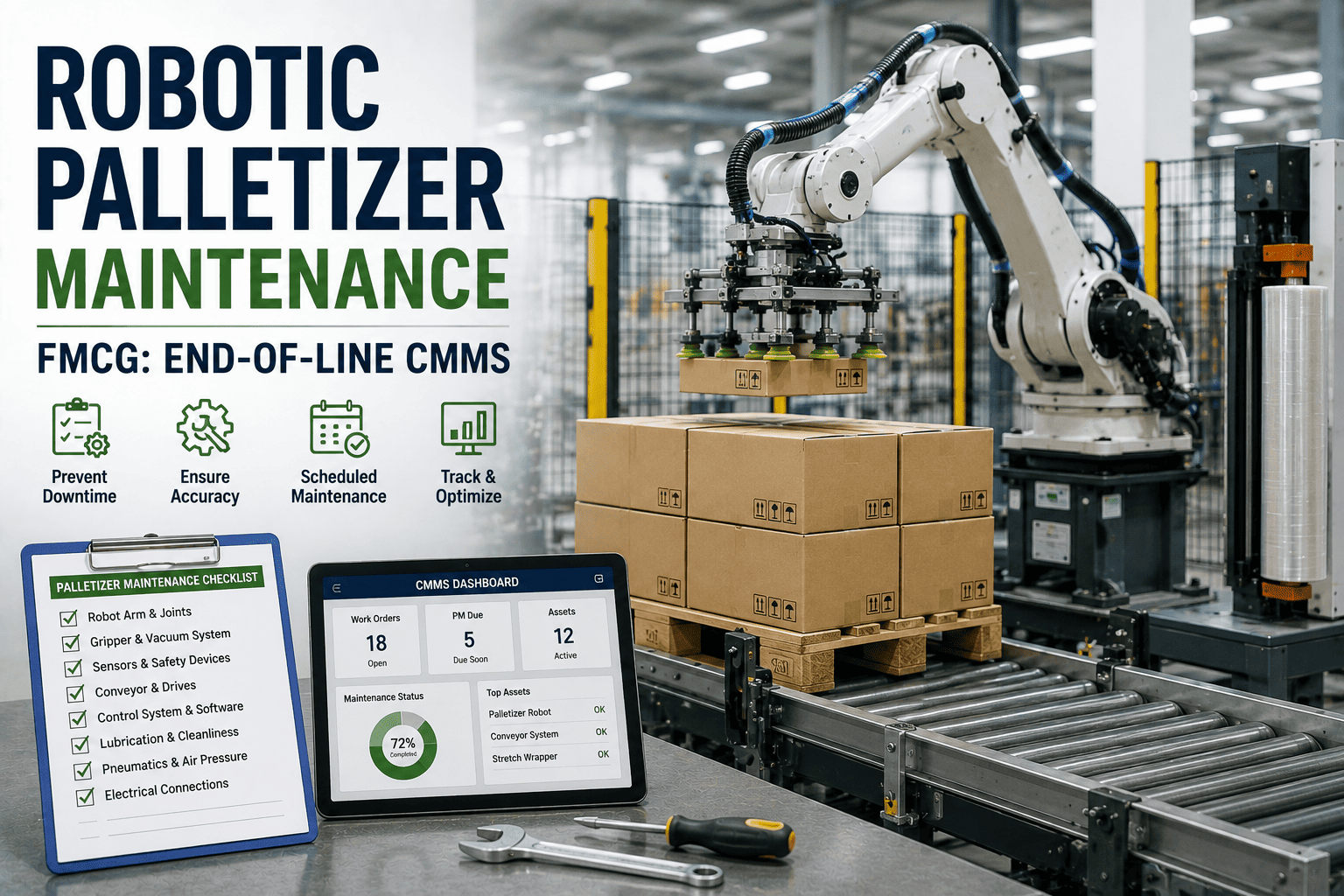
Cartoner maintenance is the PM and changeover programme for the machines that form, fill, close, and discharge folding cartons at the back of the packaging line. In an FMCG plant, three families dominate — horizontal side-load and end-load cartoners that push product through the open end of a carton, vertical top-load cartoners that drop product through the top, and increasingly robotic top-load cells where a delta or SCARA robot places product into pre-erected cartons.
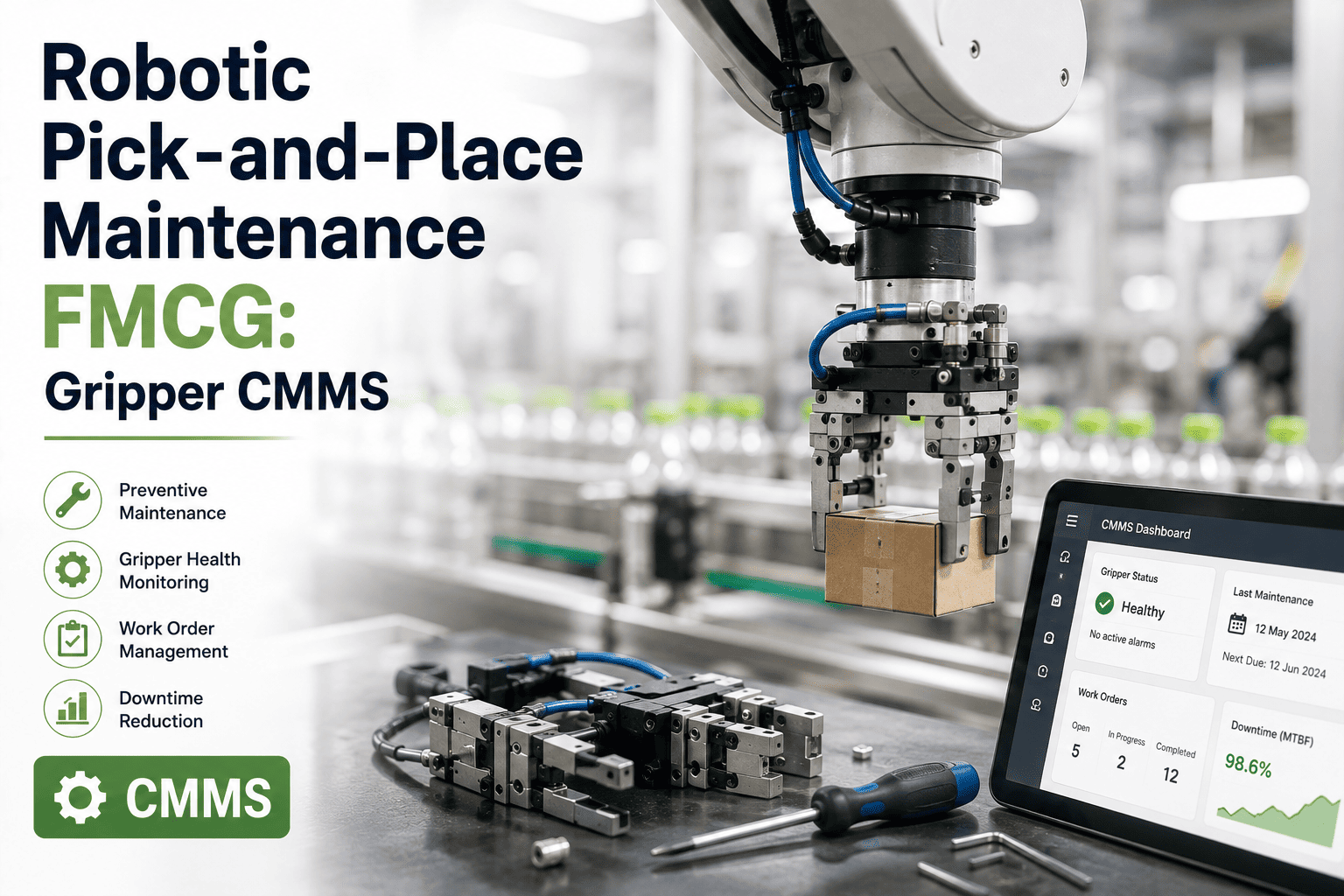
Each family has its own failure profile. Side-load and end-load machines fail at suction cups, tucker tips, glue heads, and carton magazines. Top-load machines fail at vacuum-pickup systems and erector mandrels. Robotic top-load cells fail at end-of-arm tooling and vision-system calibration. A defensible cartoner programme treats each family's failure profile as its own PM template. Start a free trial to register your cartoners by family inside Oxmaint.
The 6 Failure Modes That Quietly Kill Cartoner Uptime
Mode 01
Suction Cup Wear
Vacuum cups on the carton magazine harden, crack, and lose seal over 200-400 hours. Each cup failure misfeeds a carton, generating a jam or a non-square carton at the loader.
Mode 02
Tucker Tip and Folder Wear
Worn tucker tips fail to seat carton corners before folding, producing corner tears at 60-80 CPM. A single worn tip drives micro-jams every 4-6 minutes — invisible in totals, brutal in real time.
Mode 03
Glue System Temperature Drift
Hot-melt glue heads drift in temperature, dispenser timing, and nozzle geometry. Off-spec glue lap is the leading cause of carton leakage and rejected pallets at the warehouse.
Mode 04
Carton Magazine Issues
Magazine hopper jams, carton blank deformation, or shingling failure under low magazine level. Operator missed top-ups become unplanned line stops within 10-15 minutes.
Mode 05
Servo Drive & Cam Drift
Bucket conveyor flights drift relative to carton transport over hundreds of hours, causing pusher timing errors and crushed product. Servo tuning lost without a structured PM record.
Mode 06
Robotic Pickup & Vision Calibration
On robotic top-load cells, end-of-arm tooling wears and vision systems drift. Pick failures look random until calibration is logged — then they map to specific recipes and SKUs.
Each failure mode has a measurable signature long before it stops the line. The job of the CMMS is to turn that signature into a work order. Book a demo to see all six failure modes mapped to your specific cartoners.
Where FMCG Cartoner Programmes Quietly Bleed Throughput
!
Suction Cups Changed Only When They Fail
Vacuum cups replaced reactively at full failure. Misfeeds and non-square cartons spike for two days before the operator escalates. OEE quietly drops 4-6 points.
!
Glue Temperature Treated as Set-and-Forget
Hot-melt unit set at install and never re-verified. Nozzle clogs, temperature drifts, glue laps fail — reject pallets stack up at warehouse intake.
!
Changeover Done From Memory
Each operator changes the cartoner their own way. Format changes take 60-90 minutes instead of 25-30. Lost throughput compounds across daily SKU changes.
!
No PM Differentiation by Cartoner Family
Same generic PM applied to side-load, end-load, and top-load machines. OEM-specific service intervals lost, warranty exposed.
!
Tucker Tips and Folder Cams Skipped Until Tears Visible
Tucker wear caught only when a tear-rate inspection flags it. By then thousands of dud cartons have left the line at retail.
!
Spare Parts Stocked by Guess
Suction cups, tucker tips, glue nozzles missing from spares. Emergency overnight orders at 3-5× normal cost when a critical part fails on a Friday night.
Most FMCG packaging halls lose 20-40% of cartoner OEE potential to these six gaps — Oxmaint converts every one into a tracked work order, a stocked spare, or a changeover card. Start a free trial to see where your line sits.
How Oxmaint Operationalises Cartoner PM
Cartoner Asset Registry by Family
Each cartoner registered by family — side-load, end-load, top-load, robotic — with OEM PM intervals, spare-parts BOM, and critical-component cycle counters.
Cycle-Based PM Triggers
Suction cups, tucker tips, folder cams, and glue nozzles scheduled by cycle count rather than calendar. PM fires before the failure rather than after.
Structured Changeover Cards
Format changes documented as a checklist with parts list, torque values, and timing references. Each operator follows the same SMED-style sequence; changeover time falls 30-50%.
Glue System Verification Routine
Daily temperature, dispenser timing, and nozzle-clean check captured on a mobile checklist. Out-of-spec values auto-trigger a corrective work order before glue defects start.
Spare Parts Auto-Replenishment
Vacuum cups, tucker tips, glue nozzles, sensors set with min/max thresholds. Stockouts trigger purchase requisitions before the part is needed at 3 a.m.
OEE Dashboard for End-of-Line
Cartoner-specific OEE, reject rate, and MTBF tracked per asset. Plant manager sees which cartoner is dragging line-level performance and where to invest first.
The result is a cartoner programme that reduces micro-stops, cuts changeover time, and stabilises reject rates — without buying new equipment. Start a free trial and have your first cartoner PM template live in under an hour.
Reactive vs. Structured Cartoner Maintenance
| Performance Metric |
Reactive Cartoner PM |
Structured Programme on Oxmaint |
| Suction-cup replacement |
At full failure / line stop |
Cycle-based, before misfeeds begin |
| Tucker-tip change |
After tear-rate complaint |
Cycle-based, ahead of corner tears |
| Glue system verification |
Set-and-forget |
Daily check with auto-WO on drift |
| Changeover time |
60-90 minutes, operator-dependent |
25-30 minutes, SMED card-driven |
| Reject rate |
3-5% typical |
Under 1% with PM compliance |
| Micro-stops per shift |
15-30 events |
Under 5 events typical |
| Spare-parts availability |
Guess-based, emergency orders |
Min/max stocked, auto-reordered |
| End-of-line OEE |
60-72% |
82-88% achievable |
Documented ROI from Structured Cartoner Maintenance
10-15
OEE Points Recovered
Typical OEE recovery on FMCG cartoning lines within 12 months of cycle-based PM and structured changeover cards
50%+
Faster Changeovers
Reduction in cartoner changeover time after SMED-style PM cards replace operator-memory workflows
3-5×
Lower Reject Rate
Reduction in carton reject rate driven by glue, tucker, and suction-cup PM staying ahead of wear
70%
Fewer Micro-Stops Per Shift
Reduction in cartoner micro-stops measured per shift after 90 days of structured cycle-based PM compliance
...which is why FMCG operations leaders who shift cartoner PM from reactive to structured see line OEE climb in the same quarter the schedule goes live — start a free trial to map your cartoners today, or book a demo and we'll model the OEE upside on your specific equipment.
Frequently Asked Questions
How does Oxmaint differentiate PM between side-load, end-load, and robotic top-load cartoners?
Each cartoner family has its own PM template inside Oxmaint. Horizontal side-load and end-load templates focus on suction cups, tucker tips, glue head, and bucket-conveyor timing. Vertical top-load templates focus on erector mandrels and discharge belts. Robotic top-load templates focus on end-of-arm tooling, gripper wear, and vision system calibration. The cycle-based triggers and OEM intervals are pre-loaded so cartoners are managed by physics, not by a one-size-fits-all generic PM.
Can Oxmaint trigger PM based on actual cycle counts rather than calendar days?
Yes. Each cartoner is linked to a cycle counter — either operator-logged at end of shift or via PLC integration. Suction-cup replacement, tucker-tip rotation, glue-nozzle cleaning, and folder-cam inspection are tied to cycle thresholds. A cartoner running 18 hours a day hits its PM faster than one running a single shift, and the cadence reflects that automatically.
How does Oxmaint help cut cartoner changeover time?
Each format changeover is a structured checklist in Oxmaint — parts list, torque values, sensor positions, glue offsets, and a timing reference per recipe. Operators follow the same SMED sequence every time, with photos of correct positions and call-outs for critical settings. Parts are pre-staged based on the recipe, so the changeover team works in parallel rather than hunting for components. The typical result is a 30-50% reduction in changeover duration within 60 days.
Does Oxmaint manage spare parts inventory for cartoner consumables?
Yes. Suction cups, tucker tips, glue nozzles, photo-eyes, vacuum hoses, and bucket-conveyor flights are all stocked with min/max levels per cartoner family. As PM work orders consume parts, stock levels drop and purchase requisitions auto-generate when re-order points are hit. The 3 a.m. emergency overnight orders at 3-5× normal cost largely disappear once the BOM and reorder points are correctly set.
Stop Letting Cartoners Drag Down Plant OEE
Cut Cartoner Micro-Stops, Reject Rate, and Changeover Time in the Same Quarter
See how cycle-based PM, structured changeover cards, and stocked spare parts turn end-of-line from your worst OEE problem into your most reliable asset class.
- Cycle-based PM for suction cups, tucker tips, and glue systems
- SMED-style changeover checklists that cut format times in half
- Auto-stocked spare parts and OEE dashboards per cartoner
Used by FMCG packaging teams managing thousands of cartoning and end-of-line assets across multi-site portfolios.