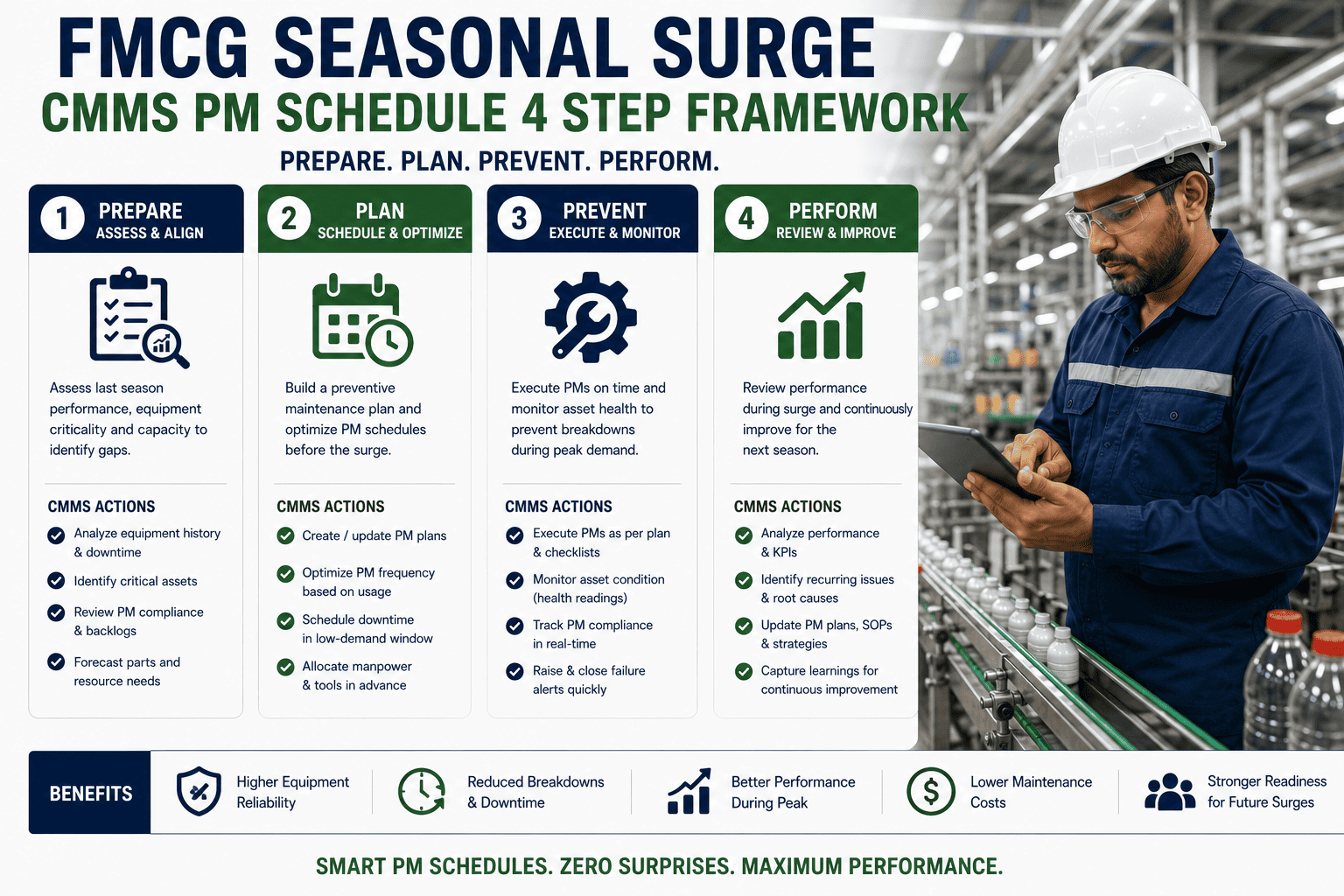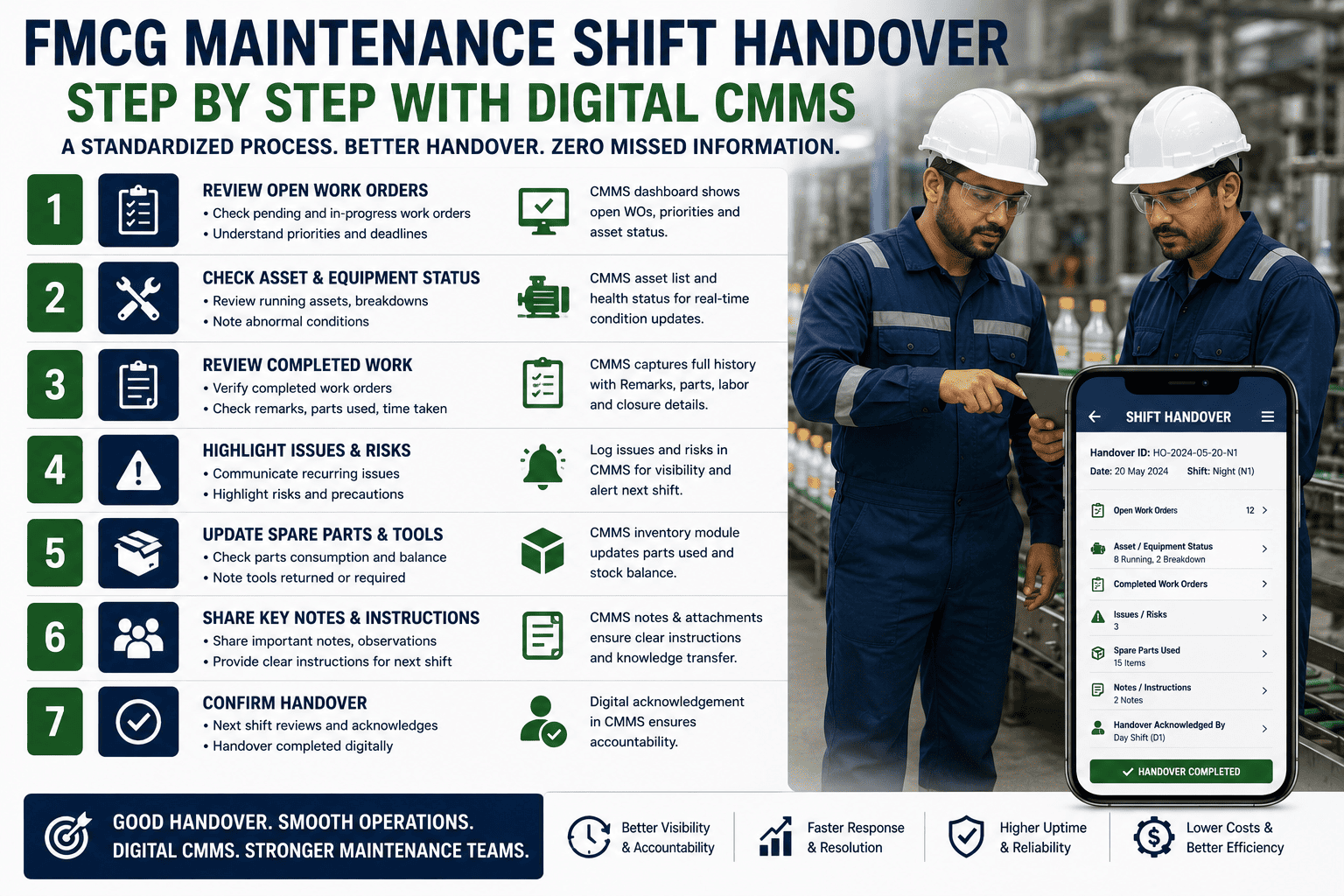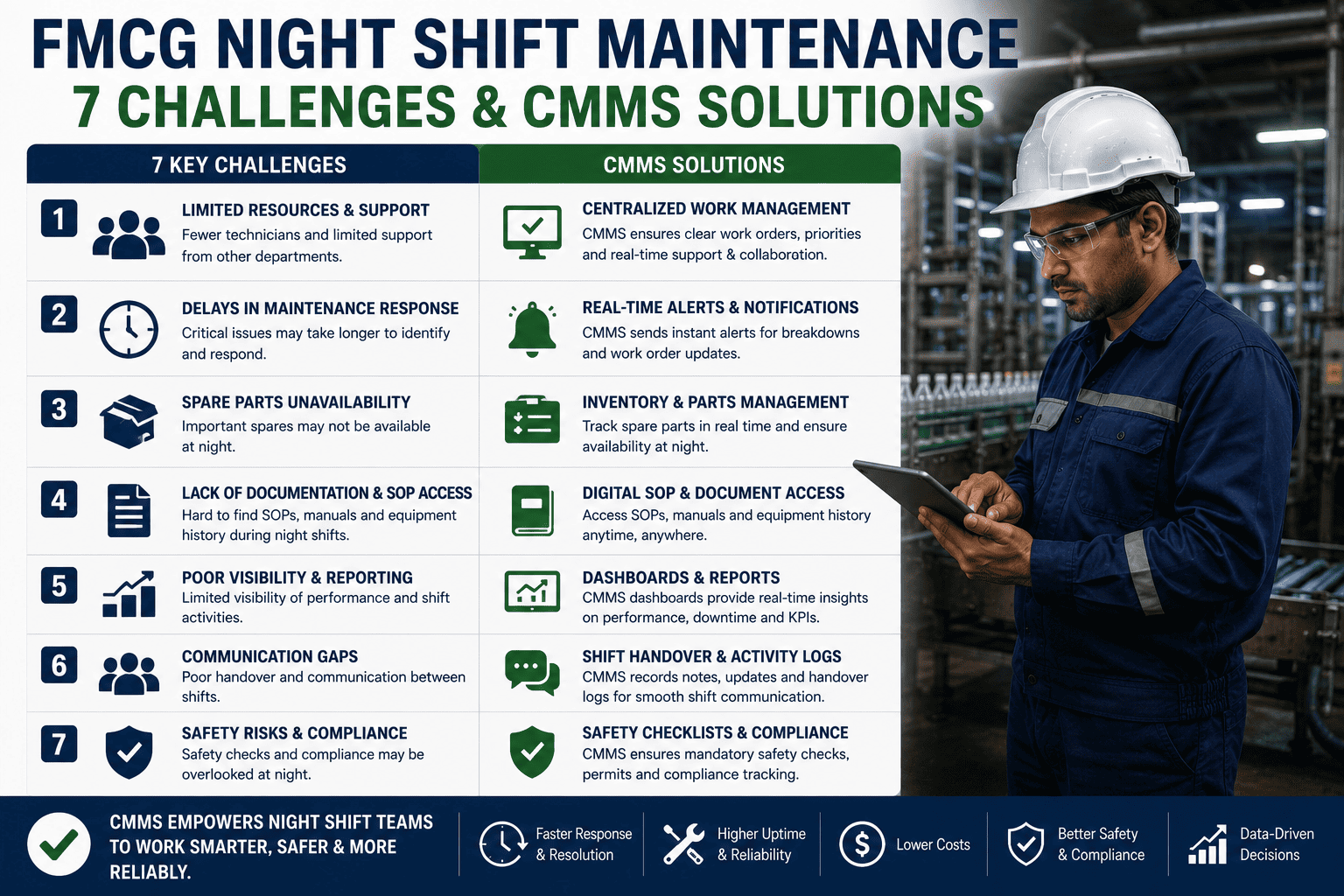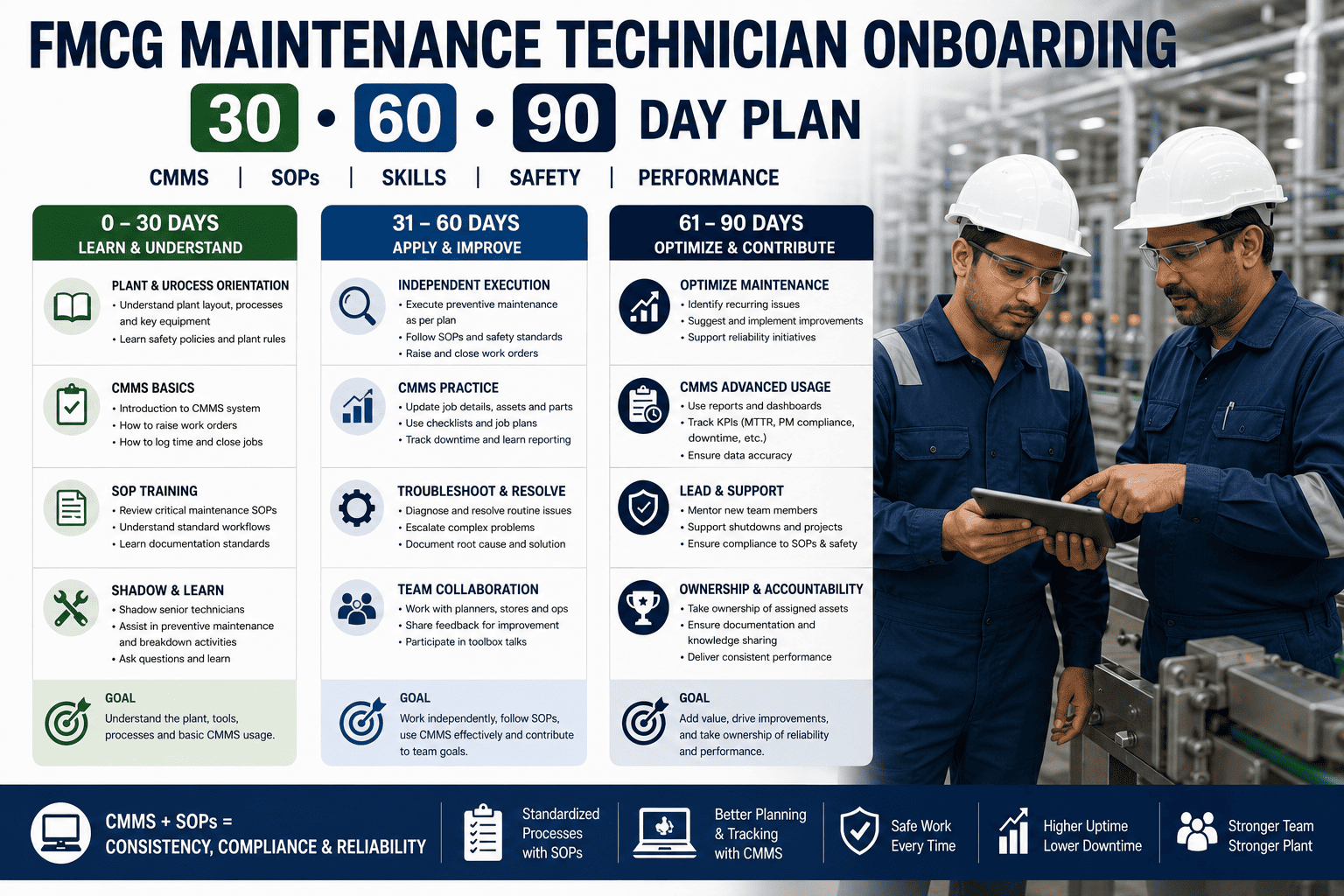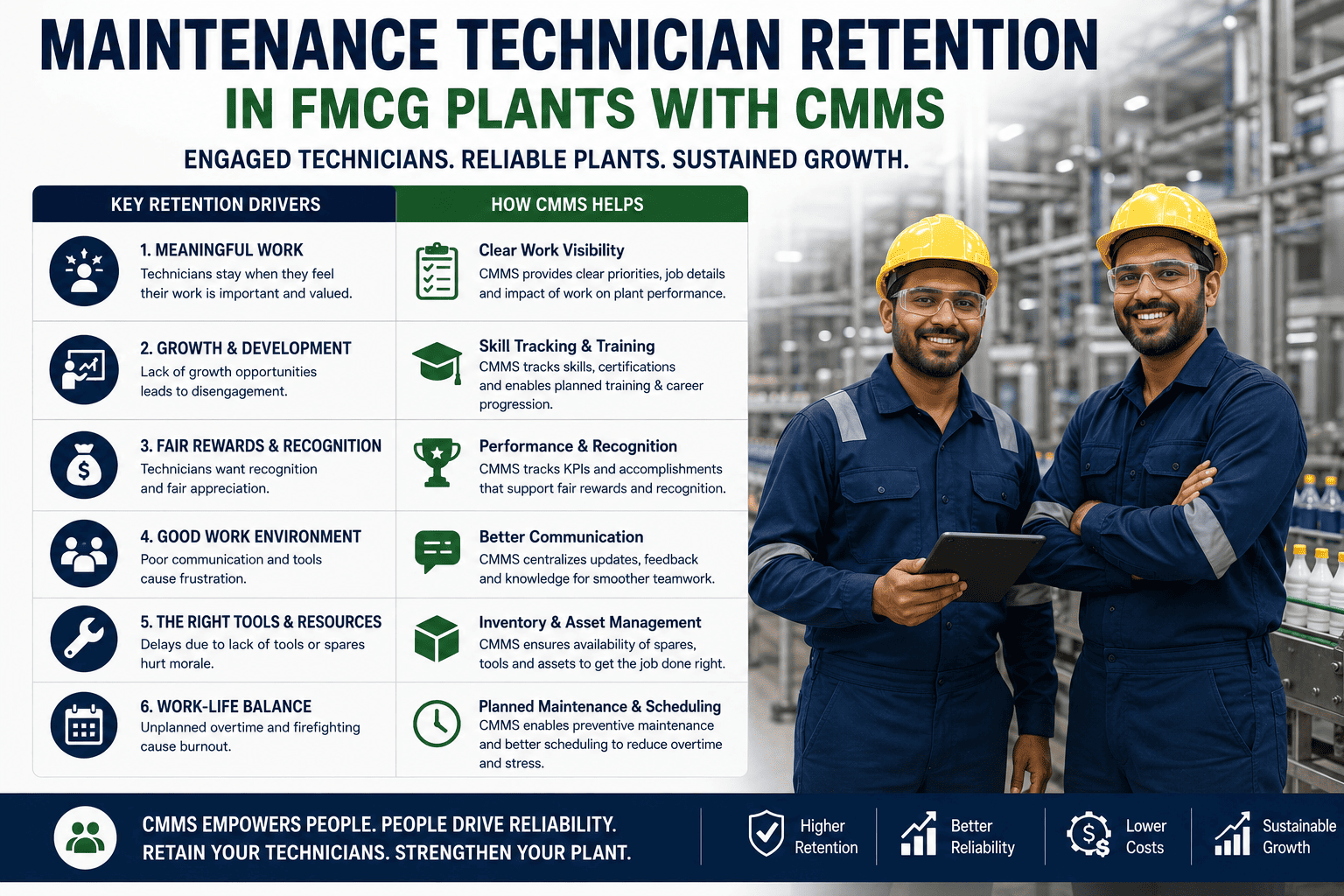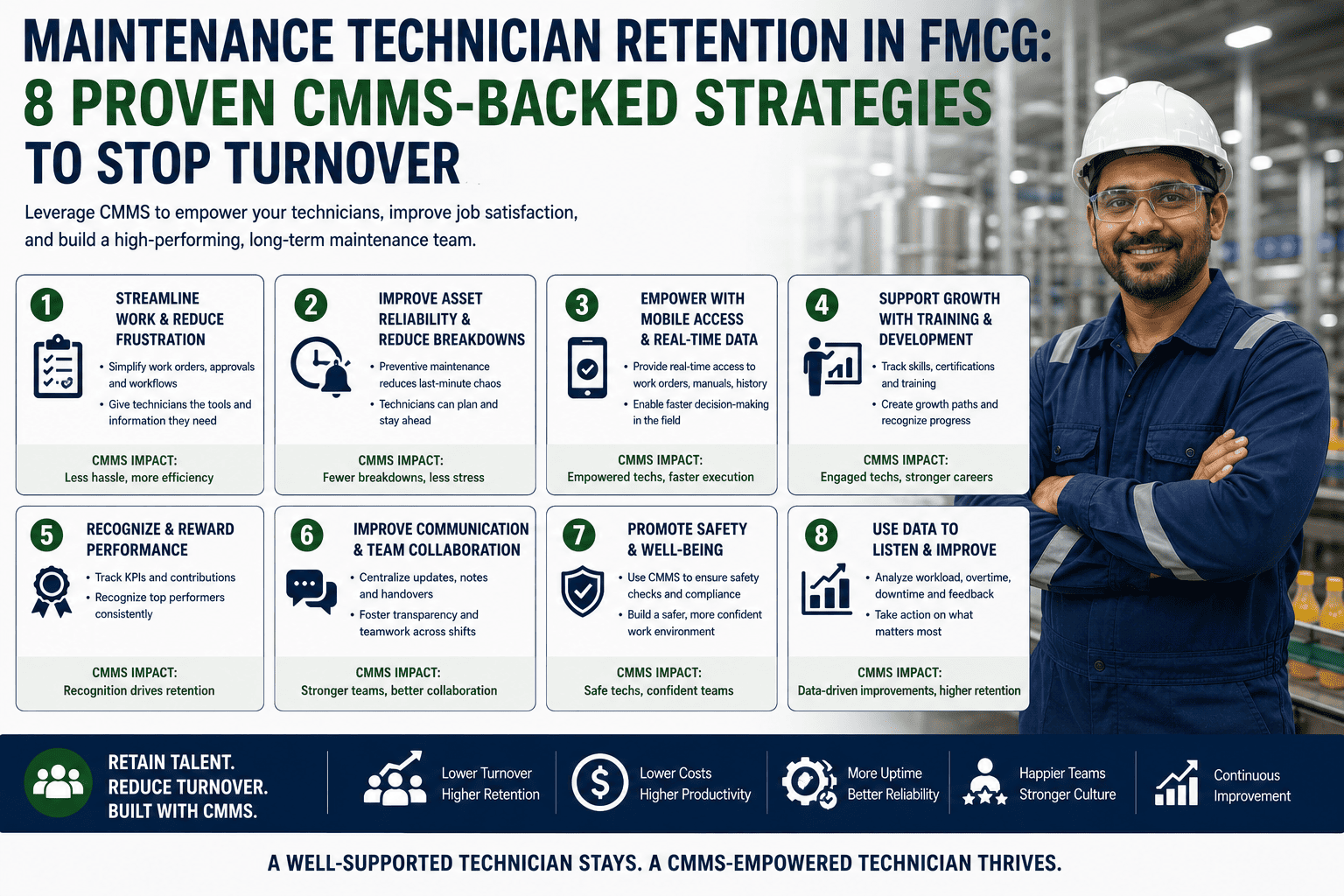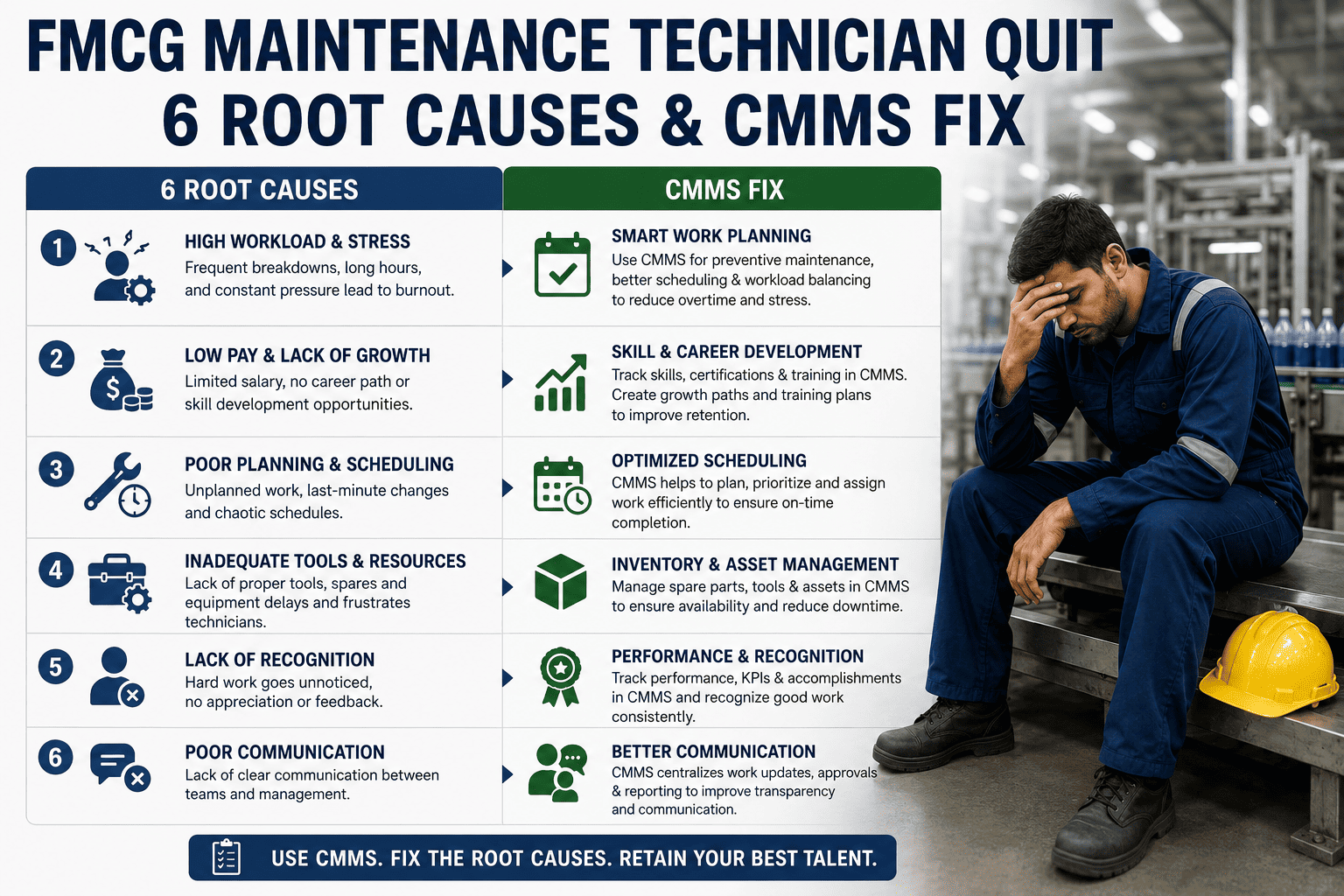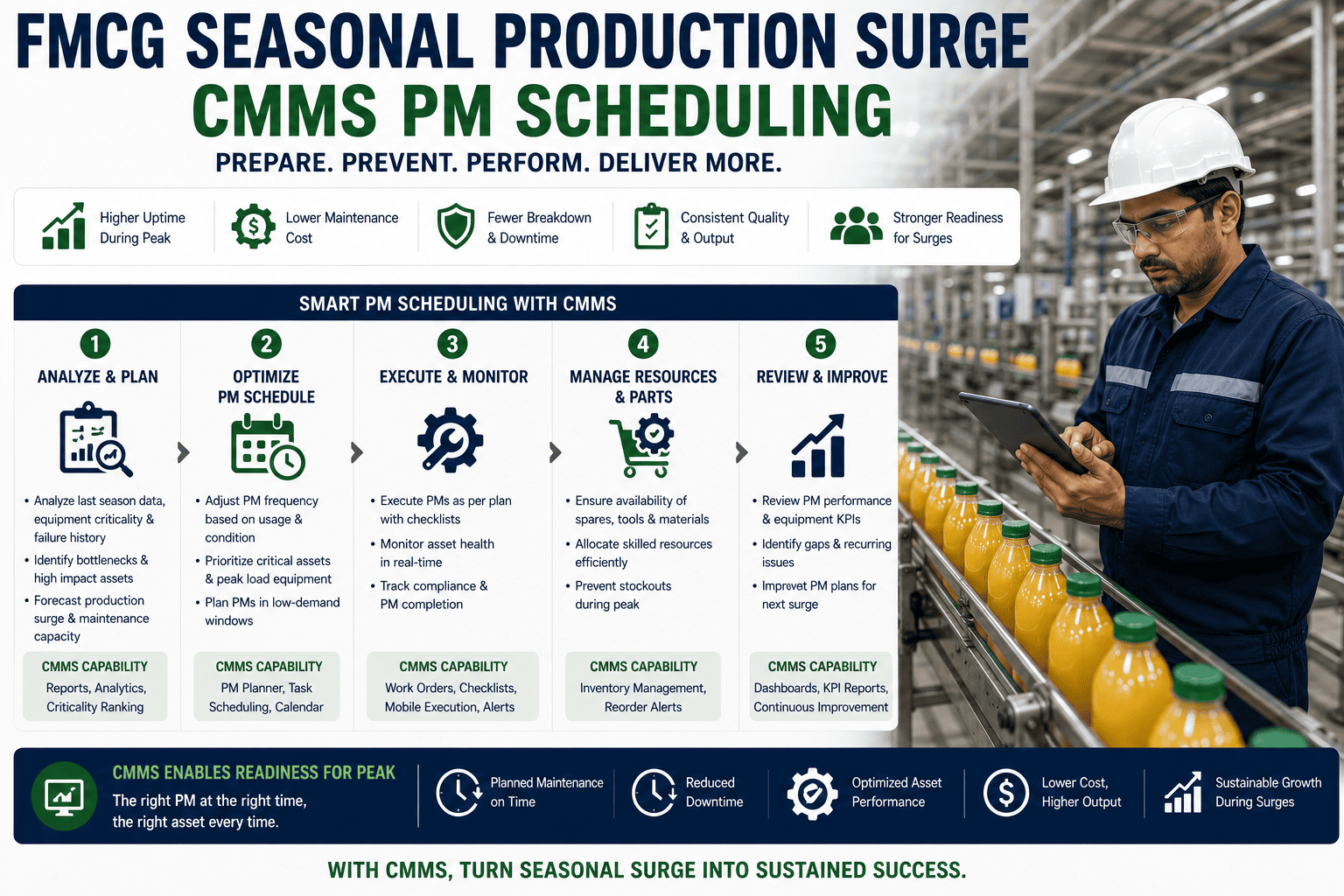
Seasonal production surge maintenance in FMCG CMMS is one of the most consequential and least-systematized areas of plant maintenance management. Every FMCG operations director knows the seasonal demand calendar: holiday food production peaks in Q4, Ramadan drives beverage and snack surges across MENA markets, summer pushes ice cream and drinks plants to maximum output. What most plants don't have is a CMMS-driven system that automatically adjusts preventive maintenance schedules when production volume climbs — rather than running the same base PM intervals designed for normal capacity while assets work 30–60% harder. Industry data shows that unplanned equipment failures cost 4.8× more to repair than planned maintenance — a gap that widens significantly during peak when every lost hour costs more in both production revenue and emergency labor rates. Start a free trial to see how OxMaint dynamically adjusts FMCG PM schedules as seasonal demand changes.
Seasonal Production Surge Planning for FMCG Plants: How CMMS Adjusts PM Schedules
Dynamic PM Scheduling · Surge-Proof Uptime · Data-Driven Seasonal Planning
OxMaint automatically adjusts PM intervals when production output increases — no manual reconfiguration, no seasonal schedule rebuild from scratch. Start a free trial and set up your first production-linked PM schedule, or book a demo and we'll configure it around your seasonal demand calendar.
Seasonal production surge maintenance in FMCG CMMS refers to the practice of dynamically adjusting preventive maintenance schedules in response to seasonal demand increases — ensuring PM frequency keeps pace with actual asset load rather than calendar-based assumptions from baseline operations. In FMCG manufacturing, assets are typically maintained to schedules calibrated for average annual production levels. When seasonal demand spikes push output to 130–160% of baseline for 8–12 consecutive weeks, those maintenance intervals become systematically insufficient — creating a predictable window of elevated failure risk during the most revenue-critical period of the year.
The core problem is mechanical: every PM interval is implicitly a function of operating hours and stress cycles, not calendar time. A conveyor bearing lubricated every 45 days assumes a certain number of runtime hours in that window. When runtime increases from 14 to 22 hours daily during surge, that 45-day calendar interval represents 57% more wear cycles than the PM was designed to protect against. Without CMMS-driven interval adjustment, plants are running their most critical season on a maintenance program designed for a quieter one. Explore how OxMaint preventive maintenance uses runtime-based triggers to solve this automatically.
OxMaint PM intervals can be set to trigger every N operating hours rather than every N calendar days. When surge-season daily runtime doubles, PM fires twice as often — automatically, without manual intervention. The CMMS adjusts to actual asset use, not assumed use.
OxMaint supports multiple PM schedule templates per asset — a base schedule and a surge schedule. Maintenance managers activate the surge template when seasonal production begins, tightening all intervals simultaneously. Reverts to base schedule when season ends. No rebuilding from scratch each year.
Not every asset needs the same surge-season adjustment. OxMaint's criticality ranking focuses intensive surge-period PM on line-stopping assets while maintaining baseline schedules for non-critical equipment — directing limited technician time where the failure risk is highest.
During surge, assets under elevated load generate different vibration, thermal, and current signatures than at baseline. OxMaint's predictive maintenance module monitors these signals in real time — firing alerts when patterns suggest imminent failure, even when the scheduled PM isn't due for another 12 days.
The live dashboard shows PM compliance specifically for surge-period schedules — which tasks are on track, which are deferred, and which assets are falling behind their tightened surge intervals. Managers see the deviation before it becomes a failure. See analytics and reporting for how this is tracked.
Tighter PM intervals during surge mean higher parts consumption. OxMaint's inventory module forecasts seasonal parts consumption from historical data, automatically raising minimum stock levels before surge begins. No stockouts on high-consumption surge-season parts.
A filling line's lubrication PM is scheduled every 45 days. During the Christmas surge, that line runs 22 hours daily instead of 14 — meaning wear accumulates 57% faster than the PM schedule assumes. By day 30 of the surge, the asset is operating with a maintenance deficit that matches 45 days of normal wear. The bearing fails on December 18th. Emergency repair, overnight freight for parts, and four hours of downtime at peak-season labor rates: $38,000 for a maintenance gap that $200 of lubricant would have prevented.
Tighter PM intervals during surge consume parts faster than base schedules — but reorder points are set for baseline consumption. Halfway through peak, the parts room runs out of a critical seal kit that the compressed PM schedule now requires every 3 weeks instead of every 6. Supplier lead time is 8 days. The asset runs without the PM, the seal fails, and the full production impact of a multi-day repair occurs during the most revenue-critical two weeks of the year.
A production supervisor asks maintenance to skip a surge-period PM — "we're running behind on orders, we can't stop for 90 minutes." Without CMMS tracking, this deferral is invisible to the plant manager. The PM gets skipped, and three days later the asset fails during a full-capacity run. The cost of the 90-minute PM window: $600. The cost of the unplanned failure at peak: $22,000 in emergency repair and lost output.
The surge ends. Three assets failed. Maintenance managers remember which ones, roughly, but the details — what failure mode, what the warning signs were, how long the repair took, what parts were needed — are in paper logbooks that nobody has time to review. Next peak season, the same assets fail in the same ways. The seasonal maintenance problem is perpetual because the data to solve it permanently was never captured and never analyzed.
See how OxMaint serves food manufacturing plants through full seasonal cycles — including post-season failure analysis that builds next year's PM framework automatically.
| Maintenance Factor | Static PM Schedule (No Surge Adjustment) | OxMaint Dynamic Seasonal PM |
|---|---|---|
| PM interval during surge | Unchanged from baseline — designed for 70% output, run at 140% output | Runtime-triggered — intervals auto-tighten when production output increases above baseline threshold |
| Seasonal schedule management | Manual rebuild each season — spreadsheet-based, inconsistent, relies on same manager every year | Surge schedule templates activate on date or production counter — consistent, automatic, repeatable |
| Failure detection during peak | Line stoppage — failure detected when production halts at maximum-value operating time | IoT sensor alerts fire before failure — 94% prediction accuracy gives technicians a response window |
| Deferred PM visibility | Invisible — PMs skipped under production pressure without management awareness | Automatic flagging — deferred PMs visible on live dashboard with escalating risk score |
| Parts availability at peak | Baseline reorder levels — stockouts on high-consumption parts during tightened surge intervals | Seasonal minimum stock levels auto-set 8 weeks before surge — right parts on hand at peak |
| Year-over-year improvement | Same assets fail each peak — no structured data to update pre-season planning annually | Post-season failure analysis feeds next year's framework — seasonal PM improves with every cycle |
OxMaint client outcome across FMCG and manufacturing — dynamic PM scheduling is a primary driver of this improvement
Multiplier between planned PM cost and emergency repair cost — highest impact during peak when production value per hour is maximum
OxMaint surge schedule templates activate once and repeat every season — no annual manual rebuild of PM plans
Across FMCG, food manufacturing, beverage, and consumer goods — including plants with multiple seasonal demand peaks annually
Estimate what dynamic seasonal PM saves your plant — use the OxMaint ROI Calculator or explore OEE analytics to see how PM compliance drives production efficiency scores.
How does CMMS software know when to increase PM frequency during seasonal surge?
Which FMCG assets most need PM schedule adjustment during seasonal production surges?
How do FMCG plants handle food safety compliance requirements during seasonal maintenance surges?
Can FMCG plants use OxMaint to plan maintenance windows during surge season without stopping production?
OxMaint gives FMCG maintenance teams runtime-based PM triggers that adjust automatically during seasonal surge, surge schedule templates that activate on a date and revert when peak ends, predictive IoT monitoring at elevated load for 94%-accurate failure alerts, and complete food safety compliance documentation embedded in every work order regardless of production pressure. This is seasonal production surge maintenance built for the FMCG demands you face every peak cycle.