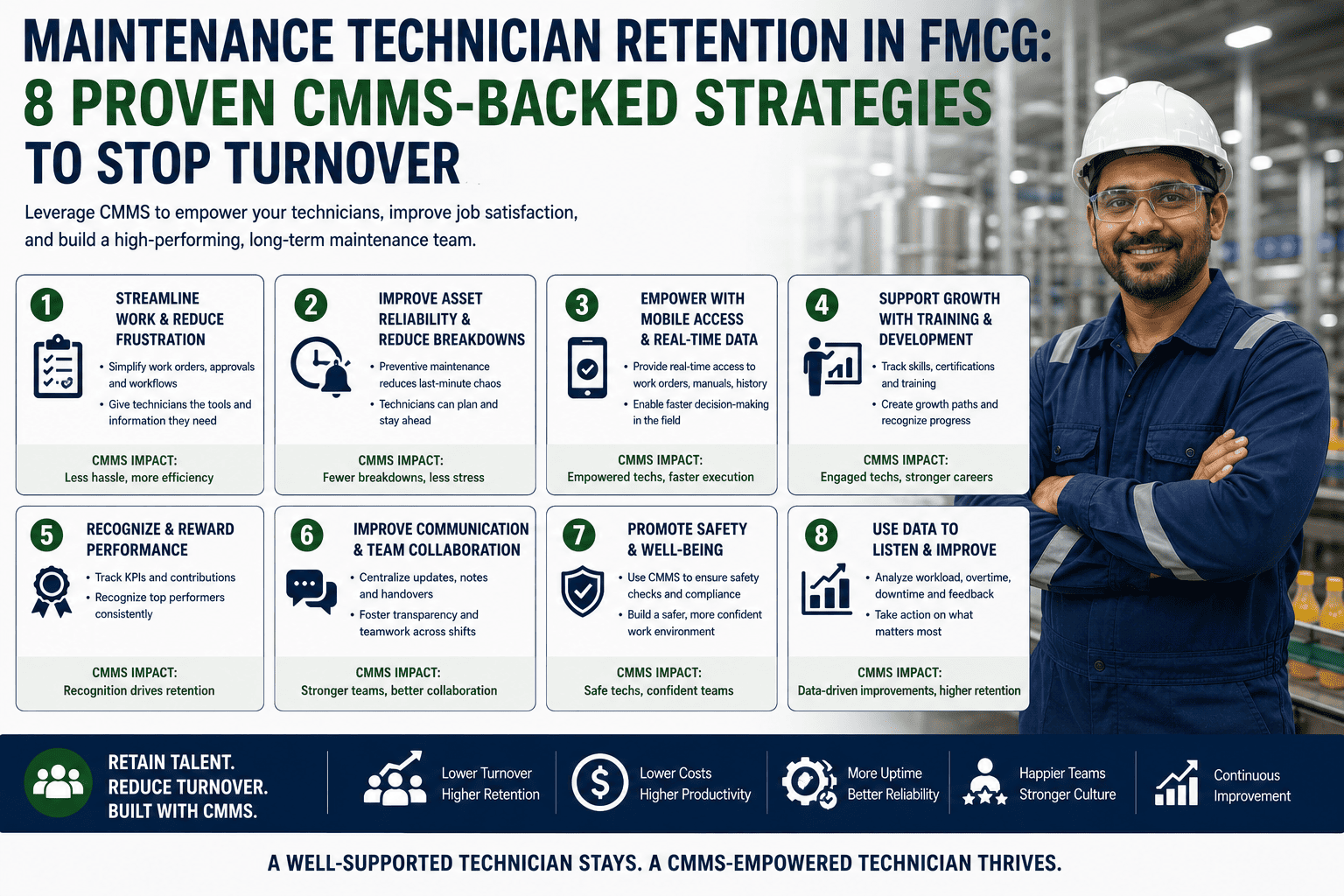
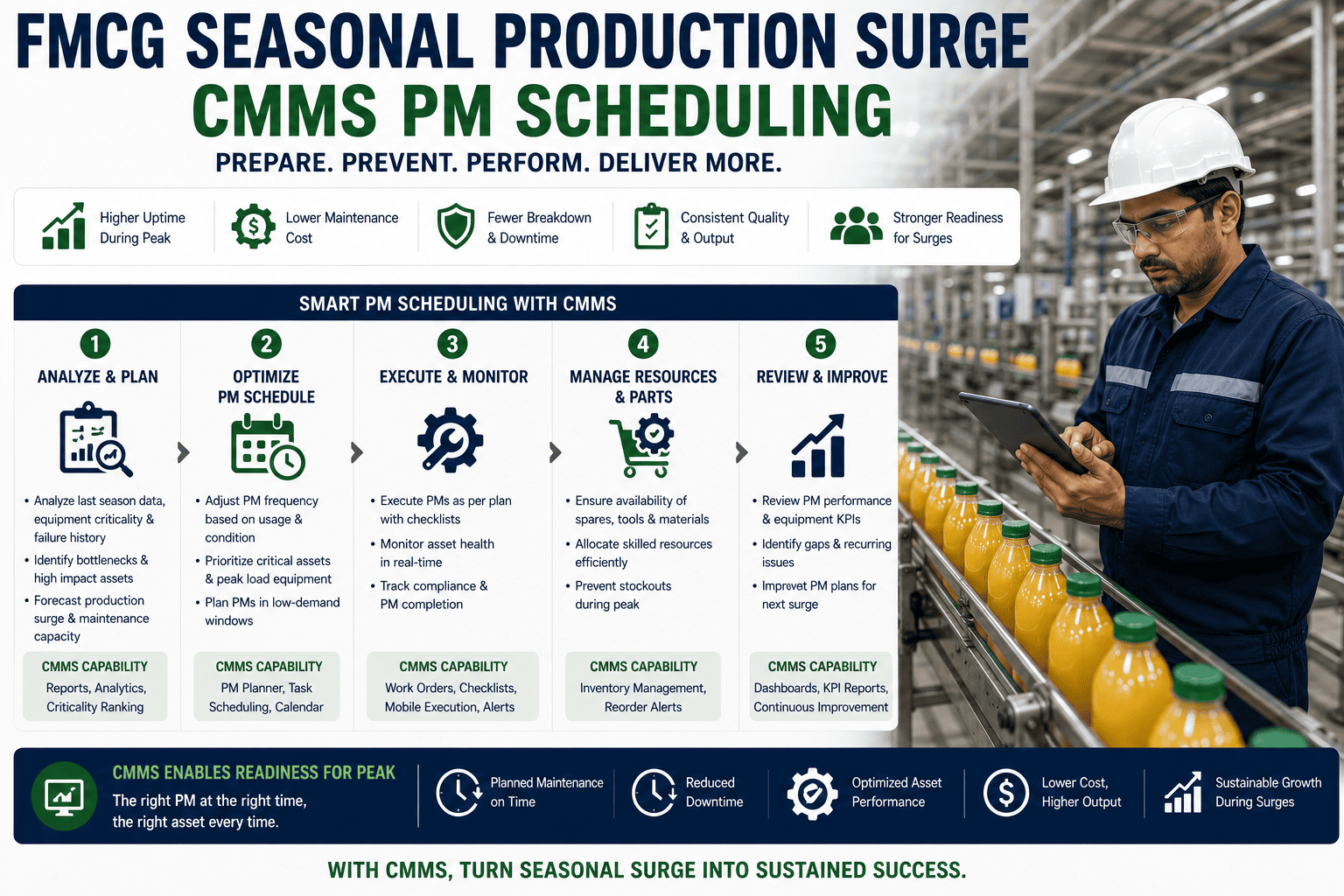
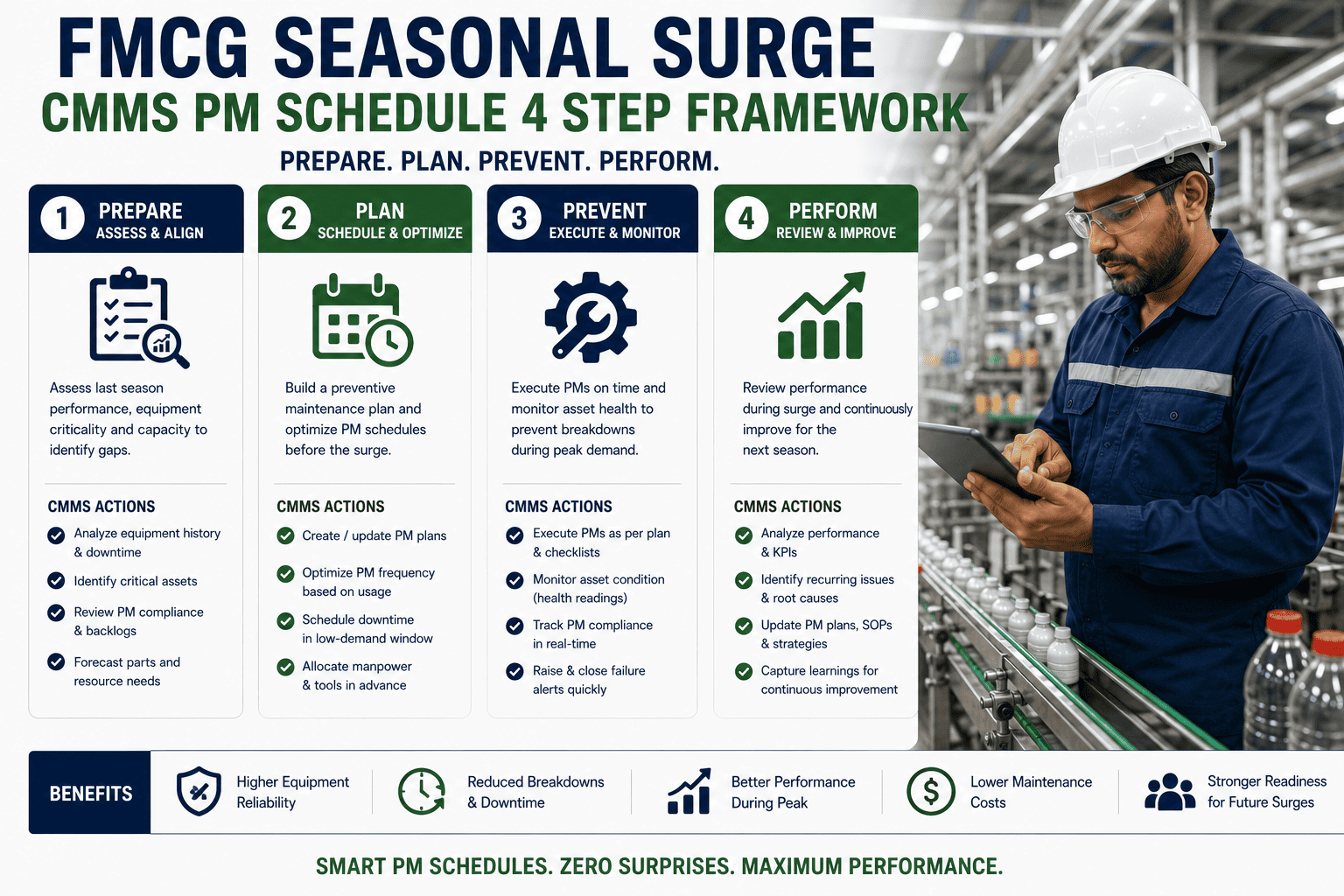
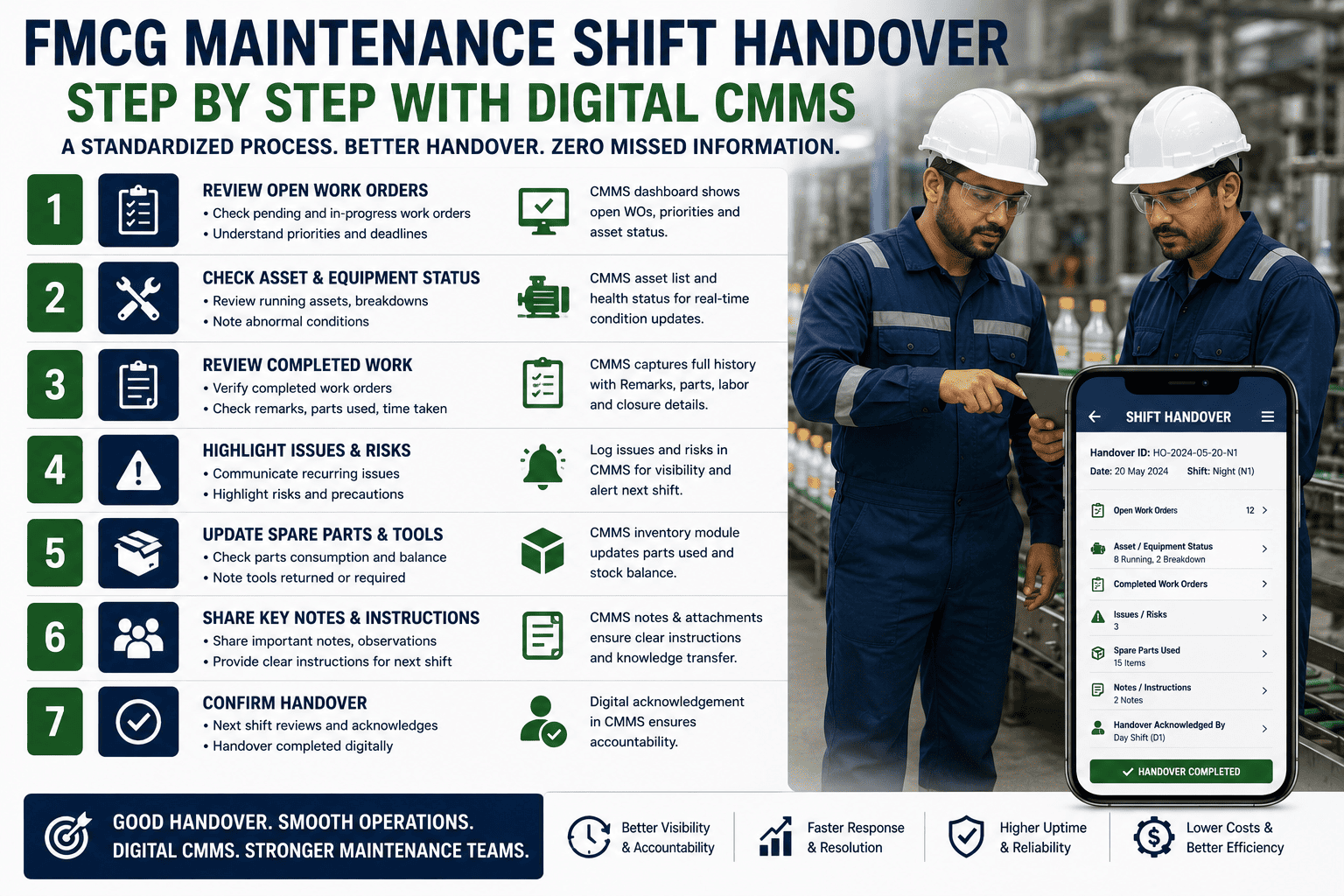
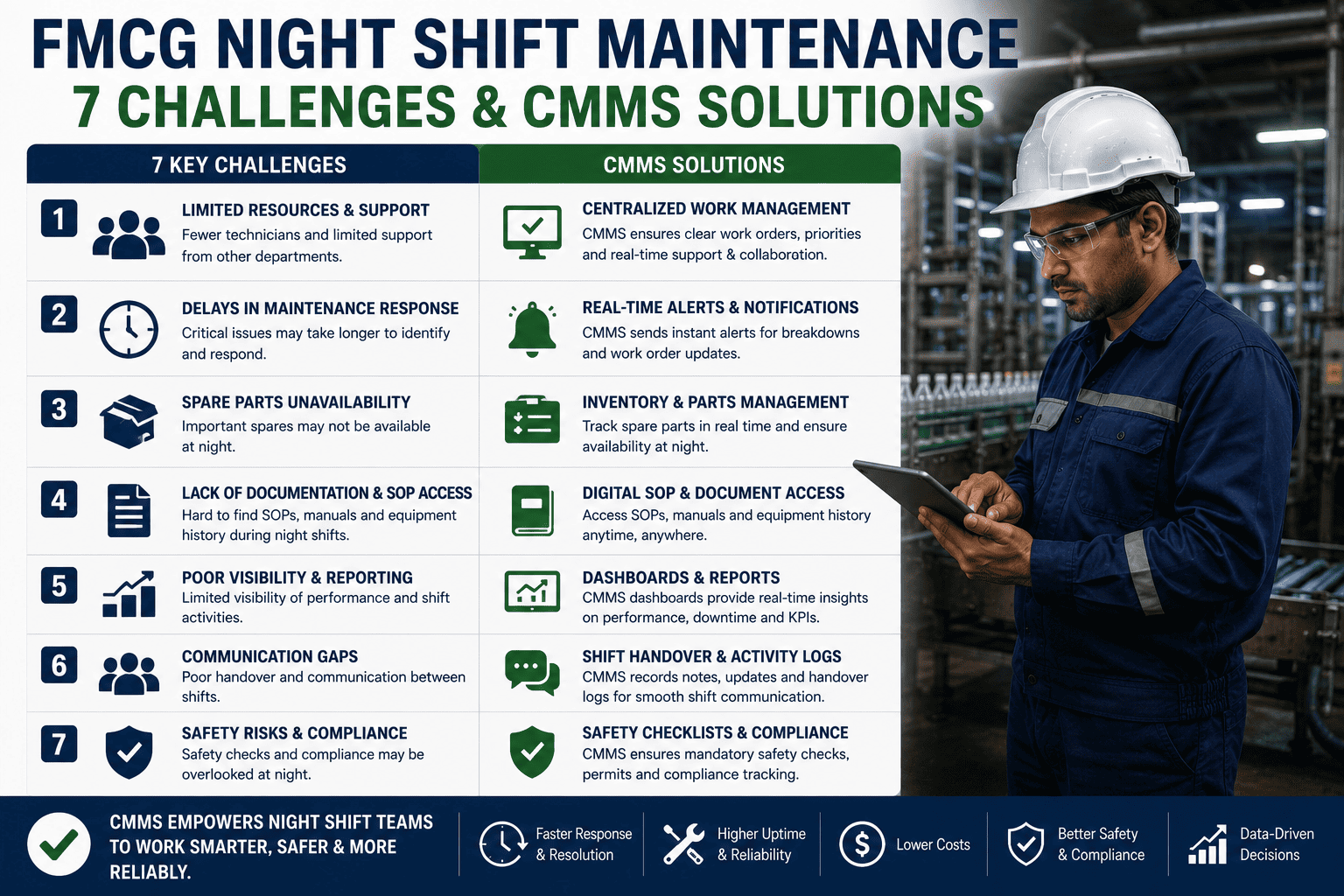
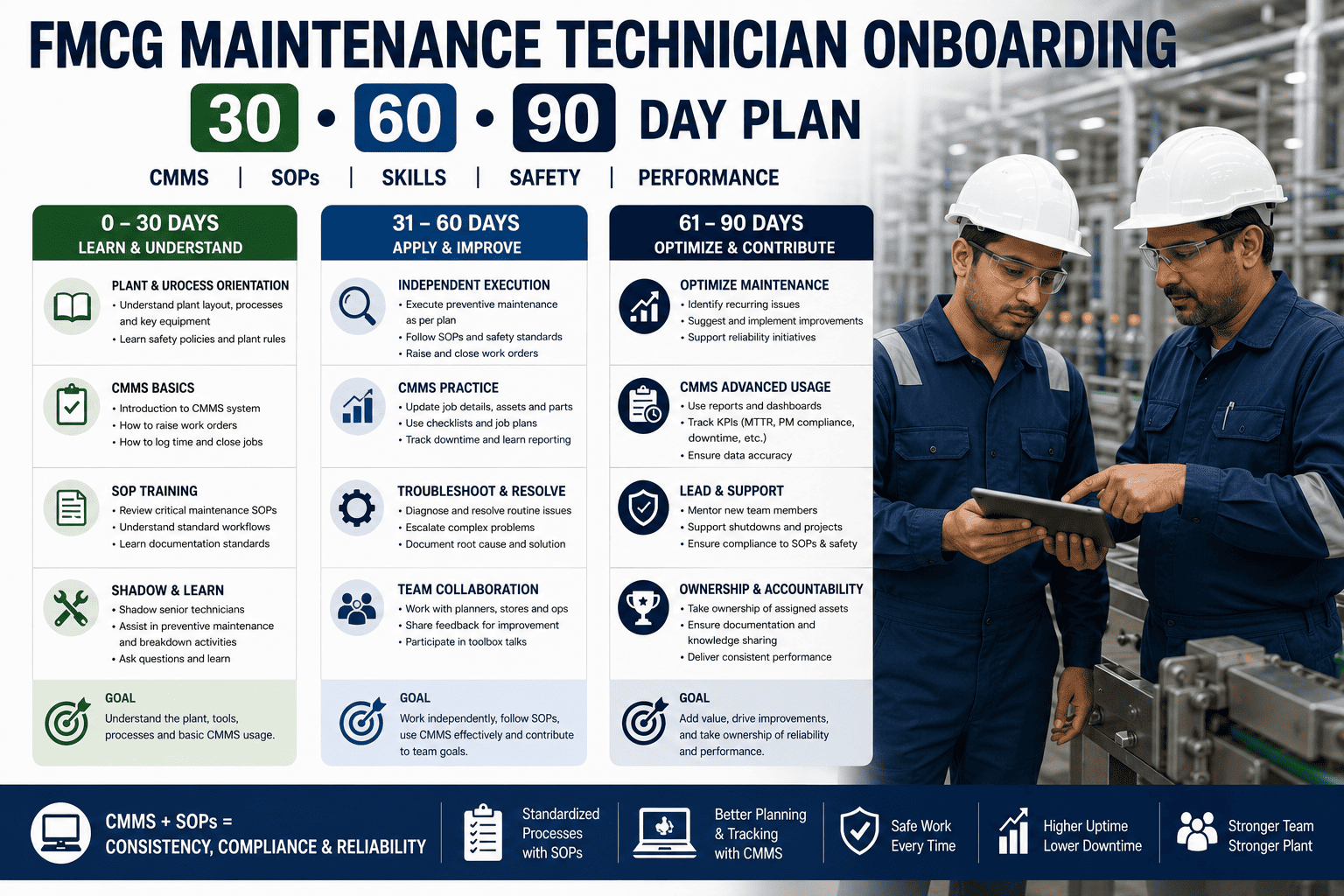
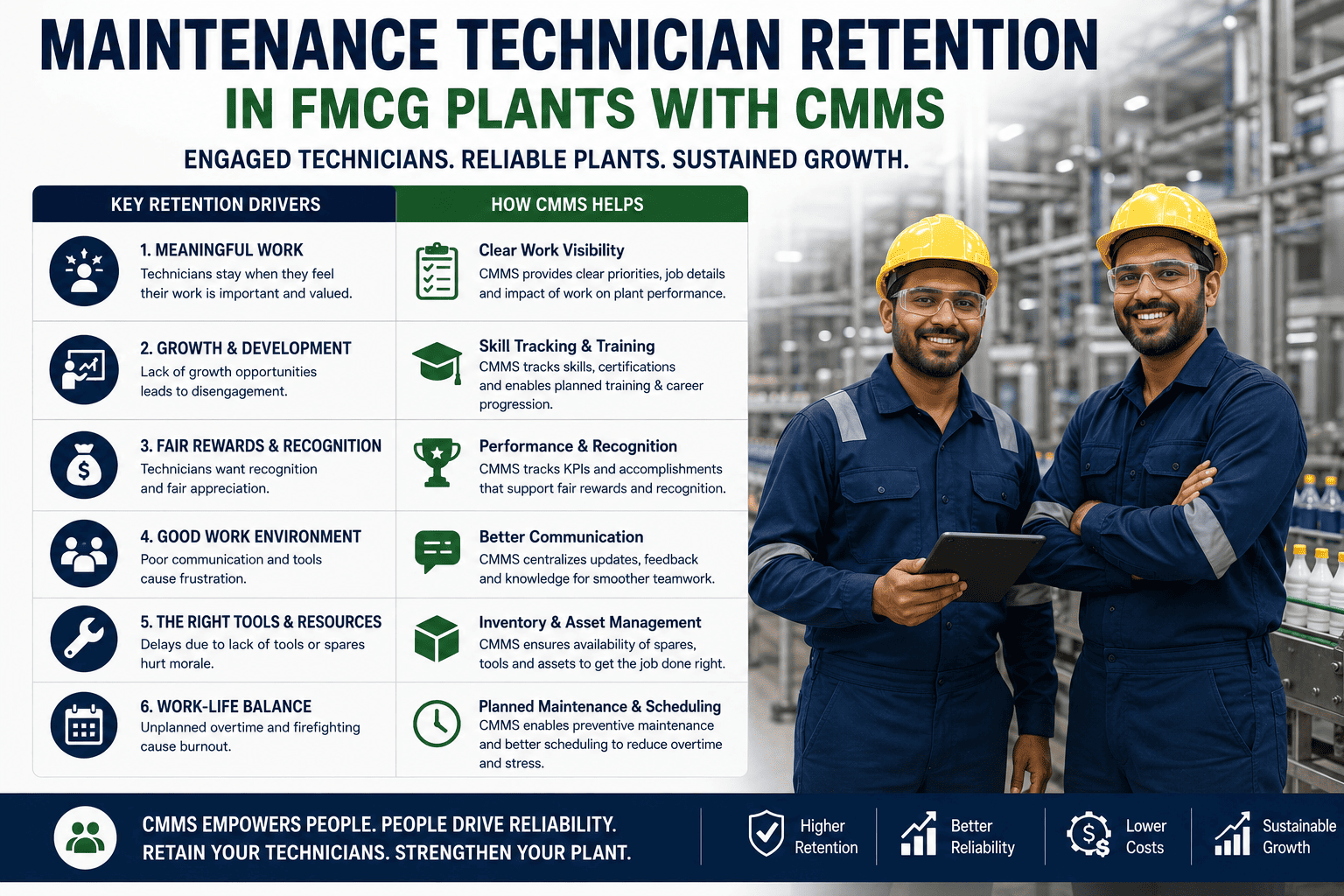
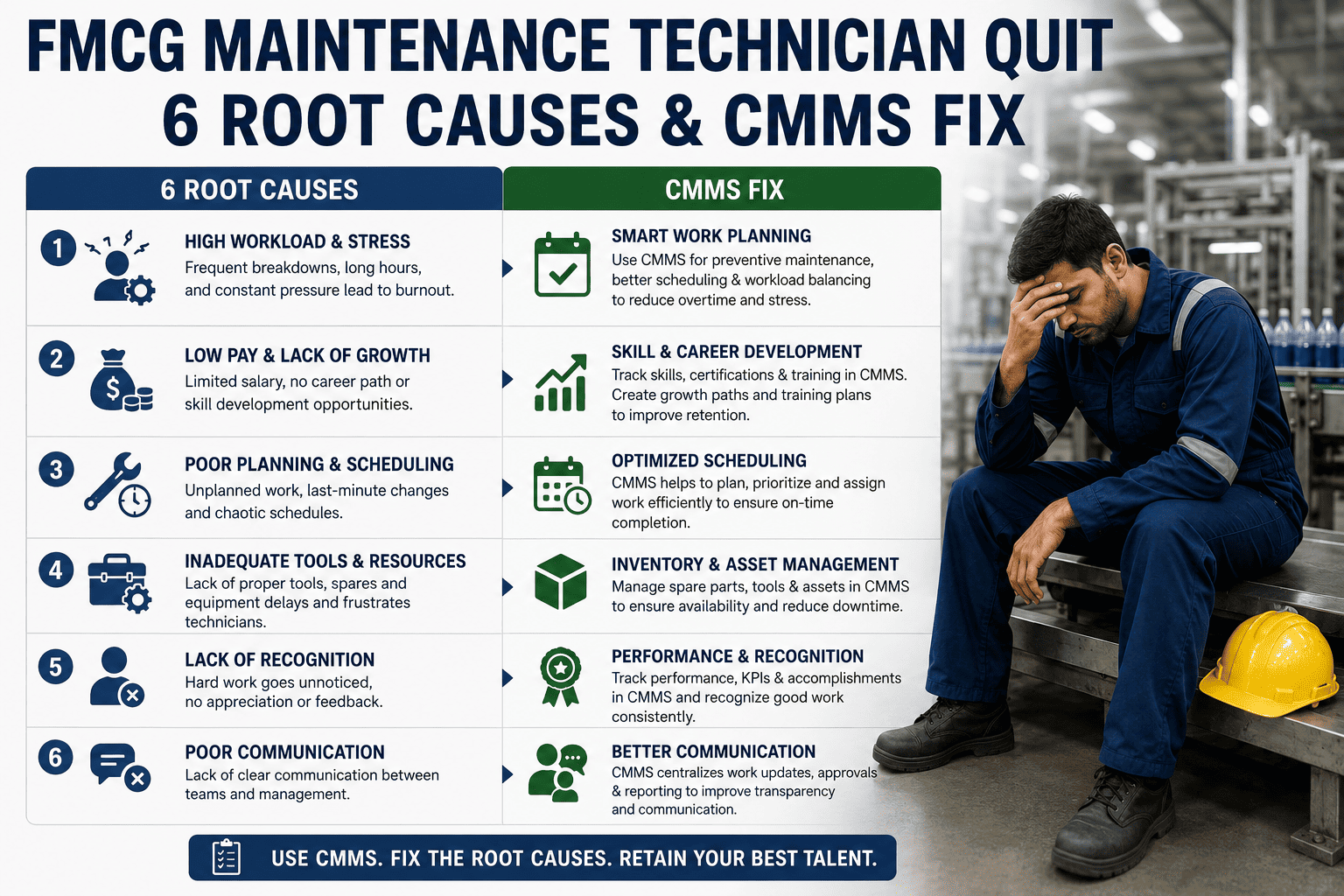
Maintenance technician retention in FMCG plants is not a human resources problem — it is an operational systems problem. Plants that retain skilled technicians at above-industry rates share one consistent characteristic: they give those technicians tools, structure, and visibility that make the job professionally sustainable. Plants that lose technicians consistently share the opposite: chaos, unclear priorities, outdated tools, and a reactive fire-fighting culture that burns through skilled workers faster than they can be replaced. This guide covers eight proven, CMMS-backed strategies to stop FMCG maintenance turnover — with specific features and workflows for each one that your team can implement starting this week. Start a free trial on Oxmaint or book a demo to see each strategy in action before committing.
FMCG Workforce Retention · Maintenance Operations 2026
Maintenance Technician Retention in FMCG: 8 Proven CMMS-Backed Strategies to Stop Turnover
Eight retention strategies plant engineers and operations directors can implement with a CMMS — each targeting a specific cause of technician attrition in FMCG plants.
See which retention problems Oxmaint solves for your team in 30 minutes.
✓ Structured work orders that eliminate shift-start chaos
✓ Mobile-first tools your technicians will actually use
✓ Performance dashboards that make every technician's contribution visible
Trusted by 1,000+ maintenance teams · Live in days
2x
higher turnover in FMCG maintenance vs other plant roles — and it's driven by preventable working conditions
150%
average true replacement cost per technician including recruitment, onboarding, and productivity ramp
62%
less unplanned downtime with CMMS-driven PM — eliminating the primary driver of technician burnout
94%
AI failure prediction accuracy — replacing reactive callouts with planned maintenance that respects work-life balance
Why FMCG Maintenance Technician Retention Requires More Than Pay
Exit interviews from FMCG maintenance departments consistently identify the same pattern: salary rarely features in the top three reasons technicians leave. The real drivers are operational — chaos at shift start, tools that don't work, no recognition for good work, and the demoralising grind of fixing the same breakdowns every month because there is never time for proper preventive maintenance.
Solving retention therefore means solving the working conditions — and that requires systems, not just policies. The eight strategies below each have a direct CMMS implementation, so the improvement is structural and measurable rather than dependent on manager behaviour or goodwill.
If your plant is losing technicians you cannot afford to lose, start a free trial on Oxmaint and implement Strategy 1 today — or book a demo and we'll show you exactly which features map to your highest-attrition causes.
8 CMMS-Backed Strategies to Retain FMCG Maintenance Technicians
01
Eliminate Shift-Start Chaos With Prioritised Work Queues
The single fastest way to reduce technician frustration is giving every technician a prioritised, structured work queue at the start of every shift — not a verbal handover and a stack of Post-it notes. Oxmaint's AI-prioritised
work order management assigns jobs based on asset criticality and production impact. The technician opens the app and knows immediately what the next three jobs are, where to find the asset, and what parts are needed. The chaos of "everything is urgent" disappears from day one.
02
Shift the Programme From Reactive to Planned Maintenance
Technicians burn out on reactive work not because it is hard — but because it is repetitive and feels futile. Fixing the same bearing failure on Line 4 for the third time in two months is demoralising in a way that complex diagnostic work is not. Structured
preventive maintenance scheduling in Oxmaint reduces the reactive ratio, giving technicians time for the systematic prevention work their training prepared them for. When the recurring failures stop, so does a significant portion of the burnout.
03
Give Technicians Mobile-First Tools That Work in the Field
A technician carrying a clipboard through a FMCG production area in 2026 is working with a tool that signals the organisation doesn't take their time seriously. Oxmaint is built mobile-first: QR scan to open any asset's full history, accept jobs, log completion, upload photos, and close work orders in under 60 seconds. The operational improvement is measurable — less time on admin, more time on maintenance work — and the signal to the technician is equally important: this organisation invests in making my job easier.
04
Make Technician Performance Visible — to the Technician Themselves
High-performing technicians who are invisible to management are also untargeted for recognition, underprepared for development conversations, and first to accept a job offer elsewhere. Oxmaint tracks jobs completed, PM compliance rate, response time, and work quality per technician — and makes those metrics visible on the technician's own dashboard, not just management reports. High performers see themselves performing well. Managers have objective data for recognition and pay decisions. The best technicians get retained because they are seen.
05
Ensure Parts Are Available Before Technicians Are Dispatched
Sending a technician to repair a filler drive only to find the replacement seal not in stock is a small but cumulative insult — it wastes their time, makes them look bad in front of production supervisors, and happens weekly in plants without managed inventory. Oxmaint's
inventory module auto-reorders critical parts based on PM schedules. Technicians check parts availability in the app before leaving the workshop. The scramble for emergency parts becomes the exception rather than the default experience of the job.
06
Embed Compliance Into the Workflow — Not on Top of It
FMCG maintenance carries a compliance burden that most industrial maintenance roles don't: GMP records, LOTO documentation, food safety sign-offs, PPE verification. When this is managed by paper — separate from the maintenance work itself — it adds 30–60 minutes of admin per shift that experienced technicians resent deeply. Oxmaint's
safety and compliance module builds every compliance requirement into the work order. LOTO steps and safety checks are part of the job flow — not paperwork afterwards. The compliance burden remains; the frustration with it disappears.
07
Use Skill Tagging to Route Complex Jobs to the Right Technicians
Experienced electricians assigned to lubrication rounds, instrumentation specialists doing general cleaning tasks — mismatched job assignment wastes skilled time and tells the technician their expertise isn't recognised. Oxmaint's skill tagging feature routes work orders to the technician with the matching competency — ensuring specialists work on specialist jobs. This improves first-time fix rates, reduces job duration, and signals to technicians that their specialist skills are valued and used appropriately rather than ignored in favour of whoever is available.
08
Replace Reactive Overtime With Predictive Planning
Emergency callouts at 2am and weekend reactive breakdowns destroy work-life balance — and for technicians with families, they are a primary driver of resignation decisions. Oxmaint's
predictive maintenance engine analyses IoT and sensor data to flag likely failures 2–6 weeks in advance, with 94% accuracy. Planned intervention during scheduled maintenance windows eliminates the emergency callout. Technicians gain predictable schedules — one of the most underestimated retention factors in FMCG plant maintenance.
All eight strategies are available in Oxmaint today — start a free trial and implement the first two this week, or book a demo and we'll walk through each feature with your team.
A 10% improvement in maintenance technician retention saves the equivalent of 1.5 technician salaries annually — before accounting for the knowledge that stays in the building.
High-Turnover vs High-Retention FMCG Maintenance Environment
| Area |
High-Turnover Plant |
High-Retention Plant (CMMS) |
| Work assignment |
Verbal handover, WhatsApp, everything urgent — chaos at shift start |
AI-prioritised queue on mobile — clear next three jobs before shift starts |
| Maintenance type |
60–70% reactive — same breakdowns, every month, indefinitely |
Target sub-20% reactive — technicians doing systematic prevention work |
| Tools |
Paper checklists, phone calls, spreadsheets — slow and frustrating |
Mobile app, QR scan, in-app asset history — fast and intuitive |
| Performance visibility |
No data — recognition based on manager impression and recency |
Personal performance dashboard — technicians see their own metrics |
| After-hours callouts |
Unpredictable emergency callouts — destroys work-life balance |
Predictive alerts replace emergency callouts with planned maintenance windows |
| Compliance admin |
30–60 min paperwork per shift — resented and often incomplete |
Compliance embedded in work order — zero separate admin, automatic audit trail |
The Business Case for Technician Retention Investment
150%
replacement cost avoided
Per technician retained. CMMS subscription cost is a fraction of one replacement — and retention improves across the team, not just one person
62%
less unplanned downtime
Fewer emergency breakdowns means fewer reactive callouts — the primary source of overtime, stress, and resignation decisions
30%
less admin per technician
Mobile-first tools and embedded compliance documentation eliminate the paperwork that erodes job satisfaction daily
94%
AI prediction accuracy
Predictive failure alerts replace 2am emergency callouts with planned repair windows — the single most impactful work-life quality improvement
Model the retention ROI for your plant using the Oxmaint ROI Calculator — or book a demo and we'll run the numbers with your actual team size and current turnover rate.
Frequently Asked Questions
What is the most effective CMMS feature for improving FMCG maintenance technician retention?
Work order prioritisation has the fastest impact — it eliminates the shift-start chaos that is consistently cited as one of the top three causes of daily frustration. Predictive maintenance has the highest long-term impact — by reducing emergency callouts and reactive overtime, it directly improves work-life balance for technicians with family commitments. Most retention improvement programmes see measurable results from work order structure within the first two weeks, and meaningful reactive ratio reduction within 60–90 days of PM schedule compliance.
How long does it take for a CMMS to improve FMCG maintenance team satisfaction?
Structured work assignment and mobile-first workflows show technician impact within the first week of deployment — the shift from verbal chaos to a prioritised queue is immediate. Parts availability improves within the first month as the inventory module goes live. The shift from reactive to planned maintenance takes 60–90 days of consistent PM scheduling, after which technicians report significant reductions in emergency callouts and reactive workload. Most teams completing 90-day reviews report measurable satisfaction improvements across the team.
Does CMMS adoption itself cause friction with FMCG maintenance technicians?
Mobile-first CMMS platforms designed for field use typically see high technician adoption because they make the job genuinely easier — faster job access, less paperwork, parts availability on-screen, and no more verbal-only handovers. Resistance is more common with desktop-only or paper-heavy CMMS systems that add steps rather than remove them. The key adoption principle is showing technicians the personal benefit first: less admin, clearer priorities, and available parts — not positioning the system as management oversight.
What FMCG maintenance KPIs indicate a retention problem before resignations occur?
Leading indicators of technician attrition include: increasing reactive maintenance ratio (more chaos per shift), declining PM compliance rate (technicians skipping planned work due to firefighting overload), rising average job response time (capacity strain on the team), increasing sick days per technician (early burnout signal), and declining first-time fix rates (new or disengaged technicians making avoidable repeat visits). Tracking these in a CMMS gives management 60–90 days of early warning before resignation letters arrive.
FMCG Maintenance Technician Retention
Stop Losing Technicians to Problems You Can Fix This Week
Oxmaint gives FMCG maintenance teams the structured work orders, mobile-first tools, predictive alerts, and performance visibility that retain skilled technicians — without adding headcount, overhead, or complexity.
- ✓ Structured priorities that eliminate shift-start chaos from day one
- ✓ Predictive maintenance that replaces 2am callouts with planned windows
- ✓ Performance dashboards that make your best technicians visible — and retainable
Trusted by 1,000+ maintenance teams across FMCG, food manufacturing, and plant operations · Live in days, not months