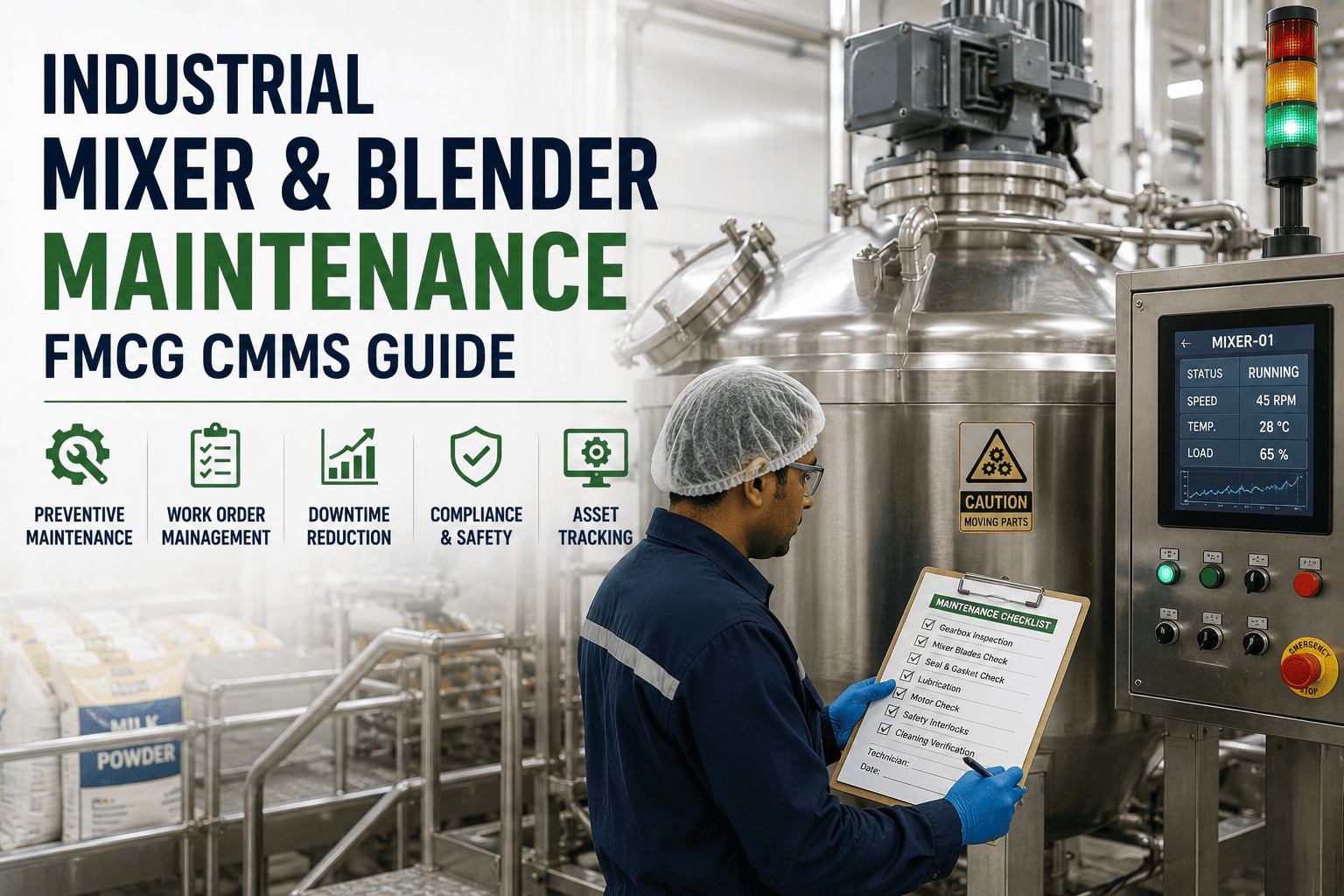
One ammonia compressor failure during a long weekend can wipe out more than $1 million in frozen inventory before anyone notices the discharge pressure climbing. In industrial refrigeration, the compressor is the single point of failure that the entire cold chain depends on — and yet the most common maintenance approach is still "wait for it to alarm." This page lays out the oil sampling, vibration baseline, slide-valve drift, and seal-monitoring cadence that catches degradation 6 weeks early on screw, reciprocating, and centrifugal compressors — and it covers the PSM, OSHA 1910.119, and IIAR documentation requirements that protect both the product and the people working around an R-717 system. Start a free trial to build your refrigeration compressor PM programme in Oxmaint, or book a demo and we'll map your specific compressor mix.
$1M+
Inventory at Risk Per Failure
Frozen product value at risk from a single ammonia compressor failure on a weekend with no PM visibility
6 wks
Early Warning From Oil Analysis
Typical lead time that quarterly oil sampling gives ahead of bearing, varnish, or wear-related failure events
70%
Failures Linked to Lubrication
Industry estimate of compressor failures whose root cause is lubrication, oil degradation, or oil-loss events
10,000
PSM Threshold (lbs of NH3)
OSHA 1910.119 PSM threshold for ammonia — most cold storage and FMCG refrigeration sites cross it easily
What Industrial Refrigeration Compressor Maintenance Means
Industrial refrigeration compressor maintenance is the structured PM and condition-monitoring programme for screw, reciprocating, and centrifugal compressors that drive the refrigeration cycle on ammonia, CO₂, or HFC systems. It covers oil sampling and oil-loss control, vibration analysis, slide-valve and capacity-control verification, suction/discharge pressure and temperature trending, mechanical seal inspection, and the IIAR and OSHA PSM documentation that goes with every action on a covered ammonia system.
Unlike general industrial compressors, refrigeration compressors live with a corrosive refrigerant, a regulated chemical, and an inventory load behind them — every PM action carries both a reliability case and a safety case. Start a free trial to put your compressor PM programme on a defensible footing.
The 6 PM Pillars Every Refrigeration Compressor Programme Needs
Pillar 01
Oil Sampling & Analysis
Quarterly lab analysis for viscosity, TAN, wear metals, water, and varnish potential. The single most predictive PM action on screw and reciprocating ammonia compressors.
Pillar 02
Vibration Baseline & Trend
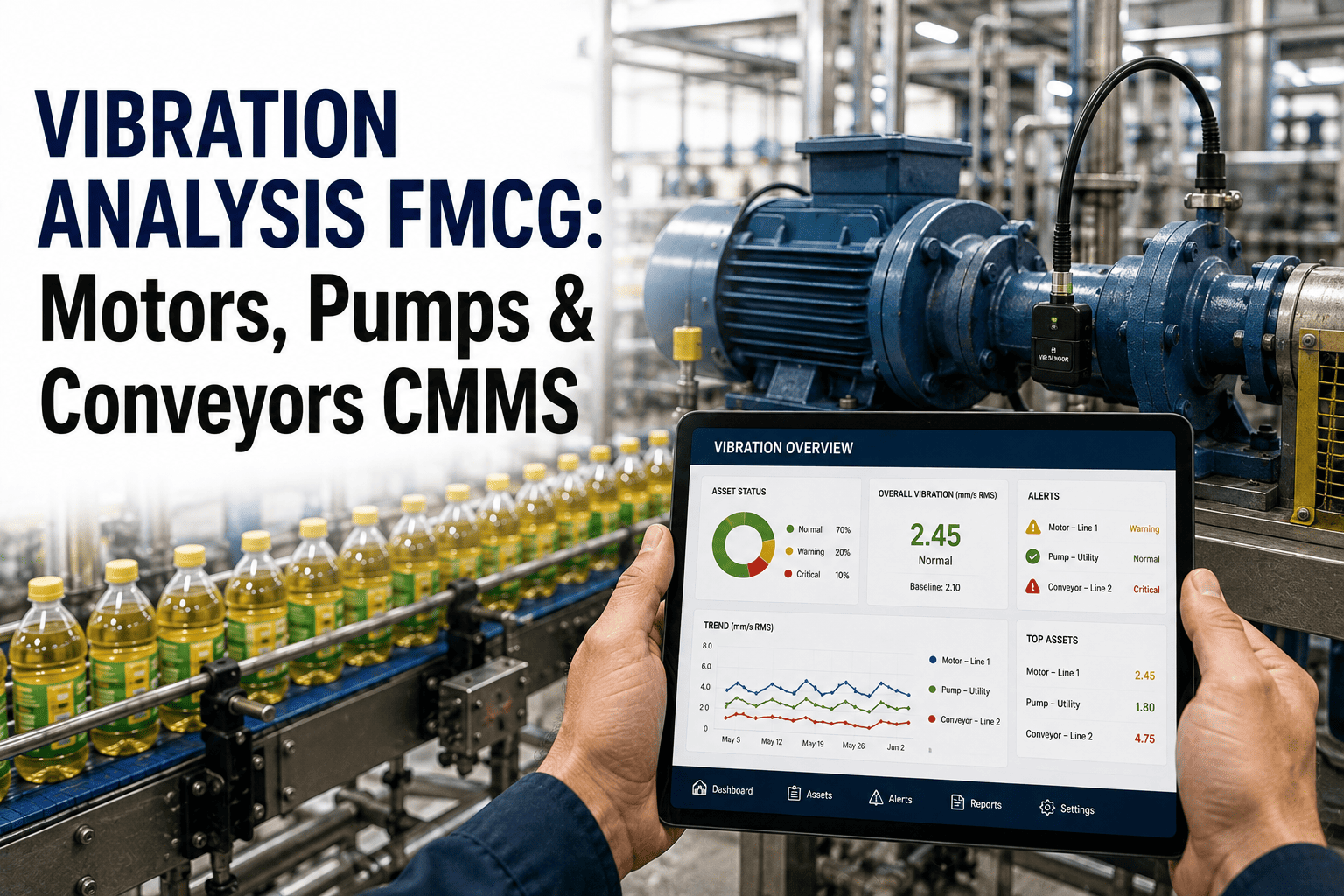
Monthly vibration readings at motor and compressor bearings. Drift from baseline signals bearing wear, misalignment, or rotor damage 4-8 weeks ahead of failure.
Pillar 03
Slide-Valve and Capacity Control
On screw compressors, slide-valve position vs commanded load tells the truth about varnish, hydraulic actuator wear, and oil degradation specific to ammonia service.
Pillar 04
Oil Separator & Coalescer Service
Coalescing filter integrity, oil sight-glass level between min and max, oil drain and charge per OEM. Most chronic oil-loss events trace back to coalescer installation error.
Pillar 05
Mechanical Seal & Shaft Inspection
Open-drive compressors leak ammonia at the shaft seal as the seal wears. Documented seal inspection, seal-pot oil level, and leak survey on a fixed cadence.
Pillar 06
PSM & IIAR Documentation
Mechanical integrity records under OSHA 1910.119 PSM, IIAR-2/4/6/9 compliance, MOC for any compressor work, and incident investigation trails — all auditable.
Together these six pillars convert a refrigeration compressor from a black-box single point of failure into a fully instrumented, predictive asset. Book a demo to see all six pillars on your specific compressor models.
Where Refrigeration Compressor Programmes Quietly Fail
!
Oil Topped Off Without Investigation
Maintenance adds oil weekly to keep the sight glass up. Nobody flags it as a coalescer or check-valve problem. Real failure is now 60 days away.
!
Slide-Valve Drift Ignored Until Capacity Fails
Screw compressor shows 100% load demand but slide valve sits at 80%. Varnish buildup, oil degrading — the signal was visible for weeks before the trip.
!
Oil Sampling Skipped Under Production Pressure
Quarterly oil analysis deferred for two cycles. Wear metals climb, TAN rises, but no lab report flags the issue. Failure arrives at the worst possible moment.
!
PSM Mechanical Integrity Gaps
OSHA PSM audit finds incomplete inspection records on covered ammonia compressors. RAGAGEP and IIAR references not documented per asset.
!
Vibration Trend Lost in Spreadsheets
Vibration readings collected but never trended. Baseline forgotten. A bearing climbing from 0.2 to 0.5 in/s goes invisible until it seizes.
!
$1M+ Inventory Loss From One Weekend Trip
No remote alarm, no rotation to backup compressor, no escalation. By Monday, a freezer of frozen product is condemned and an insurance claim is open.
Each of these six failure modes has a leading indicator that a structured CMMS would have caught weeks earlier — Oxmaint converts every one of them into a tracked work order with an audit trail. Start a free trial to see how that runs on your compressors.
How Oxmaint Operationalises Refrigeration Compressor Maintenance
Compressor Asset Registry With PSM Tags
Every screw, reciprocating, and centrifugal compressor registered with serial, refrigerant, oil type, OEM PM interval, and PSM coverage flag for OSHA mechanical integrity tracking.
Oil Sampling and Lab-Report Workflow
Quarterly oil sample scheduled per asset. Lab report attached, wear metals trended, and out-of-spec values raise a critical work order with mechanical-integrity flag.
Slide-Valve Drift and Capacity Logging
Slide-valve position vs commanded load captured on a mobile checklist. Drift greater than the threshold auto-creates a varnish investigation work order.
Vibration Baseline & Trend
Monthly vibration readings logged per asset, trended against baseline, escalated if rising. Bearing wear caught 4-8 weeks ahead of failure.
Oil-Loss Investigation Trigger
Every oil top-off logged with quantity and reason. Repeated top-offs auto-create a coalescer-check work order rather than disappearing into a topped-up sight glass.
PSM & IIAR Audit Pack
One-click export of mechanical integrity records, PM history, MOC trail, and incident reports for every PSM-covered compressor — OSHA-defensible and IIAR-aligned.
The result is a refrigeration programme where the cold chain is protected by data, not by hope — and where the PSM auditor leaves with a clean record. Start a free trial to see your compressors run on this model.
Reactive vs. Predictive Refrigeration Compressor PM
| Performance Metric |
Reactive Programme |
Predictive Programme on Oxmaint |
| Oil sampling cadence |
Annual, often skipped |
Quarterly with lab-report retention |
| Vibration trend |
Not collected or not trended |
Monthly readings vs baseline, auto-escalation |
| Slide-valve drift detection |
Discovered after capacity loss |
Caught on shift checklist 4-8 weeks early |
| Oil top-off behaviour |
Routine, untracked |
Every top-off triggers root-cause WO |
| PSM mechanical integrity |
Audit-driven catch-up |
Continuous record per asset |
| Mean time between failures |
12-24 months on critical units |
5+ years typical post-deployment |
| Weekend / overnight risk |
Single failure = $1M+ inventory loss |
Early-warning alerts, backup rotation triggers |
| Audit defence (OSHA PSM, IIAR) |
Scrambled paper records |
One-click audit pack by asset |
Documented ROI from Predictive Refrigeration Maintenance
3-5×
MTBF Improvement
Increase in mean time between failures on critical ammonia compressors after 12 months of structured oil and vibration trending
$1M+
Inventory Loss Avoided
Single weekend-failure inventory loss prevented through early-warning alerts and structured backup-rotation triggers
40-60%
Lower Repair Spend
Reduction in emergency repair costs as failures shift from catastrophic to scheduled corrective work orders
100%
PSM Audit Defensibility
Mechanical integrity records, MOC, and IIAR-aligned documentation retrievable for any OSHA PSM audit in one click
...which is why reliability and refrigeration managers who move from reactive to predictive PM see both insurance exposure and energy cost drop in the first year — start a free trial to begin trending oil and vibration on your critical units, or book a demo and we'll walk through the lead-time math with your specific failure history.
Frequently Asked Questions
What does quarterly oil analysis actually catch on an ammonia screw compressor?
Quarterly oil analysis tracks viscosity drift, total acid number rise, water content, wear metals such as iron, copper, chrome, and aluminium, plus varnish potential and oxidation. In ammonia service, oil also seals the rotors, so degradation directly impacts capacity. Rising iron and chrome typically signal bearing or rotor wear 4-8 weeks ahead of audible failure, and elevated TAN points to oil that needs replacement before it varnishes the slide-valve hydraulic system.
How does Oxmaint support OSHA PSM mechanical integrity on covered ammonia systems?
Each PSM-covered compressor is flagged in Oxmaint with its refrigerant inventory contribution, RAGAGEP reference, and required mechanical integrity cadence under OSHA 1910.119(j). All inspections, tests, oil reports, MOCs, and corrective work orders are stored against the asset record. When OSHA arrives, the plant generates a complete mechanical integrity package for any covered asset in seconds — every inspection, every signature, every corrective action, organised by date and reference.
Can Oxmaint differentiate PM cadence between screw, reciprocating, and centrifugal compressors?
Yes. Each compressor type has a distinct PM template in Oxmaint. Screw compressors get slide-valve drift checks, coalescer integrity, and oil-flow verification. Reciprocating compressors get valve plate, piston ring, and rod-packing inspections. Centrifugal compressors get impeller balance, seal-gas system, and surge-margin checks. The PM library aligns to each manufacturer's recommended intervals plus IIAR guidance, so the cadence matches the physics rather than a generic CMMS template.
How does Oxmaint trigger backup compressor rotation before a failure?
When trending data — vibration rise, oil wear metals, slide-valve drift, suction superheat anomaly — crosses an early-warning threshold, Oxmaint can raise a critical work order to bring the standby compressor online and rotate the at-risk unit out for inspection. Combined with a remote alarm policy, this means the plant takes preventive action on a weekday rather than discovering a tripped compressor on Monday morning behind a freezer of condemned product.
Stop Risking a Million-Dollar Inventory Loss on a Single Compressor
Catch Refrigeration Compressor Failures 6 Weeks Before They Stop the Cold Chain
See how predictive oil sampling, vibration trending, and slide-valve monitoring protect your inventory, your insurance position, and your PSM audit record.
- Quarterly oil analysis trended per compressor and per oil type
- Vibration baseline and capacity-control drift caught early
- OSHA PSM and IIAR mechanical integrity, one-click audit-ready
Trusted by cold storage and FMCG operations managing 10,000+ refrigeration assets across multi-site portfolios.