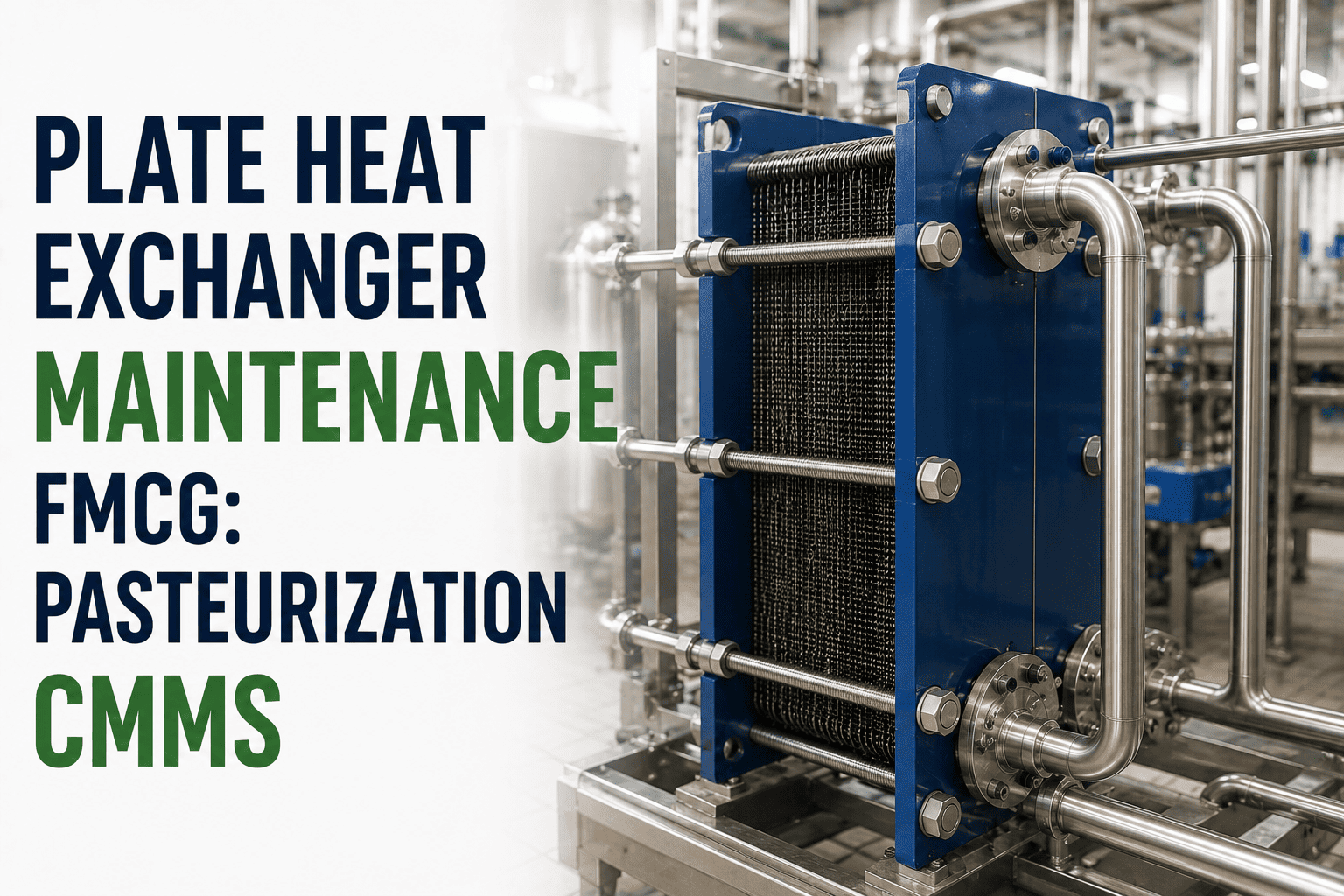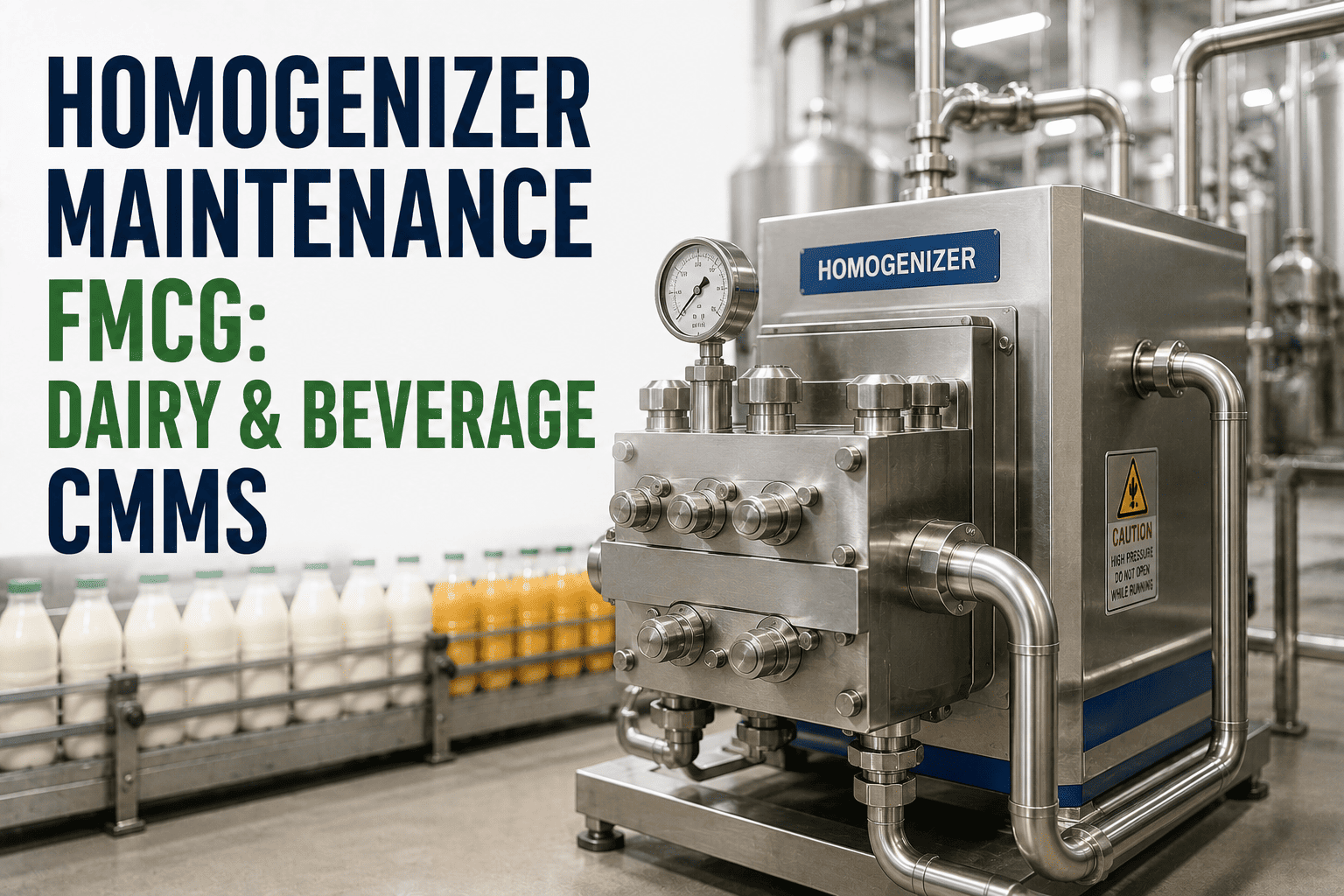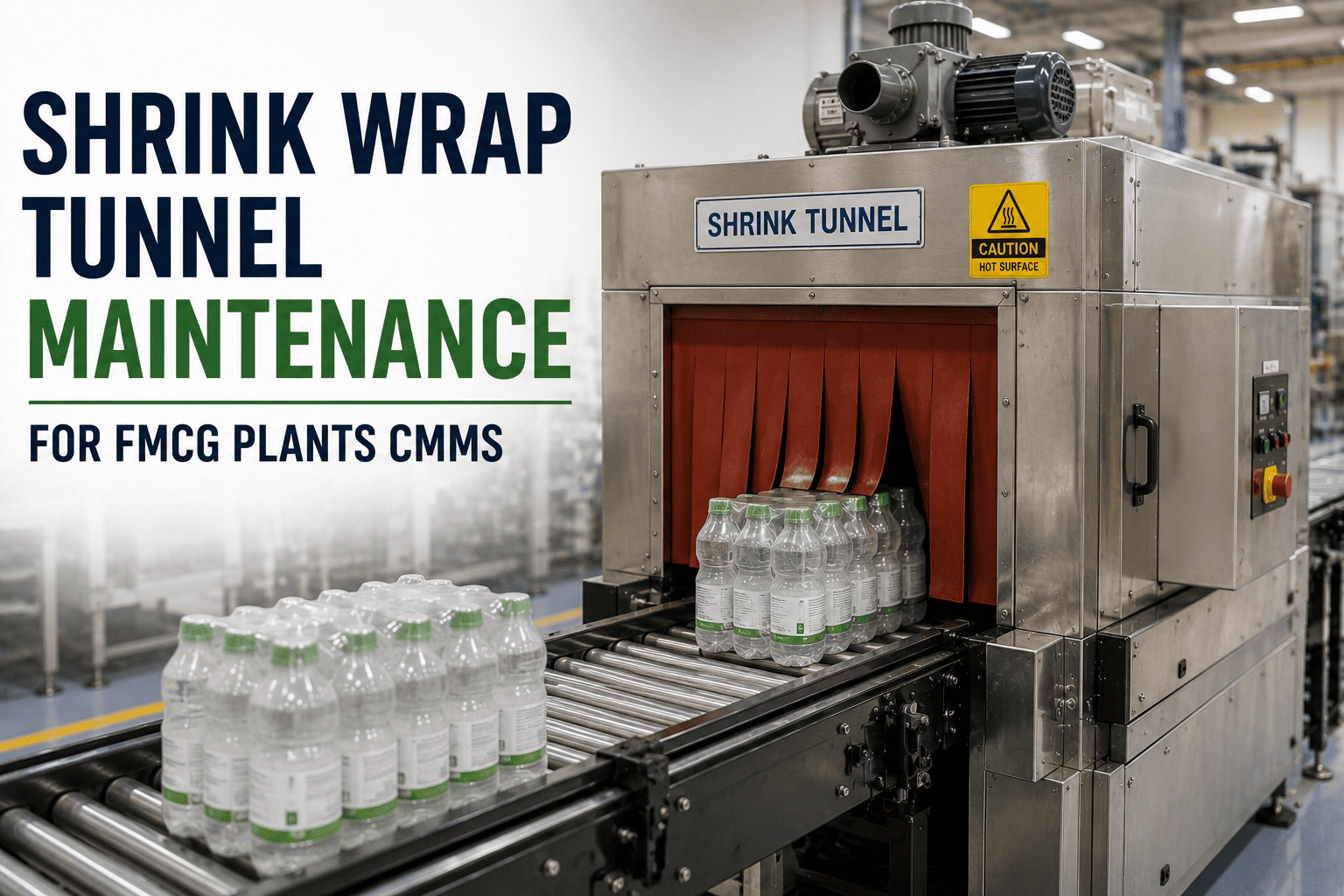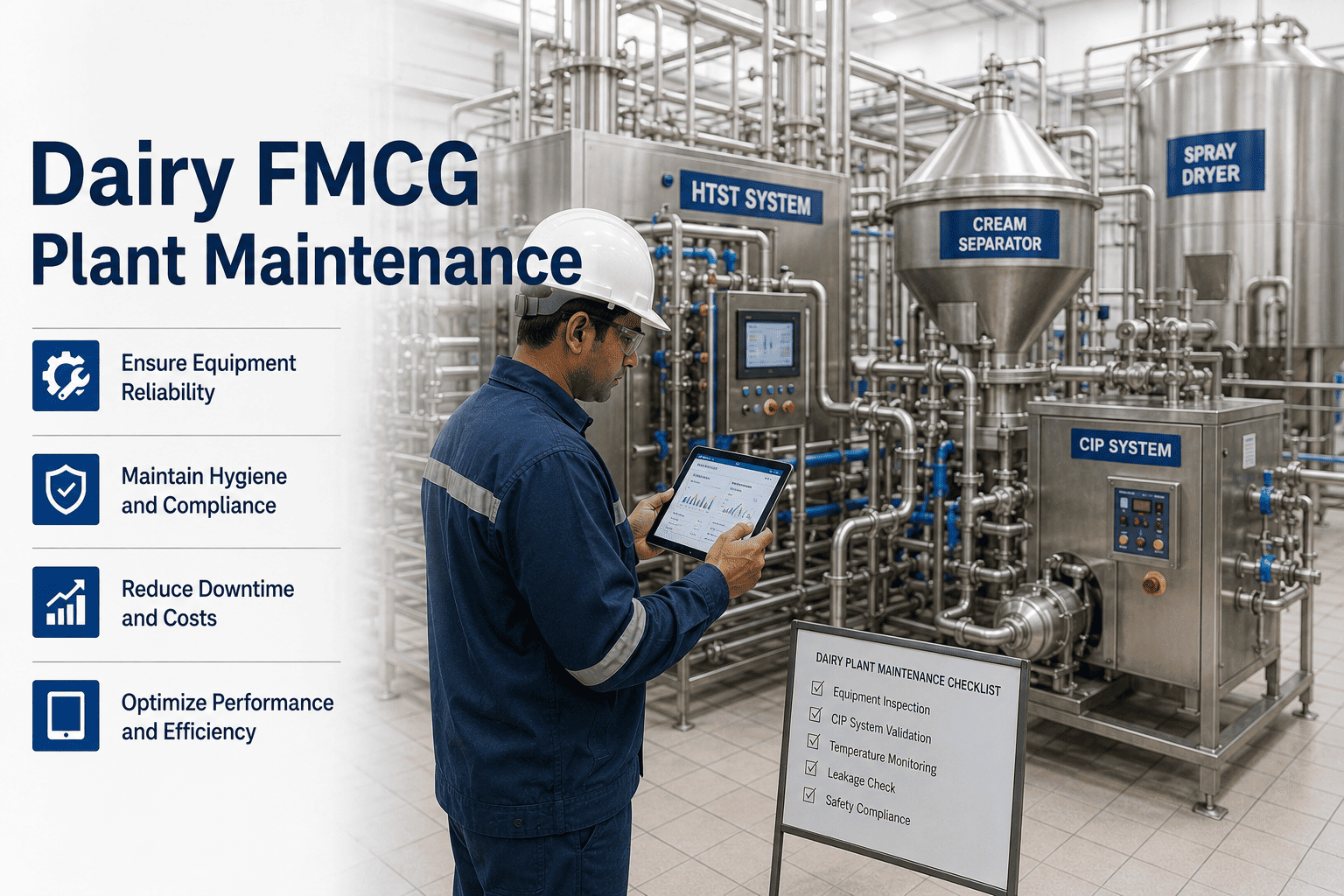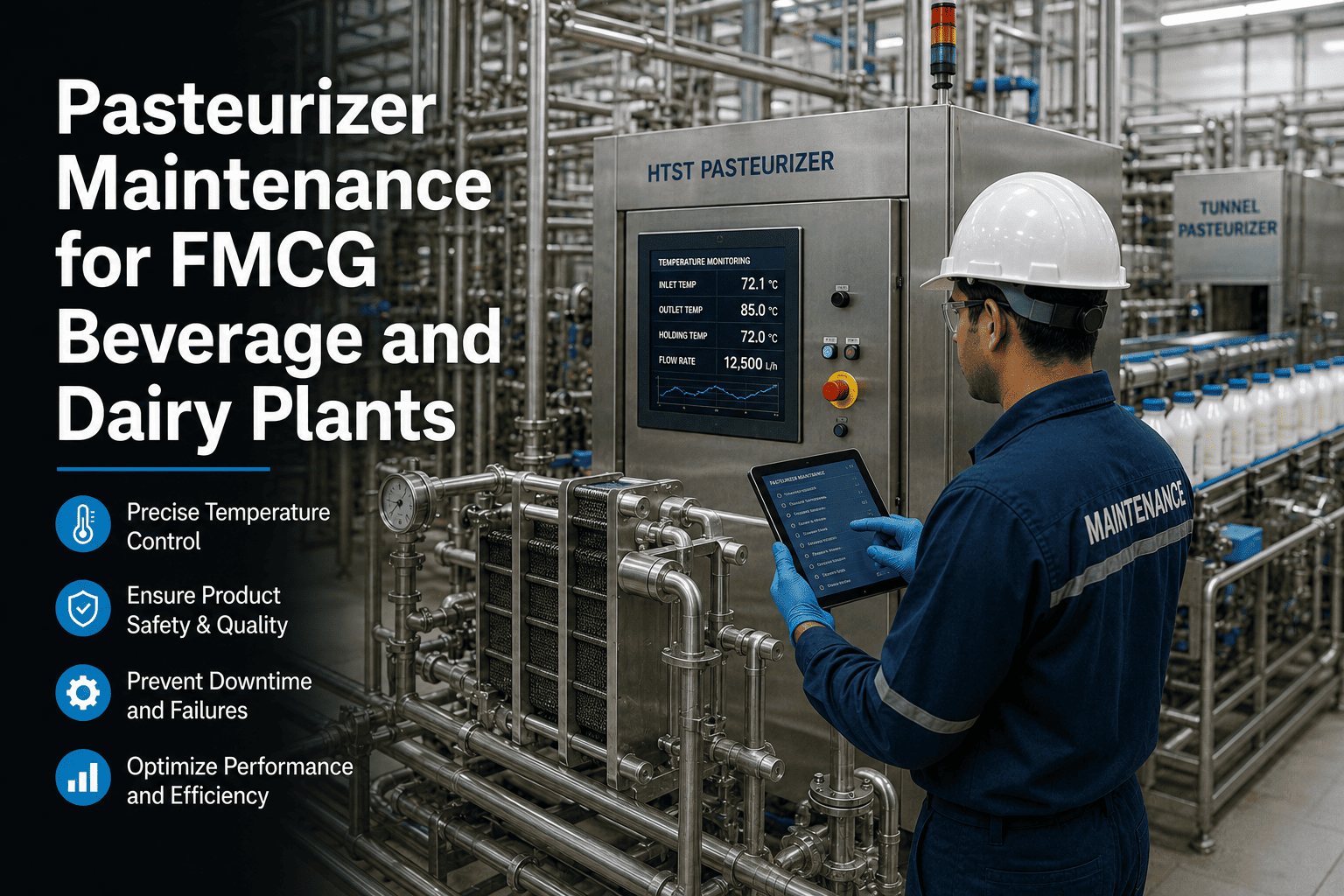
In a dairy or beverage plant, the pasteurizer is the asset that decides whether the product is safe. A high-temperature short-time (HTST) plate pasteurizer holds milk at 72 degrees C for 15 seconds; a tunnel pasteurizer brings beer or juice through 60 to 72 degrees C across a controlled belt; UHT systems push the same product to 135 to 150 degrees C for a few seconds. Each technology depends on plate-heat-exchanger surface area, flow uniformity, holding-tube residence time, and divert-valve response — and each is degraded by the single most expensive maintenance problem in dairy and beverage processing: fouling. Plate-heat-exchanger fouling reduces heat transfer efficiency, distorts temperature profiles, and increases energy cost. Studies of HTST milk pasteurization show fouling can raise heating-section temperature by approximately 1 degree C between cleaning cycles, with consequential downtime for clean-in-place (CIP) intervention. Across US Grade A PMO operations, EU EHEDG-certified hygienic plants, and GCC dairy operators serving the Gulf, the maintenance discipline is identical: the pasteurizer that fails its CIP verification or its FDA divert-valve check stops the line until both are corrected. Operations leaders start a free trial or book a demo to see how Oxmaint integrates pasteurizer PMs, CIP records, and PMO/EHEDG documentation in one workflow.
Hold the Heat-Treatment Window. Eliminate the Fouling-Driven Downtime.
HTST plate pasteurizers, tunnel pasteurizers, and UHT systems treated as instrumented thermal workflows — with temperature trace, divert-valve response, and CIP cycle records anchored to the asset for US PMO, EU EHEDG, and Gulf hygienic operations.
What Pasteurizer Maintenance Actually Requires
Pasteurizer maintenance is the structured set of asset-linked PMs, calibration verifications, divert-valve function checks, plate-heat-exchanger inspections, and CIP cycle records that together hold the heat-treatment window for every product unit through the system. The core asset is the plate heat exchanger (PHE) in HTST operations, the conveyor and water-spray zones in tunnel pasteurizers, or the tubular exchanger in UHT systems. Each is paired with a holding tube (or holding zone), a flow-diversion valve that redirects under-temperature product back to balance, a temperature-recording controller validated annually under US FDA PMO requirements, and a CIP system that recovers heat-transfer surface between production runs.
Where most dairy and beverage plants lose value is in treating these systems as independent assets. The plate exchanger fouls; the temperature recorder drifts; the divert valve sticks; the CIP cycle runs at the wrong concentration — each logged separately, each tracked by a different team, none of them aware that the same plant-water hardness or the same SKU mix is driving all four. A working program treats the pasteurizer as one instrumented workflow with the PHE, controller, divert valve, and CIP all tied to a single asset record. Teams that start a free trial can configure their first pasteurizer asset tree in under an hour.
The Six Pasteurizer System Classes Across Beverage and Dairy
FMCG beverage and dairy operations across North America, Europe, and the Gulf converge on six pasteurizer system classes. Each has its own maintenance pattern, its own dominant failure mode, and its own regulatory documentation requirement.
Each system class needs its own asset record, PM cadence, and failure history. Book a demo to see Oxmaint's pasteurizer module configured against your specific HTST, tunnel, or UHT installation.
Where Pasteurizer Maintenance Programs Actually Break Down
Dairy and beverage plants rarely fail audits because their teams do not understand pasteurization. They fail because the four sub-systems — PHE, controller, divert valve, CIP — live in separate workflows. Four patterns explain almost every recurring issue.
Each pattern is a workflow integration gap that a unified pasteurizer asset tree closes — start a free trial to see how Oxmaint ties PHE, controller, divert valve, and CIP into one record.
How Oxmaint Operationalizes Pasteurizer Maintenance
Oxmaint's pasteurizer module is built so the PHE, holding tube, controller, divert valve, and CIP skid all share one asset record, one PM cadence calendar, and one compliance audit trail — aligned with US FDA PMO, EU EHEDG, and Gulf GSO hygienic standards.
Six gaps closed in one pasteurizer workflow — book a demo to map the configuration to your specific HTST, tunnel, or UHT installation.
Siloed Pasteurizer Tracking vs Oxmaint Unified Workflow
The difference between treating the PHE, controller, divert valve, and CIP as four separate work orders versus one instrumented asset shows up in every maintenance metric a plant supervisor tracks.
| Operational Dimension | Siloed System Tracking | Oxmaint Unified Workflow |
|---|---|---|
| PHE heat-transfer trending | Memory and impression | Calculated continuously from sensor data |
| Divert-valve function records | Paper form in binder | In-app log with timestamp |
| CIP cycle conformance | Cycle-completed flag only | Concentration + conductivity verified |
| Controller calibration visibility | Metrology spreadsheet | Asset record with due-date enforcement |
| Fouling-driven energy variance | Discovered in monthly energy bill | Trended in real time |
| PMO / EHEDG audit prep | 3 to 5 business days | Under one hour |
| Cross-asset failure detection | None — siloed work orders | Auto-pattern alerts |
Outcomes Reported by US, European, and Gulf Operators
Results from dairy and beverage plants across North America, Europe, and the GCC that adopted Oxmaint's pasteurizer workflow within the past 12 to 18 months.
Pasteurizer workflow modernization pays back inside one operational quarter — book a demo to model the recovery profile for your specific line.
Frequently Asked Questions
Does Oxmaint support US FDA Grade A PMO documentation requirements
How does the system handle EU EHEDG and 3-A Sanitary Standards compliance
Is the system configured for GCC and Saudi Arabia dairy regulatory requirements
Can Oxmaint integrate with our existing pasteurizer control system or PLC
Stop Letting Fouling and Paper Records Quietly Cost You Production
Oxmaint unifies the plate heat exchanger, holding tube, divert valve, temperature recording controller, and CIP skid into one instrumented asset record. Every fouling trend, every function check, every cycle verification, every calibration date captured and exportable — aligned with US FDA PMO, EU EHEDG, and Gulf GSO standards.
- HTST, tunnel, and UHT pasteurizer architectures supported
- US PMO · EU EHEDG & 3-A · GCC GSO compliance built in
- Tetra Pak, GEA, SPX Flow, and PLC integration ready