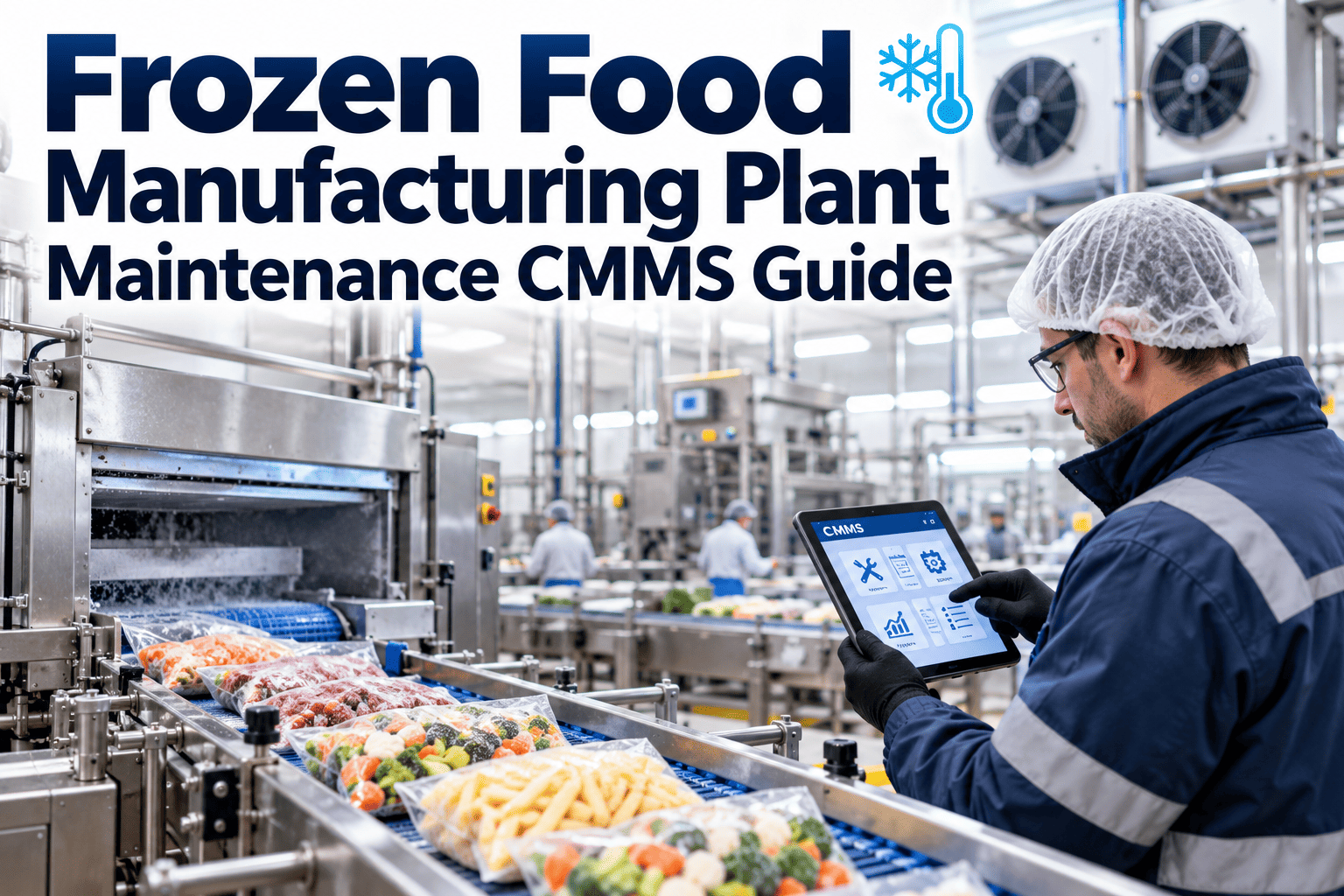
Pet food plants ask a lot from their equipment. Abrasive ingredients wear down screws and hammers, hot fat coats everything downstream, and food safety rules expect proof that finished product stays clean after the kill step. When an extruder drifts or a dryer fouls, the result is inconsistent kibble, wasted batches, and risk to product safety. This guide explains extruder, coating drum, and drying system maintenance for pet food manufacturers, and how Oxmaint maintenance management software organizes wear tracking, inspections, and compliance records.
Pet Food Manufacturing Plant Maintenance and CMMS Guide
What Makes Pet Food Maintenance Its Own Discipline
Pet food shares problems with human food plants but adds a few of its own. Raw materials are rougher, formulas are fat-rich, and finished product is often handled in large volumes.
Extruder Maintenance: A Wear Map From Feed to Die
The extruder is the heart of a kibble line and the most expensive machine to run poorly. Wear is gradual, but its effect on product shows early.
Wear indicators to record
- Tonnes processed since the last screw element or liner change
- Specific mechanical energy trend and main motor load at the same recipe and rate
- Throughput loss at constant screw speed
- Product density, size, and expansion variation
- Screw and barrel clearance measurements at planned inspections
Extruder Symptoms and Likely Maintenance Causes
| Symptom | Possible cause | Maintenance check |
|---|---|---|
| Falling output at the same settings | Worn screw elements or barrel liners increasing clearance | Measure clearance, review tonnage since last rebuild |
| Variable kibble size or shape | Die wear, knife dullness, or inconsistent feed | Inspect die inserts, knife condition, feeder calibration |
| High motor load or trips | Mechanical drag, blockage, or gearbox issue | Check gearbox, thrust bearing, and screw condition |
| Frequent die plugging | Cold spots, foreign material, or worn die surfaces | Verify heating, screens, and die inspection |
| Steam or water injection instability | Valve faults, fouled lines, or sensor drift | Check control valves, strainers, and flow meters |
| Ragged or fines-heavy product | Knife wear or incorrect knife-to-die clearance | Replace knives, set clearance, check hub and drive |
Count Tonnes, Not Weeks, on Extruder Wear Parts
Wear Part Tracking Table for Pet Food Lines
| Wear part | Main wear driver | Best tracking unit | Typical response |
|---|---|---|---|
| Screw elements | Abrasive formulas, high torque | Tonnes processed | Rebuild or replace on schedule |
| Barrel liners | Clearance growth, abrasion | Tonnes and clearance checks | Replace when limits are reached |
| Die plate and inserts | Erosion at the orifice | Run hours and product variation | Inspect, repair, or swap |
| Cutter knives | Contact with the die face | Run hours | Replace by schedule or condition |
| Hammer mill hammers and screens | Ingredient hardness | Tonnes ground | Rotate, replace, and balance |
| Spray nozzles | Fat build-up and abrasion | Run hours and coating variation | Clean, calibrate, or replace |
Dryer and Cooler Maintenance: Moisture, Airflow, and Fire Risk
Poor drying leaves kibble with uneven moisture, which affects shelf stability. Poor housekeeping in the dryer adds fire and contamination risk.
Dryer tasks
- Burner and combustion safety checks
- Fan, damper, and airflow balance verification
- Belt or conveyor tracking and wear
- Moisture and temperature sensor calibration
- Removal of accumulated product and fat dust in ducts
Cooler tasks
- Fan and bearing condition
- Airflow and filter cleanliness
- Discharge and conveyor alignment
- Prevention of condensation and drips onto product
- Inspection of seals, doors, and access hatches
Coating Drum, Fat, and Palatant System Maintenance
Coating is where cost and palatability meet. Inaccurate dosing wastes expensive fat and palatant or leaves product below specification.
Supply
Check tanks, heated lines, and filters for build-up or temperature loss.Metering
Calibrate pumps, flow meters, and load cells against known weights.Application
Inspect nozzles, spray patterns, and drum flights for uniform coverage.Verification
Record coating results and tie deviations to specific equipment tasks.Common coating problems
- Uneven fat coverage from partly blocked nozzles
- Pump seal leaks in heated fat circuits
- Temperature drift that changes viscosity and spray pattern
- Worn drum flights or liners that alter tumbling action
- Build-up of oily residue that attracts dust and promotes spoilage
Hygienic Zoning: Keeping the Raw Side and Finished Side Apart
Pathogen control for pet food often hinges on preventing recontamination after the kill step. Maintenance staff move between areas, so rules must be explicit.
Raw or pre-kill side
- Dedicated tool sets and colour coding
- Clean-down before moving to other zones
- Dust control on grinding and mixing equipment
- Pest and spill management around receiving
Finished or post-kill side
- Controlled access and footwear rules
- Repair of leaks, condensation, and roof drips
- Sanitary design checks on conveyors and coolers
- Verification before restart after any intrusive work
Work orders can include zone, tool set, and restart verification so the controls travel with the task.
Build Zone Rules and Verification Into Every Work Order
Grinding, Mixing, and Dust Control
Hammer mills and mixers feed everything downstream. Imbalance, worn hammers, or blocked screens create vibration and inconsistent particle size.
- Inspect hammer wear and rotate or replace as a set to keep the rotor balanced
- Check screens for holes, deformation, and blockage
- Monitor bearing temperature and vibration on mill drives
- Maintain dust collection filters, ducts, and explosion protection devices where installed
- Follow a documented dust hazard analysis and housekeeping routine for combustible dust
- Calibrate batching scales and liquid addition systems on a fixed schedule
Packaging and Finished Goods Handling
Pet food packaging runs at volume and often in large formats. Seal failures and weight errors reach consumers quickly.
Weighing
- Load cell and scale calibration
- Feeder gate and vibration condition
- Checkweigher verification
Bagging and sealing
- Sealing jaw and heater condition
- Film tracking and forming tube wear
- Gusset and sewing equipment for large bags
Inspection and handling
- Metal detector or X-ray verification
- Conveyor and palletizer inspection
- Label and coding equipment checks
Reactive Versus Planned Pet Food Maintenance
Run until it fails
- Screws replaced after output has already dropped
- Knife changes triggered by poor product appearance
- Coating problems found after quality complaints
- Hygiene repairs delayed until an audit
Planned and tracked
- Wear parts replaced by tonnage and measured clearance
- Knife changes scheduled by run hours
- Coating dosing calibrated and verified on a routine
- Hygiene repairs raised, assigned, and closed on a schedule
Preconditioner and Feeder Maintenance Before the Extruder
Many extruder complaints begin upstream. If feed rate or conditioning is unstable, even a perfect screw cannot produce uniform kibble.
Feeders
- Calibrate loss-in-weight feeders against certified weights
- Inspect screws, hoppers, and agitators for build-up
- Check motor, gearbox, and load cell condition
- Review feed rate stability in the control system
Preconditioners
- Inspect paddle wear and shaft seals for leaks
- Check steam and water injection nozzles for scale or blockage
- Verify temperature sensors and retention time settings
- Clean steam strainers and traps on the supply line
Recipe Changes and Their Effect on Equipment Wear
Formula changes alter how hard the line works. Higher fibre, mineral, or bone content can raise abrasion and torque. Use work order history to see the effect.
Foreign Material Control During Maintenance Work
Metal shavings, worn knife fragments, and loose fasteners are real risks around open product. The work order should account for every part removed.
- Count and record tools and small parts taken into production areas
- Inspect screens, magnets, and detectors after intrusive repairs
- Replace missing or damaged fasteners before restart rather than reusing worn ones
- Record wear parts that show chipping or cracking so supplier issues can be raised
- Use photos to document guard and cover reinstallation
Responding to an Extruder Stop Without Losing the Lesson
When the extruder trips, the aim is to restart safely and learn something from the event.
Make safe
Isolate the equipment and confirm the stored energy is released.Record the facts
Log alarms, load, temperature, and recipe at the moment of the stop.Find the cause
Check feed, steam, die, gearbox, and drive, in that order.Repair and verify
Fix the fault, restart, and confirm stable load and product quality.Prevent repeats
Add a preventive task or adjust a threshold if the cause may return.Housekeeping Routines That Reduce Fire and Contamination Risk
Fat, dust, and heat are a hazardous mix. A short routine, done consistently, is worth more than an occasional deep clean.
Each shift
- Remove visible accumulation near dryers and burners
- Check for leaks around fat lines
- Verify fire detection panels show normal
Weekly
- Clean dryer access areas and duct inspection points
- Inspect dust collector differential pressure
- Check housekeeping around mills
Monthly or as required
- Test fire protection and alarm functions
- Inspect explosion vents and isolation devices
- Review incident and near-miss reports
Spare Parts Strategy for Abrasive Process Equipment
Wear parts for extruders and mills are expensive and sometimes slow to arrive. Stock decisions should reflect both cost and the length of the stop if the part is missing.
- Hold a full spare set of knives and die inserts for each critical extruder
- Plan screw element and liner rebuilds with the supplier well before limits are reached
- Keep hammer sets, screens, and bearings for each mill on the shelf
- Stock nozzles, seals, and gaskets for heated fat circuits
- Review usage monthly so slow-moving items do not tie up cash
Handover Notes That Keep Wear Data Honest
Wear tracking only works when counters and notes are accurate. Make the handover a short, standard step.
- Enter the tonnes or run hours reading whenever a wear part is inspected or changed
- State whether a part was replaced, rotated, or rebuilt, and who carried out the work
- Note any unusual noise, temperature, or product change seen before the repair
- Flag parts that wore out earlier than expected so the cause can be reviewed
Setting Up Oxmaint for a Pet Food Plant
The setup should mirror the physical line so the team can find equipment and history in seconds.
- Build the asset tree by line, then equipment, then wear components.
- Record counters such as tonnes processed or run hours for each wear part.
- Create preventive tasks for lubrication, inspections, and calibration.
- Add mobile inspections for dryers, coaters, and hygiene-critical equipment.
- Link spare parts, minimum stock, and suppliers to the assets that use them.
- Use reports to compare wear life by recipe and identify costly repeat failures.
KPIs for Pet Food Maintenance Teams
Pet Food Maintenance FAQs
How should extruder wear be tracked?
Record tonnes processed, motor load trends, and clearance measurements for each wear part in Oxmaint.
Why does coating accuracy belong in maintenance?
Pumps, meters, nozzles, and heating determine dosing. Drift in any of them changes coating weight.
Can a CMMS support animal food safety records?
Yes. It can store inspections, calibrations, repairs, and sign-offs that support preventive control documentation.
What dryer checks matter most?
Combustion safety, airflow balance, sensor accuracy, and removal of accumulated fat and dust are the main priorities.
Can I review a pet food workflow with a specialist?
Yes. Book a demo to walk through extruder, coating, and hygiene tasks.