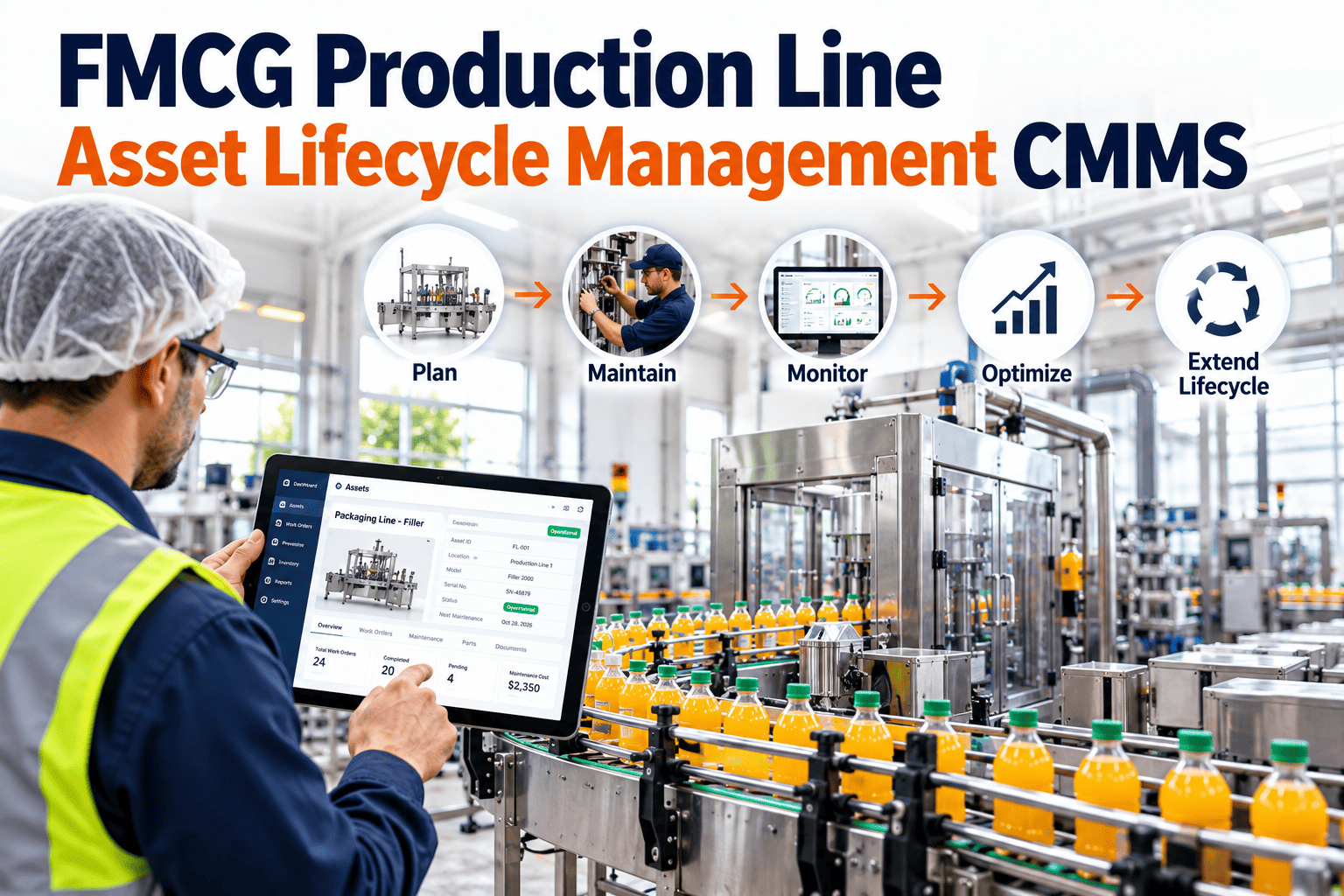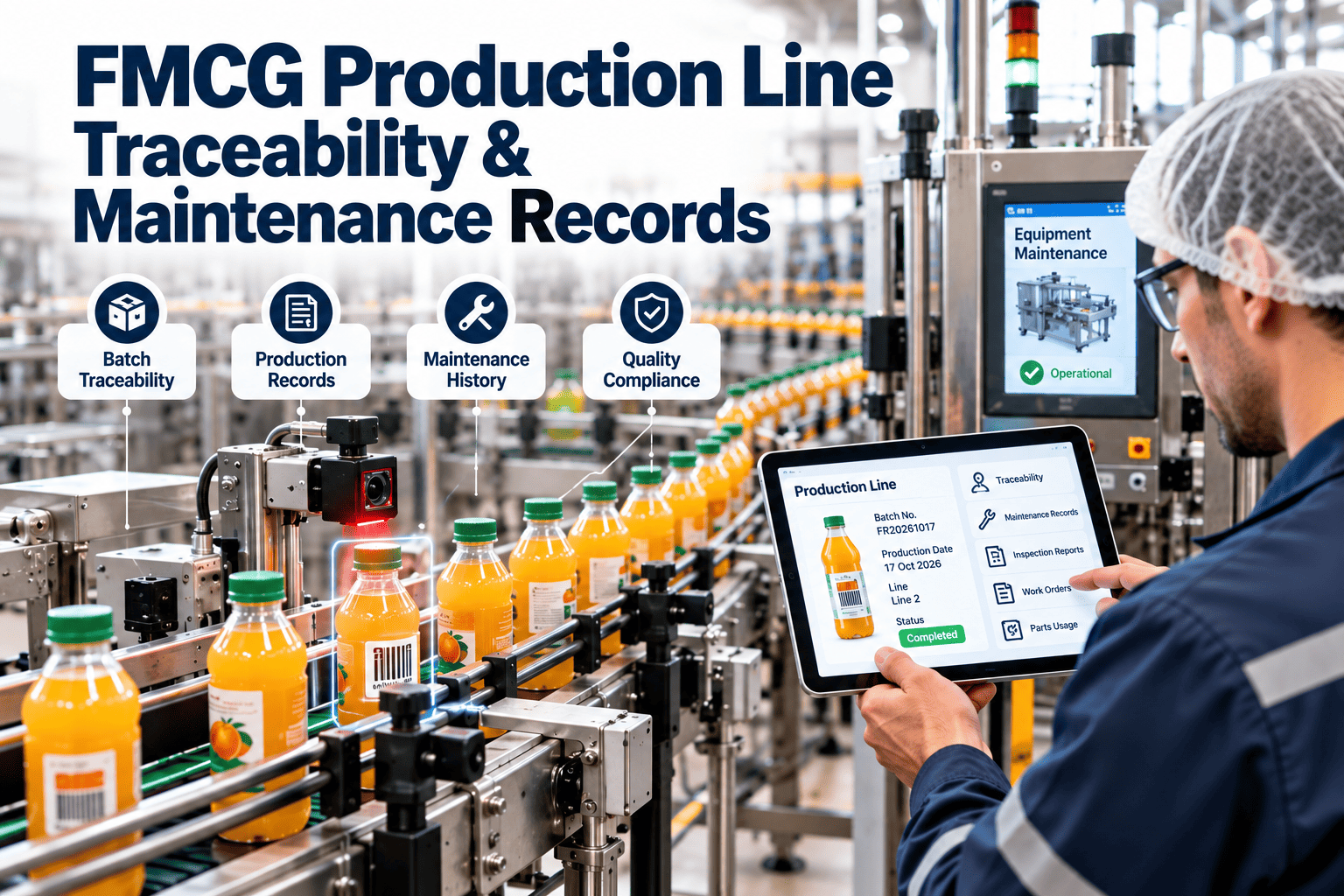
Tissue converting looks simple from the outside: unwind a large parent reel, emboss, perforate, rewind, cut, and wrap. In practice it is a high-speed process where a worn embossing roll, a dull saw blade, or a drifting glue applicator quickly becomes scrap and complaints. Paper dust makes every machine harder to keep reliable. This guide covers converting line maintenance, embossing roller care, and rewinder PM, and shows how Oxmaint maintenance management software helps tissue and paper products plants plan and record that work.
Tissue and Paper Products Manufacturing Maintenance: Converting Line, Embossing Roller, and Rewinder CMMS
Where Tissue Converting Lines Actually Stop
Converting lines run fast, so even brief stops add up. The matrix below shows how the main failure causes tend to spread across line sections, as a planning aid.
Embossing Roller Maintenance: Surface, Pressure, and Alignment
The embossing section gives tissue its softness, bulk, and appearance. Roll condition decides whether that pattern stays consistent over time.
Inspect
Check pattern definition, rubber roll surface, and signs of cuts, flats, or hardening.Measure
Record roll diameter, hardness where applicable, and nip pressure at planned intervals.Decide
Compare readings against limits to choose cleaning, regrinding, or replacement.Correct
Regrind, replace, or realign the roll, and check bearings and loading system.Verify
Confirm pattern, ply bonding, and caliper on the first rolls produced.Embossing and lamination problems to watch
- Ply separation from poor glue transfer or uneven nip pressure
- Pattern ghosting or weak definition from worn engraved rolls
- Caliper variation across the web from roll deflection or misalignment
- Glue build-up on applicator rolls and anilox surfaces
- Dust packing into the embossing pattern and marking the sheet
Roll Defect to Maintenance Cause Table
| Defect on the finished roll | Possible cause | Inspection to schedule |
|---|---|---|
| Telescoped or loose roll | Tension variation, nip loading issue, or worn core or glue system | Tension control, winding drum, core and glue application |
| Incorrect sheet count | Perforation or counting sensor fault | Perforator blades, sensors, and counter calibration |
| Rough or fuzzy roll ends | Dull log saw blade or incorrect blade speed | Blade sharpness, grinding stones, alignment |
| Ply separation | Glue transfer fault or low nip pressure | Glue applicator, emboss nip, roll condition |
| Weak tail seal | Glue dosing issue or wrong timing | Glue pump, nozzles, and tail seal timing |
| Sheet tears or web breaks | Tension spikes, roll contamination, or sharp edges | Unwind brakes, rollers, and web path inspection |
Give Every Roll Defect a Maintenance Record
Rewinder PM: Tension, Vacuum, Blades, and Glue
The rewinder carries the highest mix of mechanical, pneumatic, and control tasks on the line. A structured PM prevents small drifts from becoming roll quality problems.
Web handling
- Roller alignment and bearing condition
- Tension sensors and drive response
- Nip roll pressure and surface wear
- Web path cleanliness
Perforation
- Blade sharpness and spacing
- Anvil roll condition
- Timing relative to the winding cycle
- Sensor and counter calibration
Vacuum and core handling
- Vacuum roll holes and seals
- Blowers, filters, and ducts
- Core loader operation
- Core glue application
Winding and discharge
- Winding drum surface and drives
- Torque and speed settings
- Log ejection mechanism
- Log transfer to the accumulator
Log Saw Maintenance: Cut Quality Starts With the Blade
The log saw cuts rolls to final width. A dull or misaligned blade creates dust, rough edges, and product that looks poor on the shelf.
Track blade life
Record logs cut or run hours at each blade change to set a data-based interval.Maintain the sharpening system
Check grinding stone wear, positioning, and dressing, as well as cooling or lubrication where used.Check the cut path
Inspect log hold-down, pushers, and guides for wear or misalignment.Control the dust
Maintain extraction ducts, hoods, and filters so dust does not return to the machine.Paper Dust: The Reliability Problem Hiding in Every Section
Tissue lines generate fine fibre and dust that settles on drives, sensors, and cabinets. It reduces reliability and creates a combustible dust hazard when it accumulates.
Unwind, Splicing, and Parent Reel Handling
Problems at the unwind create web breaks and tension swings that appear later as roll defects.
- Inspect brake discs, pads, and pneumatic controls for consistent torque
- Check reel lifts, chucks, and shaft handling equipment for wear and safety
- Verify splicing equipment, adhesive supply, and sensor timing
- Examine edge guides and web tracking devices for damage or contamination
- Record parent reel quality issues so supplier problems can be separated from equipment problems
Wrapping, Case Packing, and Palletizing
End-of-line equipment often limits the speed of the whole converting line. Small stops here can force the rewinder to slow down.
Bundle wrappers
- Film feed, jaws, and cutting knives
- Product collation and pusher timing
- Heat tunnel or sealing system
Case packers
- Case erecting and forming components
- Glue or tape system condition
- Sensors, pushers, and drives
Palletizers
- Gripper or layer forming condition
- Conveyors and rollers
- Safety fencing and light curtains
Format Changeovers: Change Parts and Settings
Changing roll diameter, sheet count, or core size involves many adjustable parts. Wear in these parts leads to poor repeatability.
| Changeover item | Maintenance concern | Record to keep |
|---|---|---|
| Core size sets | Wear on core loader parts and guides | Part condition and replacement date |
| Perforation blades | Blade wear and spacing for each format | Blade changes and settings |
| Embossing rolls | Handling damage and storage condition | Roll ID, hours used, and last inspection |
| Guides and wrapper tooling | Looseness and misalignment | Adjustment sheet and verification result |
Safety Tasks That Belong in the Maintenance Plan
Converting equipment contains nip points, rotating knives, and stored energy. Safety checks are maintenance tasks, not afterthoughts.
- Lockout and tagout steps attached to each task on rewinders, saws, and unwinds
- Regular testing of guards, interlocks, and light curtains
- Safe handling procedures for blades and grinding stones
- Inspection of fire detection and suppression systems where installed
- Records of training for tasks that carry high risk
Vacuum Systems: The Quiet Cause of Many Web Problems
Vacuum rolls, blowers, and ducts hold the sheet during perforating and transfer. Loss of vacuum rarely triggers an alarm, yet it changes how the web behaves.
Roll and seal condition
- Blocked or damaged vacuum holes
- Worn rotary seals and end plates
- Fibre packed in internal channels
Blowers and filters
- Impeller wear and bearing condition
- Filter loading and differential pressure
- Motor current compared to baseline
Ducting
- Leaks at joints and flexible sections
- Dust accumulation and blockage
- Damper setting and condition
Glue and Adhesive Systems for Ply Bonding and Tail Seal
Glue applies to plies, cores, and tails. Each point has its own dosing, temperature, and cleanliness requirements.
- Inspect glue tanks, filters, and pumps for contamination and wear
- Check applicator rolls and nozzles for build-up, damage, or uneven transfer
- Verify heating and temperature control where hot-melt adhesives are used
- Confirm timing between glue application and the winding or lamination event
- Clean on a schedule that matches adhesive type and line speed
- Record glue consumption trends, since a gradual rise can point to leaks or poor transfer
Drives, Servos, and Sensors on a High-Speed Line
Modern converting lines depend on synchronized drives. Electrical and control faults can look like mechanical problems unless history is clear.
Condition Monitoring Where It Pays Off
Not every machine needs sensors, but a few well-chosen measurements can warn the team before a failure interrupts production.
- Vibration readings on blower, saw, and large roll bearings
- Bearing temperature checks on rewinder and embosser drives
- Motor current trends on vacuum blowers and main drives
- Differential pressure across dust collection and cabinet filters
- Output and cut counters used to trigger blade and roll inspections
Spare Parts for Converting Lines
Critical converting spares are often specific to one machine builder and model. Lead time matters as much as price.
| Part group | Why it matters | Stocking approach |
|---|---|---|
| Saw blades and grinding stones | Directly affect cut quality and dust | Keep a rotating stock based on logged blade life |
| Perforation blades | Control sheet count and tear quality | Stock sets per format |
| Vacuum seals and filters | Failure disrupts web transfer | Hold common wear items on site |
| Bearings for large rolls | Long lead time and high downtime impact | Hold spares for critical positions |
| Sensors and encoders | Frequent small stops from failures | Hold a pool of common models |
Humidity, Web Moisture, and Seasonal Effects
Paper reacts to the air around it. Seasonal swings in humidity change how the web runs, so some problems return every year.
- Review air handling and humidity control in converting areas before seasonal extremes
- Expect different tension and glue behaviour when parent reels are stored in damp conditions
- Check static control equipment where dry conditions increase web cling and dust
- Use last year's work order history to see which sections struggled in the same season
- Adjust inspection frequency for rollers, vacuum systems, and sensors when conditions change
A Weekly Rhythm for Converting Maintenance
Using Oxmaint on a Tissue Converting Line
A converting plant benefits from structure: clear assets, predictable tasks, and a record of what actually fails.
KPIs for Tissue Converting Maintenance
| KPI | What to learn from it |
|---|---|
| Converting line availability | How much scheduled time the line is actually able to run |
| Stops per section | Which part of the line causes the most interruptions |
| Reject rolls by defect type | Link between machine condition and quality loss |
| Blade and roll life | Whether wear parts are replaced too early or too late |
| Dust-related stops | Effectiveness of cleaning and extraction tasks |
| Preventive task completion | Whether planned work actually gets done on time |
Tissue Maintenance FAQs
How often should embossing rolls be inspected?
Set the interval by output and pattern wear, then log each result in Oxmaint to refine it.
What causes frequent rewinder stops?
Common causes are tension variation, vacuum loss, dull perforation blades, glue issues, and dusty sensors.
Can a CMMS track blade life?
Yes. Record logs cut or run hours at each change, then compare against cut quality and stop data.
How do we manage paper dust in maintenance?
Include cleaning, filter changes, and inspection tasks in the PM plan, following your site dust hazard analysis.
Can I see a converting line example?
Book a demo to review asset setup and inspection workflows for tissue lines.