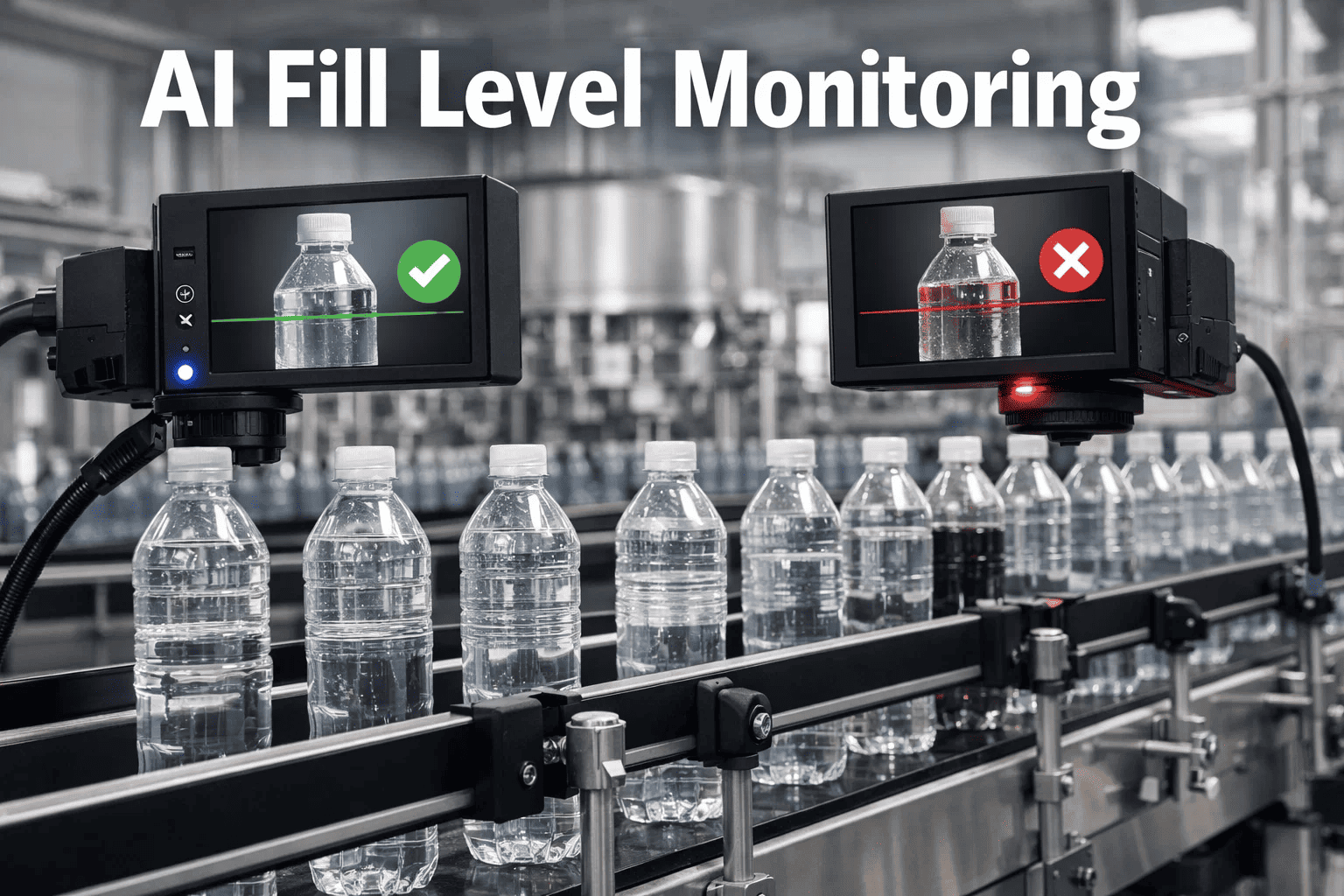
A single misaligned cap on a bottling line doesn't just create one defective unit—it creates a chain reaction. The retailer flags it. The consumer photographs it. The social media post goes viral before your quality team even knows there's a problem. In North American FMCG manufacturing, where a single product recall averages $10 million in direct costs and immeasurably more in brand damage, end-of-line inspection is the last gate between your production floor and a crisis. Yet most facilities still rely on manual visual checks performed by fatigued operators working twelve-hour shifts—human eyes scanning thousands of units per hour, missing defects at rates between 5% and 15%. Robotic end-of-line inspection eliminates that gap with machine vision, sensor-based verification, and AI-driven anomaly detection that never blinks, never tires, and documents every unit it evaluates. Book a demo to see how Oxmaint integrates inspection logs with defect ticketing and maintenance escalation.
This checklist is your operational audit tool—use it to evaluate your current end-of-line inspection capability, identify gaps, and build the system that keeps defective product off shelves and recalls out of your future.
What if every defective unit was caught, logged, and traced back to its root cause before it ever left your facility?
Oxmaint connects robotic inspection systems to your maintenance and quality workflows—turning every detected defect into an actionable ticket with full traceability. No more spreadsheets. No more manual logs. Just automated quality assurance that protects your brand and your margins.
Why End-of-Line Inspection Is the Most Critical Quality Gate
End-of-line inspection is the final verification point before finished goods enter the supply chain. Unlike in-process checks that catch issues during production, end-of-line inspection evaluates the finished product exactly as the consumer will receive it—packaging integrity, label accuracy, fill level, seal quality, date code legibility, and case count. When this gate fails, defective product reaches shelves, and the cost of correction multiplies by orders of magnitude at every step downstream.
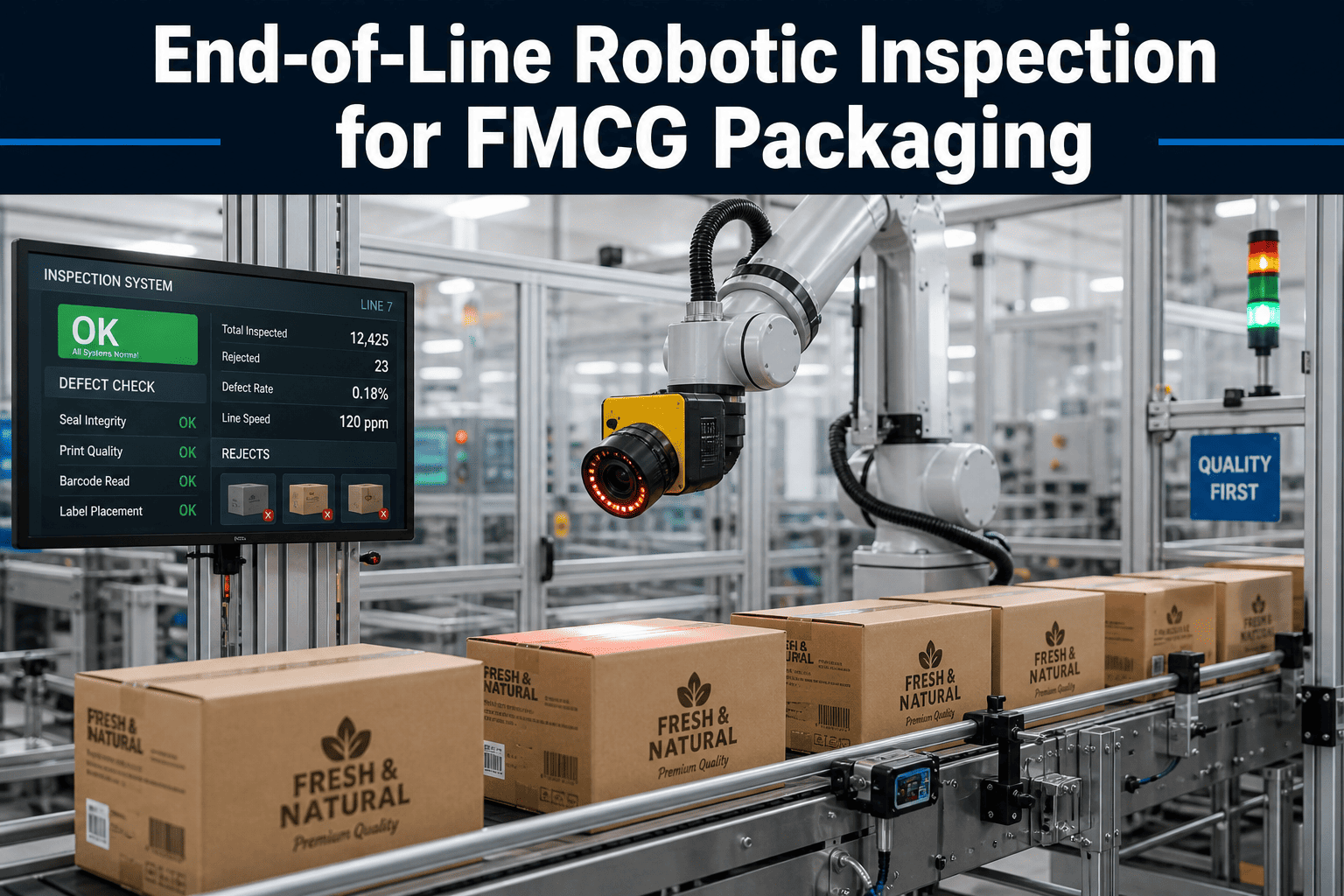
High-speed cameras and sensors capture 360° imagery of every unit—labels, caps, seals, fill levels, date codes, and packaging integrity evaluated in milliseconds.
Machine learning models classify each unit as pass, marginal, or fail against trained defect libraries. Anomaly detection flags deviations not yet in the defect catalog.
Failed units are automatically diverted. Every inspection result—pass or fail—is logged with timestamp, defect type, line position, and captured image in Oxmaint's inspection log.
Defect patterns trigger automatic maintenance tickets in Oxmaint—misaligned labeler generates a work order, degraded seal bar escalates to the maintenance queue before the shift ends.
| Inspection Element | Manual Inspection | Robotic Inspection | Impact on Recalls |
|---|---|---|---|
| Detection Rate | 85–95% on fresh shift, drops to 70% after 6 hours | 99.5%+ consistent across all shifts | 5–15x fewer escapes to market |
| Speed | Limited by human reaction time and fatigue | 1,200+ units per minute at full accuracy | No throughput-quality tradeoff |
| Documentation | Tally sheets, end-of-shift summaries | Image-level traceability per unit | Instant recall scope identification |
| Root Cause Linkage | Defect trends discovered days later in QA review | Real-time defect trending with auto-escalation | Equipment issues fixed before batch completion |
| Consistency | Varies by operator, shift, and day of week | Identical criteria applied to every unit, every time | Eliminates subjective pass/fail decisions |
Start logging every inspection result automatically — Sign Up Free
Critical Inspection Parameters Checklist
Use this checklist to audit your current inspection capability or to spec a new robotic inspection cell. Every item maps to a common recall trigger in FMCG manufacturing—check off each parameter your system currently covers and identify the gaps that put product at risk.
See how defect tickets auto-generate from inspection failures — Book a Demo
Defect Escalation Checklist
Configure your inspection system and Oxmaint defect ticketing to handle each severity level with the appropriate response. Check off each escalation path your system currently supports.
Equipment Maintenance Checklist
A robotic inspection system is only as reliable as its maintenance program. Dirty lenses, miscalibrated sensors, and degraded lighting produce false passes that send defective product to market—or false rejects that waste good product. Manage every task through Oxmaint's preventive maintenance scheduling.
Automate your inspection equipment PM schedule today — Sign Up Free
Every defect your inspection system misses is a recall waiting to happen. Every defect it catches without documentation is an opportunity wasted.
Oxmaint bridges the gap between detection and resolution—turning inspection data into maintenance tickets, root cause reports, and OEE improvements. Connect your vision systems, checkweighers, and metal detectors to one platform that logs, escalates, and resolves quality issues before they leave your facility.
KPI Benchmarks Checklist
Verify your inspection program meets these performance benchmarks. Check off each KPI your system currently tracks—unchecked items represent measurement gaps that need to be closed.
Track all your inspection KPIs in one dashboard — Book a Demo
Implementation Readiness Checklist
Use this checklist to verify readiness at each deployment phase—unchecked items are blockers that must be resolved before progressing.
Build your inspection program on Oxmaint's platform — Sign Up Free
Best Practices Checklist
The difference between an inspection system that prevents recalls and one that merely generates data comes down to operational discipline. Check off each practice your operation currently follows.
The Financial Case for Robotic Inspection
The ROI of robotic end-of-line inspection is driven by recall avoidance, scrap reduction, and labor reallocation. For a mid-size FMCG facility, the numbers build a compelling case.
Expert Perspective
- Connect inspection outputs directly to CMMS defect ticketing—never rely on manual escalation
- Track defect-to-ticket-to-resolution cycle time as a primary quality KPI
- Archive every inspection image with full traceability metadata for recall defense
- Review AI model performance monthly and retrain before drift causes escapes
Frequently Asked Questions
Oxmaint turns your robotic inspection system into a closed-loop quality engine—every defect logged, every pattern escalated, every maintenance action tracked. From vision system calibration to recall-ready traceability, one platform connects your inspection data to the actions that prevent recalls.