A regional food distributor in Texas transformed their cold storage operation after implementing structured maintenance workflows for their 47,000 square foot cold room complex. Previously, maintenance tasks were assigned verbally, completion wasn't tracked systematically, and critical refrigeration issues sometimes went unaddressed for hours while technicians worked on lower-priority items. After deploying asset master workflow usa processes through their CMMS, the facility reduced temperature excursions by 78%, cut emergency repair costs by $156,000 annually, and achieved 99.4% cold chain compliance across FDA audits. The difference wasn't more maintenance—it was better-organized maintenance with clear priorities, defined responsibilities, and systematic tracking.
Cold room maintenance presents unique workflow challenges. Equipment operates continuously, temperature deviations can compromise thousands of dollars in product within hours, and maintenance windows are extremely limited. Effective cold room workflows must balance preventive maintenance requirements against operational constraints while ensuring temperature-critical issues always receive immediate priority. Digital asset management transforms reactive firefighting into proactive, coordinated maintenance that protects product integrity.
Sign up for Oxmaint to implement structured cold room maintenance workflows, or book a demo to see how asset master workflows improve refrigeration reliability.
Workflow / Asset Master
Asset Master Workflow for Cold Room Teams
Coordinate cold storage maintenance with structured workflows that prioritize temperature-critical equipment and ensure food safety compliance.
Reduction in Temperature Excursions
Faster Response to Critical Alerts
4.2 hr
average
Reduction in Mean Time to Repair
Why Cold Room Workflows Matter
Cold room equipment doesn't allow for maintenance flexibility the way other industrial assets do. When a compressor shows early warning signs, you can't simply schedule service for "sometime next week." Temperature-controlled environments demand systematic workflows that ensure the right issues receive attention at the right time, by technicians with the right skills and parts.
Unstructured maintenance approaches create dangerous gaps in cold room operations. Technicians may address visible issues while missing critical but less obvious problems. Preventive maintenance gets postponed during busy periods and never rescheduled. Temperature monitoring data exists but isn't connected to maintenance actions. The result is reactive firefighting that costs more and protects product less effectively than systematic workflow management.
$47K
average product loss from a single cold room failure event in food distribution facilities according to industry data. Structured maintenance workflows prevent the equipment failures that cause these losses while ensuring rapid response when issues do occur.
Cold Room Asset Hierarchy
Effective cold room workflows begin with properly structured asset hierarchies that reflect how equipment relates and how failures propagate through the system.
FAC
Cold Storage Facility
Top-level location containing all cold room assets and supporting infrastructure
ZNE
Temperature Zones
Freezer (-10°F), Cooler (34°F), Dock (45°F), Processing (40°F)
REF
Refrigeration Systems
Compressors, condensers, evaporators, controls
STR
Structural Systems
Panels, doors, floors, insulation, seals
MON
Monitoring Systems
Sensors, data loggers, alarms, displays
Individual Assets
Compressor #1, Evaporator Coil A, Door #3, Sensor T-101
Structure Your Cold Room Maintenance Workflows
Oxmaint provides the asset hierarchy and workflow tools to coordinate cold storage maintenance effectively.
Daily Workflow Structure
Effective cold room maintenance follows a structured daily workflow that ensures critical equipment receives appropriate attention while maintaining productivity for other maintenance activities.
6:00 AM
Shift Start Review
Review overnight temperature logs and alarm history. Check for any alerts that occurred during unmanned hours. Prioritize any issues requiring immediate attention.
Lead Technician
6:30 AM
Morning Walkthrough
Physical inspection of all cold rooms checking for frost buildup, unusual sounds, door seal condition, and equipment operation. Log observations in mobile app.
Assigned Technician
7:00 AM
Work Order Assignment
Distribute scheduled PM tasks and address any issues identified during walkthrough. Assign based on technician skills and certifications. Confirm parts availability.
Maintenance Supervisor
Ongoing
Work Execution
Complete assigned work orders with real-time documentation. Record readings, parts used, and completion notes. Flag any follow-up items identified during work.
All Technicians
2:00 PM
Afternoon Check
Verify temperatures remain stable after morning operations activity. Check defrost cycles completed properly. Confirm no new alarms have triggered.
Assigned Technician
4:30 PM
Shift Handoff
Complete shift summary in CMMS documenting work completed, outstanding issues, and anything requiring overnight monitoring or next-day follow-up.
Lead Technician
Priority Classification System
Cold room workflows require clear priority definitions that everyone understands and follows consistently. Temperature-critical issues must always take precedence over routine maintenance.
Response: 15 minutes
Temperature rising above critical threshold
Compressor failure in single-unit room
Refrigerant leak detected
Complete power loss to refrigeration
All other work stops. Supervisor notified immediately. Contractor on standby.
Response: 2 hours
Temperature trending toward threshold
Backup unit failed (primary still running)
Door seal damage allowing infiltration
Defrost system malfunction
Complete current task then address. May reassign to different technician.
Response: 8 hours
Minor frost buildup requiring attention
Non-critical sensor malfunction
Lighting issues in cold room
Drain line partially blocked
Schedule into daily work plan. Complete before end of shift.
Response: 1-5 days
Routine preventive maintenance
Cosmetic repairs to panels
Equipment upgrades/improvements
Documentation updates
Add to backlog. Schedule during appropriate maintenance window.
Team Roles and Responsibilities
Clear role definitions ensure every team member understands their responsibilities within the cold room maintenance workflow.
Primary Responsibilities
Review and approve work orders
Assign tasks based on skills and priorities
Escalate P1 issues to management
Coordinate contractor support when needed
Review compliance metrics weekly
Primary Responsibilities
Conduct shift start reviews
First response on P1 and P2 issues
Mentor junior technicians
Verify work quality before closing
Complete shift handoff documentation
Primary Responsibilities
Execute refrigeration-specific repairs
Perform PM on compressors and condensers
Troubleshoot temperature control issues
Document refrigerant handling per EPA
Maintain EPA 608 certification current
Primary Responsibilities
Conduct daily walkthroughs
Perform non-refrigeration maintenance
Door seal inspection and replacement
Drain line maintenance
Support refrigeration tech as needed
Coordinate Your Cold Room Team Effectively
Oxmaint provides role-based access and workflow routing to ensure the right people handle the right issues.
Preventive Maintenance Workflow
Structured PM workflows ensure refrigeration equipment receives systematic attention at appropriate intervals without disrupting cold room operations.
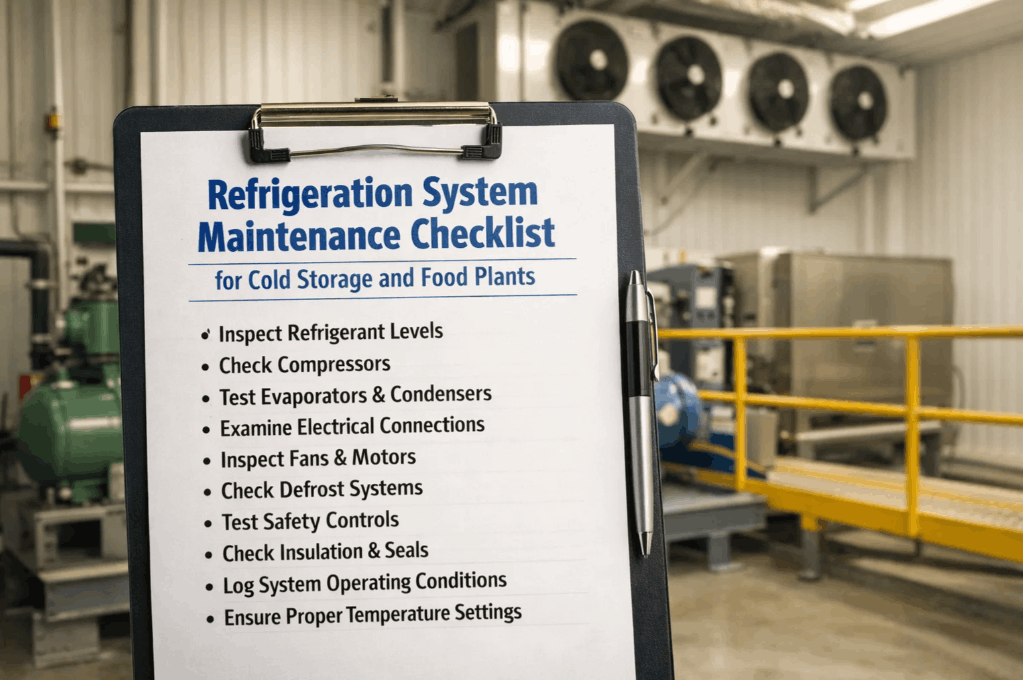
Operational Checks
Verify temperature readings match setpoints
Check for unusual compressor sounds
Inspect door seals for visible damage
Confirm defrost cycles completing
Check condensate drains flowing
Time: 30-45 min/zone
Equipment Inspection
Record compressor pressures and temps
Check evaporator coils for frost patterns
Inspect condenser for debris buildup
Verify fan motors running smoothly
Test temperature monitoring calibration
Time: 1-2 hr/system
Detailed Service
Clean condenser coils thoroughly
Check refrigerant charge levels
Inspect electrical connections
Test defrost heaters and controls
Lubricate door hinges and latches
Time: 2-4 hr/unit
Comprehensive Maintenance
Complete refrigerant system analysis
Thermal imaging of electrical panels
Door seal replacement if degraded
Vibration analysis on compressors
Update asset condition ratings
Time: 4-6 hr/system
Major Service
Complete evaporator coil cleaning
Compressor oil analysis
Expansion valve service
Control system calibration
Insulation integrity inspection
Time: Full day/zone
System Overhaul
Compressor major service
Complete refrigerant system evacuation and recharge
Motor bearing replacement if needed
Panel and floor inspection for damage
Full system performance validation
Time: 2-3 days/zone
Temperature Excursion Response Workflow
When temperature alerts trigger, every minute matters. Predefined response workflows ensure rapid, coordinated action to protect product.
0-5 min
Alert Acknowledgment
System sends alert to on-duty technician mobile device. Technician acknowledges within 5 minutes or alert escalates to supervisor.
5-15 min
Initial Assessment
Technician arrives at cold room, verifies actual temperature, checks equipment status, and determines whether issue is equipment failure, door left open, or sensor malfunction.
15-30 min
Immediate Mitigation
Implement immediate fixes if possible—close doors, restart compressor, switch to backup unit. If rapid repair not possible, begin product protection procedures.
30-60 min
Escalation Decision
If temperature continues rising, escalate to supervisor. Decide on product relocation, contractor emergency call-out, or portable refrigeration deployment.
Post-Event
Documentation and Review
Complete incident report documenting timeline, actions taken, root cause, and any product impact. Update work order with all details for compliance records.
Integration Capabilities
Cold room maintenance workflows connect with monitoring systems, inventory, and compliance platforms to create seamless operations.
TMP
Temperature Monitoring Systems
Connect to existing temperature monitoring to automatically create work orders when readings exceed thresholds or trend abnormally.
Automatic alert-to-work-order conversion
Temperature history in work order context
Threshold-based priority assignment
INV
Parts Inventory
Ensure critical spare parts are available when needed with inventory integration that tracks stock levels and triggers reorders.
Parts availability check before assignment
Automatic parts consumption tracking
Min/max reorder triggers
FDA
Compliance Documentation
Generate audit-ready documentation automatically from completed work orders and temperature excursion responses.
FDA/USDA compliant record formats
Automatic timestamp verification
Export for audit preparation
MOB
Mobile Workforce
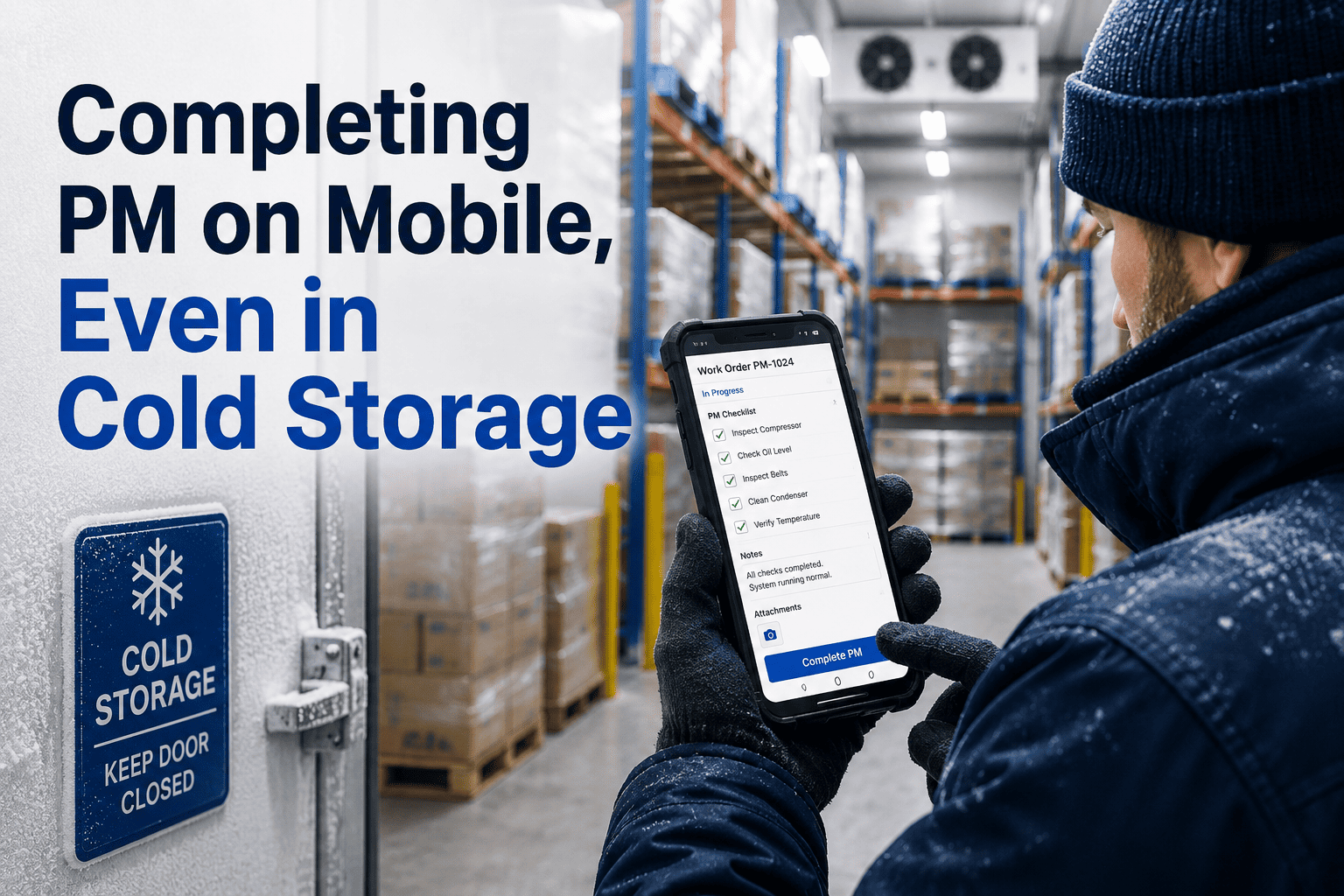
Enable technicians to receive, execute, and document work orders from anywhere in the facility using mobile devices.
Push notifications for new assignments
Photo documentation capability
Offline mode for cold room work
Workflow Best Practices
1
Never Delay P1 Response
Temperature-critical issues take absolute priority. Train all team members to immediately drop non-critical work when P1 alerts trigger. Seconds matter when product is at risk.
2
Document in Real Time
Complete work order documentation as tasks are performed, not at the end of the shift. Real-time documentation is more accurate and creates better compliance records.
3
Maintain Critical Spare Parts
Stock essential parts for rapid repair—contactors, temperature sensors, door gaskets, fan motors. Waiting for parts during emergencies is unacceptable.
4
Schedule PM During Low-Use Windows
Coordinate preventive maintenance during times of lowest cold room activity. This minimizes door openings during maintenance and reduces temperature impact.
5
Review Workflow Metrics Weekly
Track PM compliance, response times, and temperature excursions. Use data to identify workflow improvements and resource needs before problems develop.
6
Cross-Train Team Members
Ensure multiple technicians can respond to critical issues. Single points of failure in staffing create unacceptable risk for temperature-controlled operations.
Frequently Asked Questions
How do we handle maintenance when cold rooms must stay operational 24/7?
Schedule PM during lowest activity periods—typically overnight or early morning. For extensive maintenance, coordinate with operations to temporarily relocate product to adjacent zones. Some facilities implement rolling maintenance schedules that rotate through zones weekly.
What's the recommended technician-to-cold-room ratio?
General guidance is one refrigeration technician per 5-8 cold room zones for facilities operating single shifts. Facilities with 24/7 operations or high-value product typically maintain higher staffing ratios. Supplement with on-call contractor agreements for emergency coverage.
How do we integrate existing temperature monitoring with maintenance workflows?
Most temperature monitoring systems can output alerts via email, SMS, or API.
Sign up for Oxmaint to configure automatic work order creation when temperature alerts trigger, ensuring every alert receives documented response.
What documentation is required for FDA compliance during temperature excursions?
Document the exact time alert triggered, time technician responded, actions taken, temperature readings throughout the event, root cause determination, and any product disposition decisions. Workflow systems should capture all this automatically through the response process.
How do we prioritize when multiple cold rooms have issues simultaneously?
Prioritize based on: (1) rate of temperature change—fastest rising first, (2) product value at risk, (3) whether backup systems are available, (4) time since last known good reading. Your workflow system should help make these decisions with real-time data.
Implement Structured Cold Room Workflows Today
Oxmaint provides the asset master and workflow tools to coordinate cold storage maintenance, protect product integrity, and ensure regulatory compliance.