Water efficiency in food plants extends far beyond CIP cycles — yet most maintenance programs treat pipe integrity, valve performance, and utility systems as secondary priorities until a leak becomes a flood. The result: food manufacturers consume 3–10 times more water per unit of product than best-in-class peers, with 30–40% of that excess directly attributable to maintainable failures like worn valve seats, faulty float controls, and undetected pipe leaks. Teams closing this gap through proactive maintenance start a free trial with Oxmaint to build their first water-linked PM schedule, or book a demo and we'll walk through your facility's highest-volume water waste points.
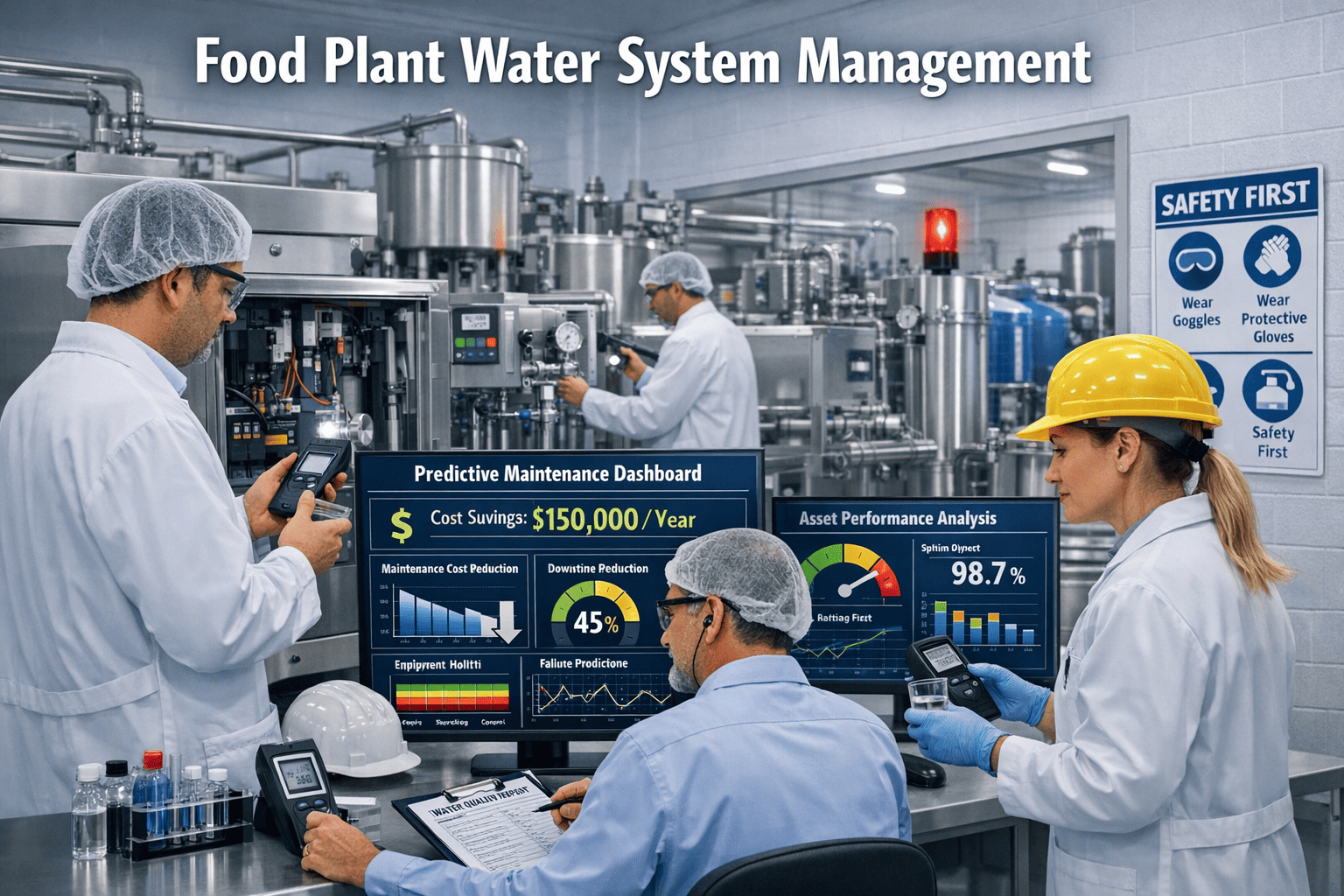
Water Efficiency in Food Plants: The Maintenance Guide
CIP is just the start. The largest water savings in food manufacturing come from proactive maintenance of pipes, valves, pumps, and utilities — not from CIP optimization alone.
What Is Water Efficiency Maintenance in Food Manufacturing?
Water efficiency in food manufacturing maintenance is the systematic practice of keeping water-carrying assets — pipes, valves, pumps, heat exchangers, cooling towers, and utility systems — performing within their designed flow and integrity specifications to prevent waste, reduce consumption, and avoid regulatory exposure.
CIP systems optimized by your process engineers may be running at peak efficiency — but if the 2-inch supply valve feeding that CIP tank has a worn seat that passes 15% more flow than specified, your water savings are illusory. Water efficiency maintenance closes this gap by ensuring every asset that touches water is maintained proactively, and that leaks, overflows, and inefficiencies are detected and resolved before they become chronic waste. Preventive maintenance scheduling in Oxmaint automates this asset-by-asset.
With water stress rising globally and regulatory scrutiny on industrial usage increasing — particularly in high-consumption regions like California, the UAE, and parts of Australia — food manufacturers face both compliance and cost pressure to reduce water intensity. The maintenance team is the primary delivery mechanism for those reductions.
8 Water Waste Sources Maintenance Can Eliminate
Valve Seat Wear & Passing
Worn control and isolation valve seats allow continuous through-flow when valves should be fully closed. A single 2" valve passing 10% flow adds up to 50,000+ liters annually. Valve inspection PM is the highest-impact water conservation action per hour of maintenance time.
Pipe & Fitting Leak Points
Small pipe leaks — even drip-level — compound significantly at scale. A 1mm leak at 3 bar pressure wastes approximately 1.5 million liters per year. Thermal imaging and acoustic leak detection, integrated with Oxmaint inspection management, finds these proactively.
Steam Trap Failure
Failed-open steam traps discharge live steam and condensate continuously. In a food plant with 50–200 steam traps, a 5% failure rate (typical without PM) wastes enormous quantities of treated water as steam — plus the energy to heat it. Annual steam trap surveys are a proven ROI action.
Cooling Tower Drift & Blowdown
Degraded cooling tower drift eliminators allow uncontrolled water entrainment into the airstream. Combined with poorly calibrated blowdown controllers, water consumption can exceed design parameters by 20–35%. Drift eliminator replacement and conductivity controller calibration address this.
Float Control Failure in Tanks
Faulty float mechanisms in process water tanks, water treatment systems, and fire suppression tanks allow continuous overflow. A stuck float on a 10,000-liter tank can drain and refill the tank multiple times before the fault is noticed — wasting tens of thousands of liters before detection.
Heat Exchanger Fouling
Fouled heat exchangers reduce thermal efficiency, extending process heating and cooling times. Longer process cycles mean more water consumed in extended CIP cycles, cooling loops running longer, and more condensate generation. Regular descaling and inspection is the fix.
Pump Seal & Packing Failure
Mechanical seal failures on process pumps range from slow drips to significant flow losses — and in food manufacturing, every pump seal leak also creates a sanitation risk. Proactive seal inspection at manufacturer intervals prevents both water waste and contamination.
Reverse Osmosis Membrane Degradation
Degraded RO membranes reduce rejection efficiency, requiring longer processing runs and higher reject water volumes. Regular membrane performance testing and replacement at optimal intervals reduces waste water generation by 15–30% versus run-to-fail strategies.
4 Operational Pain Points That Block Water Efficiency Progress
No Sub-Metering Visibility
Most food plants have a single utility meter at the boundary. Without sub-metering linked to process areas and maintenance data, identifying which system or asset is responsible for excess consumption requires weeks of manual investigation — if it happens at all.
Reactive Leak Response
Leaks are addressed when they become visible — after significant waste has already occurred. Acoustic leak detection integrated with inspection rounds and CMMS work order creation shifts teams to proactive identification, finding leaks months before they become major events.
No PM for Water-Specific Assets
Valve condition, steam trap status, and cooling tower performance rarely appear in standard PM schedules — they're treated as infrastructure rather than maintained assets. CMMS-managed PM that includes water system assets closes this structural gap in most programs.
Compliance Reporting Without Data
Water-stressed regions and customer ESG requirements increasingly demand documented water reduction programs. Without CMMS records connecting maintenance activity to consumption metrics, food manufacturers can't demonstrate water efficiency progress to auditors or customers.
These are solvable problems — book a demo and see how Oxmaint builds water-efficiency PM into your existing maintenance program without disruption.
How Oxmaint Drives Water Efficiency Through Maintenance
Water Asset PM Scheduling
Oxmaint's preventive maintenance engine schedules valve inspections, steam trap surveys, pump seal checks, and cooling tower servicing at OEM-recommended intervals. Every water system asset gets a PM calendar — not just production equipment.
Inspection Rounds with Digital Checklists
QR-code-triggered inspection rounds via Oxmaint inspection management put structured leak detection checklists in the hands of technicians doing daily rounds — turning routine walkthroughs into systematic water waste surveys that auto-create work orders on findings.
IoT Sensor Integration for Flow Anomalies
Flow meters and pressure sensors connected to Oxmaint's predictive maintenance platform flag consumption anomalies automatically — alerting maintenance teams to potential leaks or valve failures before the next meter read. Real-time visibility replaces monthly billing surprises.
Parts & Inventory for Water System Spares
Valve seats, pump seals, steam trap internals, and gaskets maintained in the Oxmaint inventory module with automatic reorder points ensure water-efficiency repairs are never delayed by parts availability — closing the loop between detection and fix.
Analytics for Water Consumption Trending
Oxmaint's analytics reporting correlates maintenance completion rates with water consumption data — showing exactly which PM actions delivered measurable reductions. This creates the documented evidence chain auditors and sustainability teams require.
AI Vision for Leak Detection
Oxmaint's AI Vision Camera monitors utility areas continuously — detecting moisture, pooling, and condensation anomalies with 99.2% accuracy and auto-creating inspection work orders before small leaks become major waste events or hygiene risks.
Reactive vs Proactive: Water Management Impact
| Water System | Reactive Approach | Proactive CMMS Maintenance |
|---|---|---|
| Valve management | Replaced on failure; chronic passing undetected | Scheduled seat inspection; passing caught early |
| Steam traps | 5–15% failed open; months of waste | Annual survey; failed traps caught and replaced |
| Pipe integrity | Leaks found when visible or on billing spike | Acoustic detection on inspection rounds; early find |
| Cooling towers | Drift eliminators replaced when fouled/broken | PM schedule; 20–35% less water loss |
| Consumption reporting | Monthly utility bill; no asset-level attribution | IoT-linked; anomaly alerts; ESG-ready reports |
| Annual water waste | 30–40% excess vs design specification | 5–10% above design; closing toward best-in-class |
ROI: What Water Efficiency Maintenance Delivers
Quantify your water efficiency opportunity — use the Oxmaint ROI calculator or start a free trial and begin tracking water system assets today.
Frequently Asked Questions
How does proactive maintenance improve water efficiency in food manufacturing?
Proactive maintenance keeps water-carrying assets — valves, pumps, steam traps, cooling towers — performing within their design specifications, preventing the waste that occurs when they degrade unnoticed. Valve seat inspection, steam trap surveys, and pipe leak detection programs address the 30–40% of water waste attributable to maintainable failures — without process redesign or capital investment.
What water system assets should be included in a food plant PM schedule?
Key water assets for PM coverage include: process valves (seat wear inspection), steam traps (annual thermodynamic or ultrasonic survey), cooling tower drift eliminators and blowdown controllers, pump mechanical seals, float controls in process tanks, heat exchanger descaling, RO membrane performance testing, and compressed air dryer performance. These are often omitted from standard PM programs but account for the majority of water waste.
How can CMMS help track water consumption at the asset level in food plants?
Oxmaint integrates with flow meters and pressure sensors to flag consumption anomalies at specific process points. When an IoT sensor detects elevated flow on a cooling loop, the system automatically generates an inspection work order — shifting the team from reactive (finding it on the monthly bill) to proactive (finding it the same day). This asset-level data also feeds ESG and water stewardship reports. See how Oxmaint serves food manufacturing specifically.
What is the ROI on water efficiency maintenance programs in food plants?
Mid-size food plants implementing structured water system PM programs typically recover $80,000–$150,000 annually in combined water and energy cost reductions — primarily from steam trap replacement, valve maintenance, and compressed air leak repair. Payback is typically well under 12 months for the maintenance labor cost, and the savings compound as the program matures and more assets are included.
Stop Paying for Water You're Wasting Through Deferred Maintenance
Every worn valve seat, failed steam trap, and dripping pump seal is a water bill you're paying unnecessarily. Oxmaint builds water system PM into your maintenance program and gives you the data to prove it's working.
- Water asset PM schedules — valves, steam traps, pumps, cooling towers
- IoT flow anomaly alerts before leaks become major waste events
- Audit-ready water consumption and maintenance documentation
Trusted by 1000+ clients · 62% less unplanned downtime · Live in days