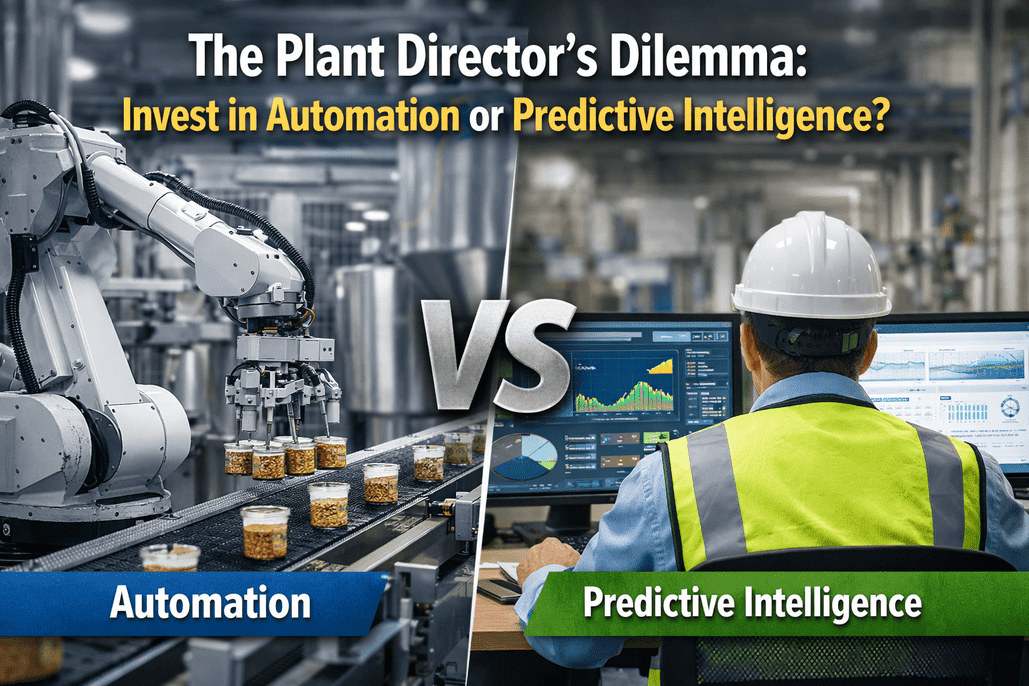
Every plant director reaches the same crossroads: the board approves a capital budget, and two competing proposals land on the desk — one for new automation hardware, one for predictive intelligence software. Both promise efficiency. Both claim ROI. See how Oxmaint delivers predictive intelligence → The difference between choosing right and choosing wrong can determine whether your plant leads or falls behind for the next five years. As industries evolve, the need for data-driven decisions becomes more crucial. Predictive intelligence empowers your team with real-time insights, reducing downtime and optimizing performance like never before. It's not just about the machines; it's about making smarter, faster decisions that keep your plant ahead of the competition.
Setting the Frame
Why This Decision Is Harder Than It Looks
The instinct in food manufacturing has always been to invest in physical infrastructure — new lines, faster conveyors, robotic pickers. But the data from 2024–2025 tells a more complicated story. Most facilities are leaving significant value on the floor not because they lack automation, but because the equipment they already own isn't running at its potential.
78%
of food manufacturers that adopted AI reported measurable waste reduction in the first year
50%
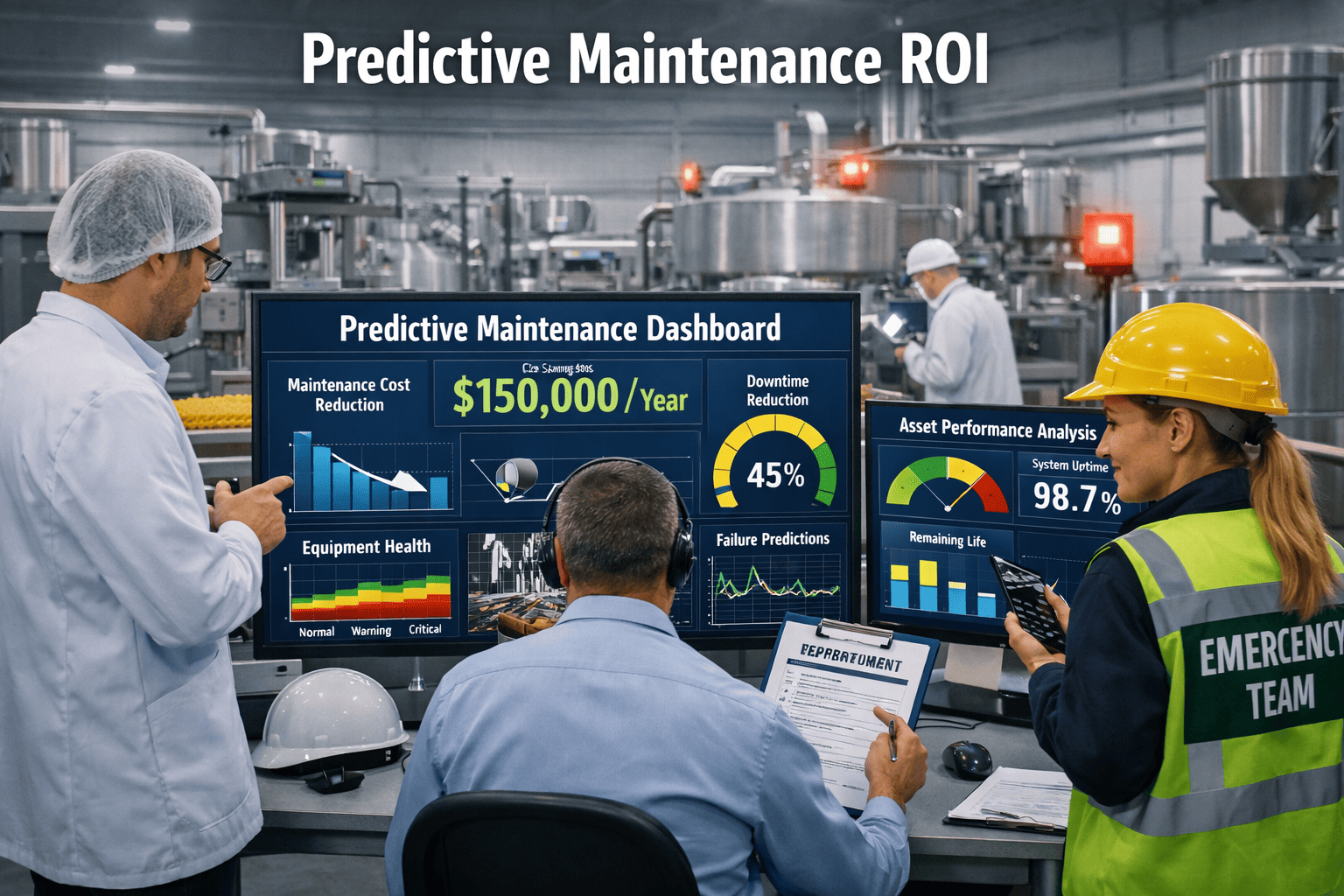
reduction in equipment downtime achievable through AI-driven predictive maintenance
30%
reduction in maintenance costs — the fastest-proven ROI category in food manufacturing tech
94.3%
accuracy of LSTM-based AI models in predicting manufacturing equipment failures
The Decision Framework
Automation vs. Predictive Intelligence: A Real Comparison
This isn't about which technology is better in theory. It's about which one delivers faster, more measurable value given where most food plants actually stand today.
Initial Investment
$20K–$120K enterprise-wide
Time to First ROI
60–90 days measurable impact
Implementation Disruption
Major — weeks of line downtime
Minimal — no production impact
Throughput Impact
High — 10–15% output increase
Moderate — via uptime recovery
Maintenance Cost Impact
Neutral to slight improvement
Unplanned Downtime Reduction
Limited — depends on the process
Up to 50% fewer downtime events
Scalability Across Plants
Expensive to replicate per-site
Instant — software deploys everywhere
Works on Existing Equipment
No — replaces existing equipment
Yes — retrofits any existing asset
The Decision Guide
Which Investment Is Right for Your Plant Right Now?
There's no universal answer — but there is a clear decision logic. Here's the honest framework most plant directors wish they had before making this call.
Your current equipment is fully optimized and running near its theoretical capacity
You're launching an entirely new product line that cannot be produced on existing assets
Labor is your dominant cost driver and volume throughput directly unlocks new revenue
Your maintenance team already has excellent visibility and your OEE is above 85%
You have 18–36 months of financial runway before needing ROI from this investment
Your OEE is below 80% and you have capacity that's being lost to unplanned downtime
You're managing 2+ facilities and have no unified view of cross-plant asset performance
Maintenance costs have been rising without a clear explanation of where the money goes
You've deferred equipment investment and need to maximize the life of existing assets
Board or financial pressure demands ROI within one fiscal year
The honest truth most consultants won't say:
For the majority of food manufacturers operating today, predictive intelligence delivers faster, more measurable ROI than automation — because the biggest performance gap in most plants isn't capability, it's reliability. Automation adds capacity you can only use if the line is running. Predictive intelligence recovers the capacity you're already losing.
ROI Timeline
When Does Each Investment Pay Back?
The payback timeline is often the deciding factor for CFOs and boards. Here's how the two investment types compare over a 36-month window.
Predictive Intelligence
Month 2–3
First measurable impact
Predictive Intelligence
Month 6–12
Full payback achieved
Automation Hardware
Month 12–18
Implementation complete
Automation Hardware
Month 18–36
Full payback achieved
Month 0Month 6Month 12Month 18Month 24Month 30Month 36
The Strategic Insight
Why the Smartest Plants Do Both — In the Right Order
The best capital allocation strategy in food manufacturing isn't "automation or AI." It's using predictive intelligence to fund and de-risk your automation investments.
Step 1
Deploy Predictive Intelligence First
Recover 25–40% of hidden maintenance costs and identify where your true performance bottlenecks are. This funds further investment without new budget approval.
→
Step 2
Use Data to Target Automation
Your asset performance data now shows exactly which processes are the real bottlenecks. Automation investments go precisely where they'll have the most impact — not where gut instinct points.
→
Step 3
Automate Into Reliability
Automated systems running on a foundation of predictive maintenance deliver near-theoretical OEE — because failures are anticipated and equipment is always in optimal condition before every run.
Where Oxmaint Fits
The Predictive Intelligence Layer Your Plant Already Needs
Oxmaint is purpose-built for food manufacturing — delivering asset performance monitoring, predictive maintenance alerts, cross-plant KPI dashboards, and compliance-ready records without replacing a single piece of equipment.
60–90days
to first measurable ROI
25–40%
maintenance cost reduction
50%
fewer unplanned downtime events
Not sure which investment makes sense for your specific situation?
Book a 30-minute strategy call. We'll walk through your plant's current OEE, maintenance cost structure, and asset age — and give you an honest assessment of where predictive intelligence delivers the fastest return.
Questions & Answers
What Plant Directors Ask Before Making This Decision
Real questions from operations leaders working through the automation vs. intelligence investment decision.
If we've already invested in automation, does predictive intelligence still add value?
Yes — in most cases even more so. Automated systems are high-value, high-complexity assets where unplanned failure is especially costly. Predictive intelligence protects your automation investment by monitoring the health of automated systems and catching failure signals before they cause a line stoppage. Many facilities find that AI-driven maintenance extends the effective life of automated equipment significantly, improving the ROI of the original capital spend.
How do I make the ROI case for predictive intelligence to a board that prefers tangible CAPEX investments?
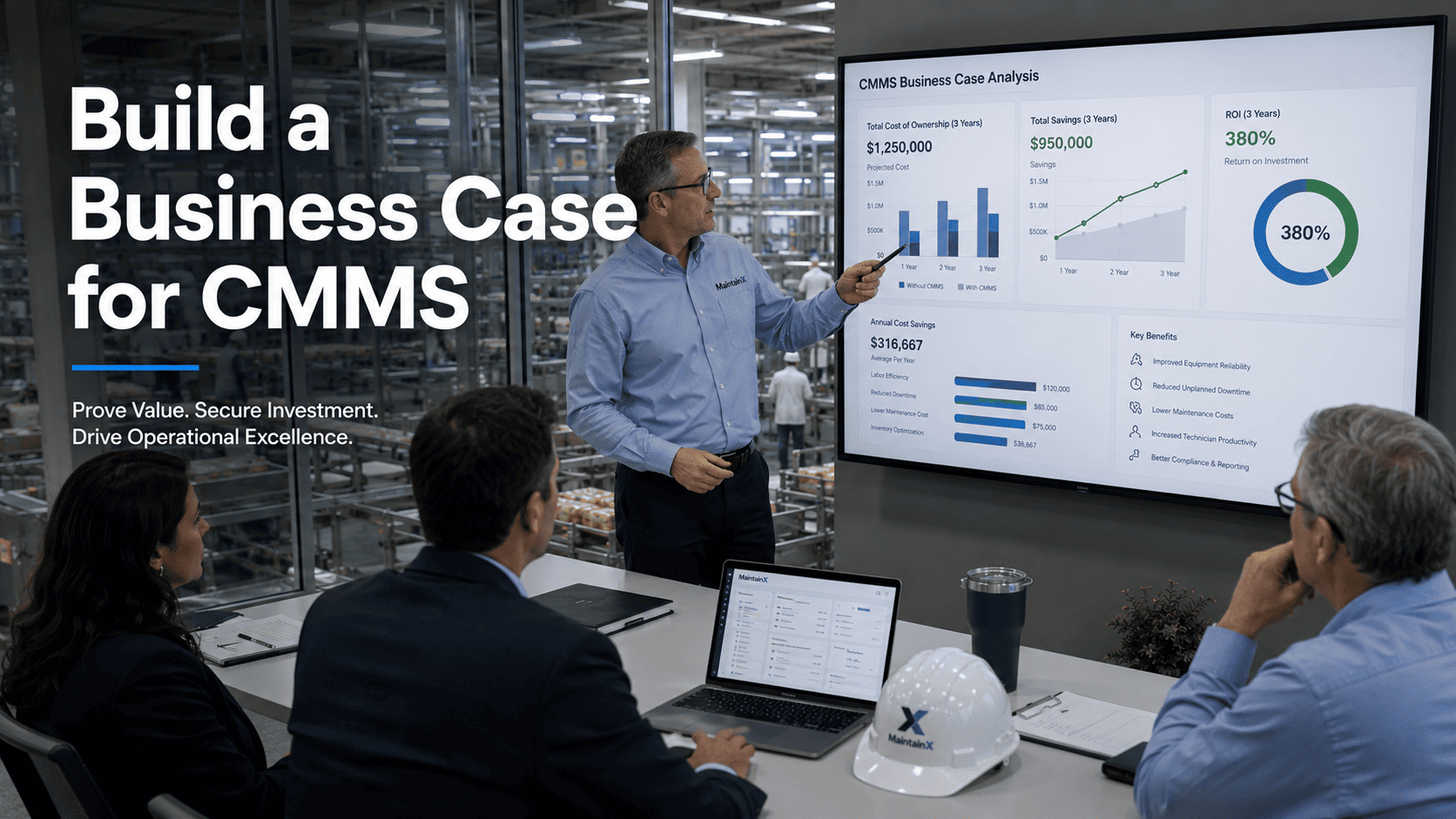
The most effective approach is to quantify the fully-loaded cost of unplanned downtime on your highest-value line — lost production, emergency labor, wasted materials, potential compliance impact. Then calculate how many downtime events per year predictive maintenance would prevent. In most mid-size food facilities, preventing two to three major downtime events per year more than covers the annual cost of the entire platform. Present that as a "downtime insurance policy with positive ROI."
What if our plant already has a CMMS — isn't that enough?
A traditional CMMS tracks what maintenance happened. It doesn't predict what maintenance needs to happen next, nor does it correlate asset performance data with maintenance history to identify emerging failure patterns. Predictive intelligence works on top of your existing CMMS data, adding the forward-looking layer that calendar-based systems fundamentally cannot provide. Most plants find that predictive intelligence makes their existing CMMS investment significantly more valuable.
How does Oxmaint work without replacing our existing equipment?
Oxmaint uses IoT sensors that retrofit onto existing assets — conveyors, compressors, mixers, refrigeration units, packaging lines — without modifying the equipment itself. These sensors feed real-time performance data into the Oxmaint platform, which builds baseline models and generates predictive alerts when deviations are detected. For plants with existing connected equipment, Oxmaint integrates directly with sensor feeds already in place. No production downtime is required for deployment.
What's the realistic timeline from decision to live system?
Most food manufacturing facilities are fully operational on Oxmaint within 2–3 weeks of kickoff. Week one covers asset registry setup and sensor deployment on priority equipment. Week two establishes baselines and activates the cross-plant dashboard. By week three, predictive alerts are live and your maintenance team is working from AI-driven work orders. Compare this to automation hardware, which typically requires 12–18 months from approval to production-ready installation.
Predictive Intelligence for Food Manufacturing
Make the Investment That Pays Back This Year
Oxmaint gives food plant directors the fastest path to measurable ROI — lower maintenance costs, fewer downtime events, and cross-plant visibility that makes every future investment decision smarter.
No equipment replacement
·
Live in 2–3 weeks
·
ROI measurable within 90 days
·
Works on existing assets