Meat Plant Achieves 100% USDA Audit Score with CMMS

By Jack Edwards on April 28, 2026

blogpostmeat-processing-plant-usda-audit-100-score-oxmaint

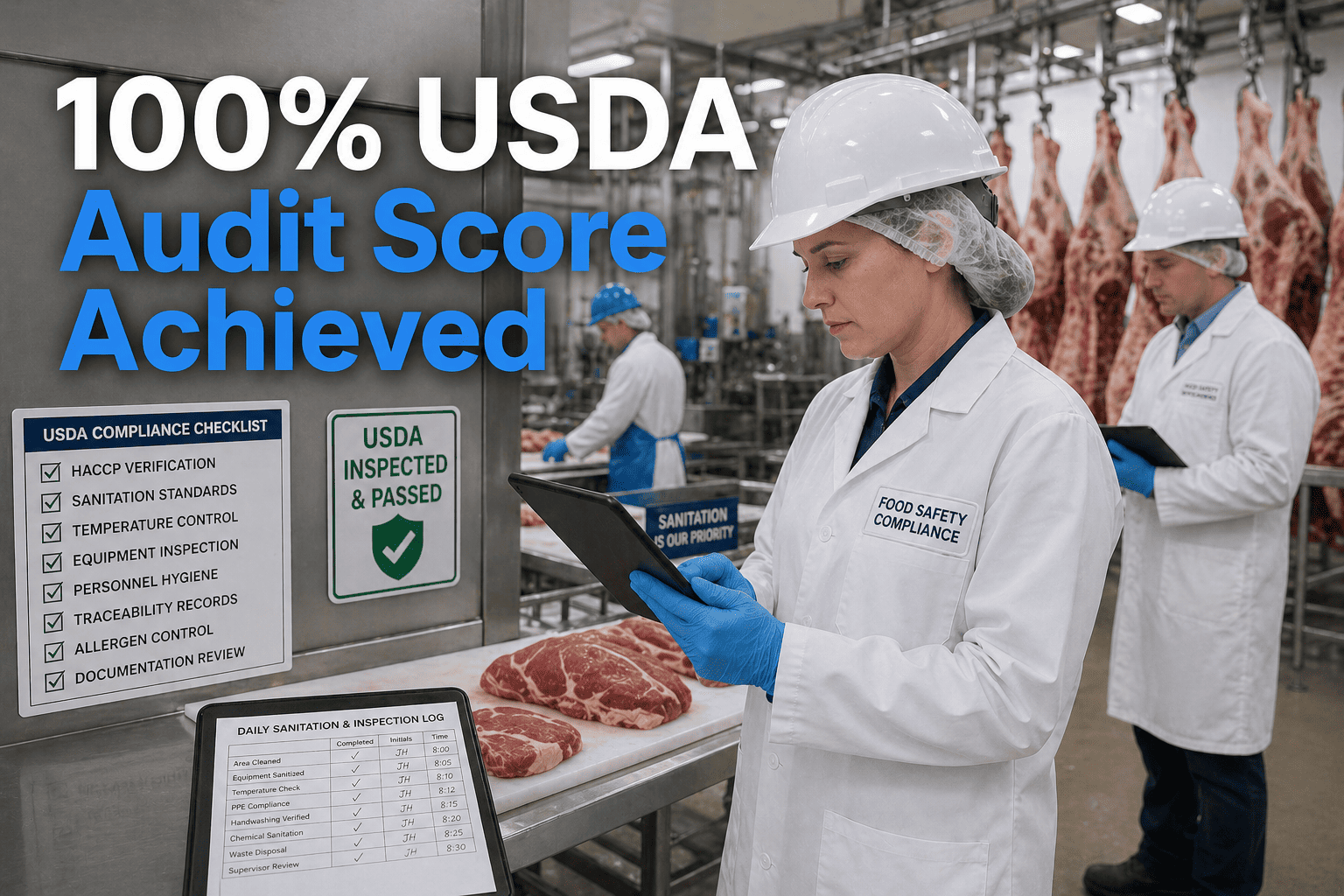
A federally-inspected meat processing plant in Iowa walked into its annual USDA FSIS audit in March 2025 and walked out with a 100% score, zero Noncompliance Records (NRs), and a written commendation referenced in the establishment file. Three years earlier the same plant had received four NRs in a single inspection — sanitation gaps, monitoring record discrepancies, equipment calibration lapses, and a temperature deviation in the hot-boning room that triggered a Form 483-style follow-up. The transformation came from one decision: every HACCP touchpoint, every sanitation SSOP, every calibration record, and every CCP monitoring log moved into OxMaint, with mandatory digital signatures and an audit-ready timestamp on every action. The plant now sits in the 99th percentile of FSIS-inspected establishments for compliance scoring and has reduced sanitation labor costs by 23% along the way. If your plant still relies on clipboards, paper logs, and the night-shift sanitation lead's memory for HACCP records, you can start a free trial of OxMaint today and have your CCP monitoring digitised before next week's pre-shift sanitation. To see exactly how the Iowa plant configured its 9 CFR Part 417 workflows in OxMaint, book a demo with our food safety specialists and we will walk through the entire HACCP build-out.

Case Study / USDA FSIS Compliance

Iowa Meat Processor Achieves 100% USDA Audit Score with OxMaint-Driven HACCP and Sanitation Workflows

Zero Noncompliance Records. Zero pre-op sanitation findings. Zero calibration gaps. The full digital HACCP and SSOP transformation across an FSIS-inspected facility — from four NRs in 2022 to a perfect score in 2025, with sanitation labor reduced 23% in the process.

100%
USDA Score
0
Noncompliance Records
23%
Sanitation labor cut
99th
FSIS percentile

The Plant — At a Glance

A federally-inspected red-meat slaughter and processing operation in central Iowa producing fresh and further-processed beef and pork products under USDA FSIS continuous inspection. The facility operates two shifts daily plus a dedicated overnight sanitation crew, runs a HACCP plan covering slaughter, fabrication, ground beef, and ready-to-eat cooked products. Establishment number issued by FSIS, regulated under 9 CFR Part 417 (HACCP) and Part 416 (sanitation).

FSIS Inspection
Continuous, on-site
HACCP Categories
Slaughter, raw, RTE
Daily Production
312,000 lbs finished
CCPs Monitored
14 across 3 plans
Sanitation Crew
22 overnight
SSOPs Active
38 procedures
Salmonella Cat.
Category 1
Shifts
2 production + 1 sanitation

The Six HACCP Workflows Now Running in OxMaint

FSIS recognises seven HACCP principles. In practice, six of them map directly to maintenance and sanitation workflows that a CMMS executes — record-keeping and verification consolidate into a single audit-trail layer that touches every step. Below is exactly how the Iowa plant configured each principle inside OxMaint.

01
Hazard Analysis
Principle 1 — 9 CFR 417.2(a)
Each hazard linked to specific assets in the OxMaint registry. Biological, chemical, and physical hazards mapped to grinder blade integrity, metal detector verification, cooler temperature ranges, and sanitation cycle effectiveness — all visible to inspectors on demand.
02
Critical Control Points
Principle 2 — 9 CFR 417.2(c)(2)
14 CCPs configured as monitored asset workflows: cooking endpoint temps, cooler temps, metal detection sensitivity, antimicrobial intervention concentrations. Each CCP triggers a digital monitoring task — no paper, no shortcuts.
03
Critical Limits
Principle 3 — 9 CFR 417.2(c)(3)
Validated limits stored per CCP — 160°F cooking endpoint, 40°F cooler max, 200 ppm peracid wash. Out-of-spec readings trigger immediate corrective work orders and lock the affected lot until verification.
04
Monitoring Procedures
Principle 4 — 9 CFR 417.2(c)(4)
Continuous IP69K-rated probe data feeds OxMaint via direct integration. Manual checks completed on mobile by trained personnel with biometric login, eliminating signature gaps that previously caused two of the four 2022 NRs.
05
Corrective Actions
Principle 5 — 9 CFR 417.3
Every deviation generates a digital corrective action workflow: cause investigation, product disposition, equipment hold, retraining trigger. The full chain documented and signed before the next production run is permitted.
06
Record-Keeping & Verification
Principles 6 & 7 — 9 CFR 417.4, 417.5
Every monitoring entry, calibration record, sanitation completion, and corrective action archived with timestamp and digital signature. FSIS inspectors pull complete records per CCP, per date, per technician — typically in under 30 seconds during walk-throughs.

Sanitation SSOPs and Cold Chain — The Pillars That Score

9 CFR Part 416 mandates pre-operational and operational sanitation. 9 CFR Part 417 mandates the HACCP discipline. The Iowa plant treats them as one integrated workflow inside OxMaint — because in practice they reinforce each other on every shift.

Pre-Op Sanitation
38 SSOPs Digitised
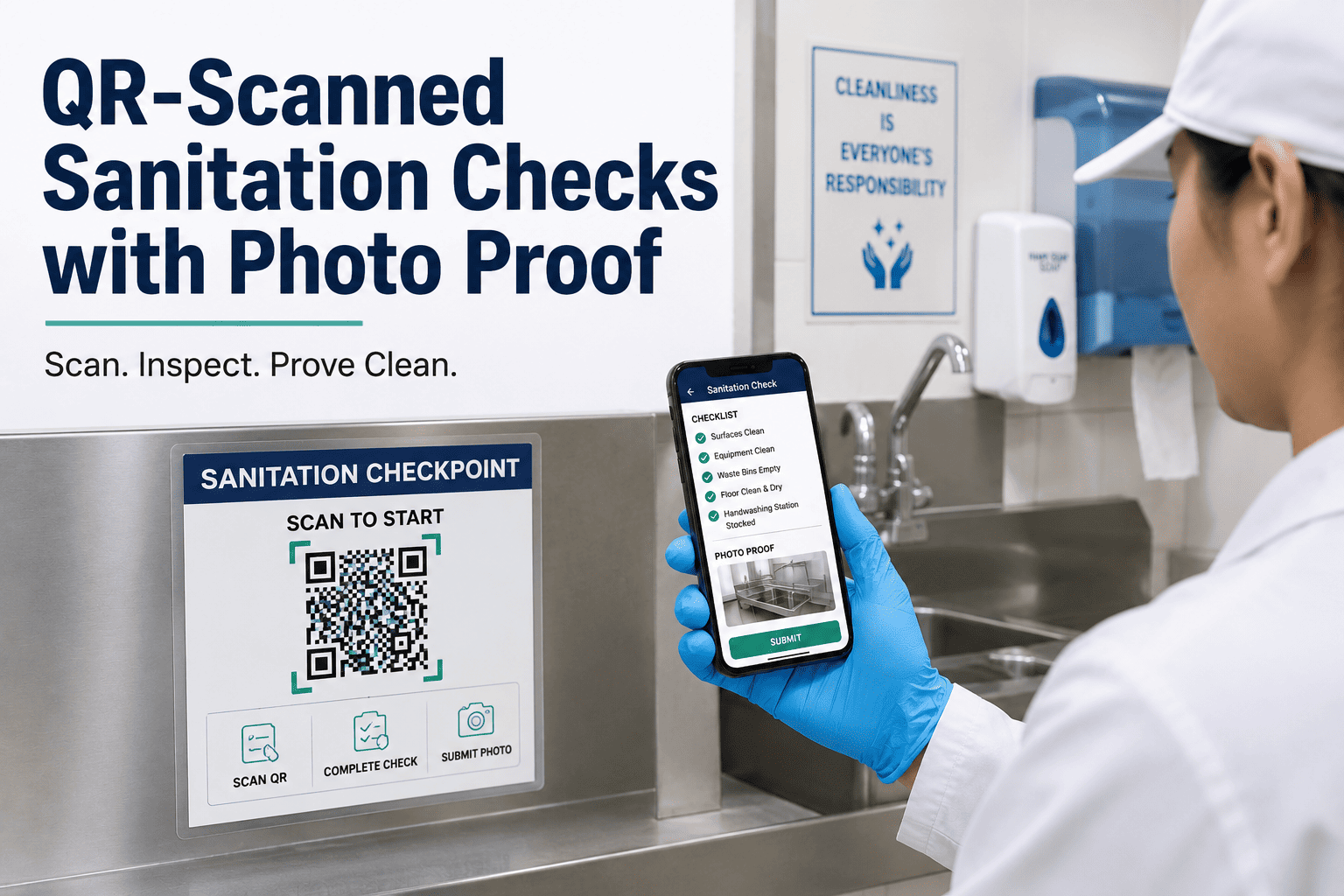
Every pre-operational sanitation procedure executed via mobile checklist with photo verification. ATP swab readings logged automatically, micro samples cross-referenced with sanitation completion records. Inspectors see the entire pre-shift sanitation history in chronological order.
100% SSOP completion before production release
Operational Sanitation
Mid-Shift Cleaning Validated
Equipment cleaning between species and between product types tracked per asset. Allergen changeover protocols enforced — a beef-to-pork transition cannot release until OxMaint records the validated clean. No exceptions, no manual overrides without supervisor digital sign-off.
0 cross-contamination findings in 18 months
Cold Chain Integrity
Cooler & Freezer Compliance
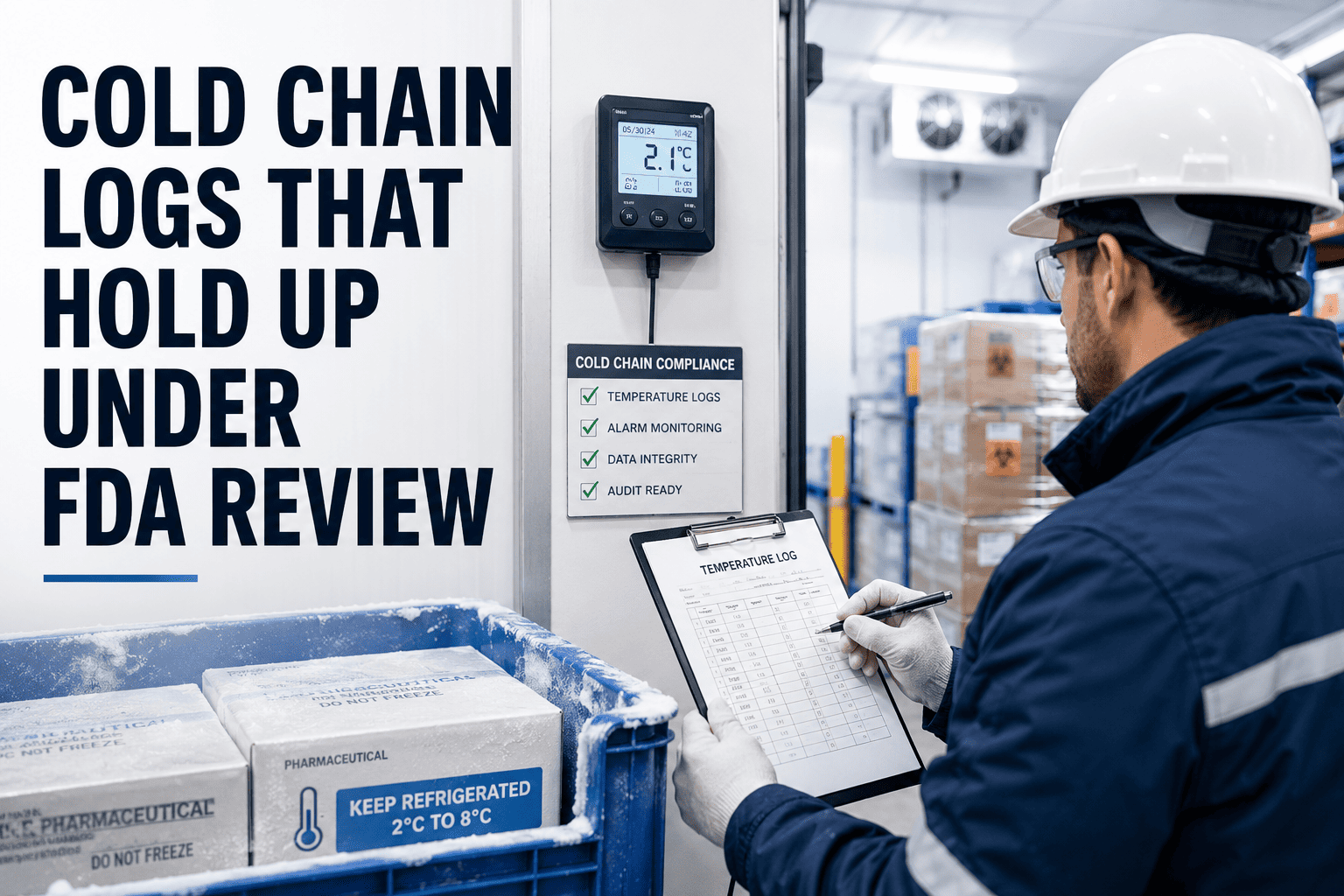
Continuous temperature logging on all coolers, blast chillers, and freezer rooms. IP69K sensors withstand wash-down. Excursion alerts go to the sanitation lead and FSIS-trained QA on-call within 90 seconds of detection. Disposition documented before product moves.
3.2 min avg. excursion response time
Equipment Calibration
Every Probe, Every Detector
Cooking probes, cooler thermometers, metal detectors, and pH meters on automated calibration schedules. Out-of-tolerance readings trigger immediate work orders and quarantine the affected production. Calibration certificates archived per asset, per date.
100% calibration on-schedule rate over 24 months
USDA-Ready Compliance

Your Next FSIS Audit Is Already Coming. Your HACCP Records Should Already Be Audit-Ready.

OxMaint configures HACCP workflows under 9 CFR Part 417, executes SSOPs under Part 416 with mobile checklists, integrates IP69K probe telemetry, and produces inspector-grade records on demand. The Iowa plant moved from four NRs to zero in three years. Your facility can start the same trajectory this quarter.

Three-Year FSIS Performance — From Findings to Perfect Score

FSIS Noncompliance Records (NRs) are the ledger that defines an establishment's regulatory standing. Below is the year-over-year trajectory pulled directly from the plant's establishment file, showing how digital workflows in OxMaint reduced each category of finding to zero.

NR Category 2022 (Pre-OxMaint) 2023 (Phase 1) 2024 (Phase 2) 2025 (Full Rollout)
Sanitation SSOP gaps1100
Monitoring record signature missing2000
Equipment calibration lapse1000
Temperature deviation, no corrective0100
Pre-op sanitation re-inspection0000
Allergen changeover documentation0000
Total NRs per audit cycle4200

The Operational Wins Behind the 100%

A perfect audit is the headline. The bigger story is what changed inside daily operations to make that result repeatable. Below are the metrics the plant manager reports to corporate quarterly — every one of them better than pre-implementation baseline.

23%
Sanitation labor reduction
Mobile checklists eliminated paperwork redo cycles and missed steps
100%
CCP monitoring on-time rate
Up from 91.4% pre-implementation — every reading captured at validated frequency
3.2 min
Excursion response time
From detection to documented action — was 28 minutes in 2022
42%
Reduced QA documentation hours
Auto-generated audit packets replaced weekly manual compilation
$184K
Avoided product holds annually
Faster corrective documentation cleared lots that previously held overnight
Cat. 1
Salmonella categorisation
Maintained best-tier status for ground beef sampling — preferred customer trust

Frequently Asked Questions

OxMaint configures each CCP, critical limit, monitoring procedure, and corrective action as a structured digital workflow. Every required record under 9 CFR 417.5 is captured with timestamp, employee identification, and supervisor verification. Inspectors retrieve full histories per CCP on request without paper retrieval.
For sensors deployed in production zones with high-pressure wash-down, IP69K is the standard rating. OxMaint integrates with IP69K-rated temperature, pressure, and pH sensors via standard industrial protocols. Sensors outside wash-down zones can use less rugged ratings — OxMaint supports both.
ATP readings are captured per location and per shift, linked to the asset record for the equipment swabbed. Out-of-spec results trigger automatic re-sanitation work orders and lock production until passing readings are recorded. Micro lab results integrate via API or manual upload, archived alongside the related sanitation records.
Yes. OxMaint runs separate HACCP plans per product category — raw non-intact, raw intact, fully cooked RTE, NRTE — each with its own CCPs, critical limits, and monitoring frequencies. Plans are version-controlled, with FSIS-approved revision histories archived for the full retention period.
QA pulls records on-demand from OxMaint — by date range, CCP, employee, asset, or category. Standard inspector requests typically resolve in under 60 seconds. The Iowa plant's 2025 inspector noted in writing that record retrieval was the fastest the inspector had encountered across federally-inspected establishments that year.
Phase 1 (sanitation SSOP digitisation, basic CCP monitoring) typically rolls out in 90 days. Full HACCP workflow integration with all corrective action, verification, and record-keeping layers — matching the Iowa plant's three-phase approach — usually completes in 12 to 18 months depending on plant complexity and existing process documentation.
Move Toward Your Own 100%

FSIS Audits Reward Documentation Discipline. OxMaint Builds That Discipline Into Every Shift.

Configured for 9 CFR Part 417 HACCP and Part 416 sanitation. Mobile-first for the wash-down environment. Audit-ready record packets generated on demand. Used right now in red-meat slaughter, poultry processing, and ready-to-eat further-processing facilities operating under continuous federal inspection. Start with a single SSOP digitisation, scale to a 100% audit score.
Share This Story, Choose Your Platform!