Carbon footprint reporting in food plants is increasingly non-negotiable — with CSRD in Europe, SEC climate disclosure rules in the US, and Scope 3 pressure cascading down supply chains, maintenance teams are now directly accountable for emissions they once ignored. The problem is that 74% of carbon reduction opportunities in food manufacturing are embedded in maintenance decisions: inefficient motors running past service intervals, compressed air leaks wasting energy, refrigeration systems with degraded gaskets overworking compressors. A CMMS that tracks these isn't just an operational tool — it's an ESG reporting platform, and teams making that shift start a free trial with Oxmaint to quantify their maintenance-driven emissions baseline, or book a demo and we'll map it to your sustainability reporting cycle.
Carbon Footprint & Maintenance in Food Plants
Maintenance decisions drive emissions. Here's how AI-driven CMMS quantifies, reduces, and reports on the carbon impact of every asset in your facility.
come from maintenance decisions
from unmaintained compressed air & refrigeration
for Oxmaint food plant clients — less downtime = less idle energy
What Is Carbon Footprint Reporting in Food Plant Maintenance?
Carbon footprint reporting in food plant maintenance means tracking, quantifying, and reducing the greenhouse gas emissions that originate from maintenance activities and poorly maintained assets. It spans direct emissions from fuel-consuming equipment, indirect emissions from energy waste due to degraded asset performance, and Scope 3 emissions from vendor service visits and parts procurement.
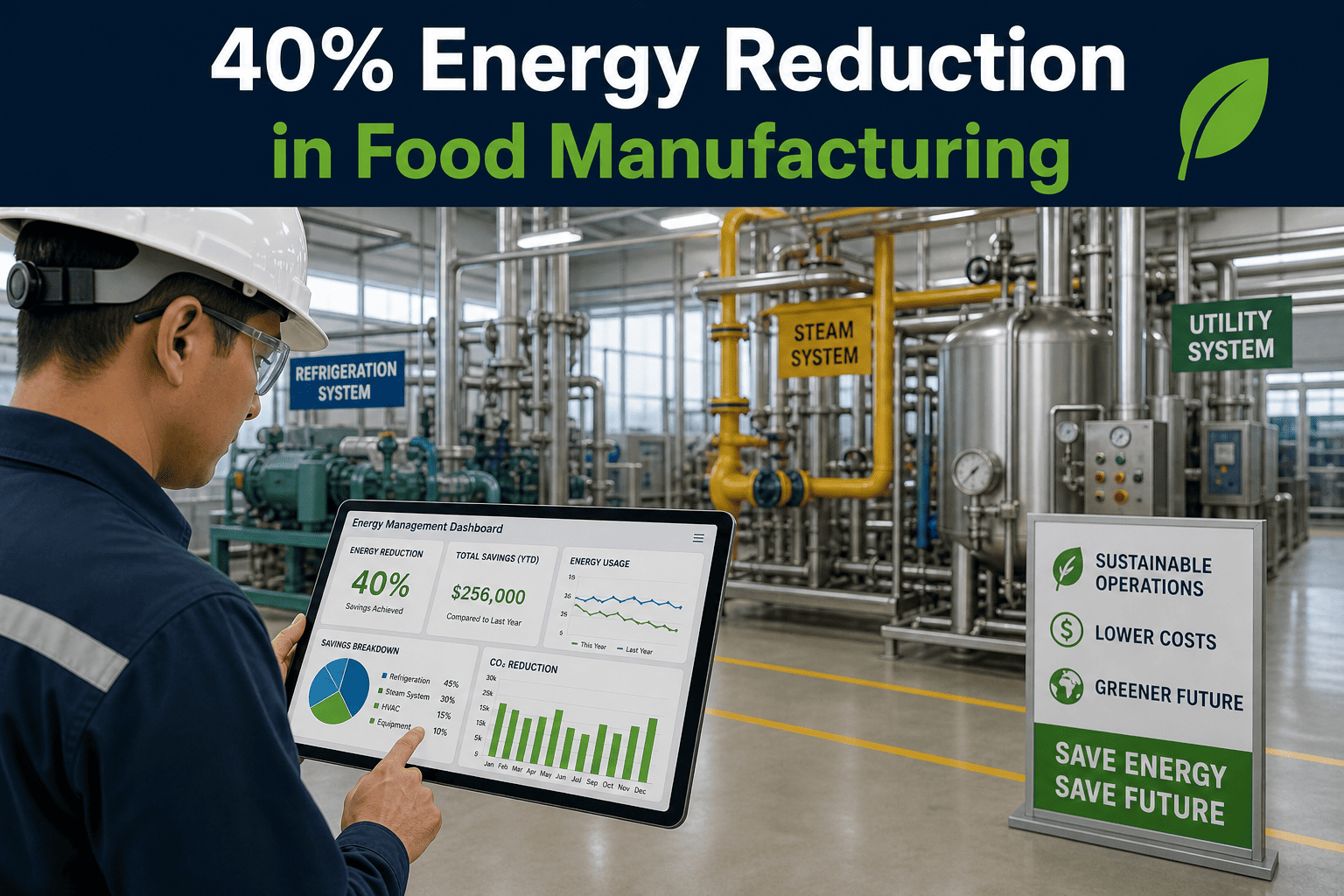
Unlike facility-wide energy audits, maintenance-driven carbon tracking goes asset by asset — identifying which motors are overperforming due to worn bearings (drawing 15–20% more current), which CIP systems are running extended cycles because valve seats have degraded, and which refrigeration circuits are consuming excess energy due to gasket failure. When a CMMS like Oxmaint connects maintenance history to energy consumption data via predictive maintenance analytics, the carbon impact of deferred maintenance becomes visible — and reportable.
For food manufacturers under ESG reporting pressure, this data is the missing link between your sustainability commitments and your maintenance budget. It also creates a compelling internal business case: reducing emissions by keeping assets in peak condition is the same action that reduces unplanned downtime and extends asset life. Explore how Oxmaint analytics and reporting captures this at the asset level.
8 Ways Maintenance Decisions Drive Carbon Emissions
Motor Degradation & Excess Draw
Worn bearings and misalignment force motors to draw 15–25% more current than rated. Across a food plant's 50–200 motors, this translates directly to elevated Scope 2 emissions and inflated energy bills.
Compressed Air Leak Losses
Typical food plants lose 25–30% of compressed air to leaks. Compressors compensate by running longer cycles — consuming significant additional electricity. A structured leak detection and repair program is the highest-ROI carbon reduction action.
Refrigeration Gasket Failure
Degraded door gaskets and refrigerant leaks force compressors to run extended cycles — consuming 20–40% more energy than a well-maintained system. This is one of the largest hidden carbon contributors in food manufacturing.
Extended CIP Cycle Times
Worn spray nozzles and valve seats force CIP systems to run longer cycles to achieve sanitation standards — consuming more hot water, chemicals, and energy. PM on CIP assets directly reduces this Scope 2 and water footprint.
HVAC & Boiler Inefficiency
Fouled coils, clogged filters, and scale buildup in boilers reduce thermal efficiency significantly. A heat exchanger operating at 70% efficiency due to scaling generates ~43% more CO2 per unit of heat output than a clean system.
Reactive Maintenance Transport
Emergency repair callouts — contractor visits, urgent parts deliveries, expedited freight — generate Scope 3 emissions that planned, scheduled maintenance eliminates. Preventive programs reduce emergency vendor visits by 60–80%.
Idle Energy During Breakdowns
Unplanned downtime doesn't mean zero energy consumption. HVAC, lighting, refrigeration, and upstream processes continue running while the line is stopped. Every hour of preventable downtime carries a carbon cost beyond the production loss.
Early Asset Replacement
Reactive maintenance accelerates asset wear and shortens lifecycle. Replacing a major food processing asset 3–5 years early due to poor maintenance generates substantial embodied carbon from manufacturing and logistics of the replacement equipment.
4 Pain Points Blocking Carbon Reporting in Food Plants
No Asset-Level Energy Data
Facility-wide utility bills can't tell you which assets are driving excess consumption. Without per-asset maintenance and energy correlation, sustainability reports stay at the facility level — too coarse for meaningful reduction targets.
Disconnected Maintenance and ESG Teams
Maintenance managers track work orders. Sustainability teams track emissions. In most food plants, these data streams never connect — so the carbon impact of deferred PM remains invisible to ESG reporting frameworks.
Manual Reporting Cycles
Compiling ESG reports manually — pulling energy data, mapping to assets, calculating emission factors — takes weeks and introduces errors. As reporting requirements tighten under CSRD and SEC rules, manual processes become an audit liability.
No Baseline to Measure Reduction Against
Sustainability goals require a credible baseline. Without historical maintenance and energy data linked at the asset level, food plants can't demonstrate emissions reduction progress — making sustainability commitments unverifiable.
Maintenance and sustainability are the same problem — book a demo to see how Oxmaint bridges them in your facility.
How Oxmaint Supports Carbon Reduction & ESG Reporting
IoT-Linked Energy Monitoring
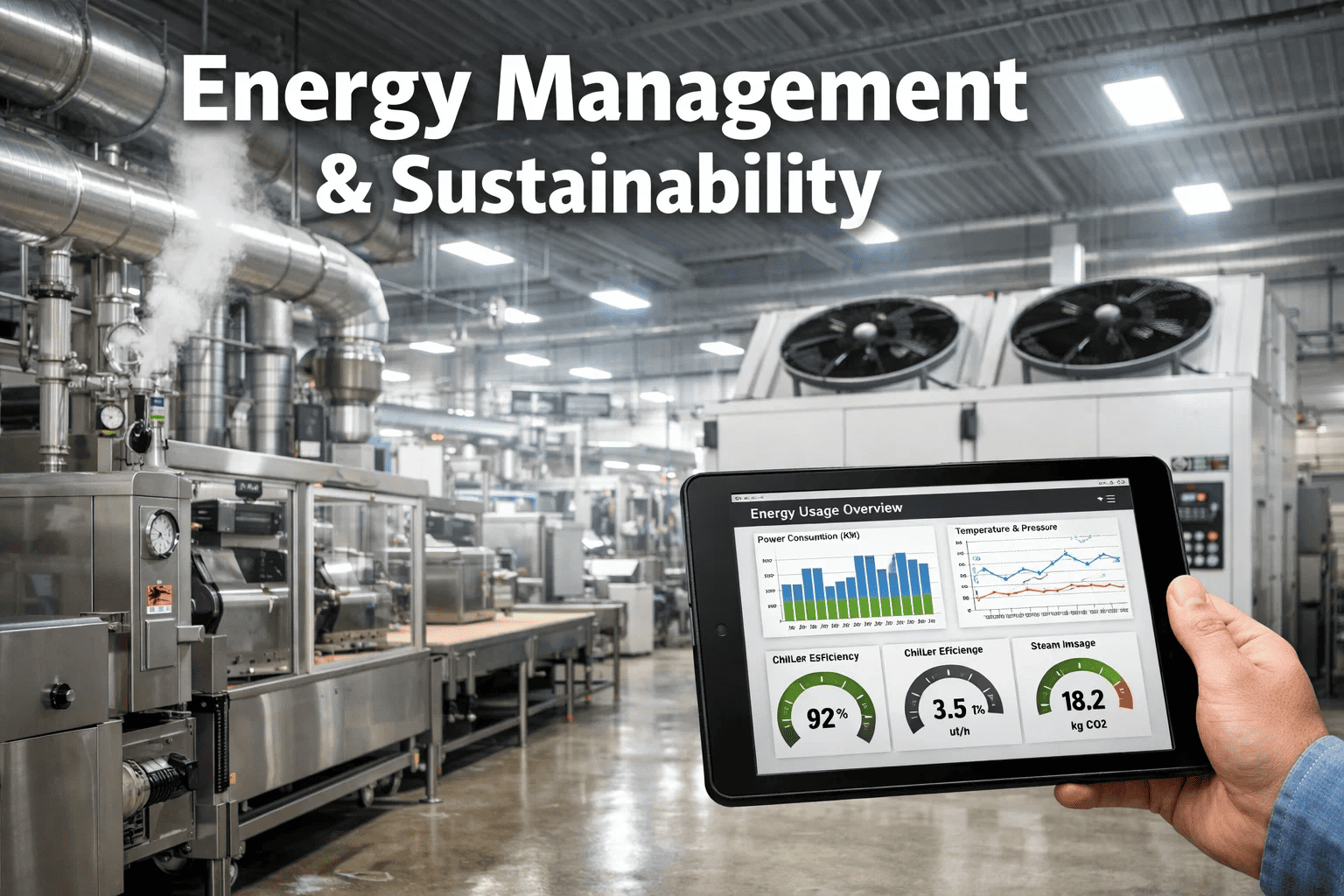
Oxmaint's predictive maintenance platform connects sensor feeds — current draw, temperature, vibration — to asset records. When a motor draws 20% more than baseline, the system auto-creates a PM work order and logs the energy anomaly for emissions reporting.
Preventive Maintenance Emissions Reduction
Automated PM schedules keep compressed air systems, refrigeration, and HVAC assets performing within spec — directly reducing the energy overconsumption that drives Scope 2 emissions. Tracked to each asset, this data feeds ESG reports automatically.
Maintenance-to-Emissions Reporting
Oxmaint's analytics module maps maintenance activity to energy consumption trends — giving sustainability teams asset-level data to populate CSRD, GRI, and CDP frameworks. Export audit-ready reports without manual compilation.
EHS & Compliance Documentation
Oxmaint's EHS management module logs environmental incidents, refrigerant leak events, and compliance checks — creating the documented chain of evidence auditors require under ISO 14001 and EMAS environmental management systems.
Reactive vs CMMS-Managed: Carbon Impact Comparison
| Carbon Driver | Without CMMS (Reactive) | With Oxmaint CMMS |
|---|---|---|
| Motor efficiency monitoring | No visibility — excess draw undetected | IoT alerts flag anomalies; PM auto-created |
| Compressed air leaks | Found during breakdowns; 25–30% losses | Scheduled leak detection; losses under 5% |
| Refrigeration performance | Gasket failures uncaught; 20–40% energy waste | PM schedules maintain efficiency; waste minimized |
| ESG report data | Manual, time-consuming, facility-level only | Asset-level, automated, audit-ready exports |
| Scope 3 vendor transport | High — reactive callouts and emergency freight | Reduced by 60–80% via planned PM schedules |
| Asset lifecycle impact | Early replacement = embodied carbon cost | Extended lifecycle through proactive care |
ROI: The Carbon & Cost Case for Maintenance-Driven Sustainability
Ready to quantify maintenance-linked emissions in your plant? Start a free trial and build your first energy-linked asset register, or use the ROI calculator to size the opportunity.
Frequently Asked Questions
How does maintenance directly affect carbon emissions in food manufacturing?
Poorly maintained assets consume significantly more energy than designed. Motors with worn bearings draw 15–25% excess current, compressed air systems with leaks require compressors to run longer, and degraded refrigeration gaskets force extended compressor cycles — all of which increase Scope 2 emissions directly. Structured PM programs keep assets operating at rated efficiency, reducing energy consumption and the associated emissions.
Can CMMS software support CSRD and CDP carbon reporting for food plants?
Yes. Oxmaint's analytics module captures maintenance activity, energy anomalies, and asset performance data at the individual asset level — providing the granular, time-stamped data that CSRD, CDP, and GRI frameworks require. Reports can be exported in audit-ready format, eliminating manual compilation and reducing reporting preparation time significantly.
What are the biggest maintenance-driven carbon reduction opportunities in food plants?
Compressed air leak detection and repair, refrigeration gasket replacement programs, and motor current monitoring are the three highest-ROI actions. Together, these typically reduce facility energy consumption by 18–27% and deliver measurable Scope 2 emissions reductions without major capital investment — making them the starting point for any maintenance-led sustainability program.
How does Oxmaint help food plants meet food manufacturing sustainability reporting requirements?
Oxmaint connects IoT sensor data, PM completion records, and work order history to create an asset-level emissions baseline. The EHS management module documents environmental incidents, refrigerant events, and compliance checks — giving sustainability teams the data infrastructure to populate reporting frameworks and demonstrate continuous improvement year over year.
Turn Maintenance Data Into Your ESG Advantage
Your biggest carbon reduction opportunity is already inside your maintenance program. Oxmaint connects asset performance to energy data — so every PM you run is also a sustainability win you can report.
- IoT-linked energy monitoring on every critical asset
- Automated PM programs that reduce Scope 2 emissions at source
- Audit-ready ESG reports from CMMS data — no manual compilation
Trusted by 1000+ clients across food manufacturing, facility management, and industrial operations · Live in days