A craft brewery in Colorado discovered their main air compressor couldn't maintain pressure during a critical bottling run when system pressure dropped from 110 PSI to 67 PSI over three hours. The gradual decline went unnoticed until bottle capping failures triggered a line shutdown. Investigation revealed a combination of factors: a worn intake filter restricting airflow, a partially failed unloader valve causing short-cycling, and multiple small leaks throughout the distribution system that had developed over months. The pressure loss ruined 4,200 gallons of craft IPA exposed to oxygen during the extended troubleshooting period, costing $127,000 in product loss plus emergency repairs and overtime. Facilities implementing structured compressor checklist usa inspection protocols identify pressure problems in early stages, preventing the cascading failures that halt production and destroy product.
Compressor pressure drop rarely happens instantly. System pressure degrades gradually as filters load, valves wear, seals deteriorate, and leaks develop. Each small issue compounds—a 5% reduction in intake efficiency combined with a 3% leak rate and a sluggish unloader creates a system that can't keep up with demand. Without systematic monitoring, operators don't notice until pressure falls below critical thresholds during peak demand periods.
Sign up for Oxmaint to digitize your compressor inspection checklists with automated scheduling and pressure trend tracking.
Maintenance Checklist
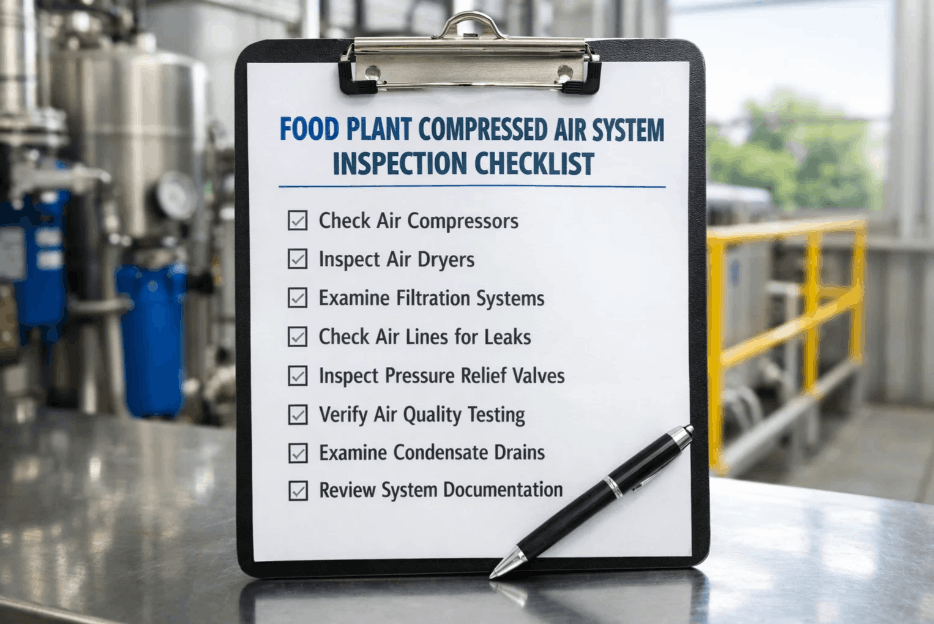
Compressor Pressure Drop Prevention Checklist
Systematic inspection procedures to detect pressure loss before it affects production or product quality.
Of Pressure Issues Are Leak-Related
Pressure Problems Preventable with Routine Checks
Energy Waste from Air System Leaks
20 min
daily
Complete Pressure System Inspection
Why Pressure Monitoring Matters in Food Manufacturing
Compressed air is the fourth utility in food and beverage manufacturing—essential for pneumatic controls, packaging equipment, conveying systems, and cleaning operations. When system pressure drops, equipment malfunctions cascade through production lines. Pneumatic valves respond slowly or fail to actuate. Packaging machines can't maintain seal pressure. Conveying systems stall. Product quality suffers before operators identify compressed air as the root cause.
Pressure problems also waste significant energy. A compressor working harder to overcome restrictions or compensate for leaks consumes more electricity without delivering more useful work. Industry estimates suggest 20-30% of compressed air is lost to leaks in typical facilities. Each 2 PSI of artificial pressure increase to compensate for leaks adds roughly 1% to energy costs. Systematic pressure monitoring protects both production reliability and operating costs.
73%
of compressed air pressure problems involve leaks either in distribution piping, connections, equipment, or the compressor itself. Regular leak detection and repair provides the highest return on investment for maintaining system pressure.
Daily Compressor Pressure Checklist
Complete these pressure and operational checks at the start of each production day. Document readings and compare to baseline values to identify developing trends.
Record system pressure at main header
Should be within 5 PSI of setpoint. Consistently low pressure indicates capacity or leak problems.
Record pressure at critical use points
Compare to header pressure. Excessive drop indicates distribution restrictions or localized leaks.
Note pressure differential across filters
Compare inlet to outlet pressure at main filter. Rising differential indicates filter loading.
Check receiver tank pressure
Should cycle between cut-in and cut-out pressures. Narrow cycling indicates capacity issues.
Verify compressor load/unload cycling
Frequent short cycles indicate leaks or control problems. Note cycle frequency and duration.
Check compressor run hours vs. production hours
Rising ratio indicates increasing leaks or inefficiency. Track this trend weekly.
Listen for unusual compressor sounds
Knocking, hissing, or rattling indicates developing mechanical or valve problems.
Verify unloader valve operation
Valve should open fully when unloading. Partial operation causes pressure loss and overheating.
Inspect intake filter condition
Visually check for contamination or damage. Restricted intake reduces output capacity.
Check intake filter differential indicator
If equipped, note differential pressure. Replace filter when approaching limit.
Verify intake area is clear
Ensure nothing obstructs air intake. Hot or contaminated intake air reduces efficiency.
Digitize Your Pressure Monitoring
Replace paper logs with mobile forms that track pressure trends, alert supervisors to abnormal readings, and build maintenance history.
Weekly Detailed Inspection Checklist
These deeper inspections identify developing problems before they affect daily pressure readings. Schedule during lower-demand periods.
Perform static leak test during shutdown
With production stopped, note pressure drop rate. More than 10% per hour indicates significant leaks.
Walk distribution system listening for leaks
During quiet periods, audible hissing reveals significant leaks. Mark locations for repair.
Check quick-connect fittings
Apply soapy water to connections. Bubbling indicates leaks requiring o-ring replacement or fitting tightening.
Inspect condensate drains
Verify drains function properly. Stuck-open drains waste compressed air continuously.
Test pressure relief valve
Verify valve operates at correct setpoint. Leaking relief valve causes continuous pressure loss.
Check check valve operation
Verify no backflow when compressor unloads. Failed check valve allows receiver pressure to bleed back.
Verify pressure switch operation
Confirm cut-in and cut-out pressures match settings. Drifting switches cause improper cycling.
Inspect pressure regulators
Check downstream pressure at each regulator. Failing regulators cause localized pressure problems.
Check dryer pressure differential
Excessive pressure drop across dryer indicates desiccant loading or internal restriction.
Verify dewpoint performance
Check dewpoint indicator or meter. Rising dewpoint indicates dryer problems developing.
Drain moisture from receiver tank
Open manual drain to expel accumulated water. Excessive water indicates dryer issues or high humidity.
Common Pressure Drop Causes and Solutions
Understanding root causes helps identify permanent solutions rather than repeatedly addressing symptoms.
Leaks at fittings, connections, hoses, and equipment accumulate over time. A facility may lose 20-30% of compressed air to leaks.
Solutions
Implement regular ultrasonic leak detection
Tag, track, and repair all identified leaks
Replace quick-connects with threaded fittings where practical
Restricted intake reduces compressor capacity and increases energy consumption. Food facilities generate significant dust and debris.
Solutions
Establish filter replacement schedule based on conditions
Install differential pressure indicator
Consider relocating intake to cleaner area
Worn intake or discharge valves reduce volumetric efficiency. Compressor runs longer but produces less air at higher temperature.
Solutions
Replace valves on manufacturer schedule
Monitor discharge temperature as indicator
Track amp draw trending for efficiency loss
Automatic drains stuck open continuously vent compressed air. A single stuck drain can waste significant air volume.
Solutions
Include drains in daily inspection routine
Install zero-loss or demand drains
Replace timer drains with level-sensing types
Piping sized for original loads may be inadequate after capacity additions. Excessive velocity causes pressure drop across distances.
Solutions
Calculate pressure drop across distribution
Add parallel piping runs where needed
Install dedicated lines to high-demand equipment
Check valve failure allows receiver pressure to bleed back when compressor unloads, causing rapid cycling and pressure instability.
Solutions
Listen for backflow during unload cycles
Replace check valves on schedule
Consider soft-seat check valves for longer life
Track Pressure Trends Over Time
Oxmaint captures inspection data to identify gradual pressure decline before it affects production.
Pressure Drop Response Procedure
When inspection reveals low pressure or excessive pressure drop, follow this systematic response to restore system performance.
1
Assess Impact
Determine if pressure is adequate for current production. If equipment is malfunctioning, pressure restoration becomes urgent priority.
2
Check Compressor Status
Verify compressor is running and loading normally. Check for fault codes, overload trips, or control issues preventing full operation.
3
Inspect Intake System
Check intake filter condition. A severely clogged filter can reduce capacity 20-30% while increasing energy consumption significantly.
4
Locate Major Leaks
Walk the system listening for audible leaks. Check recent maintenance or production changes that may have introduced new leaks.
5
Check Distribution Path
Measure pressure at multiple points to identify where drop occurs. Large differential indicates restriction or leak in that section.
6
Document and Schedule Repairs
Record all findings with locations. Prioritize repairs by impact. Verify pressure returns to normal after corrections.
Pressure System Best Practices
1
Establish Baseline Measurements
Document normal operating pressures at header, key use points, and across filters when system is healthy. Without baselines, you can't identify gradual decline.
2
Implement Regular Leak Detection
Schedule comprehensive ultrasonic leak surveys quarterly. Tag, track, and repair all leaks found. Calculate leak costs to justify repairs.
3
Size Pressure for Actual Needs
Don't compensate for leaks or restrictions by raising system pressure. Higher pressure increases leak rates and energy costs. Fix root causes instead.
4
Maintain Filtration Properly
Replace filters on condition rather than time alone. Track pressure differential to optimize change intervals for your actual conditions.
5
Monitor Run Hours vs. Production
Track compressor run hours relative to production output. Rising ratio indicates declining efficiency from leaks, wear, or restrictions.
6
Train Operators to Report Issues
Equipment operators often notice pneumatic performance changes first. Create easy reporting channels to capture early warning signs.
Frequently Asked Questions
What is acceptable pressure drop across a compressed air system?
Total pressure drop from compressor discharge to point of use should not exceed 10% of supply pressure—ideally less than 5%. For a 100 PSI system, pressure at use points should be at least 90 PSI. Greater drops indicate restrictions, undersized piping, or excessive leaks.
How can we quantify compressed air leak costs?
A 1/4-inch leak at 100 PSI wastes approximately 100 CFM—equivalent to running a small compressor continuously. At typical electricity rates, a single large leak can cost $10,000-15,000 annually. Ultrasonic leak surveys quantify losses by measuring leak sound intensity.
How often should we conduct leak detection surveys?
Quarterly comprehensive surveys using ultrasonic detection catch most developing leaks before they waste significant air. Monthly walkthroughs listening for audible leaks supplement formal surveys.
Sign up for Oxmaint to schedule and track leak detection activities systematically.
What causes pressure to drop only during peak demand?
Pressure drops during peak demand typically indicate inadequate compressor capacity, storage volume, or distribution sizing. The system meets normal demand but can't sustain pressure when multiple high-demand processes operate simultaneously. Solutions include adding capacity, storage, or optimizing demand timing.
Should we raise system pressure to compensate for pressure drop?
No. Raising system pressure increases leak rates (higher differential), energy consumption (approximately 1% per 2 PSI), and equipment wear. Instead, identify and fix the root cause of pressure drop—whether leaks, restrictions, or capacity limitations. This provides sustainable improvement.
Maintain System Pressure with Systematic Inspection
Oxmaint transforms paper checklists into digital workflows that ensure completion, track pressure trends, and alert you to developing problems before they affect production.



.png)


