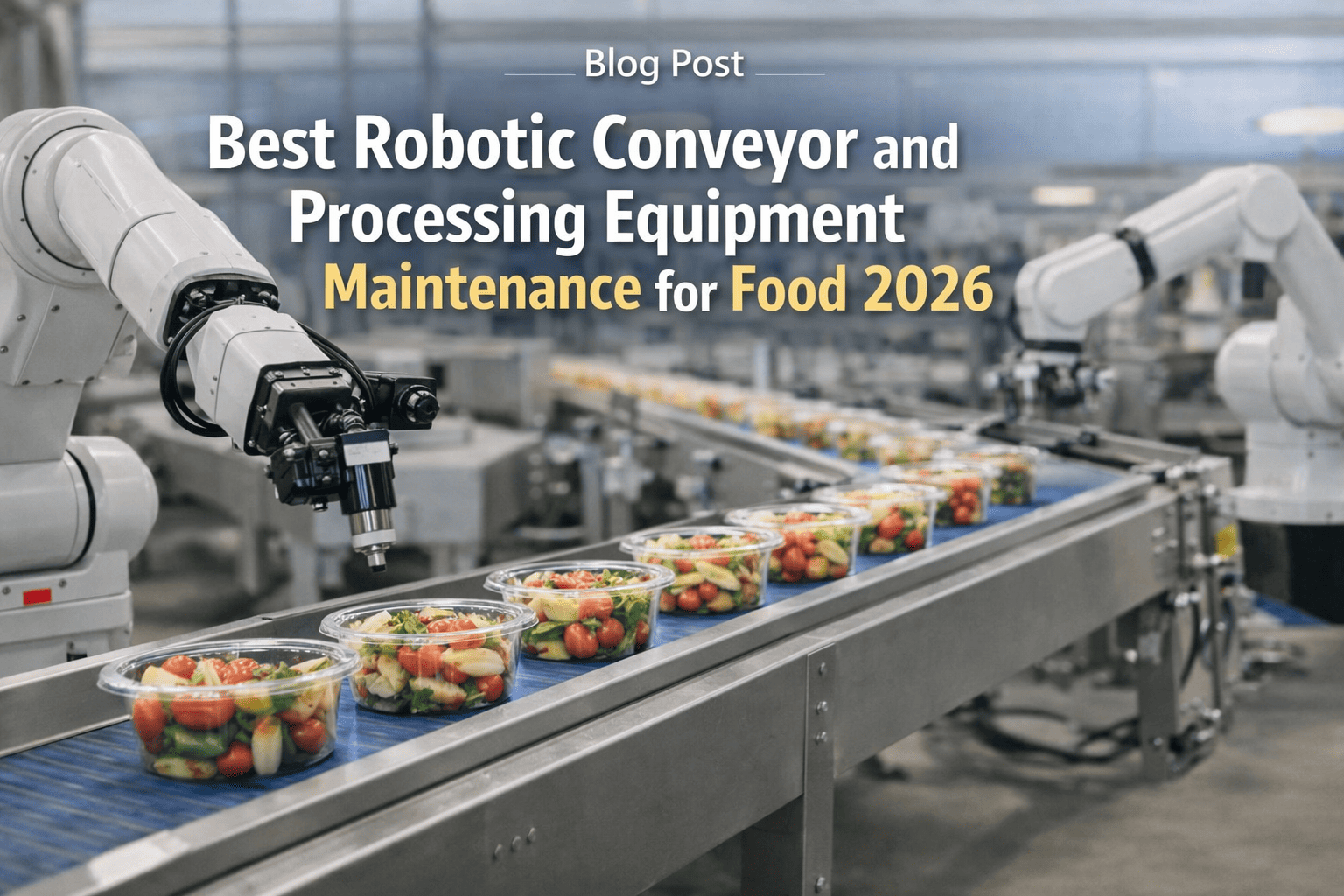
A food conveyor belt is not just a transport mechanism. It is a food-contact surface, a hygiene interface, and a critical production asset simultaneously. When a conveyor belt tears, a bearing seizes, or a drive motor fails mid-shift, the downtime impact is immediate and expensive. When a conveyor belt harbors a biofilm from inadequate cleaning, the consequence is a failed swab test, a potential recall event, and an audit non-conformance that no amount of corrective paperwork fully erases. Food conveyor and material handling maintenance demands a dual discipline: mechanical reliability and hygiene integrity, maintained in parallel, on a documented schedule, with evidence that satisfies both operations managers and food safety auditors. Start a free trial and register your conveyor assets in Oxmaint with hygiene-first PM schedules today, or book a demo to see how food plant conveyor maintenance is managed in Oxmaint.
65%
Of food conveyor failures are mechanical — bearing wear, belt tension, and drive motor degradation
4.8x
Emergency conveyor repair cost premium vs. planned PM-driven intervention in food manufacturing
30%
Of food safety audit non-conformances in material handling zones relate to inadequate cleaning records
40%
Reduction in conveyor downtime events at food plants with structured CMMS-driven PM programs
Hygiene and Reliability — Managed Together in One System
Oxmaint tracks conveyor mechanical PMs and cleaning schedules in the same asset record — so your maintenance team and quality team work from the same compliance baseline.
The Dual Maintenance Mandate for Food-Grade Conveyors
Food conveyors carry two maintenance responsibilities that industrial conveyors do not share equally. First, mechanical reliability — preventing bearing failures, belt tears, chain stretch, and drive motor burnout that halt production. Second, hygiene integrity — ensuring belt surfaces, frames, rollers, and transfer points do not harbour biofilm, allergen residue, or foreign debris that contaminate product. Both must be managed simultaneously, documented separately, and evidenced for different audiences. Mechanical records go to the maintenance manager. Hygiene records go to the quality team and the auditor. Start a free trial and see how Oxmaint separates and tracks both record types against the same conveyor asset.
Track 1 — Mechanical Reliability
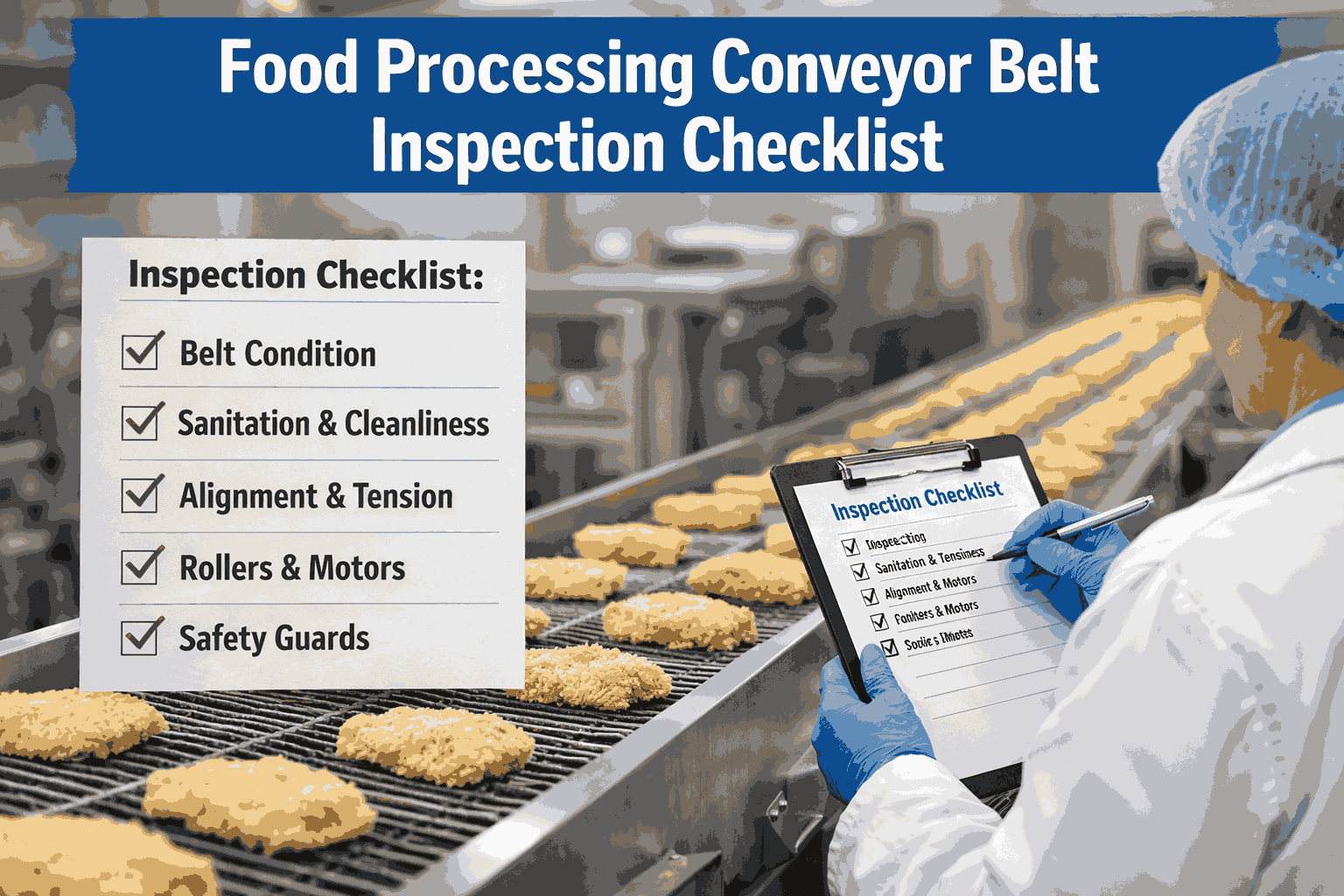
Belt Tension and Alignment
Weekly check — over-tension causes premature wear; under-tension causes slippage and product damage. Misalignment generates edge wear and metallic contamination risk.
Bearing Lubrication and Condition
Bi-weekly lubrication check using food-grade lubricant. Vibration trending on critical drive bearings provides 4–6 weeks advance warning of failure.
Drive Motor and Gearbox Inspection
Monthly thermal and vibration inspection. Motor current monitoring detects mechanical overload before it causes winding damage or catastrophic failure.
Chain Tension and Wear Check
Monthly chain elongation measurement on chain-driven conveyors. Chains stretched beyond manufacturer tolerance create metallic debris and jam risk.
Track 2 — Hygiene Compliance
Belt Surface Cleaning Schedule
Cleaning frequency determined by product contact risk — open food-contact belts require cleaning every shift. Cleaning records must be timestamped and signed per GMP requirements.
Frame, Roller, and Skirting Inspection
Weekly visual inspection for food debris accumulation, belt edge fraying, and product build-up at transfer points — all potential harborage sites for Listeria and Salmonella.
Hygienic Design Verification
Quarterly review of belt support configuration, frame hollow sections, and inaccessible zones that cannot be effectively cleaned — identifying and eliminating harborage risk by design.
ATP Swab Records per Zone
Post-clean ATP verification at defined sampling points provides objective evidence that belt surfaces and transfer areas meet hygiene standards — required under BRCGS and SQF programs.
Common Conveyor Failure Modes in Food Plants — and How CMMS Prevents Them
Conveyor failures in food plants are predictable. The same failure modes recur across plants of different sizes and product types — because the physics of belt wear, bearing fatigue, and motor degradation are consistent. A CMMS that schedules interventions before these failure curves reach the threshold point eliminates the majority of unplanned events. Book a demo to see how Oxmaint schedules conveyor PMs based on production hours and belt cycles.
Asset Registry
Conveyor Asset Hierarchy
Each conveyor is registered with full component detail — belt type, drive motor specs, bearing locations, and hygiene zone classification. PM tasks inherit conveyor-specific parameters automatically.
Production PM
Cycle and Hour-Based PM Triggers
PM tasks trigger on belt hours, production throughput, or shift changes — not just calendar dates. High-output conveyors get more frequent service than intermittent-use lines without manual adjustment.
Hygiene Records
Cleaning Schedule and Sign-Off
Cleaning tasks appear as separate work orders with required fields for chemical used, concentration, contact time, and post-clean verification — generates GMP-compliant records automatically.
Inspections
Mobile Hygiene Inspection Checklists
Pre-production and post-cleaning inspection checklists completed on mobile — with photo capture at each sampling point and mandatory supervisor sign-off before the line restarts.
Lubrication
Food-Grade Lubricant Tracking
Every lubrication task records the lubricant type, food-grade status, and quantity applied — creating the lubricant management documentation required under SQF Edition 9 and FSSC 22000.
Compliance
Audit-Ready Conveyor Maintenance Reports
Generate complete mechanical PM history and hygiene compliance records per conveyor line — formatted for BRCGS, SQF, and FSSC 22000 auditors in minutes, not days of manual compilation.
| Maintenance Area |
Reactive / Unstructured |
CMMS-Planned (Oxmaint) |
| Belt replacement timing |
After visible tear or slip event |
Scheduled on production hour threshold |
| Bearing lubrication |
When noise is audible — too late |
Bi-weekly on schedule, food-grade confirmed |
| Cleaning record completeness |
Paper log — often unsigned or missing |
Digital, mandatory sign-off, 100% traceable |
| ATP swab evidence |
When auditor requests it — scramble ensues |
Logged per cleaning cycle, instantly accessible |
| Conveyor downtime per year |
12–20 unplanned stops |
2–4 planned interventions |
| Food safety audit outcome |
NC for incomplete cleaning/maintenance records |
Full evidence trail — zero documentation NCs |
40%
Fewer Downtime Events
Food plants with CMMS-driven conveyor PM programs report 40% fewer unplanned line stoppages
30%
Hygiene NCs Eliminated
Documented cleaning schedules with digital sign-off eliminate the most common material handling audit finding
5x
Longer Belt Life
Properly tensioned, aligned, and lubricated food conveyor belts last 5x longer than reactively managed equivalents
2 min
Audit Report Generation
Complete conveyor maintenance and hygiene records generated on demand — mechanical and cleaning history combined
Manage Your Food Conveyors Like the Dual-Risk Assets They Are
Oxmaint gives food plant managers a single platform to track conveyor mechanical PMs, cleaning schedules, hygiene inspections, and lubricant records — with digital signatures and instant audit-ready reporting. No paper. No gaps. No non-conformances from missing records.
Frequently Asked Questions
How often should food-grade conveyor belts be cleaned and inspected?
Cleaning frequency depends on the food contact risk level of the conveyor zone. Open food-contact belts — those in direct contact with unwrapped product — must be cleaned and sanitized between each production run and at a minimum every shift. Conveyors carrying wrapped or packaged products require less frequent cleaning but still need regular frame and skirting inspection for debris accumulation. All cleaning events must be documented with the cleaning agent used, contact time, and post-clean verification result — digital records in Oxmaint eliminate the paper log gaps that generate BRCGS and SQF non-conformances.
What are the most common food conveyor failure modes and how are they prevented?
The most frequent failure modes in food plant conveyors are: bearing fatigue (prevented through regular lubrication on schedule with vibration monitoring trending), belt misalignment and tension loss (prevented through weekly tension and tracking checks), drive motor overload (detected early through current monitoring and thermal inspection), and chain elongation on chain conveyors (detected through monthly elongation measurement against manufacturer tolerance). All of these are preventable with structured PM schedules — Oxmaint automates their scheduling, completion recording, and escalation when tasks are missed.
What lubricants must be used on food plant conveyors?
Any lubricant applied to food-contact conveyors or conveyors in open food handling areas must be NSF H1 food-grade certified — meaning they are approved for incidental food contact. H2 lubricants (not food-safe but approved for non-contact applications) must be clearly segregated and their use location documented. Oxmaint tracks lubricant type, food-grade certification status, and application location against each conveyor asset — creating the lubricant management evidence required under SQF Edition 9, FSSC 22000's ISO/TS 22002-1 requirements, and BRCGS hygiene standards.
Can Oxmaint manage conveyor cleaning schedules separately from mechanical maintenance?
Yes. Oxmaint allows different task types to be scheduled against the same asset with different frequencies, responsible teams, and compliance requirements. A conveyor belt can have a weekly mechanical PM assigned to the engineering team and a shift-based cleaning task assigned to the sanitation team — both visible in the same asset record but tracked and reported separately. This dual-track approach matches the dual operational accountability of food conveyor management, with one system providing the complete evidence trail for both the maintenance manager and the food safety auditor.