The morning shift at a bakery packaging facility started normally until a seized roller on the product conveyor shredded the belt—stopping three packaging lines simultaneously. The maintenance team found catastrophic bearing failure that had been developing for weeks. The morning operator remembered hearing "something different" but had no structured way to document or escalate the observation. Post-failure investigation revealed the roller had been running hot for at least two weeks, leaving visible heat discoloration that any basic conveyor checklist would have flagged. The 8-hour repair cost $34,000 in lost production, emergency parts, and overtime labor—all preventable with a 3-minute daily inspection that catches roller problems before they become line-stopping failures.
Conveyor rollers are the workhorses of food manufacturing—spinning thousands of times per hour, carrying product weight, and operating in environments with temperature extremes, moisture, and sanitation chemicals. They fail predictably, showing warning signs days or weeks before catastrophic failure. Yet most facilities don't inspect rollers systematically until they seize, shred belts, or contaminate products with bearing grease. Facilities using structured conveyor inspection checklists reduce unplanned conveyor downtime by 62% and extend roller life by 40% by catching problems in their earliest, most fixable stages.
Sign In Now
Checklist / Asset Management
Conveyor Roller Failure Checklist
Systematic inspection that catches roller problems before they stop your lines.
Reduction in Conveyor Downtime
Of Failures Detectable Early
3 min
per section
Daily Inspection Time
Why Conveyor Roller Inspection Matters
Conveyor rollers fail through predictable mechanisms—bearing wear, contamination ingress, misalignment, and overloading. Each failure mode produces detectable warning signs before catastrophic failure: temperature rise, noise changes, rotation resistance, and visible wear. A structured inspection checklist ensures these signs are caught and documented before rollers fail in ways that damage belts, contaminate products, or stop production lines.
In food manufacturing environments, roller failures carry additional risks. Bearing grease from failed seals can contaminate products. Metal fragments from seized bearings create foreign material hazards. Failed rollers can cause belt tracking problems that damage product or create sanitation issues. Systematic inspection protects both equipment reliability and food safety.
85%
Of conveyor roller failures show detectable warning signs 2-4 weeks before catastrophic failure. Structured checklists catch these signs during routine inspection—temperature changes, noise, rotation resistance, and visible wear—when replacement is planned maintenance rather than emergency repair.
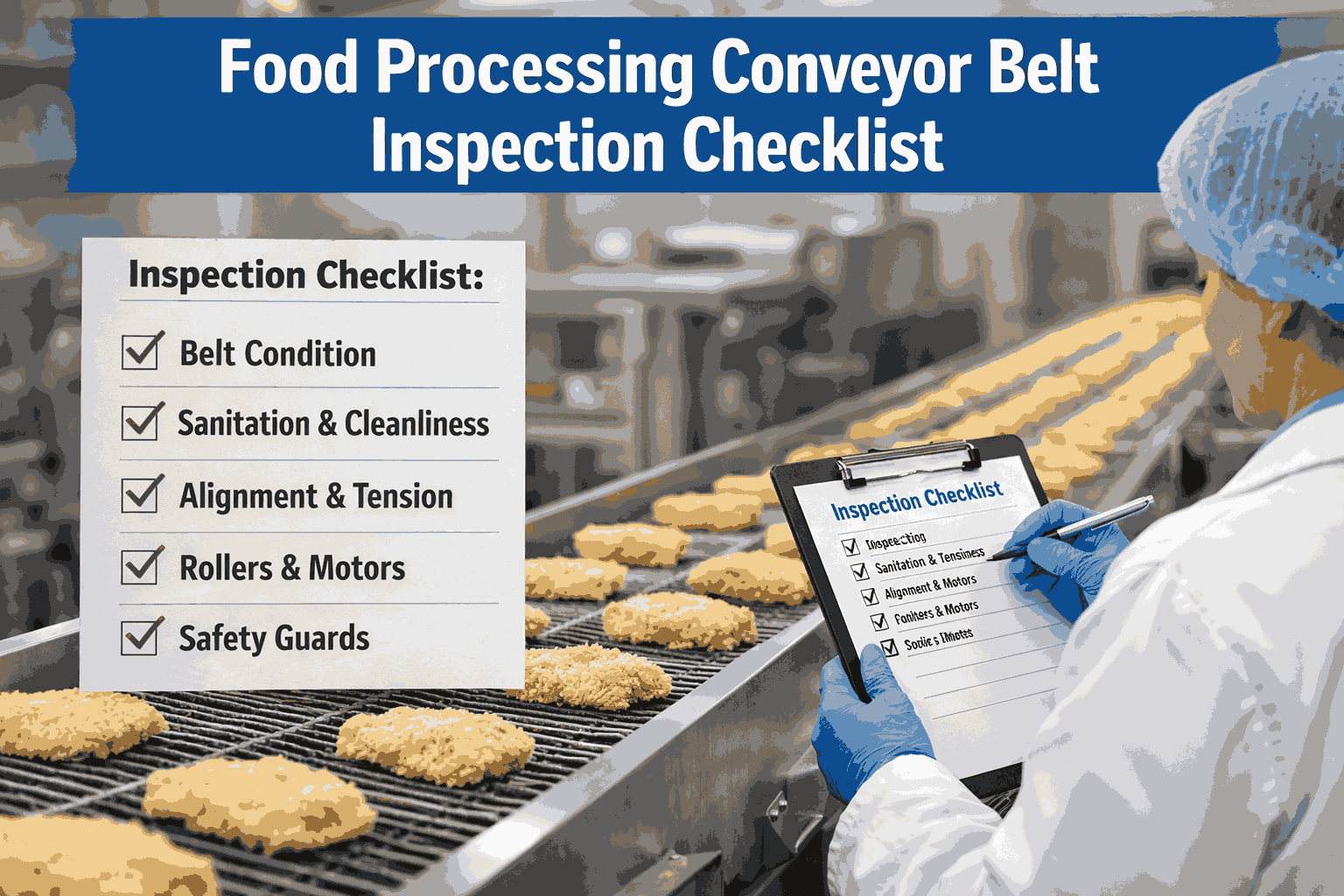
This checklist provides a systematic approach to conveyor roller inspection, organized by inspection timing and component focus. Use it as a starting template, then customize based on your specific conveyor types, operating conditions, and failure history.
Pre-Shift Startup Checklist
Complete this quick inspection before starting conveyors each shift. Focus on safety systems, obvious abnormalities, and conditions that changed since last operation:
Digital Checklists with Automatic Documentation
Oxmaint transforms paper checklists into mobile-ready digital inspections with photo capture, automatic timestamps, and instant work order creation when problems are found.
Daily Operational Checklist
Complete this detailed inspection once daily while the conveyor is running at normal operating speed. Running inspection catches problems that only appear under load:
Detailed Roller Inspection Checklist
Complete this thorough roller inspection weekly or during scheduled downtime. Requires machine lockout/tagout for hands-on inspection:
The drive roller transfers power to the belt. Failures here stop the entire conveyor.
Inspection Points:
☐ Bearing rotation smooth (rotate by hand)
☐ No play or looseness in bearings
☐ Lagging condition acceptable (no worn spots)
☐ No buildup on lagging surface
☐ Shaft alignment correct
Warning Signs:
Rough rotation or grinding feel
Axial or radial play in shaft
Heat discoloration on bearing housing
The tail pulley maintains belt tension and often includes takeup adjustment.
Inspection Points:
☐ Bearing rotation smooth
☐ Takeup adjustment within range
☐ Takeup mechanism functional
☐ No debris wrapped around roller
☐ Scraper/cleaner effective (if equipped)
Warning Signs:
Takeup at end of travel
Material buildup causing mistracking
Seized takeup adjustment
Carry rollers support the loaded belt. Failed carry rollers increase belt wear and can damage product.
Inspection Points:
☐ All rollers rotating freely
☐ No seized or slow-spinning rollers
☐ Roller surface condition good
☐ No excessive wear patterns
☐ Mounting brackets secure
Warning Signs:
Flat spots from seized rotation
Grooves worn in roller surface
Shell separating from shaft
Return rollers support the empty belt on its return path. Often neglected but failure causes tracking problems.
Inspection Points:
☐ All return rollers rotating
☐ No material buildup on rollers
☐ No belt material wrapped around shafts
☐ Roller surface not damaged
☐ Bearings functional
Warning Signs:
Belt tracking worse on return side
Debris wrapped around roller ends
Seized rollers wearing belt back
Snub rollers increase belt wrap on drive pulleys. High loading makes them failure-prone.
Inspection Points:
☐ Bearing condition good
☐ Roller surface clean
☐ Position/adjustment correct
☐ No excessive belt wrap tension
☐ Lagging intact (if equipped)
Warning Signs:
Higher temperature than other rollers
Lagging wear or separation
Bearing noise under load
Self-aligning rollers that correct belt tracking. Must pivot freely to function.
Inspection Points:
☐ Pivot mechanism moves freely
☐ Roller rotates properly
☐ Sensing mechanism functional
☐ Return-to-center action works
☐ Not binding or stuck
Warning Signs:
Tracker stuck at full deflection
Pivot seized from contamination
Belt tracking not correcting
Common Roller Failure Warning Signs
Train inspectors to recognize these warning signs that indicate developing roller problems requiring attention:
Signs:
Roller not rotating while belt moves
Flat spot worn on roller surface
Belt wear marks from friction
Smoke or burning smell from friction
Action: Stop conveyor immediately. Replace roller before continued operation.
Signs:
Elevated temperature at bearing
Grinding or rumbling noise
Visible grease leakage at seals
Play/looseness when checked by hand
Action: Schedule replacement within 48 hours. Monitor closely until replaced.
Signs:
Cracks or splits in roller shell
Dents or deformation
Shell separating from ends
Deep grooves or wear patterns
Action: Replace at next scheduled downtime. Risk of shell failure and belt damage.
Signs:
Lagging worn smooth (loss of grip)
Chunks missing from lagging
Lagging peeling from shell
Belt slippage at drive pulley
Action: Plan rework or replacement within 1-2 weeks. Monitor for slippage.
Signs:
Product buildup on roller surface
Material wrapped around shaft ends
Belt mistracking from buildup
Diameter variation from accumulation
Action: Clean at next opportunity. Investigate cause and improve cleaning/scrapers.
Signs:
Belt consistently tracking to one side
Belt edge wear on one side only
Uneven wear pattern on roller
Belt rubbing frame or guide
Action: Adjust roller alignment. Check the frame for damage or distortion.
Inspection Frequency Guidelines
Match inspection depth to frequency based on conveyor criticality and operating conditions:
Pre-Shift Startup
Safety system verification
Visual inspection for obvious issues
Startup sound and operation check
Performed by: Operator
Operational Inspection
Temperature monitoring at key points
Sound monitoring for changes
Belt tracking and tension check
Drive system visual inspection
Performed by: Operator or Maintenance
Detailed Roller Inspection
Hands-on roller inspection (LOTO required)
Bearing condition check
Lubrication per schedule
Complete drive system inspection
Performed by: Maintenance Technician
Comprehensive System Check
Every roller individually inspected
Belt splice condition assessment
Frame and structure inspection
Electrical connections check
Performed by: Maintenance Technician
From Checklist to Predictive Intelligence
Combine manual inspections with AI-powered monitoring for comprehensive roller health management. Oxmaint integrates checklist findings with vibration and temperature data to predict failures before they occur.
Documentation and Reporting
Effective checklist documentation enables trend analysis and maintenance planning. Record these elements with each inspection:
Identification
Conveyor ID/name and location
Date, time, and shift
Inspector name
Inspection type (startup/daily/weekly)
Results
Pass/Fail for each checkpoint
Measurements where applicable
Observations and notes
Photos of abnormal conditions
Findings
Issues identified and location
Severity/priority classification
Recommended action
Work order number if created
Trending
Temperature readings over time
Recurring issues by location
Roller replacement history
Time between failures
Best Practices for Conveyor Inspection
Maximize the value of your conveyor checklist program with these proven practices:
1
Establish Baselines
Document normal operating conditions—typical temperatures, sounds, and appearance—when equipment is in good condition. Detecting "different from normal" requires knowing what normal looks like.
2
Compare to Neighbors
Temperature and sound changes are early warning signs. A roller that's 20°F hotter than its neighbors or sounds different than last week is telling you something—investigate before it fails.
3
Inspect While Running
Many problems only appear under load. Temperature rise, bearing noise, and tracking issues are detectable during operation. Include running inspections in your program.
4
Act on Findings
Inspections without follow-up teach everyone the program doesn't matter. Create work orders for every finding requiring attention and track completion.
5
Keep Spares Available
The best inspection program is useless if you find a failing roller but have to wait two weeks for parts. Stock critical rollers and bearings for immediate replacement.
6
Train Operators to Observe
Operators hear and see conveyors all day. Train them to recognize warning signs and report observations. Their input catches problems between scheduled inspections.
Frequently Asked Questions
How often should we inspect conveyor rollers?
Inspection frequency depends on conveyor criticality and operating conditions. At minimum: pre-shift startup checks (3-5 minutes) every shift, daily operational inspection (8-10 minutes) while running, weekly detailed roller inspection (20-30 minutes) with machine locked out, and monthly comprehensive inspection (45-60 minutes) of all components. High-criticality conveyors or those in harsh environments may need more frequent detailed inspections. Adjust based on your failure history—if rollers fail between inspections, increase frequency.
What temperature indicates a failing roller bearing?
Rather than absolute temperature, compare each bearing to its neighbors and baseline. General guidelines: below 140°F (60°C) is typically normal, 140-160°F (60-71°C) requires monitoring and investigation, above 160°F (71°C) indicates a problem requiring action. More importantly, a bearing running 20-30°F hotter than similar rollers nearby is warning of developing failure regardless of absolute temperature. Establish baseline temperatures when bearings are new and track changes over time.
Should operators or maintenance perform conveyor inspections?
Both, with different scope. Operators should perform pre-shift startup checks and daily operational inspections—they're present constantly and notice changes fastest. Train operators to identify abnormalities and document observations without requiring them to diagnose problems. Maintenance technicians should perform weekly detailed inspections requiring lockout/tagout and technical evaluation, monthly comprehensive inspections, and follow-up investigation of operator-reported issues. This division provides continuous monitoring while applying technical expertise where needed.
How do we check rollers that are hard to access?
For inaccessible rollers, use indirect indicators: listen for unusual sounds from the general area, use an IR thermometer to check temperatures from a distance, observe belt tracking behavior that might indicate roller problems, and watch for debris accumulation patterns suggesting seized rollers. During scheduled downtime, make time to inspect difficult-to-access locations that can't be checked during operation. Consider installing access doors or inspection ports on conveyor covers for regularly problematic areas. For critical conveyors, vibration monitoring sensors can detect bearing problems without physical access.
What's the most important thing to check on conveyors?
If you can only check one thing, check temperatures at bearing locations—elevated temperature is the most reliable early indicator of bearing failure. A bearing running hot today will likely seize within days to weeks if not addressed. Temperature checks are quick (IR thermometer scan), non-invasive (no lockout required), and catch the most common failure mode. However, a complete inspection program should include sound, visual condition, and hands-on checks during scheduled downtime to catch the full range of potential problems.
How do we integrate checklist findings with our CMMS?
Digital checklist platforms should connect directly to your CMMS for seamless workflow. When an inspector identifies an issue, the system should automatically create a work order with equipment ID, finding description, photos, and recommended priority—eliminating manual transcription and ensuring nothing falls through cracks. The CMMS should also provide inspection schedules, notify when inspections are due or overdue, and enable reporting on inspection compliance and findings trends. Look for platforms with pre-built CMMS integrations. At minimum, establish a manual process where checklist findings generate work orders within 24 hours.
Stop Roller Failures Before They Stop Your Lines
Oxmaint's digital inspection platform transforms paper checklists into mobile-ready inspections with photo documentation, automatic work order creation, and trend analysis—catching conveyor problems when they're still easy to fix.