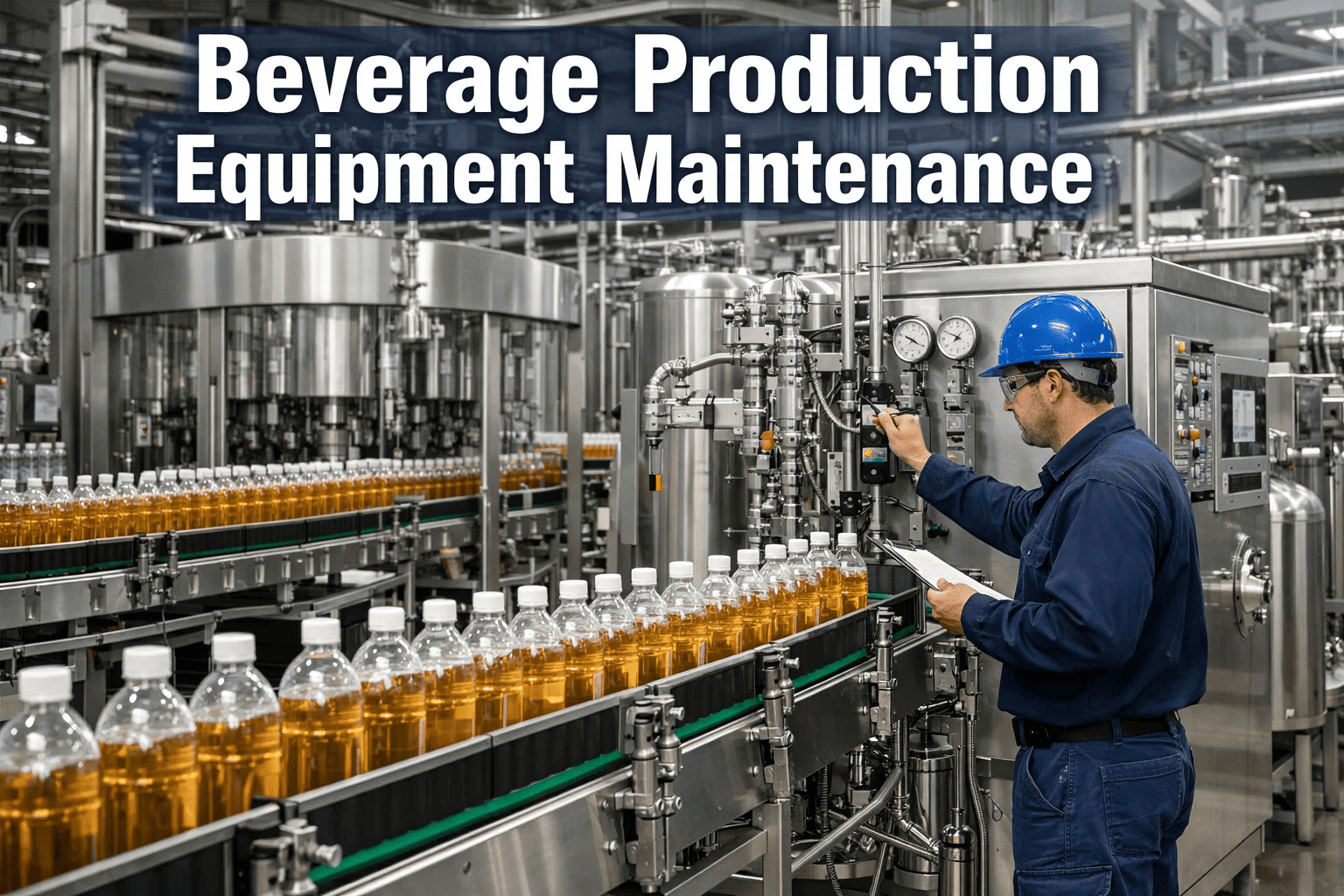
Dairy processing facilities operate at an intersection of extreme precision and extreme consequence: a pasteurizer failing to hold 72°C for 15 seconds is not a production inconvenience — it is a public health event. A separator running out of balance vibration does not just wear bearings — it risks contaminating a batch whose traceability chain passes through every retail outlet it reached. For maintenance managers, plant engineers, and quality leads in dairy operations across the USA, UK, Canada, Australia, UAE, and Germany, the maintenance program is not a support function — it is a core food safety control. The facilities that sustain audit-ready compliance, consistent product quality, and minimum downtime run structured, data-driven maintenance programs on every critical asset from reception to despatch. start a free trial or book a demo to see how Oxmaint manages dairy equipment maintenance from pasteurizer to packaging.
Dairy Equipment Maintenance That Meets the Standard Every Audit
Oxmaint gives dairy plant teams automated PM scheduling for pasteurizers, separators, homogenizers, and CIP systems — with calibration tracking, compliance documentation, and mobile work orders purpose-built for dairy production environments.
Critical Dairy Processing Equipment: What Needs to Be Maintained and Why
Dairy plant maintenance covers a wider range of technically demanding assets than most food manufacturing categories — combining pressure vessels, precision rotating machinery, high-temperature heat exchangers, and product-contact automation into one integrated system where failure at any point can compromise the entire batch. start a free trial and build your dairy asset register in Oxmaint within your first session.
High-temperature short-time pasteurizers are the most critical food safety asset in any fluid dairy plant. Flow diversion valve (FDV) function, temperature recorder calibration, regeneration section plate condition, and holding tube integrity require weekly verification and annual third-party validation under FDA PMO (USA), EU Regulation 853/2004, and equivalent frameworks.
Cream separators and clarifiers operate at 5,000–8,000 RPM — making bearing condition, bowl balance, seal integrity, and lubrication the highest-priority maintenance items. Vibration monitoring quarterly, bowl disassembly and inspection annually, and seal replacement per OEM schedule prevent catastrophic mechanical failures that generate significant downtime and potential contamination events.
High-pressure homogenizers operating at 150–300 bar demand rigorous maintenance of homogenizing valves, valve seats, pistons, O-ring seals, and high-pressure pump components. Pressure consistency failure affects fat globule reduction, producing product texture variation detectable in QC testing. Valve seat replacement at defined hours is the highest-impact scheduled task.
UHT processing at 135–150°C for 4–15 seconds demands that heat exchanger integrity, holding tube configuration, and aseptic filling machine sterile barrier are maintained with zero tolerance for deviation. Annual sterility validation and plate heat exchanger inspection are statutory requirements in most markets.
Dairy CIP systems clean and sanitize product-contact surfaces between production runs. Spray ball condition, pump flow rate, caustic and acid dosing accuracy, temperature control, and cycle validation records are required for BRCGS, IFS, and PMO compliance. CIP effectiveness testing — ATP bioluminescence or microbiological swabbing — should be scheduled quarterly per circuit.
Dairy cold chain — from raw milk reception at 4°C through chilled storage — demands that refrigeration compressors, evaporator coils, cooling towers, and remote data loggers maintain continuous performance. Compressor PM, refrigerant charge checks, and data logger calibration are critical maintenance items with direct product safety and shelf-life implications.
Aseptic fillers, carton sealers, and bottle capping lines require filler head seal integrity, temperature seal bar profiling, and cap torque verification as core maintenance activities. For aseptic lines, any break in the sterile barrier triggers a full restart and validation procedure — making filler PM the highest-value maintenance investment on the packaging floor.
Temperature probes, flow meters, conductivity sensors, pressure transmitters, and pH meters throughout the dairy process require scheduled calibration with certificates retained in the asset record. Instrument drift in pasteurization or CIP circuits directly creates food safety risk — making calibration PM one of the most compliance-critical maintenance activities in the dairy environment.
The Dairy Maintenance Pain Points Auditors Find First
Flow Diversion Valve Not Tested on Schedule
FDA PMO and EU dairy regulations require documented weekly FDV functional testing on every HTST system. A single missed test week with no alternate evidence creates an immediate critical finding — and potential market withdrawal obligations for product produced during the gap period.
Homogenizer Pressure Drift Undetected
Homogenizer valve seat wear causes pressure reduction that affects fat globule size distribution — producing texture and mouthfeel defects detectable in consumer panels before they appear in QC testing. Without scheduled pressure trend logging, valve wear is discovered only after product complaints arrive.
Separator Bearing Failure Without Warning
Centrifugal separators running without vibration monitoring programs experience catastrophic bearing failure at unpredictable intervals — taking 6–12 hours of production offline at an average cost of $15,000+ per event. Quarterly vibration monitoring cuts separator unplanned downtime by over 70%.
Calibration Records Incomplete for PMO Audit
FDA PMO inspectors require complete calibration records for all instruments in the pasteurization circuit — temperature recorders, chart drives, and process controllers. Gaps in calibration records trigger regulatory action regardless of whether product safety was actually compromised.
How Oxmaint Manages Dairy Equipment Maintenance
Oxmaint centralizes every dairy maintenance task — from daily FDV tests to annual separator bowl services — into one platform with automated scheduling, mobile work orders, calibration tracking, and audit-ready documentation. book a demo to see the complete dairy maintenance workflow.
FDV and PMO Compliance Workflows
Weekly FDV test work orders with mandatory sign-off fields — creating the documented record FDA and EU dairy inspectors require at every inspection, without manual follow-up from quality managers.
Instrument Calibration Certificate Tracking
Register every temperature probe, flow meter, and pressure transmitter with calibration due dates. Automatic alerts 30 days before expiry prevent the calibration gaps that generate PMO and BRCGS non-conformances.
Vibration Monitoring and Bowl Service
Schedule quarterly vibration readings and annual bowl disassembly work orders — with OEM specifications embedded in the task and IoT sensor integration connecting continuous vibration data to automatic alert thresholds.
CIP Cycle Validation Logging
Log CIP cycle parameters — time, temperature, concentration, flow rate — at the circuit level with mobile capture. Quarterly effectiveness testing work orders include ATP swab result fields linked to corrective action protocols.
Refrigeration Asset PM Schedules
Compressor, evaporator, and cooling tower PM work orders scheduled per OEM interval — with refrigerant charge checks, coil cleaning records, and data logger calibration cycles all tracked in one unified asset program.
Instant FDA, BRCGS, IFS Audit Reports
Generate complete maintenance history reports by asset, circuit, or date range in seconds. Dairy inspectors and third-party auditors receive the full documented program — no emergency file compilation required.
Before vs. After: Dairy Maintenance Program Impact
Dairy Maintenance ROI
Frequently Asked Questions
What documentation does the FDA PMO require for dairy pasteurizer maintenance?
The FDA Pasteurized Milk Ordinance requires documented weekly functional testing of the flow diversion valve on every HTST system, complete calibration records for temperature recording and controlling instruments, sealing records for regulatory controls on the timing system and temperature recorder, and documentation of any equipment modifications affecting pasteurization performance. All records must be retained for a minimum of two years and be available for immediate review by FDA inspectors and state regulatory authorities. Digital CMMS records with technician sign-off and date stamps satisfy these documentation requirements — paper binder records increasingly do not under enhanced inspection scrutiny.
How often should homogenizer valves and valve seats be replaced in dairy processing?
Homogenizer valve and valve seat replacement intervals depend on product viscosity, throughput volume, and operating pressure — but most OEM recommendations for fluid dairy processing at 200+ bar range from 500 to 2,000 operating hours for valve seats, with O-rings and seals inspected at every 250-hour service interval. The key indicator is operating pressure consistency: a homogenizer unable to maintain target pressure within specification after pressure adjustment indicates valve seat wear requiring replacement. CMMS hour-based PM triggers ensure replacement intervals are never exceeded, regardless of production schedule variations.
What maintenance does a dairy CIP system require?
Dairy CIP system maintenance includes: spray ball inspection and flow rate verification quarterly; pump impeller and seal inspection annually; chemical dosing system calibration quarterly; temperature and conductivity sensor calibration per instrument maintenance schedule; CIP cycle validation — comparing actual vs. target time, temperature, concentration, and flow parameters — at least quarterly per circuit; and microbiological effectiveness testing using ATP swabbing or plate count culture at defined intervals. The CMMS should schedule each task independently by circuit and retain all results in the asset record for audit retrieval.
Can Oxmaint manage dairy maintenance compliance across different international regulatory frameworks?
Yes. Oxmaint supports multi-regulatory compliance by allowing site-specific maintenance standards and documentation requirements to be configured per facility. A dairy group operating plants in the USA (FDA PMO), UK (Dairy Hygiene Regulations), and Germany (Tier-Hygiene-Verordnung) can configure site-specific PM schedules, documentation fields, and compliance alert parameters within the same platform — with portfolio-level reporting showing compliance status across all markets simultaneously. Calibration records, FDV test logs, and inspection certificates are stored per asset and retrievable by the relevant regulatory authority without cross-site data exposure.
Dairy Plant Maintenance That Meets the Standard Every Single Day
Oxmaint gives dairy maintenance teams the automated scheduling, calibration tracking, CIP documentation, and compliance reporting that keep FDA PMO, BRCGS, and IFS programs audit-ready 365 days a year — not just two weeks before the inspector arrives.