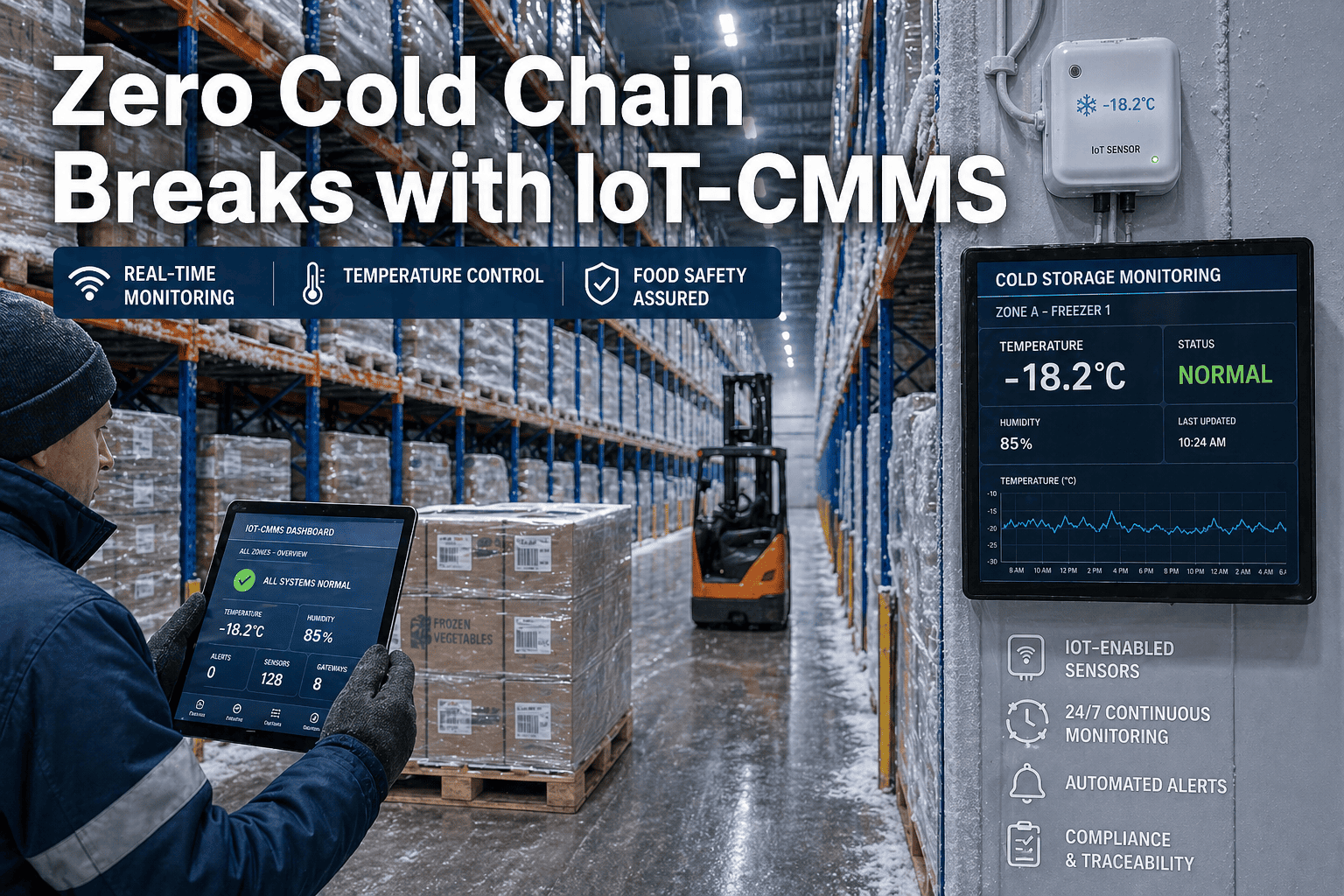
Most cold chain failures don't announce themselves — they accumulate quietly across shifts, equipment cycles, and inspection gaps until a compressor trips at 2 AM and $800,000 in perishable inventory is at risk. The food distribution center featured in this case study had exactly that problem. What they built with Oxmaint's IoT-integrated CMMS didn't just fix it — it eliminated cold chain breaks entirely. Book a demo to see how real-time IoT monitoring and automated maintenance scheduling work together to protect your temperature-sensitive inventory.
Food Supply Chain · Cold Storage · IoT CMMS
How a Food Distribution Center Achieved Zero Cold Chain Breaks Using IoT-Integrated CMMS
A regional food distribution operator managing $80M+ in perishable inventory eliminated temperature excursions, passed every regulatory audit, and cut refrigeration-related downtime by 73% — all within 8 months of deploying Oxmaint.
$80M+
Inventory Protected
Zero cold chain breaks post-deployment
73%
Downtime Reduction
Refrigeration system failures eliminated
100%
Audit Pass Rate
FDA, FSMA, SQF compliance maintained
8 mo
Time to Results
Full IoT integration + PM schedule live
The Problem
What Was Breaking — And Why Nobody Caught It in Time
The distribution center operated 14 refrigerated zones across 220,000 sq ft. Temperature checks were manual, logged on paper clipboards. Maintenance was reactive — technicians responded after alarms triggered. Equipment history lived in spreadsheets nobody trusted. Across a 12-month period before Oxmaint, the facility recorded 9 cold chain breaks, 3 partial inventory losses, and 2 failed third-party audits.
!
No Real-Time Visibility
Temperature readings taken every 4 hours by staff — 3.5-hour windows where excursions went undetected.
!
Reactive Maintenance Only
Compressors and condensers serviced after failure. No PM schedule. Average repair cost: $18,400 per incident.
!
Paper-Based Compliance
Audit documentation assembled manually before each inspection — gaps, inconsistencies, and missing records exposed the facility to regulatory risk.
!
Disconnected Equipment Records
No asset registry. Equipment age, service history, and warranty status tracked informally — CapEx decisions made on guesswork.
The Solution
How Oxmaint's IoT CMMS Integration Changed Everything
Oxmaint was deployed across all 14 refrigerated zones with IoT temperature sensors feeding directly into the CMMS. Every asset was registered, PM schedules were automated, and compliance documentation became digital and audit-ready at all times. Start a free trial to see how the platform connects your sensor data to actionable maintenance workflows.
01
IoT Sensor Integration
Temperature and humidity sensors installed across all 14 zones. Data streams into Oxmaint every 60 seconds. Threshold alerts trigger work orders automatically — no human intervention required.
02
Full Asset Registry Built
Every compressor, condenser, evaporator coil, and walk-in unit registered with condition scores, service history, and manufacturer specs. 84 assets catalogued in the first 3 weeks.
03
Preventive Maintenance Automated
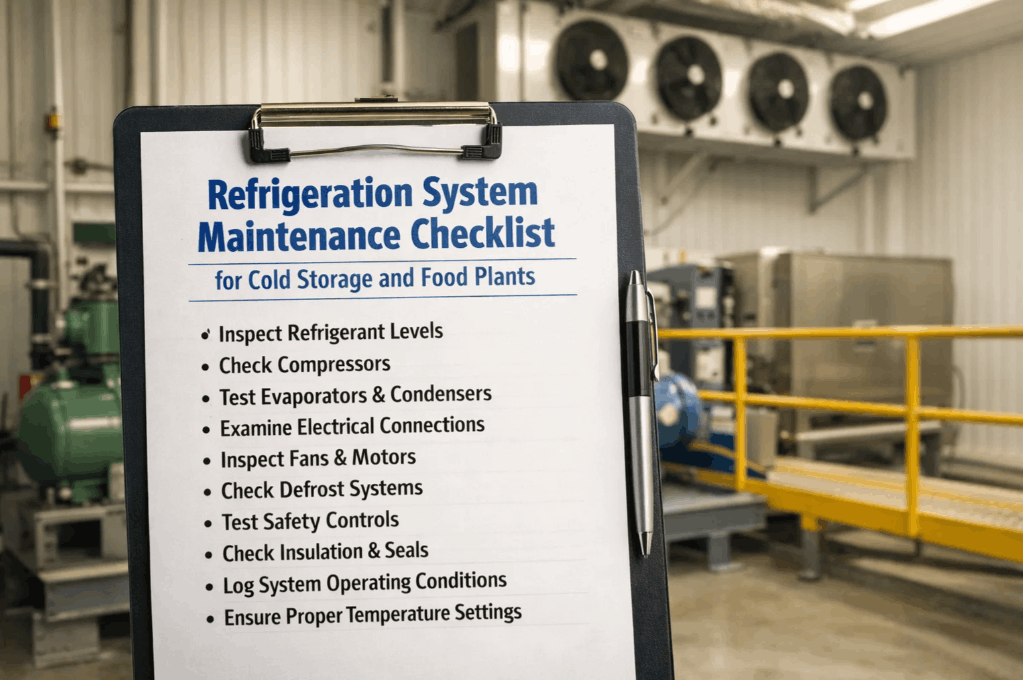
PM schedules built for every refrigeration asset based on manufacturer intervals and operational hours. Technicians receive mobile work orders before equipment reaches failure thresholds.
04
Digital Compliance Documentation
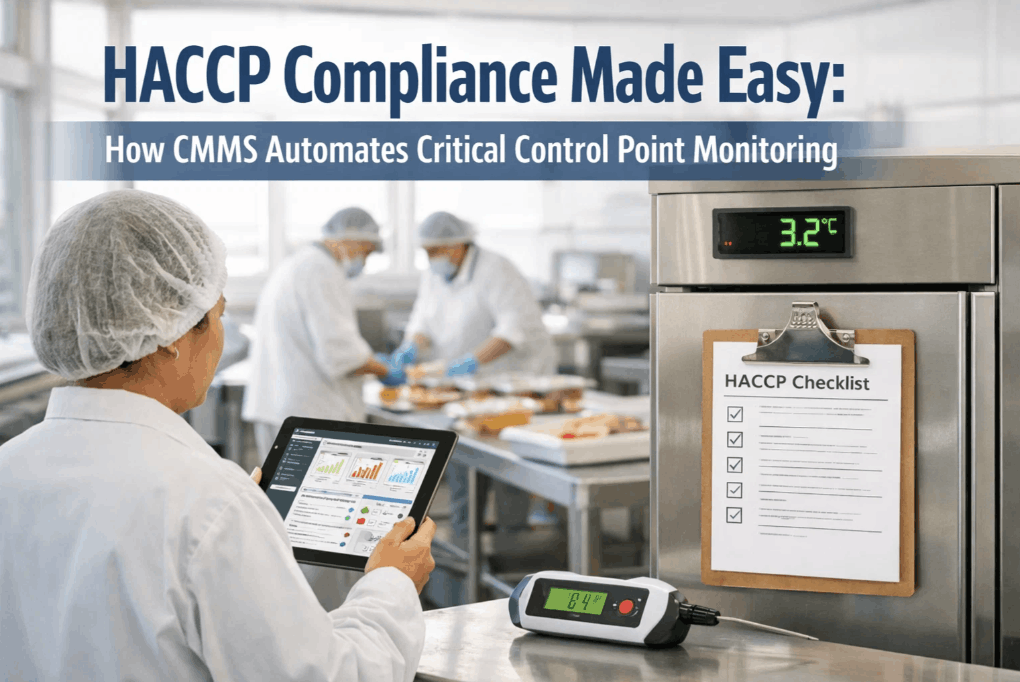
Temperature logs, inspection records, and corrective action reports stored digitally with timestamps and digital signatures. Audit packages generated in minutes, not days.
Before vs After
Reactive vs. IoT-Integrated Maintenance: Side by Side
Key Features Used
Oxmaint Capabilities That Drove These Results
IoT Integration
Real-Time Sensor Monitoring
Temperature and humidity data feeds from IoT sensors directly into the CMMS. Threshold breaches auto-generate work orders with zone, severity, and assigned technician — in under 90 seconds.
Asset Management
Full Equipment Registry
Every refrigeration asset tracked with condition score, service history, warranty status, and remaining useful life estimate. CapEx decisions backed by data, not guesswork.
Preventive Maintenance
Automated PM Scheduling
Maintenance intervals tied to asset records and operational triggers — hours, cycles, or calendar. Technicians receive mobile work orders before failures occur, not after.
Compliance
Audit-Ready Documentation
Digital temperature logs, inspection records, and corrective action reports with timestamps and digital signatures. FSMA, FDA, and SQF documentation generated on demand.
Work Orders
Mobile-First Technician Workflows
Field technicians complete inspections, log findings, and close work orders from mobile devices on the floor. No paper, no re-entry, no gaps in the maintenance record.
Reporting
Portfolio-Level Dashboards
Operations leadership tracks refrigeration uptime, PM completion rates, and compliance status across all zones from a single dashboard — updated in real time.
Results
Measured Outcomes — 18 Months Post-Deployment
0
Cold Chain Breaks
18 consecutive months with zero temperature excursions
82%
Repair Cost Reduction
Emergency repair cost down from $18,400 to $3,200 per incident
$1.4M
Inventory Loss Prevented
Estimated annualized value of spoilage avoided since deployment
96%
PM Completion Rate
Preventive maintenance tasks completed on schedule across all 84 assets
These outcomes weren't accidental. They came from connecting sensor data to maintenance workflows, replacing paper logs with digital records, and building a PM programme that runs automatically rather than depending on someone remembering to check. Book a demo to see exactly how the IoT-to-work-order workflow is configured for food distribution environments.
FAQs
Frequently Asked Questions
How quickly can IoT sensors be integrated with Oxmaint's CMMS?
Most food distribution facilities complete initial IoT integration within 2–4 weeks. Oxmaint supports standard IoT protocols including MQTT and REST API. Sensors from major manufacturers connect directly — no custom middleware required. The facility in this case study had all 14 zones live within 21 days of project kickoff.
Start a free trial to explore the integration setup.
Does Oxmaint support FDA FSMA and SQF compliance documentation?
Yes. Oxmaint generates audit-ready documentation including temperature logs with timestamps, corrective action records, equipment inspection reports, and digital signatures. Records are stored with full traceability — the facility in this study reduced audit preparation time from 3–5 days to under 2 hours. Documentation meets FSMA, SQF, BRC, and FDA requirements.
What types of refrigeration equipment does Oxmaint support for preventive maintenance?
Oxmaint's asset registry supports any equipment type — compressors, condensers, evaporator coils, walk-in coolers, blast freezers, refrigerated dock doors, and HVAC units. PM schedules can be triggered by calendar intervals, operational hours, cycles, or real-time IoT readings. The platform adapts to your equipment mix, not the other way around.
How does automatic work order generation from IoT alerts work in practice?
When a sensor reading crosses a defined threshold — for example, a walk-in cooler rising above 38°F — Oxmaint automatically creates a work order, assigns it to the on-call technician, and sends an alert via mobile and email. The technician receives zone location, current temperature reading, affected assets, and recommended actions. Average alert-to-response time at the case study facility dropped from 3.5 hours to under 12 minutes.
Book a demo to see a live alert workflow.
Ready to Protect Your Cold Chain?
Your next cold chain failure is preventable. The question is whether you have the system to catch it first.
Oxmaint connects your IoT sensors, refrigeration assets, and maintenance teams into a single platform — so temperature excursions trigger action automatically, PM schedules run without reminders, and your compliance documentation is always audit-ready.