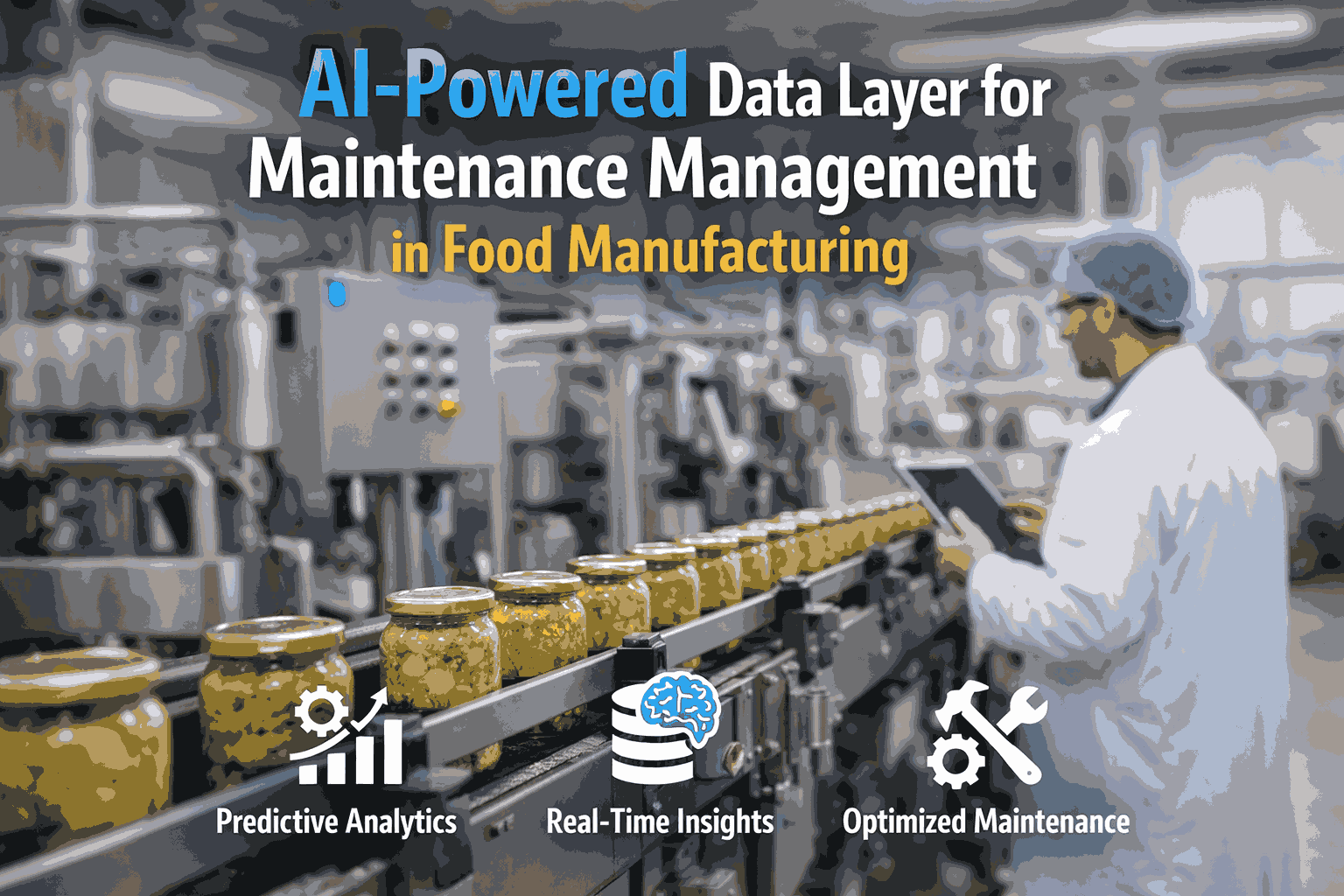
A snack manufacturer in Texas spent $4.7 million automating their production lines over three years—PLCs on every motor, SCADA across the floor, automated packaging from end to end. Yet they were still averaging 23 hours of unplanned downtime per month. The automation ran the machines. But nothing analyzed the data those machines generated. Vibration data sat unread in PLC registers. Temperature trends scrolled past on HMI screens with no one watching. When a gearbox failed on their highest-throughput line, the SCADA system faithfully recorded every second of the decline—and nobody saw it until the line stopped. The machines were automated. The decisions were not. Sign up for Oxmaint to add the intelligence layer your automation is missing.
Are Food Plants Over-Automated but Under-Intelligent?
Your plant has PLCs, SCADA, automated conveyors, and robotic packaging. It generates terabytes of operational data every month. But here's the uncomfortable question: is any of that data actually making decisions—or is it just being recorded while your team keeps reacting to breakdowns?
The Paradox: More Data, Fewer Insights
Food plants today collect more operational data than ever. Yet 68% of manufacturers cite data fragmentation as the primary barrier to AI adoption. The data exists—but it's trapped in silos that no one can reach. Book a demo to see how Oxmaint connects your data to decisions.
Automation ≠ Intelligence: Understanding the Gap
Automation tells machines what to do. Intelligence tells people what's about to happen. Most food plants invested heavily in the first and almost nothing in the second.
What the Intelligence Gap Actually Costs
Without an analytics layer, your automation investment works at a fraction of its potential. These are the costs hiding inside the gap.
Your Machines Are Talking. Is Anything Listening?
Oxmaint connects your existing PLC, SCADA, and sensor data to an intelligent maintenance layer—turning raw data into predictive work orders without replacing your automation.
Adding the Missing Layer
You don't need to rip out your automation. You need to add an intelligence layer on top of it—one that reads the data your machines already produce and turns it into decisions your team can act on.
Intelligence Layer (CMMS + AI Analytics)
Receives data from all systems below. Applies pattern recognition and anomaly detection. Auto-generates prioritized work orders. Provides audit-ready documentation. This is where data becomes decisions.
Automation Layer (PLC / SCADA / Sensors)
Already installed. Already generating data. Already recording vibration, temperature, pressure, current, fault codes, and cycle counts. The infrastructure investment is already made.
Physical Equipment
Compressors, conveyors, motors, packaging lines, refrigeration units. The assets that produce your product and generate your revenue.
Same Plant. Same Automation. Different Outcomes.
Conveyor motor vibration data sits in PLC register #4420. Nobody queries it. Motor fails Tuesday at 2pm during peak run.
CMMS reads PLC register #4420 continuously. AI detects vibration trend 18 days before failure. Work order auto-created for next scheduled window.
Closing the Gap: A Practical Starting Point
You don't need a multi-year digital transformation. Start where the data already exists and the cost of inaction is highest.
Audit Your Data Sources
Map which systems generate equipment health data—PLCs, SCADA, IoT sensors, operator logs. Most plants discover they already have 70–80% of the data they need, just sitting unused.
Identify Your Costliest Blind Spots
Which 3–5 assets cause the most expensive downtime? Those are your pilot candidates. Focus the intelligence layer where the ROI is immediate and provable.
Connect Data to CMMS
Feed sensor and PLC data into Oxmaint. Configure thresholds and anomaly rules. Let the system auto-generate work orders when degradation patterns emerge—no manual monitoring required.
Measure and Expand
Track downtime reduction, prevented failures, and maintenance cost savings. Use the data to build your business case for expanding to additional asset groups—results, not promises.
Don't Replace Your Automation. Make It Smarter.
Oxmaint sits on top of your existing systems and turns the data they already generate into predictive maintenance actions. No rip-and-replace required.
Frequently Asked Questions
Automation Was the Investment. Intelligence Is the Return.
You've already spent millions on the infrastructure. The data is flowing. The only thing missing is the layer that converts it into fewer breakdowns, lower costs, and better decisions. That's what Oxmaint delivers.