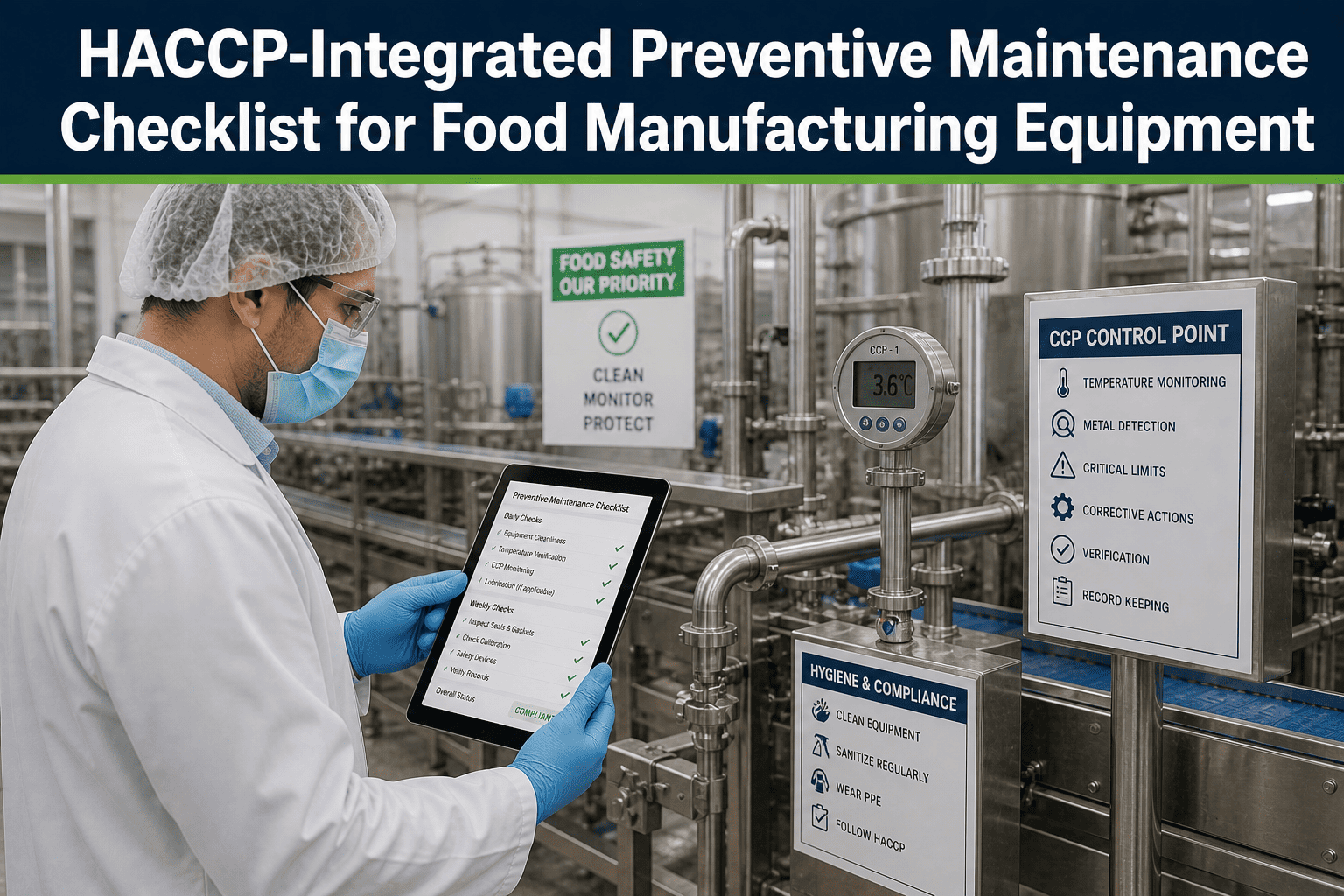
Pasteurizer common failures cost the North American dairy industry an estimated $340 million annually in product losses, emergency repairs, regulatory penalties, and brand damage. A single under-pasteurization event at a Michigan facility last year resulted in a 2.1 million pound recall, three hospitalizations, and an FDA warning letter requiring 18 months of enhanced oversight. The equipment had passed its scheduled maintenance inspection just six days before the failure—the technician missed a slowly drifting temperature sensor that read 2.3 degrees higher than actual product temperature. Sign up for Oxmaint to implement continuous sensor drift monitoring and prevent pasteurizer failures before they occur.
Of pasteurizer failures trace back to temperature measurement or control system problems that proper calibration and monitoring programs would have detected weeks earlier
7 Most Common Pasteurizer Failure Modes
These failure modes account for 91% of pasteurizer-related food safety incidents and unplanned downtime events in food and beverage manufacturing facilities.
RTDs and thermocouples gradually drift from calibration, reading higher or lower than actual product temperature. Sensors reading high allow under-pasteurized product to pass.
- Increasing differential between indicating and recording thermometers
- Inconsistent alkaline phosphatase test results
- Gradual increase in divert frequency
Weekly comparison checks against reference thermometer, annual NIST-traceable calibration, sensor replacement at 3-5 year intervals
The FDD valve fails to divert under-temperature product, allowing inadequately pasteurized product to reach packaging. Valve seats wear, seals degrade, or actuators weaken.
- Slow valve response during startup testing
- Valve chatter or incomplete closure sounds
- Product traces in divert line during normal operation
Daily function testing, monthly response time measurement, quarterly seal inspection, annual valve rebuild
Pinhole leaks or gasket failures in the regenerator section allow raw product to contaminate pasteurized product, completely bypassing thermal treatment.
- Unexpected positive coliform or alkaline phosphatase results
- Pressure differential changes between sections
- Product in CIP rinse water from pasteurized side
Weekly pressure hold tests, quarterly dye penetrant inspection, maintaining pasteurized side at higher pressure
Product residue, mineral deposits, or biofilm on heat transfer surfaces reduces thermal efficiency. System compensates with higher temperatures, damaging product quality.
- Increasing steam consumption for same throughput
- Rising pressure drop across heat exchanger
- Extended run times between CIP cycles
Optimized CIP chemistry and temperatures, regular efficiency monitoring, water softening, proper product preheating
Positive displacement pump wear allows flow rate variation, changing holding tube residence time. Faster flow reduces hold time below minimum requirement.
- Flow rate drift from calibrated value
- Increased pump noise or vibration
- Product leakage at seals
Monthly flow rate verification, quarterly pump inspection, proper suction conditions, seal monitoring
Controller hardware failures, software glitches, or communication losses disable safety interlocks or provide false readings. System may continue with compromised safety functions.
- Intermittent communication errors in logs
- Unexplained alarm activations
- Battery backup warnings
UPS protection, environmental control, regular backup battery replacement, software version management
Symptom-Based Troubleshooting Guide
When pasteurizer problems occur, systematic troubleshooting identifies root causes quickly. Start with the observed symptom and work through potential causes in order of likelihood.
- Steam supply pressure and temperature
- Product inlet temperature
- Flow rate - verify timing pump delivery
- Sensor calibration against recording thermometer
- Heat exchanger fouling - pressure drop
- FDD setpoint programming
- Control valve operation
- Control valve sizing - oversized causes hunting
- PID tuning - improper gain settings
- Steam pressure variations
- Sensor location and response
- Product flow variations - pump pulsation
- Air in product stream
- Sensor wiring connections
- Temperature records - review for under-temp events
- Regenerator integrity - pressure test
- FDD function - verify diversion occurred
- Sensor accuracy - immediate calibration check
- Holding tube residence time calculation
- Post-pasteurization contamination
- Sample handling procedures
- Setpoint programming in controller
- Sensor signal to controller
- Solenoid electrical signal
- Pneumatic air supply pressure
- Actuator diaphragm condition
- Valve mechanical binding
- Safety circuit for unauthorized bypasses
Root Cause Analysis: 5-Why Example
Effective root cause analysis prevents failure recurrence. This example demonstrates the 5-Why methodology applied to a pasteurizer under-temperature event. Book a demo to see how Oxmaint automates incident investigation workflows.
Product tested positive for alkaline phosphatase indicating inadequate thermal treatment. 47,000 pounds of product recalled.
The flow diversion device did not divert product when temperature dropped below 161°F.
The temperature sensor was reading 2.8°F higher than actual product temperature.
The RTD had drifted out of calibration over 14 months of service.
Annual calibration was postponed due to production demands.
No policy existed requiring management approval to postpone food safety critical maintenance.
- Immediate: Calibrate all pasteurizer temperature sensors, verify FDD function on all lines
- Short-term: Implement weekly sensor comparison checks against reference thermometer
- Long-term: Create policy requiring plant manager approval to postpone any food safety critical PM task
- Systemic: Install automated sensor drift detection with alerts when differential exceeds 0.5°F
Pasteurizer Failure Prevention Strategies
Systematic prevention programs reduce pasteurizer failures by 84% compared to reactive maintenance approaches. Sign up for Oxmaint to implement these strategies with automated scheduling and compliance tracking.
- Compare indicating and recording thermometer readings at startup
- Test FDD function by simulating under-temperature condition
- Verify flow rate matches calibrated setpoint
- Check steam/hot water supply pressure and temperature
- Review previous shift records for anomalies
- Compare indicating thermometer to NIST-traceable reference
- Measure FDD response time (must be under 1 second)
- Record heat exchanger pressure drops for trend analysis
- Check control valve operation through full range
- Review alarm logs for developing patterns
- Pressure test regenerator for cross-contamination potential
- Inspect timing pump for wear and seal condition
- Verify holding tube integrity and support positions
- Check electrical connections for tightness
- Test backup battery condition on controllers
- Full calibration of all temperature sensors (NIST-traceable)
- FDD valve rebuild or replacement per manufacturer schedule
- Heat exchanger disassembly and plate/tube inspection
- Timing pump rebuild with new seals and wear components
- Control system backup and software verification
Maintenance Approach Comparison
The maintenance strategy you choose directly impacts food safety risk, operational costs, and regulatory compliance.
| Metric | Reactive | Preventive | Predictive |
|---|---|---|---|
| Food Safety Risk | High - failures cause incidents | Medium - interval gaps exist | Low - continuous monitoring |
| Unplanned Downtime | 12-24 hours per incident | 2-4 hours occasionally | Near zero |
| Regulatory Compliance | Warning letters likely | Generally acceptable | Exceeds expectations |
| Sensor Calibration | When failures occur | Fixed annual schedule | When drift detected |
| Component Life Used | 100% (to failure) | 60-70% | 85-95% |
Your Next Pasteurizer Failure Is Already Developing
Sensor drift, valve wear, and control system degradation happen gradually. Oxmaint detects these developing failures weeks before they compromise food safety or cause unplanned downtime.