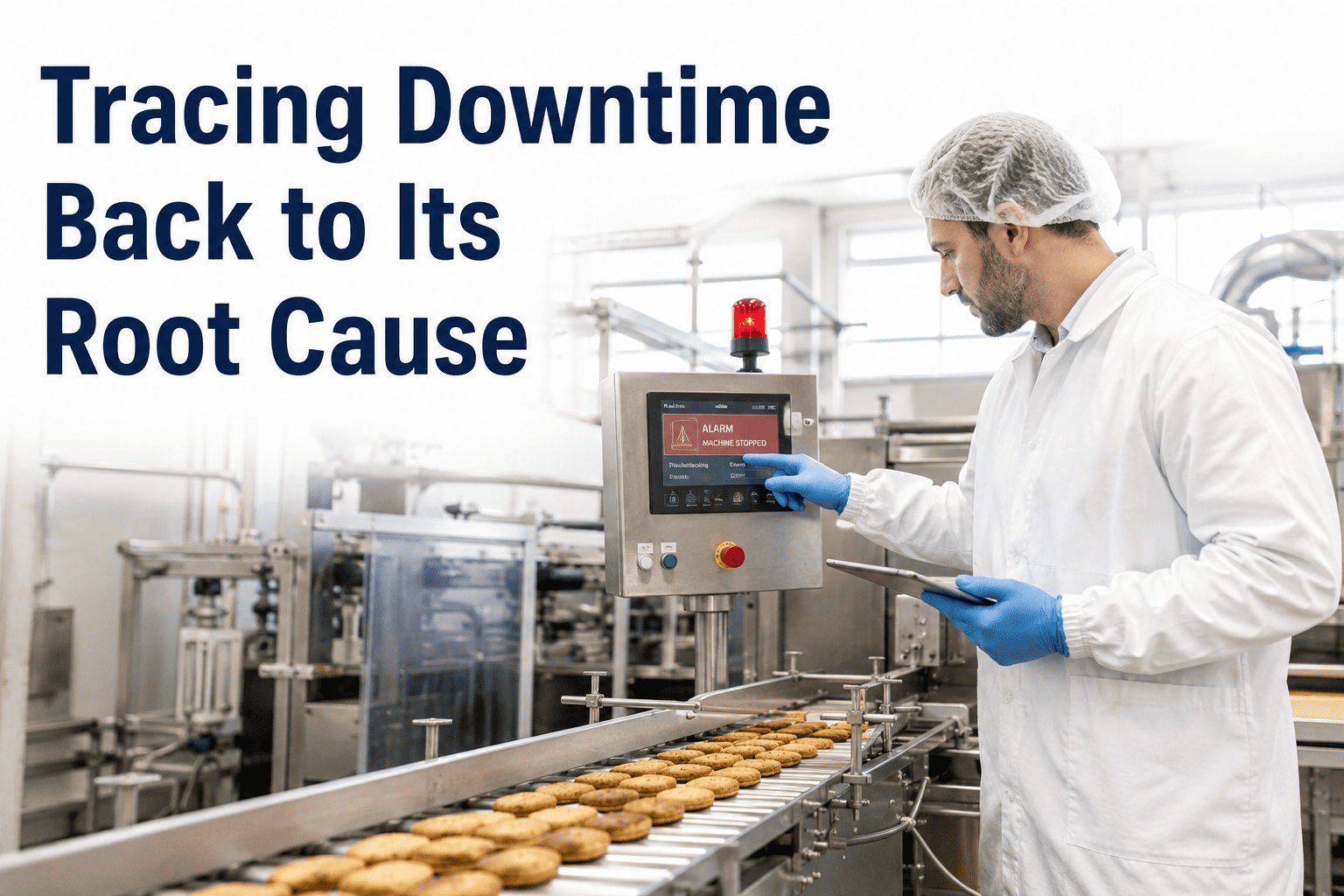
The brewery's centrifugal transfer pump failed for the fourth time in six months. Each time, the maintenance team replaced the mechanical seal, documented "seal failure" as the cause, and returned the pump to service. Each repair cost $2,800 in parts and labor. But nobody asked the question that mattered: why do the seals keep failing? When a reliability engineer finally conducted proper process pump failure root cause analysis, the answer emerged in three hours. The pump's suction strainer hadn't been cleaned since installation—eighteen months prior. Starved for flow, the pump cavitated continuously, destroying seals in weeks instead of years. Total cost of the actual fix: $45 for a strainer cleaning and a PM schedule update. The $11,200 spent on four seal replacements was wasted money treating symptoms while the disease spread.
Root cause analysis transforms how food and beverage facilities approach pump reliability. Instead of asking "what broke," RCA asks "why did it break, and why did we let it happen?" Facilities that implement structured RCA programs reduce repeat pump failures by 78% and cut annual pump maintenance costs by $127,000. The difference between reactive repair and permanent improvement is a simple question asked five times: Why?
Explore More By SignUp | Book A Demo Now.
Root Cause Analysis
Root Cause Analysis of Process Pump Failures in Food Manufacturing
Stop fixing symptoms. Start eliminating causes. Transform every failure into permanent improvement.
Reduction in Repeat Failures
Of Failures Have Hidden Causes
RCA Success Rate When Documented
$127K
annual savings
Average Maintenance Cost Reduction
Why Surface-Level Fixes Fail: The Cost of Not Asking Why
Every maintenance department knows the pattern. A pump fails. The technician identifies the failed component—usually a seal, bearing, or impeller. The part gets replaced. The pump returns to service. Documentation reads "replaced mechanical seal" or "installed new bearings." Case closed. Except it isn't.
Without root cause analysis, you're treating symptoms while the underlying disease continues. The seal didn't fail because seals fail—it failed because something caused it to fail. That cause remains, waiting to destroy the next seal, and the next, until someone finally asks the right questions.
65%
Of process pump failures in food manufacturing have root causes that differ from the apparent failure mode. A "bearing failure" might actually be a lubrication program failure. A "seal failure" might be a vibration problem. A "cavitation damage" might be a process control issue. Without RCA, you'll never know—and the failures will continue.
The math is unforgiving. A single pump seal replacement costs $800-$3,000 including labor and downtime. If the root cause remains unaddressed and the seal fails again in three months instead of three years, you've multiplied your costs by twelve. Worse, each failure risks product contamination, regulatory findings, and customer complaints that carry costs far beyond the repair invoice.
Ready to break the cycle of repeat failures? Request a demo to see how Oxmaint guides teams through structured RCA workflows.
The RCA Framework: From Symptom to Source
Effective root cause analysis follows a structured approach that moves systematically from the obvious failure to its true origin. In food and beverage manufacturing, where pump failures can contaminate product and halt production, this discipline is especially critical.
01
Problem Definition
Clearly describe what failed, when it failed, and the immediate impact. Avoid assumptions. Document observable facts: "Product transfer pump P-104 stopped pumping at 14:23 on March 15. Production line 3 halted. Visible leak at seal area."
Key Questions: What exactly happened? When did it happen? What was the immediate impact? What were the operating conditions?
02
Data Collection
Gather all relevant information before analysis begins. This includes maintenance history, operating logs, inspection records, and physical evidence from the failed components. In food operations, also collect CIP records and product information.
Key Questions: What does the failed component look like? What does the maintenance history show? Were there any recent changes? What do operators recall?
03
Cause Analysis
Apply structured analysis techniques—5-Why, Fishbone diagrams, or fault tree analysis—to trace the failure chain from symptom to source. Continue asking "why" until you reach a cause that is preventable through action you can take.
Key Questions: Why did each condition exist? What allowed this to happen? Where does the chain of causation lead? What is the true root cause?
04
Solution Development
Develop corrective actions at three levels: immediate (fix the current problem), root cause (prevent recurrence on this equipment), and systemic (prevent similar failures across the facility). Assign owners and deadlines.
Key Questions: What will prevent recurrence? Who owns each action? When must it be complete? How will we verify effectiveness?
05
Implementation and Verification
Execute corrective actions with appropriate documentation. Monitor the equipment to verify the fix worked. Track metrics to confirm the failure mode doesn't recur. Close the loop with lessons learned.
Key Questions: Were all actions completed? Did the fix work? Has the failure recurred? What can we learn for other equipment?
The 5-Why Method: Drilling to the Root
The 5-Why method is the most practical RCA technique for process pump failures. By repeatedly asking "why," you move past symptoms to reach actionable root causes. The method works because it forces you to keep digging when the natural tendency is to stop at the first plausible answer.
1
Why did the pump fail?
The mechanical seal failed, causing product leakage
2
Why did the mechanical seal fail?
Seal faces showed heat damage and scoring from running dry
3
Why was the seal running dry?
The pump was starting before the supply tank had adequate level
4
Why was the pump starting with low tank level?
The level interlock was bypassed during a production rush and never restored
5
Why was the bypass never restored?
ROOT CAUSE: No procedure exists for tracking temporary bypasses, and no verification step confirms interlocks are restored after maintenance or production emergencies
Corrective Actions Implemented
Immediate: Restore level interlock, replace damaged seal, verify pump operation
Root Cause Fix: Create bypass tracking log requiring supervisor sign-off for each bypass and mandatory restoration verification within 24 hours
Systemic Fix: Audit all safety interlocks across facility, implement weekly interlock verification checks, add bypass tracking to CMMS
Outcome: Zero seal failures in 18 months following implementation. Annual savings of $14,400 in seal replacements plus eliminated production losses.
1
Why did the pump fail?
The drive-end bearing seized, causing motor overload trip
2
Why did the bearing seize?
Bearing showed signs of lubricant contamination and inadequate lubrication film
3
Why was the lubricant contaminated?
Product (tomato sauce) was leaking past the inboard seal and entering the bearing housing
4
Why was product leaking past the seal?
The seal was degraded from chemical attack by the acidic tomato product
5
Why was the seal material incompatible with the product?
ROOT CAUSE: When the product changed from mild sauce to acidic tomato sauce 2 years ago, no engineering review assessed equipment compatibility—the original EPDM seals are not suitable for acidic products
Corrective Actions Implemented
Immediate: Replace bearings, install Viton seals compatible with acidic products, flush and refill bearing housing
Root Cause Fix: Create material compatibility matrix for all pump seals and elastomers vs. product characteristics
Systemic Fix: Implement Management of Change procedure requiring engineering review for any product changes affecting equipment
Outcome: Bearing life extended from 4-5 months to projected 3+ years. Similar seal upgrades implemented on 6 other pumps handling acidic products.
1
Why did the pump fail?
Impeller showed severe pitting and erosion, pump could no longer maintain required flow
2
Why was the impeller damaged by cavitation?
NPSH available was insufficient—suction pressure was too low for the pump's requirements
3
Why was suction pressure too low?
The suction strainer was 70% blocked, creating excessive pressure drop
4
Why was the strainer blocked?
Strainer cleaning was not on the PM schedule—it had never been cleaned
5
Why was strainer cleaning not on the PM schedule?
ROOT CAUSE: When the pump was installed 3 years ago, the strainer was added as a field modification but was never incorporated into the equipment BOM or PM task list in the CMMS
Corrective Actions Implemented
Immediate: Clean strainer, replace impeller, verify NPSH margin restored to acceptable level
Root Cause Fix: Add strainer to equipment BOM, create monthly strainer inspection PM task with cleaning threshold criteria
Systemic Fix: Audit all field modifications from past 5 years, verify each is documented in CMMS with appropriate PM tasks; implement procedure requiring CMMS update before any field modification is closed
Outcome: Impeller life extended from 8-10 months to 4+ years (still running). Audit identified 23 other undocumented field modifications requiring PM tasks.
Structure Your RCA Process. Track Every Corrective Action. Eliminate Repeat Failures.
Oxmaint provides guided RCA workflows that ensure thorough investigation, tracks corrective actions to completion, and monitors equipment to verify fixes are effective—turning every failure into permanent improvement.
Common Root Cause Categories for Process Pump Failures
While every failure is unique, root causes tend to fall into recognizable categories. Understanding these patterns helps RCA teams know where to look and what questions to ask. In food and beverage manufacturing, these six categories account for the vast majority of pump failure root causes:
Maintenance Program Deficiencies
Examples
Missing PM tasks for critical components, incorrect PM intervals, inadequate inspection criteria, PM tasks not executed as scheduled, lubrication program failures
Indicators in RCA
Failures occur on predictable timeline, maintenance history shows gaps, failed components show wear patterns consistent with neglect
Operating Practice Issues
Examples
Running pumps dry, improper startup/shutdown sequences, operating outside design envelope, bypassed safety interlocks, inadequate operator training
Indicators in RCA
Failures correlate with shift changes or specific operators, damage patterns suggest operational abuse, interlocks found bypassed
Design and Selection Problems
Examples
Pump undersized or oversized for application, wrong materials for product/chemicals, inadequate NPSH margin, improper seal selection, design not suited for CIP conditions
Indicators in RCA
Failures began at installation or after process change, identical pumps in similar service perform differently, design calculations show marginal conditions
Installation and Workmanship
Examples
Misalignment, pipe strain on pump casing, improper seal installation, wrong lubricant type or quantity, torque specifications not followed, contamination introduced during assembly
Indicators in RCA
Failures occur shortly after maintenance or installation, alignment checks show out-of-spec conditions, installation documentation incomplete
Process Condition Changes
Examples
Product formulation changes, temperature variations, viscosity changes, flow rate modifications, CIP chemical changes, new cleaning procedures
Indicators in RCA
Failure timing correlates with process changes, damage patterns suggest chemical attack or thermal stress, similar failures across multiple pumps handling same product
Management System Gaps
Examples
No Management of Change process, inadequate spare parts inventory, insufficient training programs, missing procedures, poor communication between shifts/departments
Indicators in RCA
Similar failures across multiple equipment types, failures follow organizational changes, root causes point to missing systems rather than individual errors
The Fishbone Diagram: Organizing Complex Failures
When a pump failure involves multiple contributing factors, the Fishbone (Ishikawa) diagram helps organize potential causes into logical categories. This visual tool ensures RCA teams consider all possible cause categories and don't overlook contributing factors.
For process pump failures in food manufacturing, the standard fishbone categories adapt to address industry-specific factors:
Equipment/Machine
Pump design limitations
Component wear and age
Material compatibility
Seal and bearing condition
Instrumentation accuracy
Method/Process
Operating procedures
Startup/shutdown sequences
CIP cycle parameters
PM task execution
Inspection criteria
Material/Product
Product characteristics
Viscosity variations
Temperature extremes
Abrasive particles
Chemical compatibility
Manpower/People
Operator training level
Maintenance technician skills
Shift communication
Workload and fatigue
Procedure compliance
Environment
Ambient temperature
Humidity and moisture
Washdown exposure
Vibration from nearby equipment
Electrical supply quality
Management
Resource allocation
Spare parts availability
Training programs
Change management
Performance metrics
Food-Specific RCA Considerations
Root cause analysis in food and beverage manufacturing must address factors that don't exist in other industries. Product safety, regulatory compliance, and sanitary design requirements add layers of complexity—and consequence—to pump failure investigations.
CIP
CIP Cycle Impact Analysis
Clean-in-place cycles create thermal shock, chemical exposure, and repeated stress cycles that accelerate pump wear. RCA must examine CIP parameters: temperatures, chemical concentrations, cycle frequency, and transition rates between hot and cold phases.
RCA Questions: Have CIP parameters changed? Are temperature transitions too rapid? Is the seal material compatible with all CIP chemicals? Are rinse cycles adequate to remove chemical residue?
CON
Contamination Risk Assessment
When pumps fail in food service, contamination risk must be part of the RCA. Did the failure mode allow lubricant, metal particles, or seal fragments into the product stream? What product was affected? Was it captured or released?
RCA Questions: What material entered the product? How much product was potentially affected? Were downstream detection systems (magnets, screens) effective? What is the contamination risk to consumers?
REG
Regulatory Compliance Factors
FDA, USDA, and 3-A sanitary standards impose requirements that affect pump design, materials, and maintenance. RCA should verify whether equipment and practices meet regulatory requirements—non-compliance may be a root cause or a consequence.
RCA Questions: Does the pump meet sanitary design requirements? Are materials FDA-approved for food contact? Are maintenance practices documented per regulatory requirements? Could the failure trigger a reportable event?
PRD
Product Characteristic Changes
Food products vary seasonally, by supplier, and by formulation. A pump that worked perfectly for one product may fail rapidly when product characteristics change. RCA must investigate whether product changes contributed to the failure.
RCA Questions: Has the product formulation changed? Are there seasonal variations in raw materials? Has viscosity, temperature, or pH shifted? Did a new supplier provide different ingredient characteristics?
SAN
Sanitary Design Verification
Pumps in food service must be cleanable with no dead legs, crevices, or areas where product can accumulate and harbor bacteria. RCA should verify whether the pump installation maintains sanitary design principles.
RCA Questions: Are there areas where product accumulates? Is the pump properly drainable? Do maintenance practices maintain sanitary integrity? Were gaskets and seals replaced with food-grade equivalents?
DOC
Documentation and Traceability
Food safety regulations require documentation of equipment maintenance and any events that could affect product safety. RCA documentation becomes part of the facility's food safety record and may be reviewed during audits.
RCA Questions: Is the investigation properly documented? Are corrective actions traceable? Does documentation meet audit requirements? Are lessons learned communicated to appropriate personnel?
For more information Sign Up Now. and Book A Demo.
Capture Food-Specific Failure Data. Meet Regulatory Documentation Requirements.
Oxmaint's RCA workflows include food industry-specific factors, generate audit-ready documentation, and track corrective actions through to verified completion.
Building an Effective RCA Program
Individual root cause analyses provide value, but the real transformation comes from building RCA into your maintenance culture. An effective program ensures investigations happen consistently, knowledge accumulates over time, and improvements spread across the facility.
01
Define RCA Triggers
Not every failure warrants full RCA—establish clear criteria for when investigation is required. Common triggers include: repeat failures (same failure mode within 12 months), safety incidents, product contamination events, failures exceeding cost threshold, and critical equipment failures.
02
Train RCA Facilitators
Effective RCA requires facilitation skills beyond technical knowledge. Train dedicated facilitators in RCA methodology, interviewing techniques, and documentation standards. Having trained facilitators ensures consistent quality across investigations.
03
Standardize the Process
Use consistent templates, checklists, and workflows for all RCA investigations. Standardization ensures thoroughness, enables comparison across investigations, and simplifies training. Your CMMS should support structured RCA workflows.
04
Track Corrective Actions
An RCA is worthless if corrective actions aren't completed. Assign clear ownership, set deadlines, and track progress. Escalate overdue actions. Verify effectiveness after implementation. Your CMMS should track actions to completion.
05
Share Lessons Learned
RCA findings should spread beyond the immediate equipment. Communicate lessons learned to other shifts, departments, and facilities. Apply systemic fixes across similar equipment. Build a searchable knowledge base of past investigations.
06
Measure Program Effectiveness
Track metrics that demonstrate RCA program value: repeat failure rate, time to complete corrective actions, cost savings from prevented failures, and mean time between failures for equipment that underwent RCA.
RCA Documentation Best Practices
Thorough documentation transforms a one-time investigation into lasting organizational knowledge. In food manufacturing, documentation also serves regulatory and audit purposes. Follow these practices to create RCA records that deliver ongoing value.
Documentation Essentials
Complete failure description with date, time, equipment ID, and operating conditions
Photos of failed components showing damage patterns and wear indicators
Full cause chain from symptom through root cause with supporting evidence
All corrective actions with owners, deadlines, and completion verification
Lessons learned applicable to other equipment or facilities
Follow-up monitoring plan to verify fix effectiveness
Common Documentation Failures
Stopping at the apparent cause without reaching true root cause
Vague descriptions like "seal failed" without explaining why
Missing photos or disposing of failed components before documentation
Corrective actions without assigned owners or deadlines
No follow-up to verify corrective actions were effective
Storing documentation where others cannot find or learn from it
When to Escalate RCA Investigations
Most pump failures can be investigated by plant maintenance teams. However, some situations require escalation to specialists, engineering support, or external experts. Recognize these triggers early to ensure appropriate resources are applied.
Escalate to Engineering
Root cause analysis points to design or selection issues
Failure involves equipment operating outside original design parameters
Process changes may have affected equipment suitability
Metallurgical analysis or material testing is required
Corrective actions involve equipment modification or replacement
Engage External Specialists
Same failure recurring despite multiple internal RCA attempts
Catastrophic failure with significant safety or financial impact
Failure investigation requires specialized testing equipment
Root cause appears to involve manufacturing defect requiring OEM involvement
Product contamination incident requiring independent investigation
Frequently Asked Questions
What is root cause analysis for process pump failures?
Root cause analysis (RCA) is a systematic investigation method that identifies the underlying causes of equipment failures rather than just addressing symptoms. For process pumps, RCA goes beyond documenting what component failed (seal, bearing, impeller) to determine why it failed and what organizational, procedural, or design factors allowed the failure to occur. Effective RCA leads to corrective actions that prevent recurrence, not just repairs that restore immediate function.
When should root cause analysis be performed on pump failures?
RCA should be performed when: the same failure mode recurs within 12 months, the failure results in product contamination or safety incident, repair costs exceed a defined threshold (often $5,000-$10,000), the failure affects critical production equipment, or the failure has regulatory implications. Not every minor failure requires full RCA—establishing clear triggers ensures resources focus on failures with the greatest improvement potential.
How long does a pump failure RCA typically take?
A thorough RCA for a process pump failure typically requires 2-8 hours of investigation time, depending on complexity. Simple failures with clear cause chains may be completed in 2-3 hours. Complex failures involving multiple contributing factors, missing documentation, or the need for component analysis may require 6-8 hours or more. The investigation should not be rushed—incomplete RCA that misses the true root cause wastes resources and allows failures to recur.
What is the difference between the 5-Why method and Fishbone diagram?
The 5-Why method traces a linear chain of causation by repeatedly asking "why" until reaching a preventable root cause. It works well for straightforward failures with a single cause chain. The Fishbone (Ishikawa) diagram organizes potential causes into categories (Equipment, Method, Material, Manpower, Environment, Management) and helps teams brainstorm all possible contributing factors. Fishbone diagrams are better suited for complex failures with multiple contributing causes. Many RCA investigations use both: Fishbone to identify potential causes, then 5-Why to trace the most likely cause chain to its root.
How do you verify that RCA corrective actions are effective?
Verification requires monitoring the equipment after corrective actions are implemented to confirm the failure doesn't recur. This includes: tracking the specific failure mode to ensure it doesn't repeat, monitoring leading indicators (temperatures, vibration, performance metrics) that preceded the original failure, conducting follow-up inspections at defined intervals, and documenting evidence that corrective actions were completed as specified. A CMMS with RCA tracking capabilities can automate follow-up monitoring and alert teams if warning signs reappear.
How does RCA support food safety and regulatory compliance?
In food manufacturing, RCA documentation demonstrates due diligence in equipment management and provides evidence that contamination risks are identified and addressed. FDA and USDA inspectors may review RCA records during audits, particularly for failures that could affect product safety. Thorough RCA also supports HARPC (Hazard Analysis and Risk-Based Preventive Controls) requirements by identifying equipment-related hazards and implementing preventive measures. Proper RCA documentation can be critical evidence if a product safety incident leads to regulatory investigation or litigation.
Transform Every Failure Into Permanent Improvement
Oxmaint provides structured RCA workflows, tracks corrective actions to completion, monitors equipment for recurrence, and builds a searchable knowledge base of lessons learned—ensuring your pump fleet gets more reliable with every investigation.