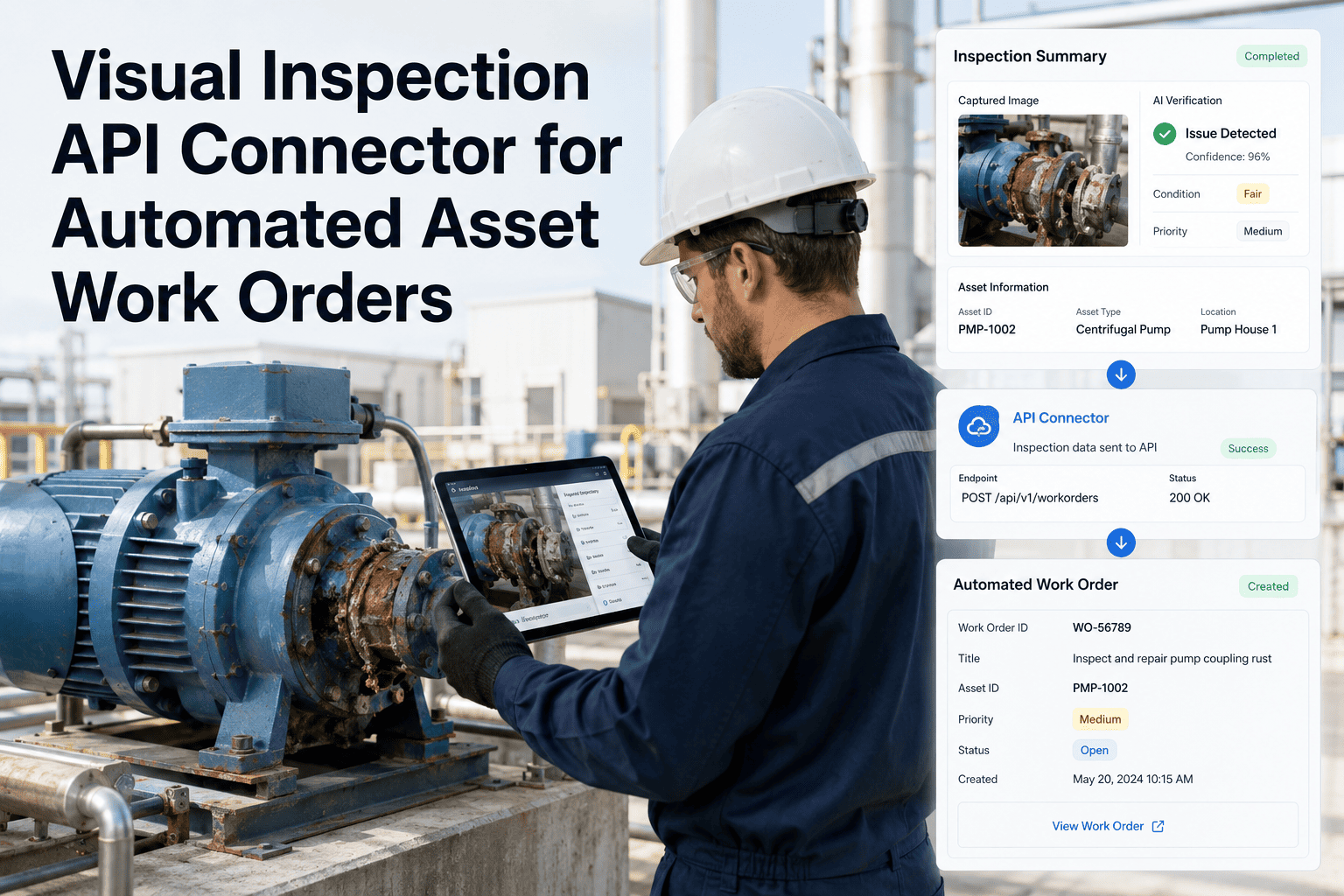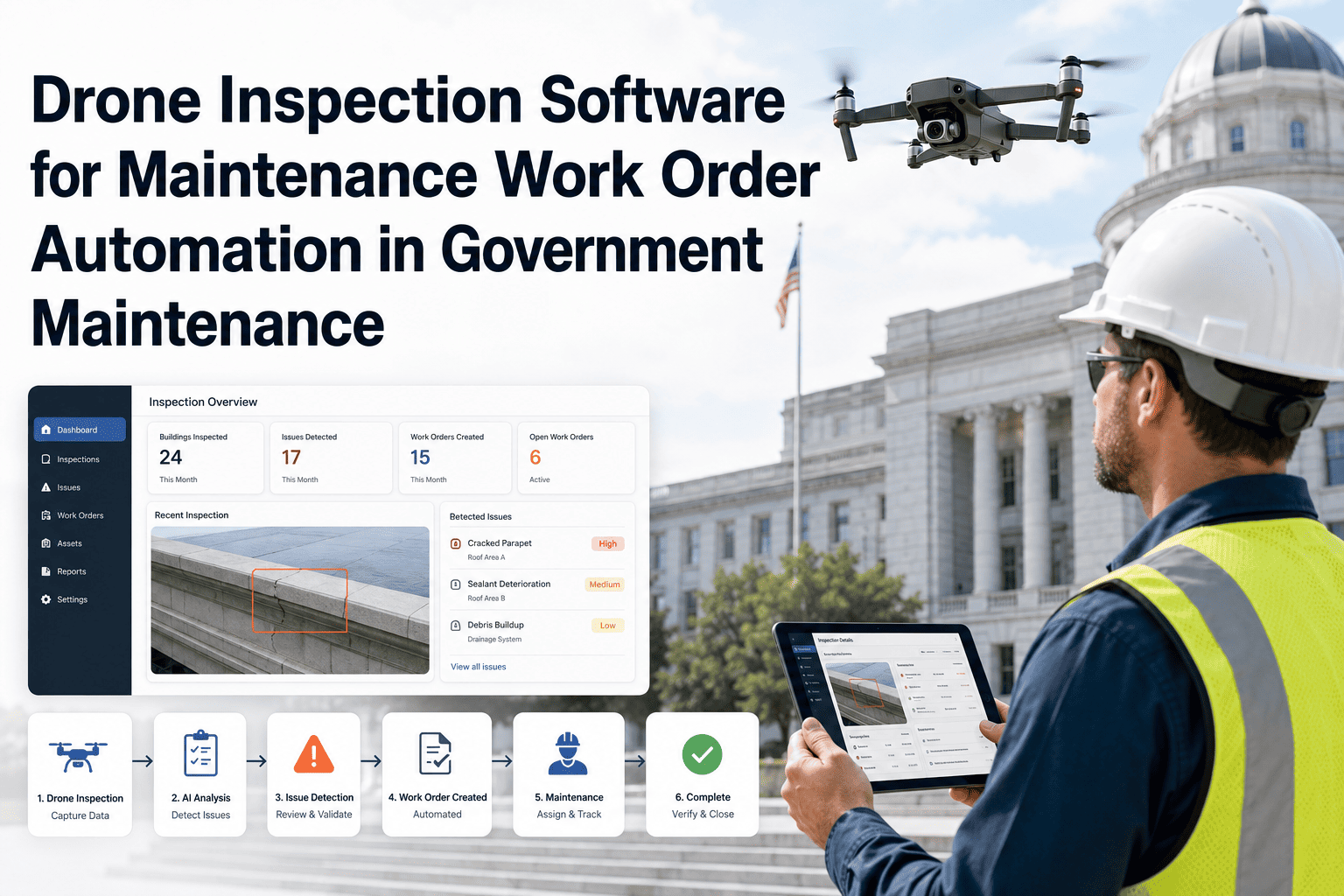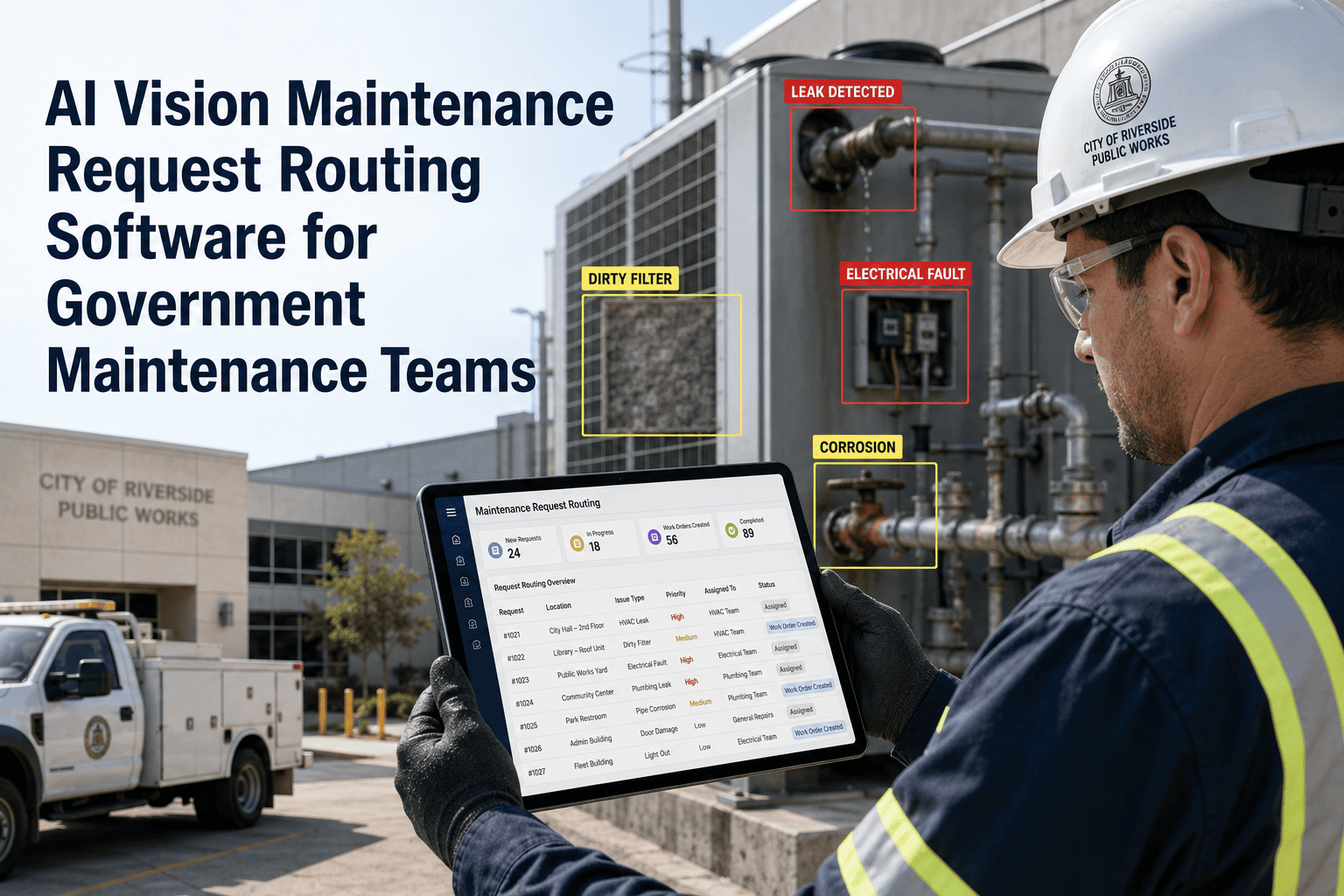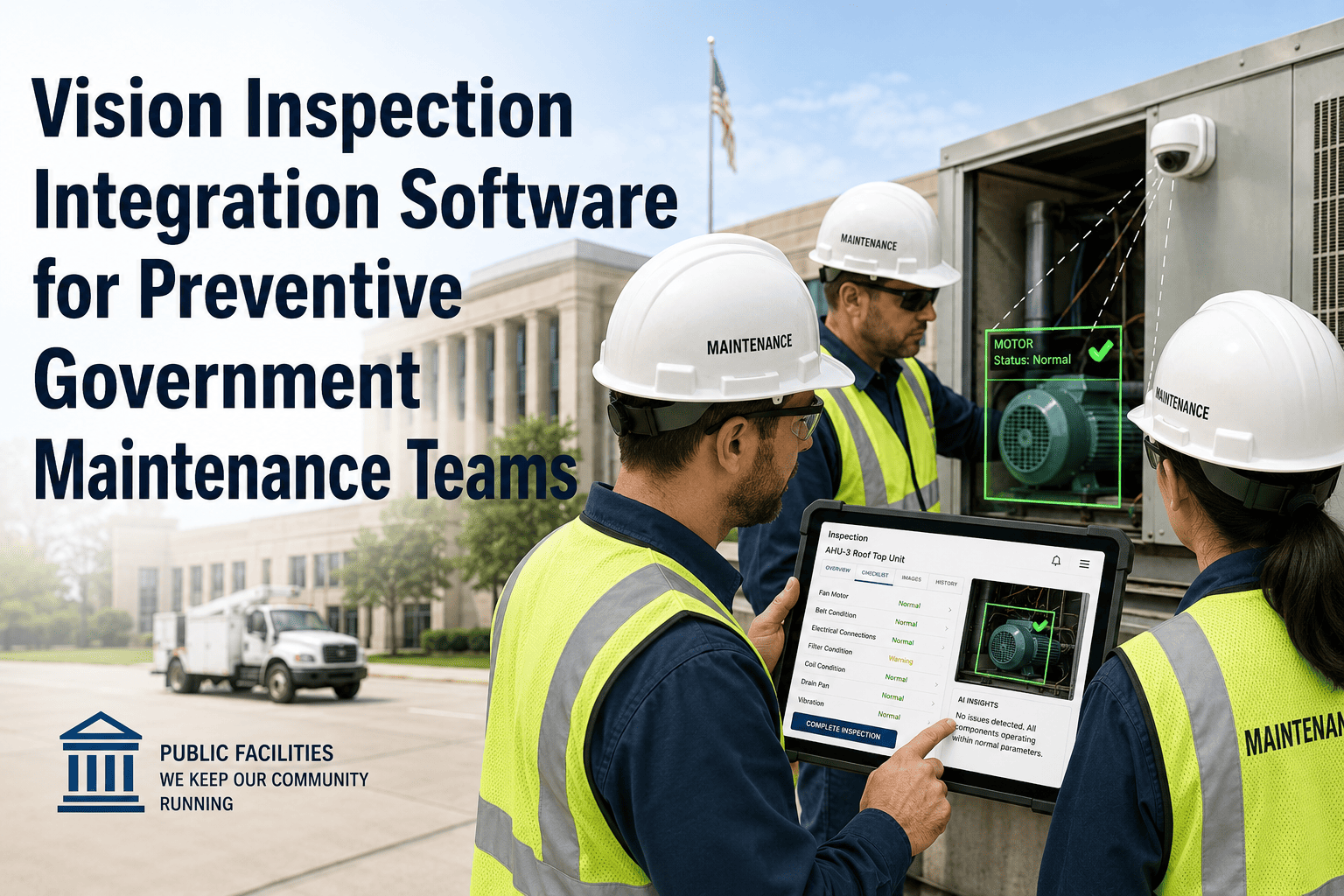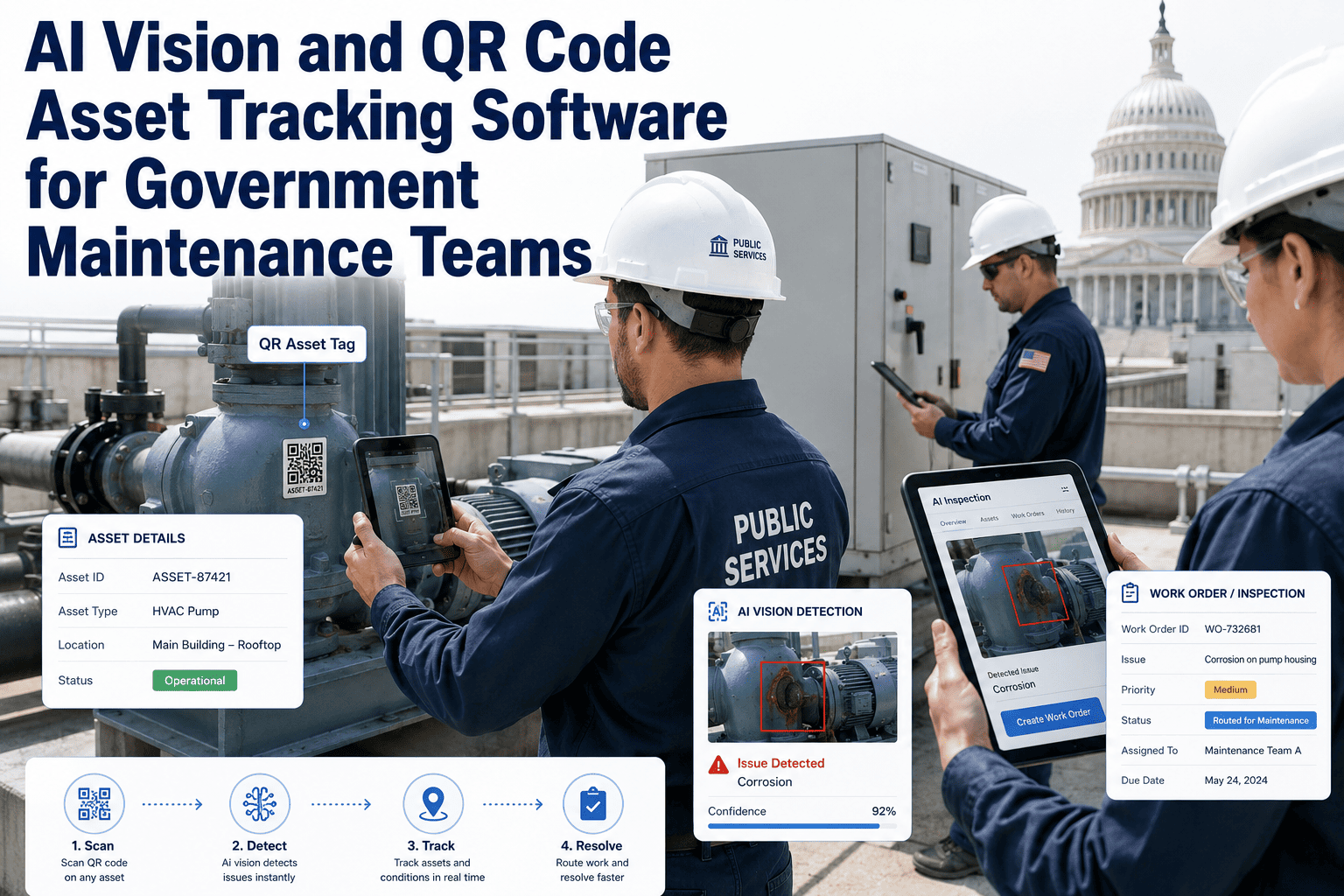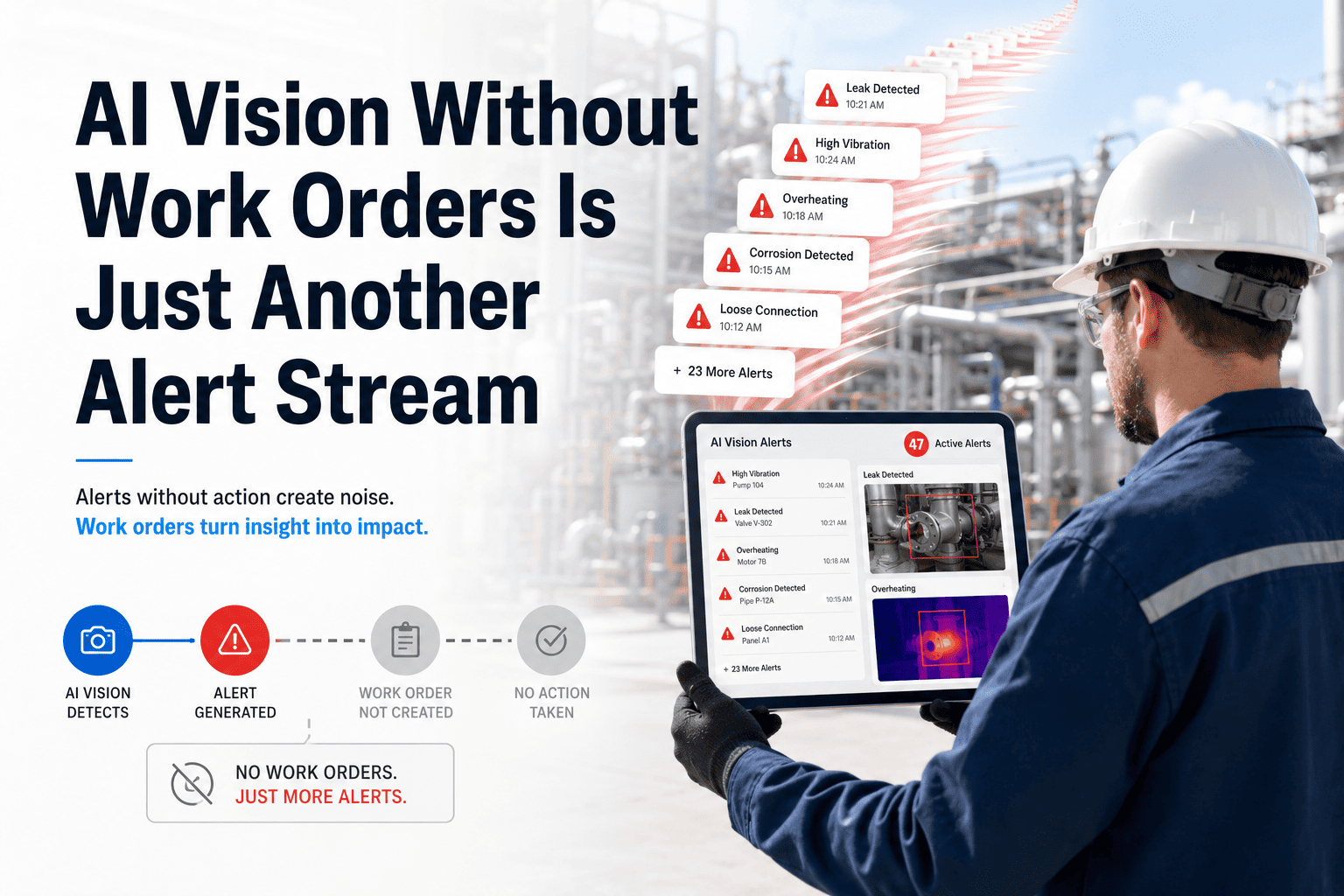
A city public works department deployed AI vision across 38 facilities expecting predictive maintenance superpowers. What they got was a notification firehose — 184 alerts on day one, 412 on day three, and by week six the maintenance supervisor had built a Gmail filter sending every vision alert directly to archive. The cameras kept detecting. Nobody kept reading. This is the silent default state of AI vision in government — a working detection system feeding an inbox nobody has time to triage. Alert fatigue in government maintenance CMMS deployments is the leading reason vision platforms fail to deliver promised ROI. Oxmaint's AI vision triage and work order automation engine converts the alert stream into a prioritised, asset-linked work order queue — so the question stops being "did the camera detect it" and starts being "did the technician close it."
AI Vision Without Work Orders Is Just Another Alert Stream
An inbox of 400 daily camera alerts is not a maintenance system. It is a liability disguised as visibility. The signal lives in the work order queue underneath — not in the raw detection feed.
Why an Alert Stream Stops Being a Maintenance System
Alert fatigue is not a tooling problem and it is not a personnel problem. It is a structural inevitability of any system that generates more notifications than humans can rationally evaluate. Once the maintenance supervisor reaches the cognitive ceiling — typically around 50 actionable alerts per shift — every additional notification degrades the response quality of every other notification. The system does not collapse with a bang. It degrades quietly: filters are added, channels are muted, the most experienced supervisor stops checking the dashboard, and the agency keeps paying the vision subscription while no longer receiving value from it.
The Volume Problem, Visualised
This is what a 6-month government vision deployment looks like when measured by detection volume vs work order output. The gap between what the camera saw and what the agency acted on is where the ROI disappears.
Anatomy of an Alert vs Anatomy of a Work Order
An alert and a work order look superficially similar — both are records of something an AI saw. They are not the same artifact. AI vision alert triage for public works means converting one into the other, and the difference is what determines whether the detection produces value.
The Triage Funnel — How OxMaint Turns Volume Into Signal
Triage is not filtering. Filtering throws data away. Triage classifies every event, escalates the few that need human action, and silently logs the rest for trend analysis. The OxMaint triage funnel processes a typical month of 10,000 vision events into a manageable supervisor workload — without losing a single detection from the audit chain.
An Alert Stream Is Not a Maintenance Program — It Is the Raw Material One Is Built From.
OxMaint sits between your AI vision platform and your field crews — running the triage layer that converts thousands of daily alerts into the small number of routed, prioritised work orders your team can actually close.
The Supervisor View — Inbox Chaos vs Prioritised Queue
The most concrete way to understand the triage gap is to compare what a public works supervisor sees on the same shift, on the same equipment, with and without OxMaint in the loop. The left pane is the raw vision platform inbox. The right is the OxMaint maintenance supervisor dashboard running on the same detection stream.
The Disposition Matrix — How Every Alert Gets Classified
OxMaint applies a 2×2 disposition rule to every incoming AI vision event, using detection confidence and asset criticality as the two axes. Every alert lands in exactly one quadrant, and the quadrant determines the response. Nothing is discarded — but only the top-right quadrant generates a routed work order.
The Real Cost of Alert Fatigue — Quantified
Public agencies rarely calculate the cost of alert fatigue because the cost is hidden — it shows up as missed detections, delayed responses, and audit exposure rather than a line item. The math below converts that hidden cost into a defensible budget figure. Work order automation from AI detection is the line item that closes the gap.
KPIs That Tell You the Stream Is Now Signal
An agency cannot defend a vision program on detection counts alone. These are the six metrics that prove the alert stream has been converted into a maintenance program — the metrics OxMaint surfaces on a single dashboard. Computer vision ROI for municipal utilities ultimately reduces to whether these six numbers move in the right direction.
Signal-to-Noise Ratio
Actionable detections (work order generated) versus noise events (observation log only). Below 1:1 means the vision threshold is wrong or the asset criticality logic is misconfigured.
Alert-to-WO Conversion
Percentage of high-confidence, high-criticality detections that auto-generate a routed work order within 60 seconds. The fundamental output of a working triage layer.
SLA Closure Rate
Percentage of vision-generated work orders closed within their priority-defined SLA window. The single most defensible compliance metric in a public records request.
False-Positive Rate
Vision-generated work orders closed with disposition "no action required" after field inspection. Above 15% indicates a tuning problem feeding crew burnout and trust erosion.
P1 Acknowledgement Time
Average time from a critical alert to a named technician acknowledgement. The benchmark a city council expects for any infrastructure detection of immediate safety significance.
Audit Trail Completeness
Percentage of vision events with a complete sealed record — detection image, disposition, work order outcome (or observation log), and timestamps. Anything below 100% is a compliance gap.
Expert Review — A Public Works Maintenance Director's Perspective
In municipal facilities you can buy any AI vision platform on the market today — they all work. What none of them do is stop your maintenance supervisor from receiving 400 alerts a day, and the moment that supervisor builds a filter to silence the channel, you have wasted seven figures on a procurement decision. The triage layer is the entire game. The first vision deployment I ran without an integrated CMMS had an 89% detection rate and a 17% action rate. The second deployment, with OxMaint sitting between the cameras and the crew, had a 91% detection rate and a 94% action rate. Same cameras, same detection algorithm, completely different operational outcome. The lesson I now tell every county and city procurement team is simple: if you cannot show me the work order queue, do not show me the alert dashboard. The dashboard is theatre. The queue is the program.
Frequently Asked Questions
What is the difference between alert triage and alert filtering, and why does it matter for government compliance?
Filtering throws data away — once a low-confidence alert is filtered out, it is gone and cannot be referenced in an audit. Triage classifies every event but only escalates a subset for human action; the rest are silently logged with full evidence. This distinction is critical for public sector compliance: a FOIA or state DOT auditor asking "did you detect anything at asset X on date Y" needs an answer for every event, not just the ones that triggered a response. OxMaint preserves every detection — whether it generates a work order or only an observation log. Book a demo to see the observation log audit export.
How does OxMaint avoid creating its own alert fatigue inside the CMMS work order queue?
A poorly tuned CMMS can replicate the alert fatigue problem inside the work order queue — too many low-priority items, no escalation logic, every WO looking equally urgent. OxMaint addresses this through priority-driven queue rendering and SLA-based escalation: supervisors see only P1 and P2 work orders by default, with P3 and P4 collapsed into a single "routine queue" view. SLA breach triggers automatic escalation upward, so no work order quietly ages out. The dashboard is engineered to surface exactly what needs supervisor attention now — not everything that exists. Sign in to OxMaint to see the priority-driven queue view.
Can OxMaint integrate with an existing AI vision platform without replacing it?
Yes. OxMaint is a triage and work order automation layer that sits behind any vision platform speaking standard API patterns — REST webhooks, MQTT, or direct integration with the major industrial vision vendors. The vision platform investment is preserved entirely. OxMaint subscribes to the alert stream, applies the 2×2 disposition matrix, creates routed work orders for actionable events, and silently logs the rest. Agencies typically complete the integration in 4–8 weeks without disrupting the existing vision deployment. Book a demo to walk through the integration path for your existing vision stack.
What happens when an AI vision model is retrained or its threshold is changed mid-deployment?
Vision models are retrained constantly — manufacturers ship updates, agencies adjust thresholds, new defect classes are added. OxMaint treats the alert stream as a contract, not a snapshot: the disposition rules are tied to confidence scores and asset criticality, not to specific model versions. A retrained model that suddenly raises confidence on a class of detections will move those events into the action quadrant automatically — no rule rewrites needed. OxMaint also tracks model-version metadata on every event for downstream audit. Start free in OxMaint to see model-version tracking on alerts.
How do I justify the triage layer to a council that already approved the AI vision platform spend?
The argument is best framed in terms of what the existing vision spend currently buys: detection without action. The integration layer is what converts that spend from a documentation system into a maintenance system. The numbers typically used at council level are the pre/post action rate (22% to 94%), the missed-detection cost avoidance (typically $500K-$2M / year for a mid-size agency), and the supervisor-hour reclamation (~10 hrs/week). Council members understand the framing immediately — the cameras are already paid for; the triage is what makes them useful. Book a demo to receive a council-ready budget template.
Stop Measuring AI Vision in Detections. Start Measuring It in Closed Work Orders.
OxMaint converts your vision platform's alert stream into a prioritised, routed, SLA-tracked work order queue with full audit-trail integrity — turning a procurement decision your council already approved into the maintenance program they expected.