AI vision systems mounted on quadruped robots are transforming how government maintenance teams detect infrastructure defects — but the inspection value is only realized when the visual evidence flows directly into a CMMS as structured work order data. A robot that spots corrosion on a bridge support or a cracked pipe joint in a utility vault is only half the system: the other half is the workflow that converts that visual finding into a timestamped work order, assigns it to the right technician, and stores the image as audit-ready evidence. Public sector inspection teams using Oxmaint's AI vision workflow report 55% faster defect-to-repair cycle times and near-zero compliance documentation backlogs. Book a demo to see the full AI vision-to-work-order workflow live, or start free to connect your first visual inspection data source today.
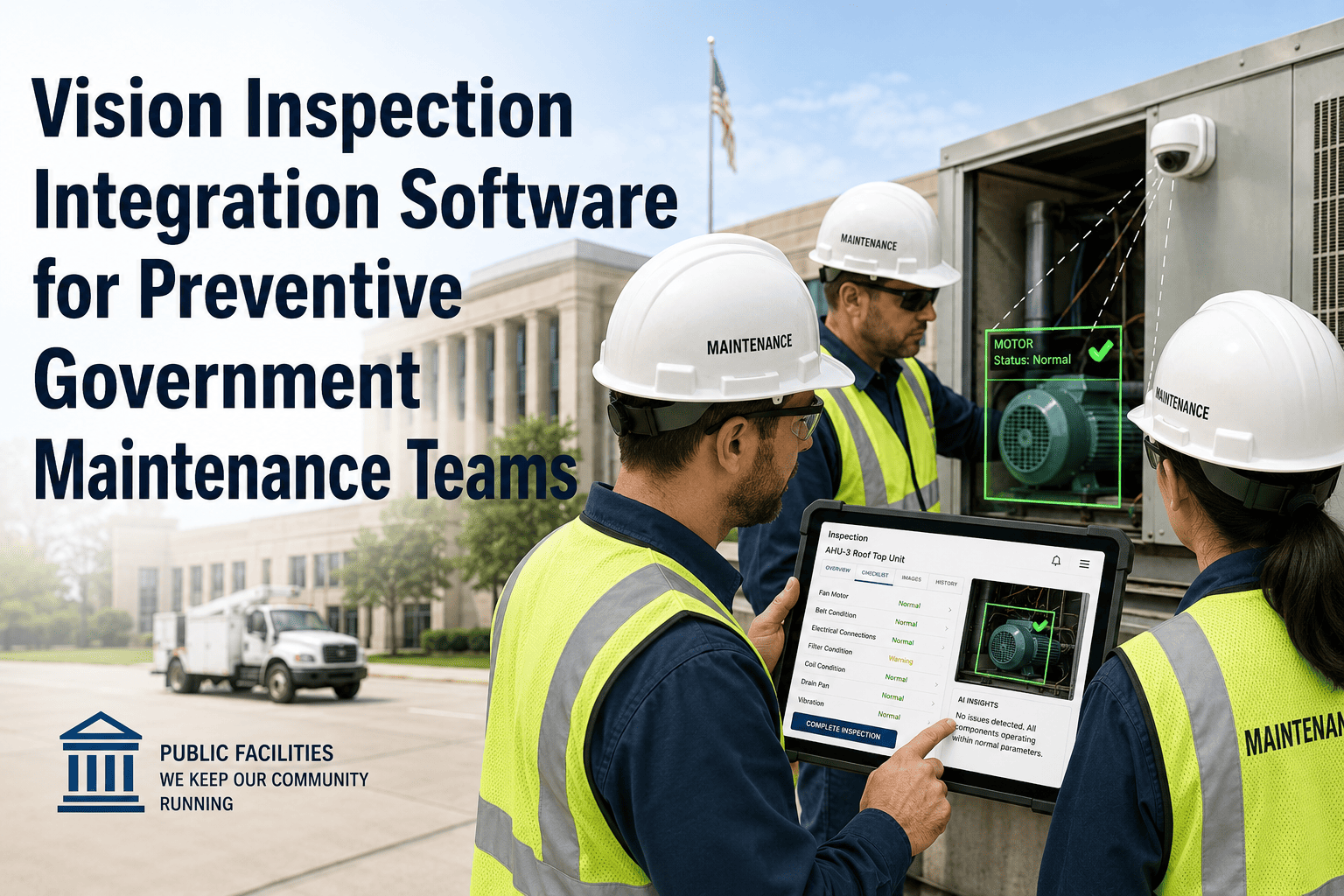
What AI Vision Detects That Human Inspection Misses
Surface Crack Propagation
Sub-millimeter fractures in concrete and steel detected before they reach structural threshold
Early-Stage Corrosion
Rust and oxidation spotted at formation stage, not after coating failure
Fluid Leak Signatures
Residue patterns around pipe joints and valve flanges identified with image classification
Equipment Wear Indicators
Belt fraying, gasket deformation, and connector fatigue flagged from visual deviation patterns
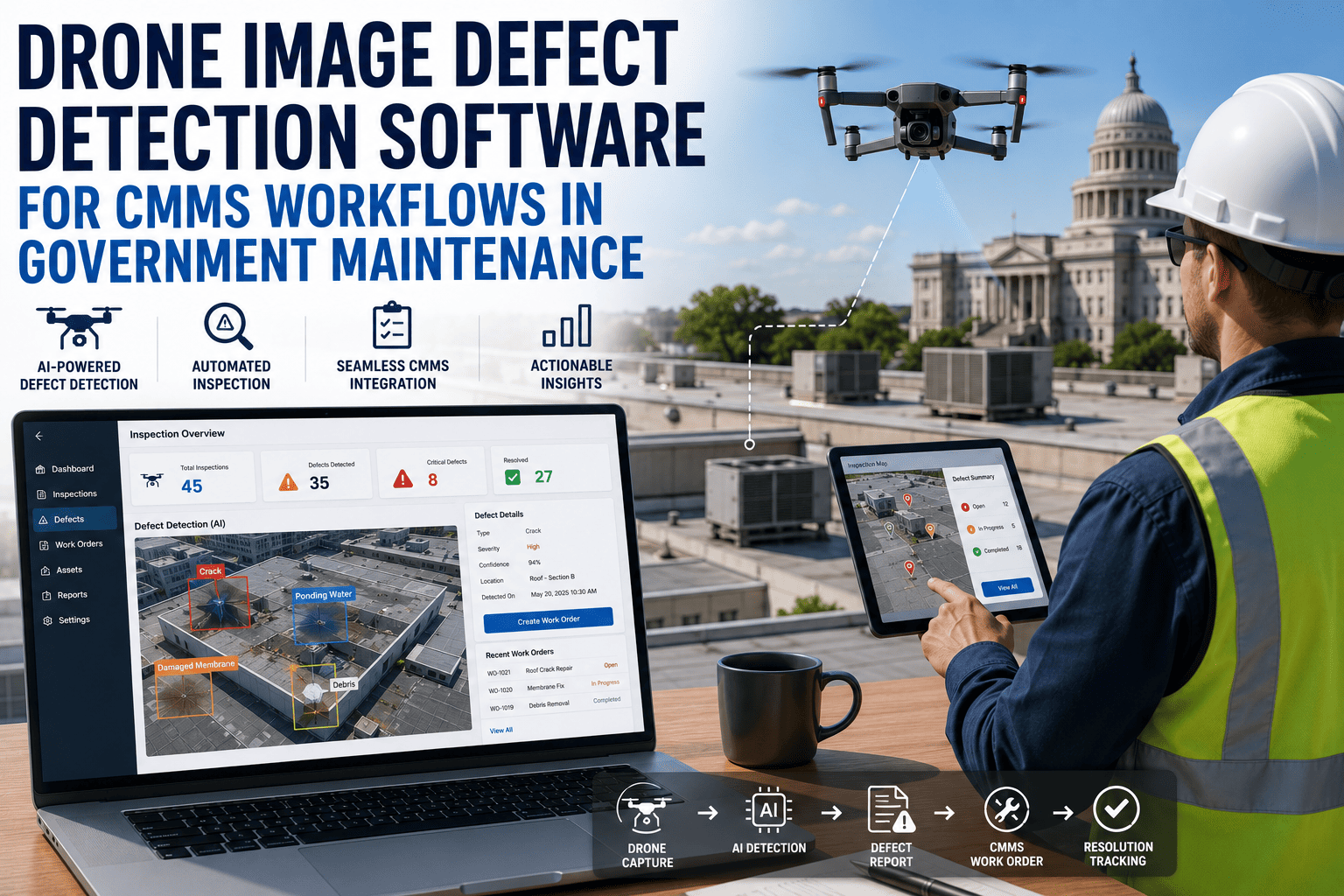
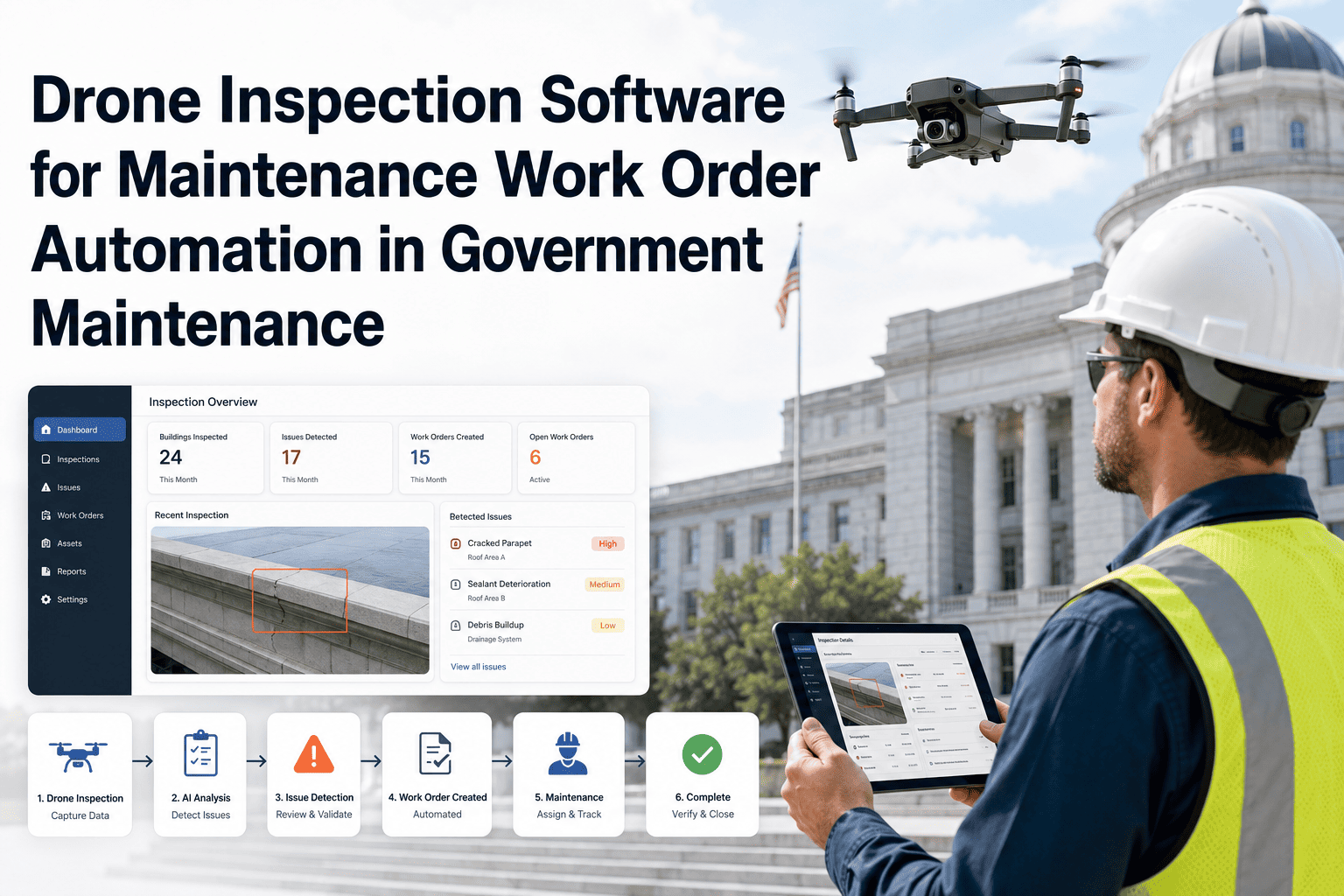
AI Vision Defect Workflow: From Detection to Resolution
DETECT
Robot camera captures image during patrol route
AI model classifies defect type and severity
GPS and asset ID tagged to finding automatically
ROUTE
Finding pushed to Oxmaint via API or webhook
Asset criticality tier determines work order priority
Work order created with image and defect class attached
RESOLVE
Technician assigned and dispatched with evidence on mobile
Repair completed and signed off in Oxmaint
Compliance record closed with before/after images
Turn Every AI Vision Finding into a Tracked Work Order
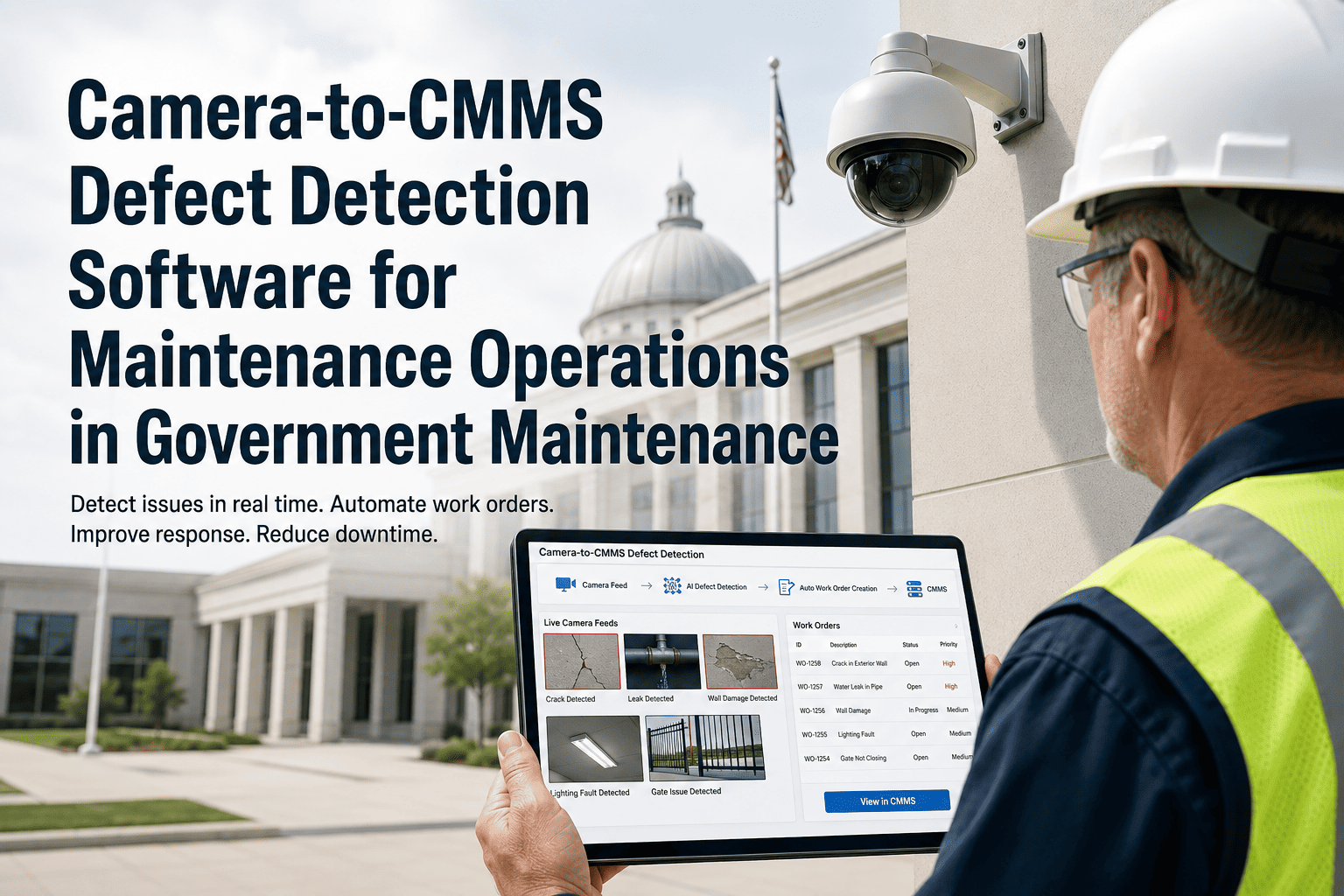
Oxmaint connects AI inspection cameras to your CMMS — defect detected, work order created, evidence stored, audit ready.
Defect Classification and Work Order Mapping
| AI Defect Class |
Severity Level |
Work Order Type Generated |
Target Response Time |
| Structural crack — critical threshold |
Critical |
Emergency corrective WO |
Same shift |
| Active fluid leak — visible flow |
Critical |
Emergency corrective WO |
Same shift |
| Early corrosion — surface only |
Moderate |
Scheduled preventive WO |
Within 7 days |
| Belt / gasket wear — pre-failure |
Moderate |
Scheduled corrective WO |
Within 14 days |
| Surface staining — monitor required |
Low |
Inspection follow-up WO |
Next scheduled patrol |
Performance Data: AI Vision vs Manual Inspection
Manual Visual Inspection
vs
AI Vision + Oxmaint Workflow
Defect detection accuracy
68–72%
94–97%
Average time: defect found to WO created
4–24 hours
Under 5 minutes
Inspection documentation time
2–4 hrs per patrol
Automatic
Repeat defect miss rate
22%
Under 2%
Expert Review
AI vision gives government maintenance teams a level of defect detection consistency no human inspector can match at scale — but it only changes outcomes when the detection event connects automatically to the work order system. I've seen facilities where robot cameras were finding defects that sat in a dashboard report for a week because nobody built the workflow bridge. That's not a technology problem; it's a process integration problem that Oxmaint solves at the point of configuration.
— Infrastructure Asset Management Specialist, 14 years in municipal and state facility maintenance
Frequently Asked Questions
What AI vision platforms does Oxmaint support for defect detection integration?
Oxmaint integrates with AI vision outputs from robot platforms including Boston Dynamics Spot, ANYbotics ANYmal, and custom inspection robots that export findings via REST API, webhook, or structured CSV. The platform accepts defect classification labels, confidence scores, and attached images as standard fields that map directly to work order records.
Book a demo to walk through your specific robot's data format with our integration team.
How does the AI vision workflow handle false positive defect detections?
Oxmaint applies a confidence threshold filter before generating work orders — findings below the configured confidence score are queued for human review rather than auto-dispatched, preventing false positives from flooding the technician queue. Government teams typically set this threshold at 85–90% during their first month and adjust based on actual false-positive rates observed in their specific environment.
Start a free account to configure your first detection threshold.
Can AI-detected defects update predictive maintenance schedules automatically?
Yes — when Oxmaint records a defect finding against an asset, it compares the detection date against the asset's current PM schedule. If the finding indicates accelerated deterioration, the platform flags the PM interval for review and can automatically advance the next scheduled inspection based on configurable rules tied to defect class and asset criticality tier.
How are before-and-after visual records stored for government audit compliance?
Oxmaint stores the original AI inspection image, any additional technician photos added during repair, and the post-repair verification image in a single work order record with locked timestamps and technician identifiers. This complete visual chain — detection to resolution — is available on demand for government audit requests in any time range without manual file assembly.
Talk to our team about audit export formats available for your jurisdiction.
AI Vision Is Only Half the System — the Workflow Is the Other Half
Oxmaint closes the loop between what the robot sees and what the team fixes, with every finding documented, every work order tracked, and every audit covered.