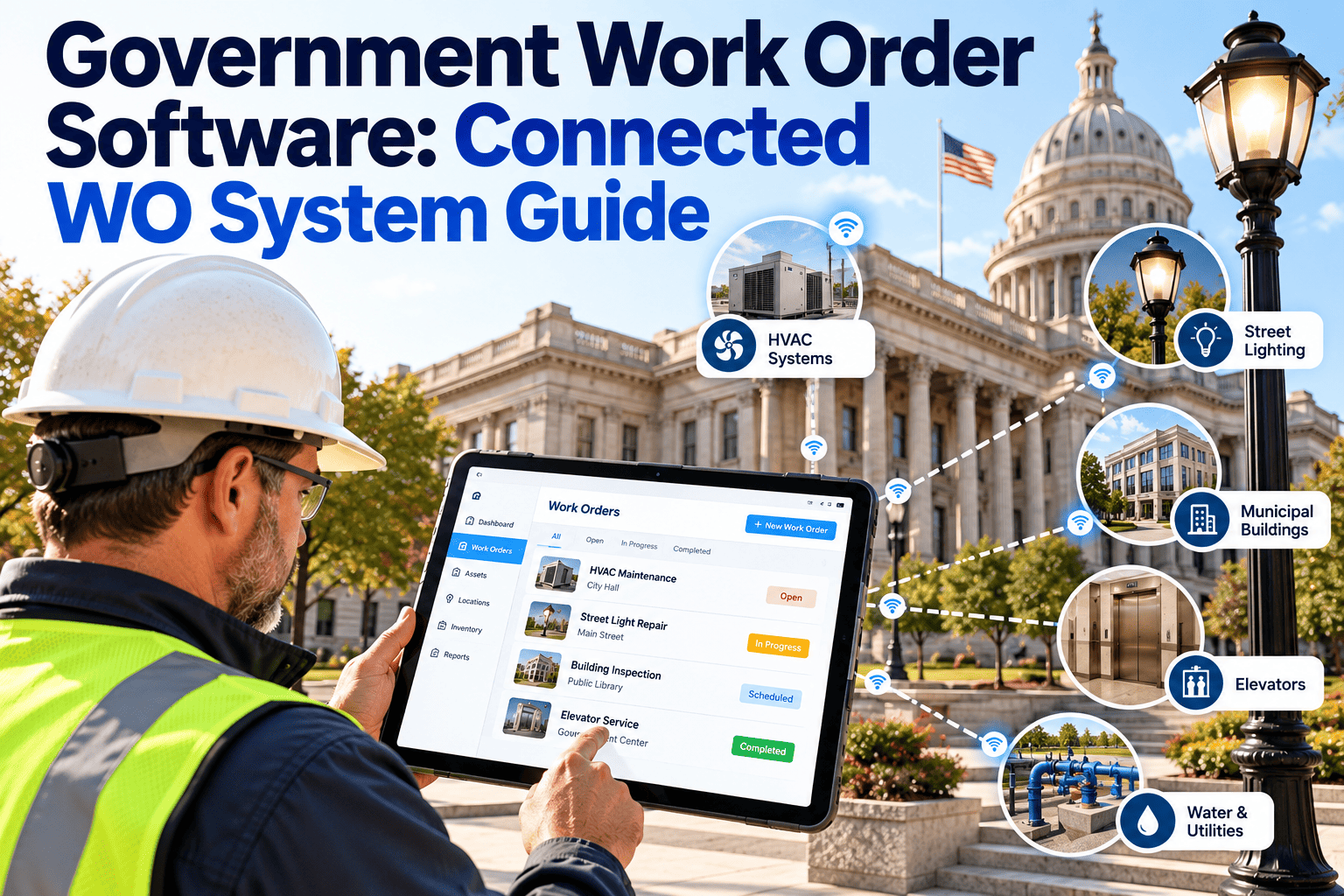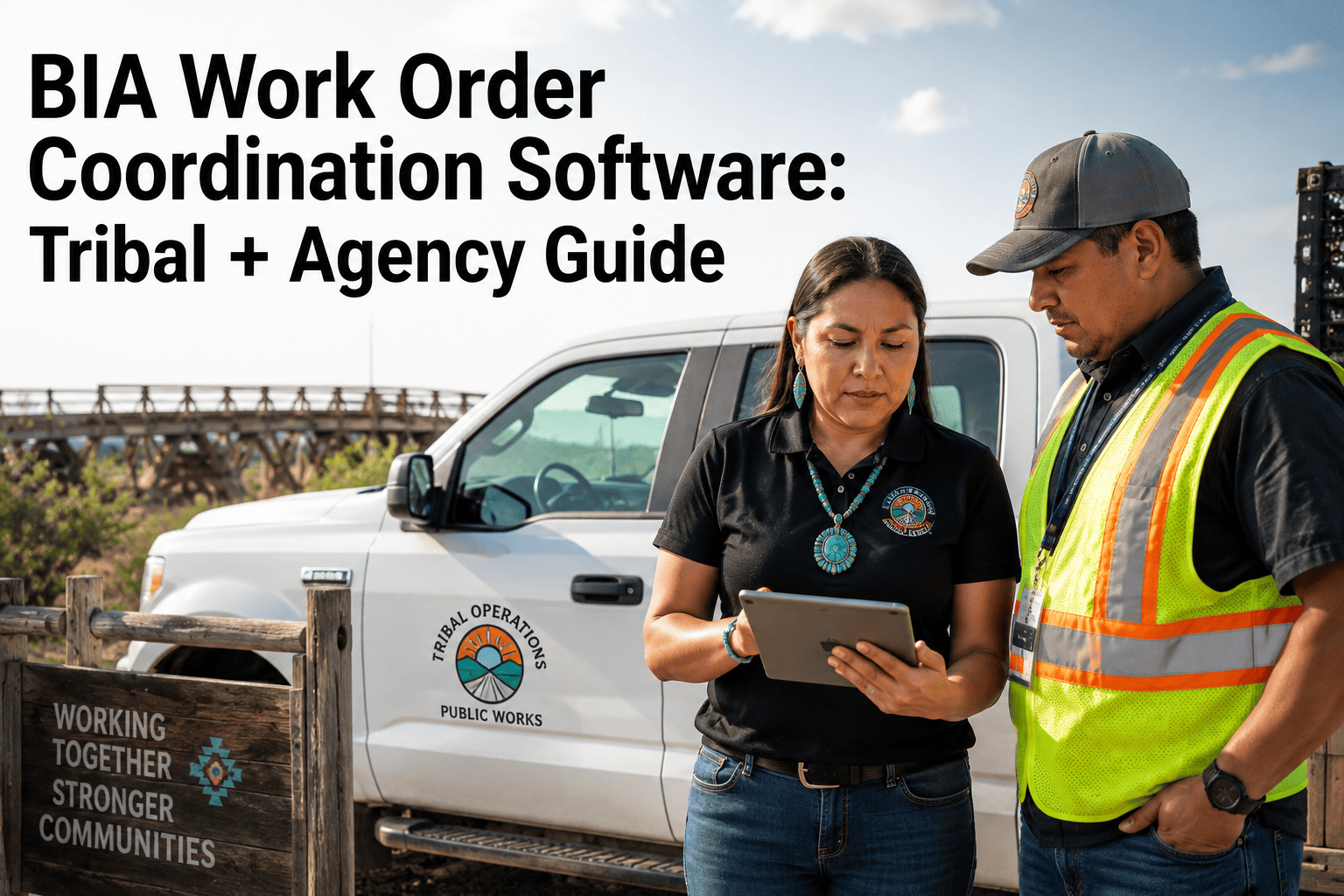
A tribal facility manager closes out a boiler repair at the health clinic, logs it in the maintenance system the tribe actually uses day to day, and moves on to the next call. Three states away, the BIA agency office reporting into IA-FMS Maximo has no idea that repair ever happened, because the tribe's system and the Bureau's system have never talked to each other. When the next Facilities Operations and Maintenance funding formula cycle comes around, that clinic's deferred maintenance backlog still shows the boiler as an open deficiency, because the only record that would have closed it never reached Maximo. This is not a training gap or a compliance failure on either side — it is what happens when two work order systems run in parallel with no cross-connect between them. See how Oxmaint mirrors tribal work orders into IA-FMS-ready records — free trial, no credit card required.
Why BIA Work Order Coordination Breaks Down
Indian Affairs runs its nationwide operations and maintenance program through IA-FMS, the Maximo-based system managed by the Division of Facilities Management and Construction. That system is the record of truth for facility condition, deferred maintenance, and O&M funding decisions across BIA and BIE. But a large share of BIA-funded facilities — clinics, schools, roads, irrigation systems, housing — are not maintained by BIA staff at all. They are maintained by tribal facility managers operating under Public Law 93-638 self-determination contracts or self-governance compacts, and those tribal programs almost never have full seats in Maximo. Instead, they run their own maintenance tracking, sometimes a CMMS, sometimes a spreadsheet, sometimes a paper log — a system built for the tribe's own operational needs, not for feeding data back into a federal Maximo instance.
The result is two parallel records of the same physical facility, updated on two different schedules by two different teams, with no automatic reconciliation between them. A DFMC program analyst preparing a deferred maintenance rollup has to trust that every tribal program remembered to report its completed work, on time, in a format that maps cleanly to IA-FMS work types and structure numbers. A tribal facility director trying to defend next year's O&M budget has to trust that whatever they reported actually made it into the federal system that funding formulas are calculated from. Neither side controls the other's system, and the gap between them is where deferred maintenance backlogs quietly overstate, funding formulas quietly misallocate, and DFMC and tribal facility managers end up arguing about numbers that were never actually the same number in the first place. Book a demo to see how cross-connect coordination closes that gap.
Two Systems, One Facility, Zero Reconciliation — Until Now.
Oxmaint gives tribal facility managers a CMMS built for their own operations, while automatically mirroring completed work into IA-FMS-ready records DFMC can trust.
Two Sides of the Same Work Order
Coordination software does not ask a tribal program to abandon its own workflow and adopt Maximo directly, and it does not ask DFMC to give up IA-FMS as the system of record. It sits between the two, translating one side's completed work into the other side's expected format.
What Cross-Connect Coordination Requires
The Next DM Rollup Should Not Depend on Manual Re-Entry.
Every week of lag between a tribal work order closing and the IA-FMS record updating is a week the deferred maintenance backlog is wrong. Close that gap automatically.
Coordination Across Program & Agreement Types
Not every BIA-funded facility is maintained under the same arrangement, and coordination has to fit the agreement governing each one rather than forcing a single workflow on every program.
Oxmaint vs Other Coordination Options
Swipe to view the full comparison table
| Capability | Oxmaint | MaintainX | UpKeep | Fiix (Rockwell) | Limble CMMS | IBM Maximo | Hippo (Eptura) |
|---|---|---|---|---|---|---|---|
| Tribal-Side Work Order Mirroring | Automated field mapping to IA-FMS | Not available | Not available | Custom config | Not available | Native (agency-side only) | Not available |
| Deferred Maintenance Rollup Reporting | Cross-program automatic rollup | Not available | Limited | Enterprise tier | Not available | Agency-side only | Not available |
| No Maximo Seat Required for Tribal Staff | Yes, standalone mobile app | Standalone, no mirroring | Standalone, no mirroring | Standalone, no mirroring | Standalone, no mirroring | Requires Maximo license | Standalone, no mirroring |
| Offline Mobile for Remote Reservations | Full offline + sync | Online only | Limited offline | Limited offline | Limited offline | Limited | Online only |
| Tribal Data Sovereignty Controls | Tribe retains ownership of records | Not addressed | Not addressed | Not addressed | Not addressed | Federal system record | Not addressed |
| Deploy Time | 7–21 days | 2–3 weeks | 2–4 weeks | 4–12 weeks | 1–2 weeks | 6–18 months | 2–6 weeks |
The distinction is not whether a platform can track a work order — nearly all of them can. It is whether the platform understands that a tribal facility manager and a DFMC program analyst are looking at the same physical asset through two completely different systems, and whether it actually closes that gap instead of just adding a third disconnected tracking tool to the pile.
Proven Results
Data Security & Tribal Data Sovereignty
Cross-connect coordination only works if tribal programs trust the system carrying their data. That trust starts with the tribe retaining ownership of its own records rather than surrendering them into a federal system it does not control.
Frequently Asked Questions
Does a tribal facility manager need a Maximo license to use this?
How does a work order map correctly to IA-FMS fields?
Who owns the data once it is mirrored into the agency system?
Does this work across remote reservations with no reliable internet?
Can this support a tribe running both 638 and direct-service facilities?
Close the Gap Between Tribal Work and the Federal Record.
Give tribal facility managers a system built for how they work, and give DFMC a deferred maintenance rollup it can actually trust. Free to start. Live in under three weeks.