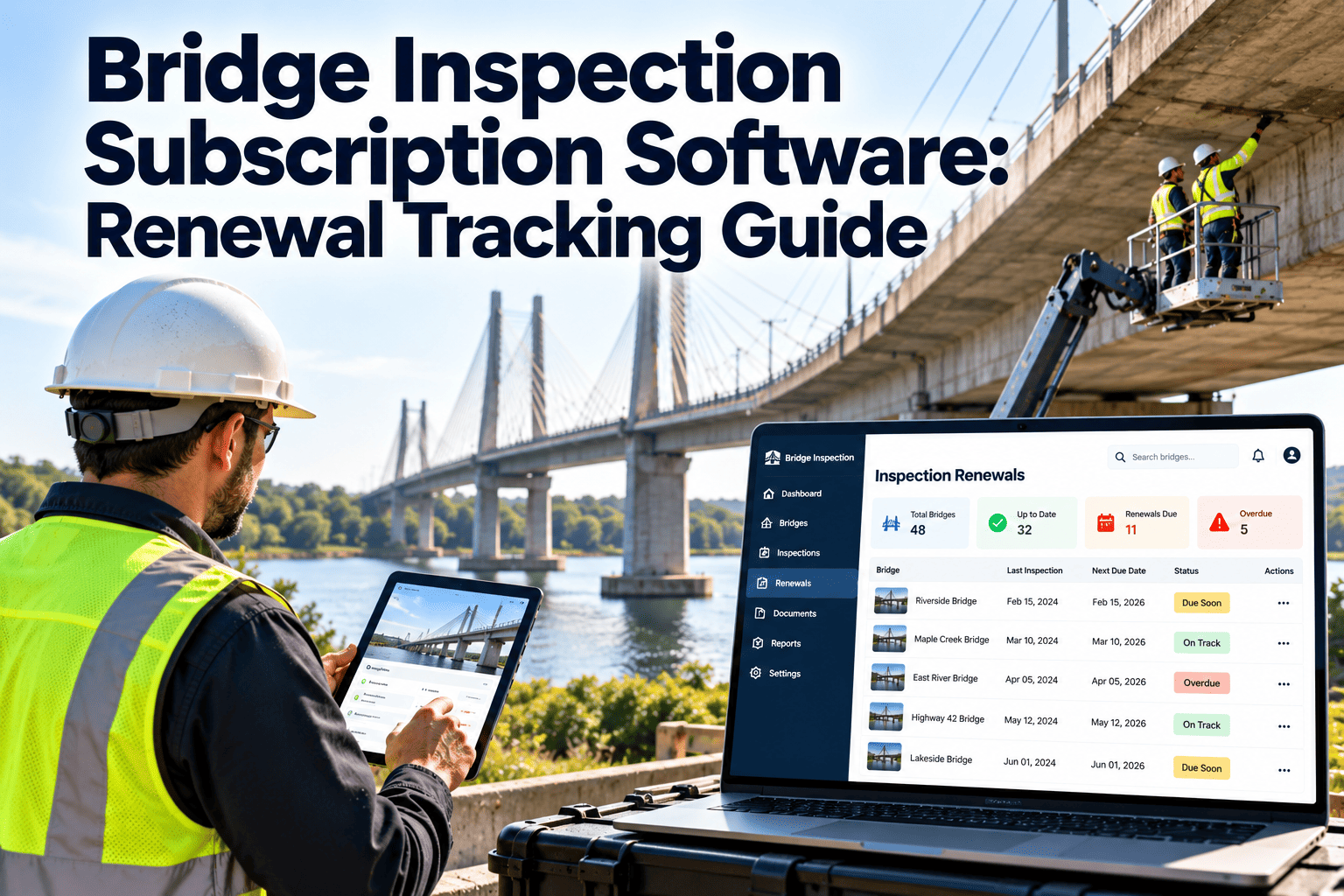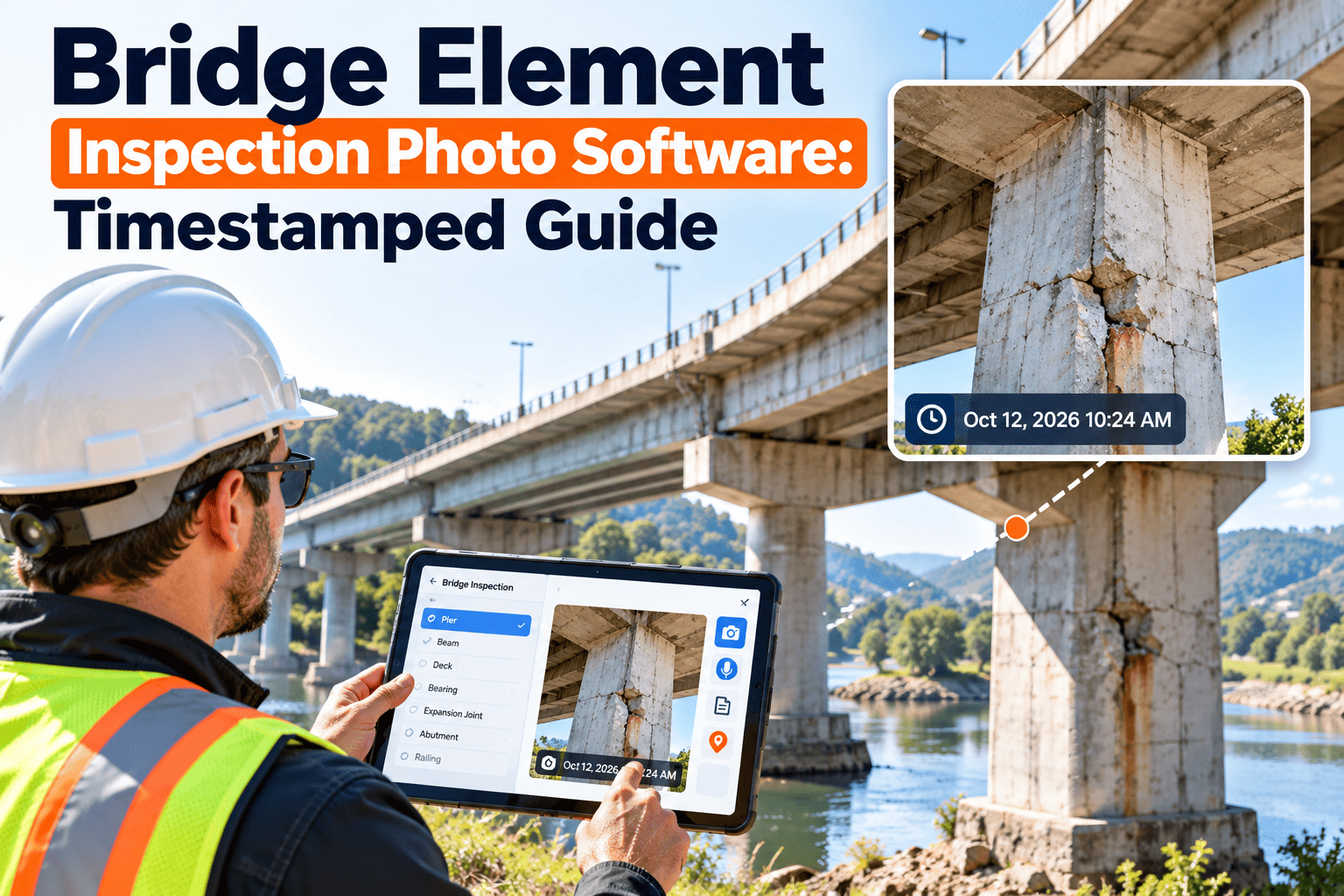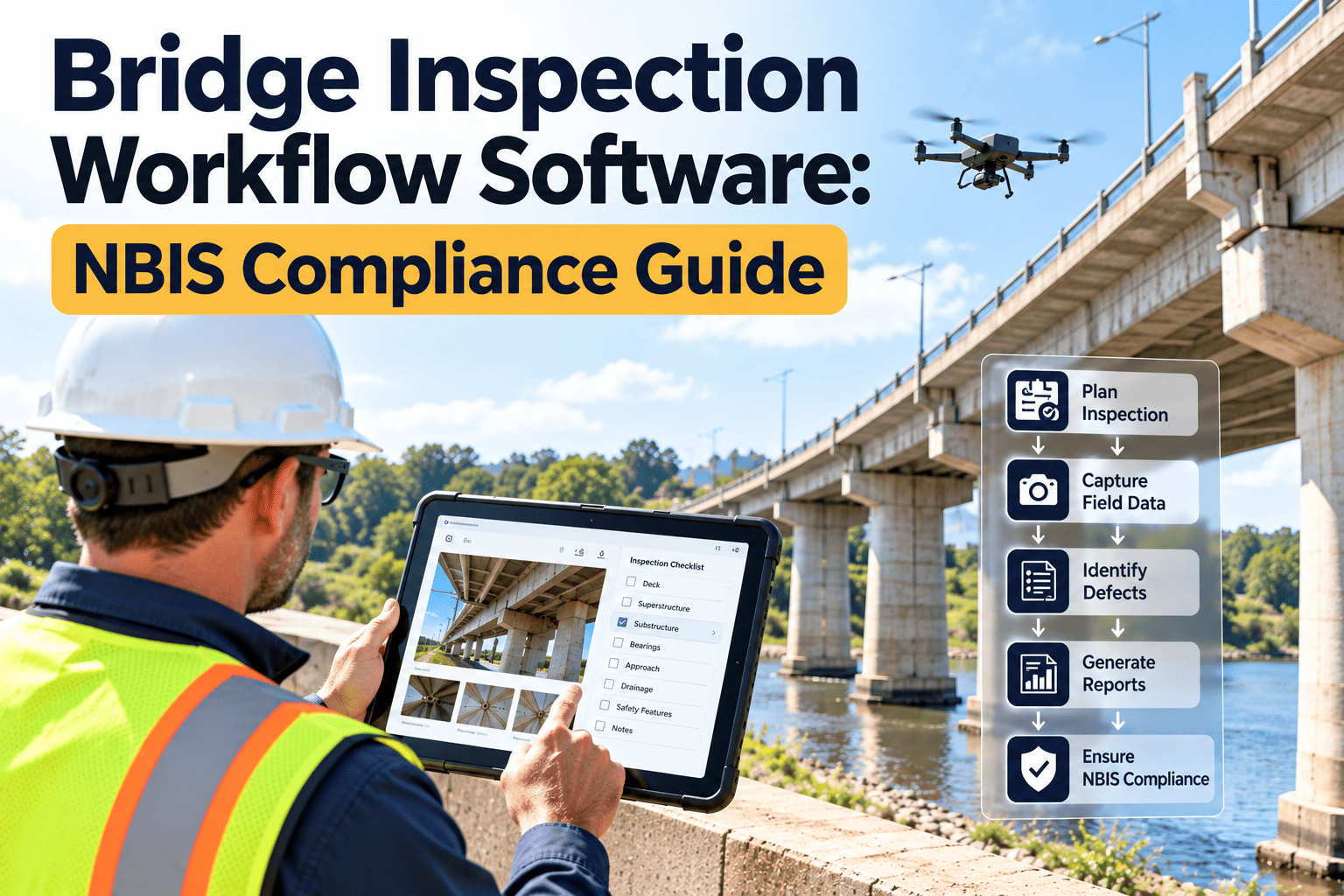
Bridge inspectors already know how to rate a deck, a girder, or a bearing. The harder part is keeping element-level condition data consistent across hundreds of structures, several inspection teams, and many years. When coding lives in separate files, quantities drift, defects are recorded twice, and maintenance never sees the findings. A bridge maintenance management system keeps AASHTO element data tied to work you can schedule and close.
Bridge NBI Element Coding Software: An AASHTO Guide
Organize deck, superstructure, and substructure element coding so every condition state leads to a clear maintenance action.
How Element-Level Bridge Coding Works
The AASHTO Manual for Bridge Element Inspection defines a standard set of elements and a four-state condition scale. Instead of one rating for a whole component, inspectors record how much of each element sits in each condition state.
- National Bridge Elements cover the primary structural parts: decks, girders, columns, abutments, bearings, and similar members.
- Bridge Management Elements cover items such as joints, wearing surfaces, and protective systems.
- Defect elements, such as corrosion, cracking, and delamination, add detail where deterioration is visible.
Quantities are measured in the unit set for each element, for example square metres, metres, or each. The quantities across all four states should account for the full element.
NBI Rating and Element Condition: Two Views of One Bridge
NBI General Condition Rating
- One 0 to 9 rating each for deck, superstructure, and substructure
- Fast to read and useful for network-level reporting
- Hides how much of a component is deteriorated
AASHTO Element Data
- Quantity in each of four condition states per element
- Supports deterioration modeling and treatment selection
- Needs disciplined, consistent field coding
Most agencies carry both. The practical challenge is making sure the two stay consistent and that either one can trigger maintenance.
Coding by Bridge Component
Reinforced concrete decks (element 12) and their wearing surfaces and joints need quantity by condition state plus defect notes such as cracking, delamination, and spalling.
- Record deck area per state
- Link joint leakage to nearby bearings and bents
- Flag sealing or overlay candidates
Open girders, such as steel (107) or prestressed concrete (109), are coded by length per state. Corrosion, section loss, cracking, and coating failure drive the state.
- Track coating condition separately
- Mark fatigue-prone details
- Attach close-up photos to the member
Columns (205), abutments (215), and piers are coded by count or length. Scour, settlement, tilt, and cracking need a link to waterway or geotechnical monitoring.
- Record scour observations
- Note bearing seat condition
- Cross-reference underwater inspection dates
Inspection Cycle Requirements to Plan Around
| Inspection Type | Typical Frequency | Maintenance Data to Capture |
|---|---|---|
| Routine | Up to 24 months, shorter where condition requires | Element quantities, defects, photos, recommended actions |
| Fracture critical member | Interval set by the owner, commonly 24 months | Hands-on findings, crack records, access method |
| Underwater | Up to 60 months in many programs | Scour depth, substructure condition, diver or ROV notes |
| Special or in-depth | Set by engineering need | Test results, load rating inputs, repair recommendations |
| Damage or event | After impact, flood, or seismic event | Damage extent, temporary measures, follow-up work orders |
Confirm the intervals against your agency policy and the current federal inspection standards, since programs can approve different frequencies.
Why Element Coding Goes Wrong
Quantities do not add up
State totals differ from the element total because of copy-and-edit errors.
Drift between inspectors
Two teams code the same corrosion into different states.
No history in the field
Inspectors cannot easily compare against last cycle's photos and notes.
Findings stop at the report
Recommendations never become scheduled maintenance work.
From Condition State to Treatment Decision
| Condition Pattern | Common Action Category | Work Order Example |
|---|---|---|
| Mostly CS 1 | Preservation | Wash bearings and drainage, clear debris from joints |
| CS 2 growing | Preventive treatment | Seal cracks, repaint localized steel, replace joint seals |
| CS 3 present | Repair | Patch spalls, repair bearings, address drainage defects |
| CS 4 present | Rehabilitate or restrict | Engineering review, posting evaluation, priority repair |
Prioritization Inputs Beyond Condition
- Traffic volume and detour length
- Load rating or posting status
- Scour vulnerability and waterway activity
- Freight or emergency route designation
Link Every Element Finding to a Maintenance Action
Keep structure records, inspection history, and bridge work orders in one workflow your inspectors and crews can both use.
Field Coding Practices That Improve Data Quality
- Review last cycle first. Open prior photos and quantities before arriving on site.
- Code from defined condition-state language. Use the manual and agency supplements, not memory.
- Check totals before leaving. State quantities must reconcile to element quantity.
- Photograph every state change. Reference the element and location.
- Write actionable recommendations. Name the work, extent, and urgency.
- Close the loop. Confirm which recommendations became work orders.
How Oxmaint Fits an Element-Based Bridge Program
Oxmaint is maintenance management software. It does not replace your agency's official bridge inspection reporting system. It supports the maintenance side of the process.
KPIs for an Element-Level Program
Frequently Asked Questions
Does Oxmaint replace the official bridge inspection database?
No. It supports maintenance planning and execution around inspection data. Book a demo to map your process.
What are the four condition states?
They are Good, Fair, Poor, and Severe, defined per element in the AASHTO manual.
Can inspection findings create work orders?
Yes. Recommendations can become corrective work orders with priority and due dates.
How do we handle bridges with different intervals?
Set a schedule per structure so each bridge follows its own required cycle.
Where should a small team start?
Load your highest-risk bridges first, then expand. You can sign up to begin.
Turn Element Condition Data Into Funded Bridge Work
Give your bridge team one place to schedule inspections, track repairs, and report progress.