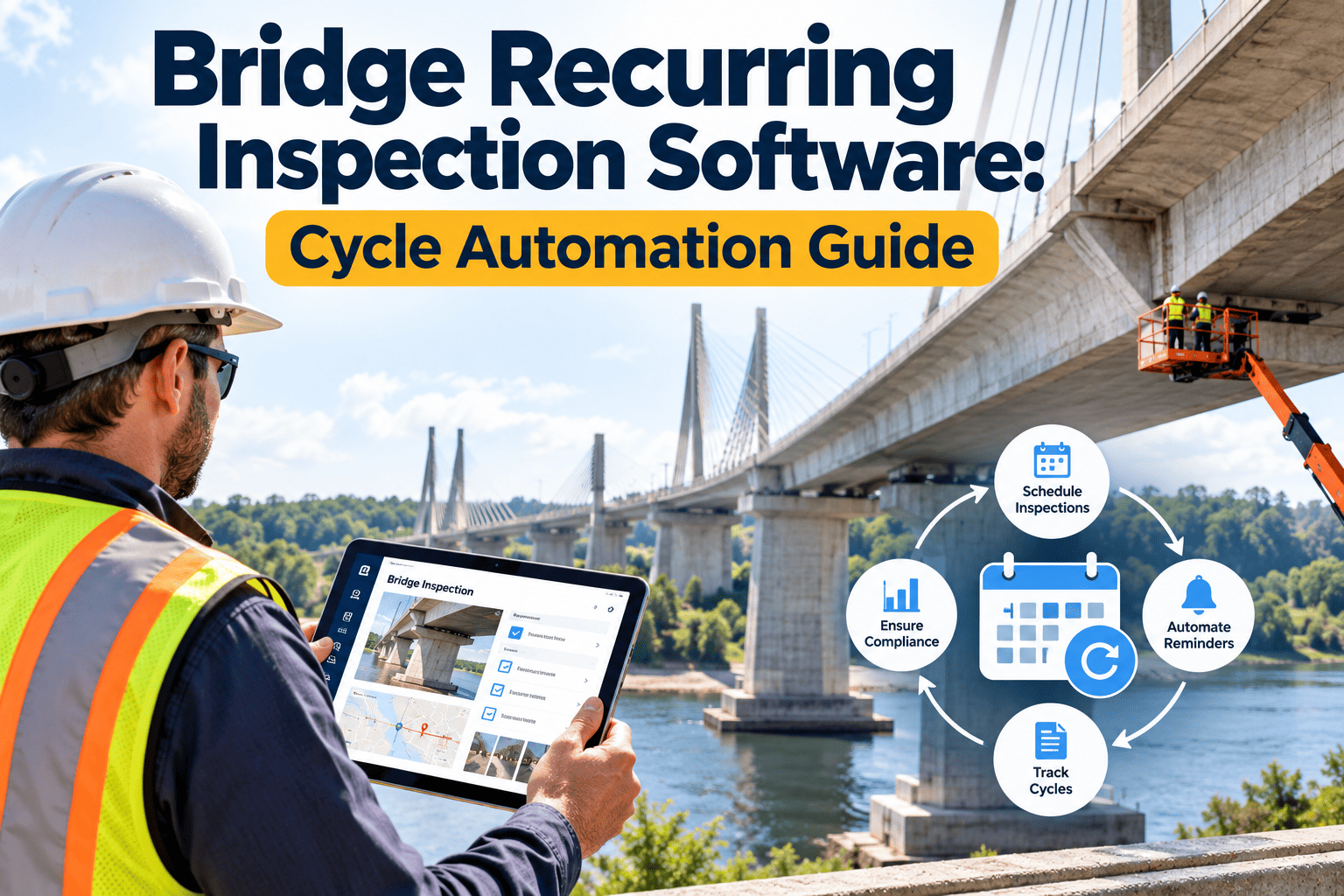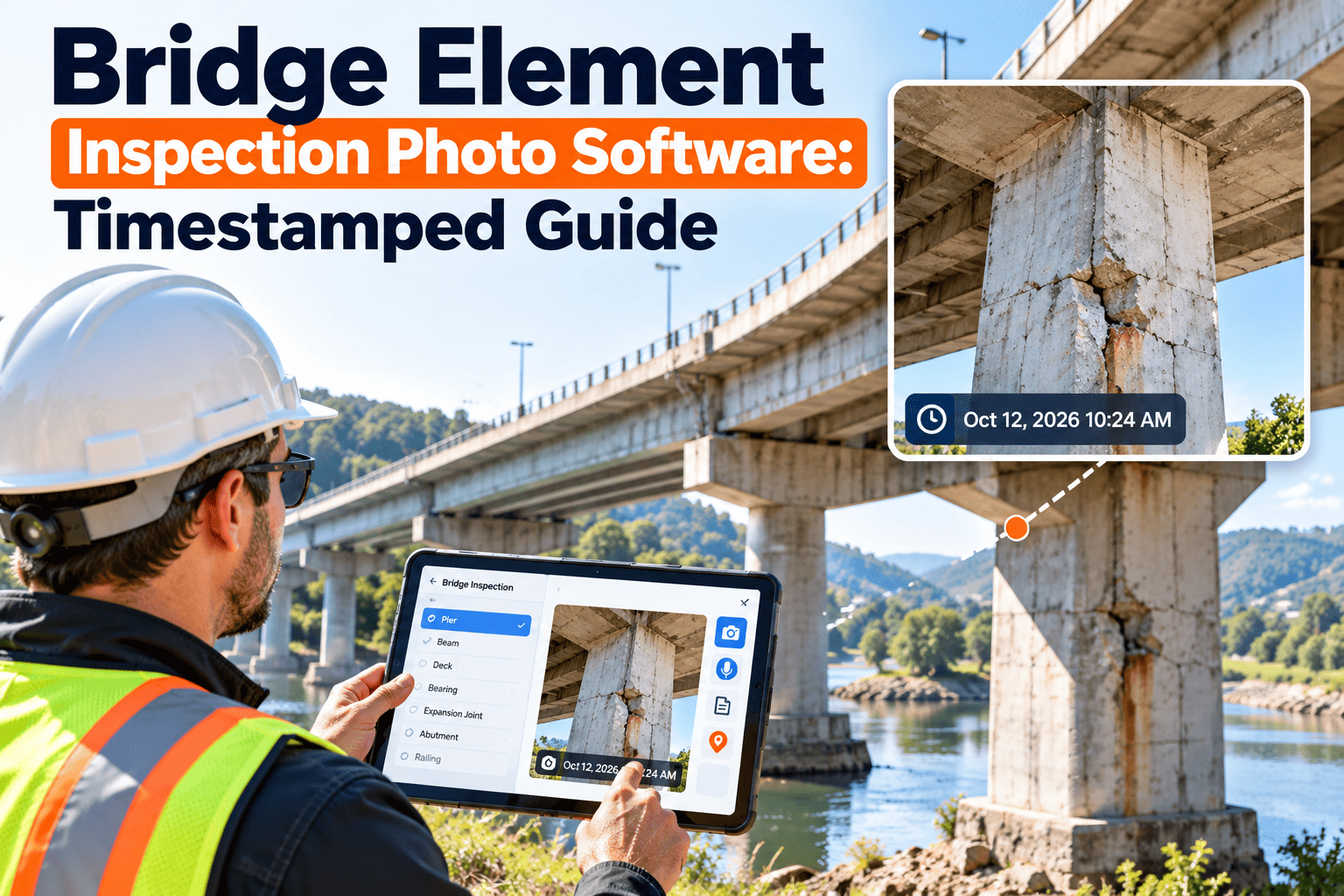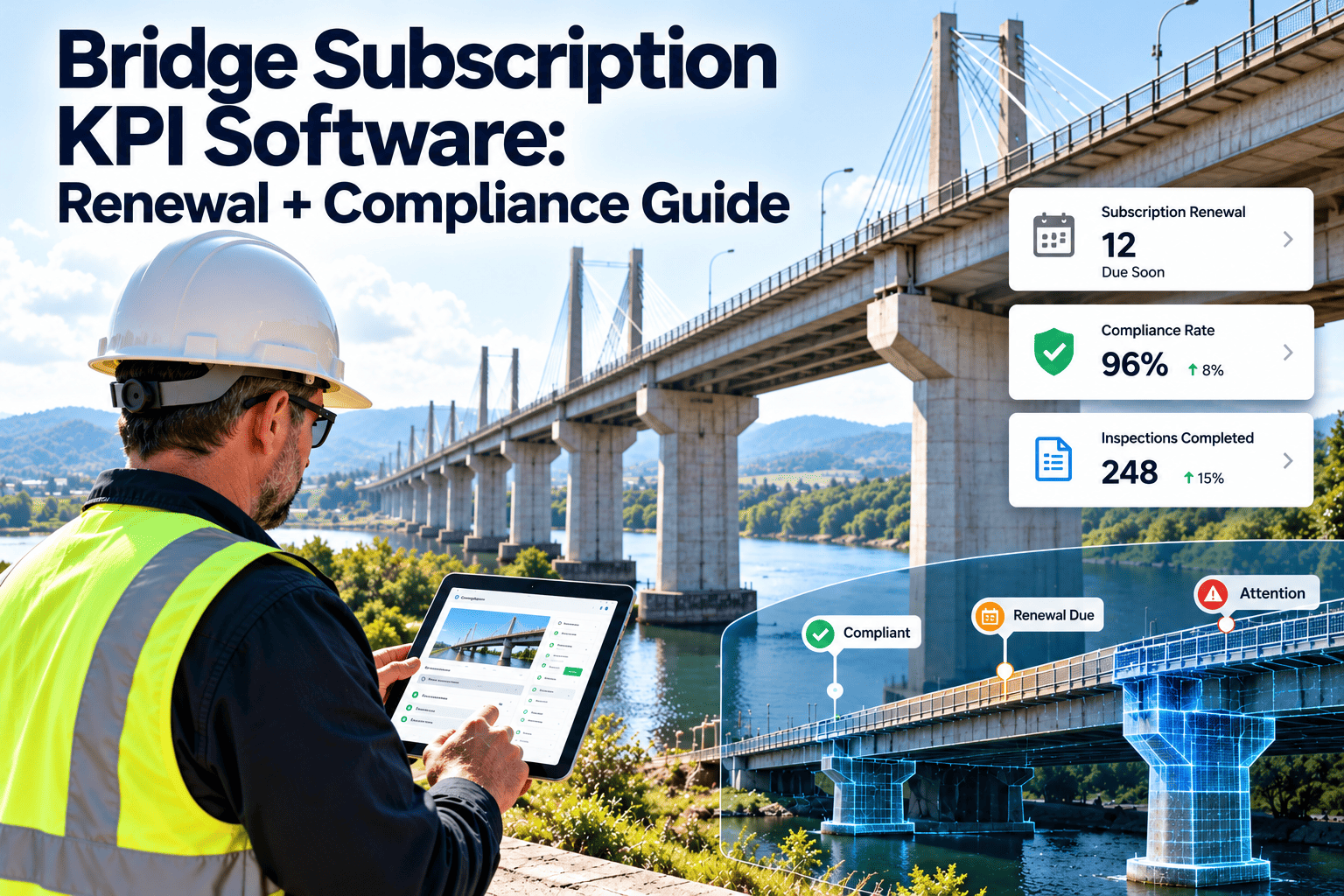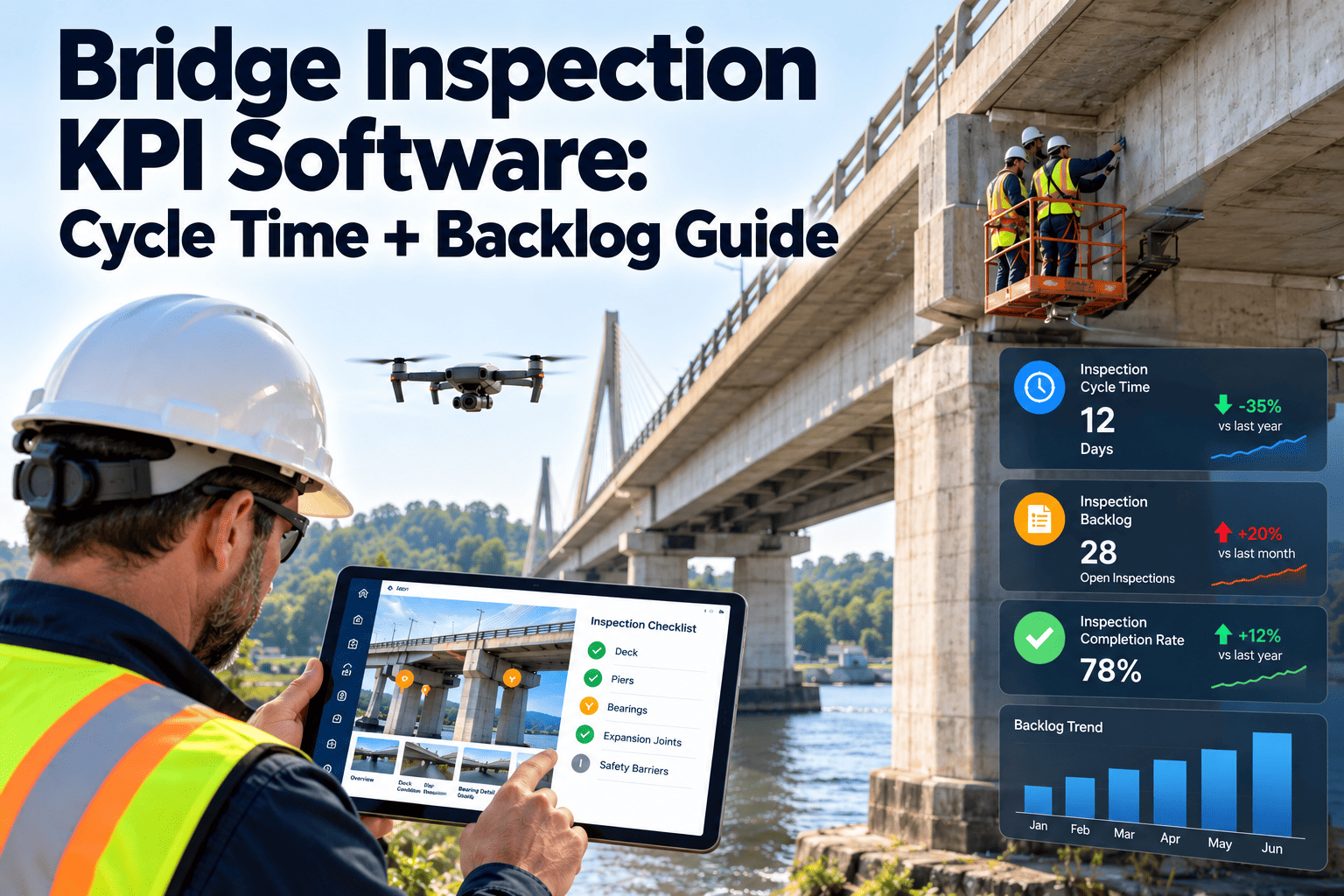
Many bridge owners buy inspection services from several vendors at once: routine inspection teams, underwater divers, load rating engineers, and monitoring providers. Each contract has its own term, scope, and renewal date. When those dates sit in email threads and spreadsheets, a lapse can leave a structure outside its required inspection cycle. Tracking renewals alongside inspection schedules in maintenance management software makes those gaps visible early.
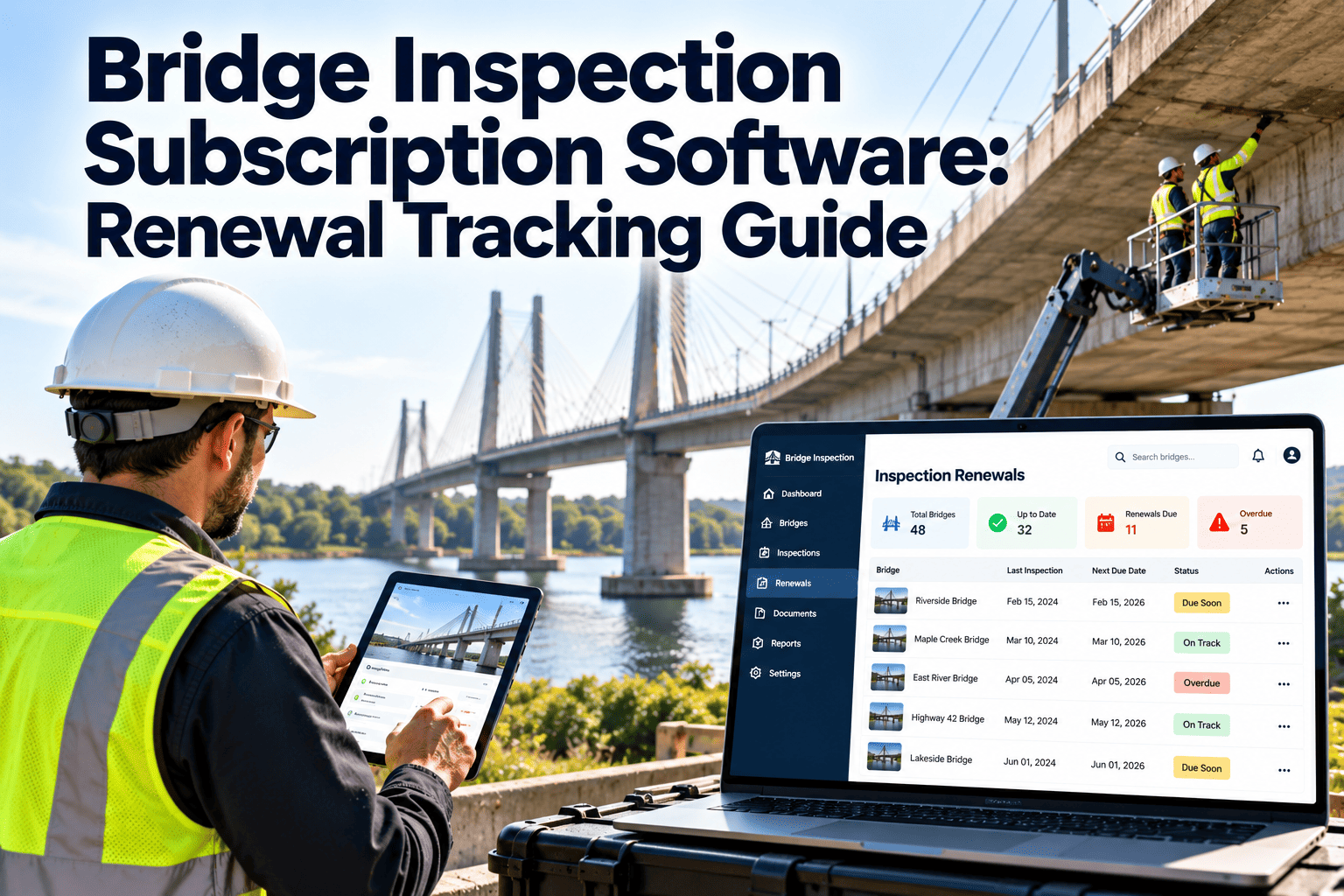
Bridge Inspection Subscription Software: Renewal Tracking Guide
Track recurring inspection contracts per bridge and per vendor so renewals, scope changes, and inspection due dates stay aligned.
What Counts as a Bridge Inspection Subscription?
A subscription here means any recurring service arrangement that supports a bridge inspection or monitoring program. The common thread is a repeating term that must be renewed, rebid, or ended on purpose.
Recurring Inspection Services
Routine, fracture critical, and in-depth inspections delivered under multi-year agreements.
Underwater and Specialty Work
Diving, ROV, rope access, and non-destructive testing, often on longer cycles.
Monitoring and Data Services
Sensors, drone survey, and reporting platforms billed by term or by structure.
Engineering Support
Load rating, scour assessment, and repair design provided on call or by contract.
Where Renewal Tracking Breaks Down
Dates owned by individuals
The person who signed the contract is the only one who knows when it ends.
Contract and bridge records are separate
Nobody can see which structures lose coverage if a vendor agreement lapses.
Scope drifts quietly
Bridges are added or removed, but contract scope and pricing are not updated.
Vendor performance is anecdotal
Late reports and rework rarely feed into the renewal decision.
Link Renewals to the Inspection Calendar
Inspection intervals come from agency policy and federal standards. Renewal dates come from procurement. The risk sits where the two do not line up.
| Situation | Risk | Better Practice |
|---|---|---|
| Contract ends before next inspection due | No vendor in place when work is required | Start renewal early enough to cover the next due date |
| Several bridges on one expiring agreement | A single lapse affects many structures | List all covered bridges on the contract record |
| Different vendors per bridge type | Reports arrive in different formats and schedules | Set common deliverables and a due-date rule |
| Auto-renewal clauses | Unwanted renewal or missed notice window | Track notice deadlines, not just end dates |
| Price escalation clauses | Unplanned cost increases | Record escalation terms and review before renewal |
Fields Worth Storing for Every Contract
- Vendor, contract owner, and backup contact
- Start date, end date, and notice deadline
- Bridges, districts, or inspection types covered
- Deliverable due dates and report format
- Pricing basis and escalation terms
- Insurance, certification, and qualification documents
A Renewal Workflow Built Around the Notice Window
Register the Agreement
Create the contract record, attach the signed document, and link every covered structure.
Schedule the Reminders
Set tasks ahead of the notice deadline and the end date, assigned to named owners.
Review Performance
Check on-time inspections, report quality, and open recommendations for that vendor.
Decide and Document
Renew, renegotiate, rebid, or consolidate, and record the reason and approvals.
Reset the Cycle
Update dates, scope, and linked bridges so the next cycle starts clean.
Multi-Vendor Programs: Keeping Control
Common Multi-Vendor Problems
- Overlapping coverage on some bridges and gaps on others
- Inconsistent inspector qualifications and report formats
- Different renewal months across districts
- Limited comparison between vendor performance
Control Measures
- One register showing bridge, vendor, and contract status
- Shared deliverable and quality checklist
- Renewal dates reviewed in one monthly view
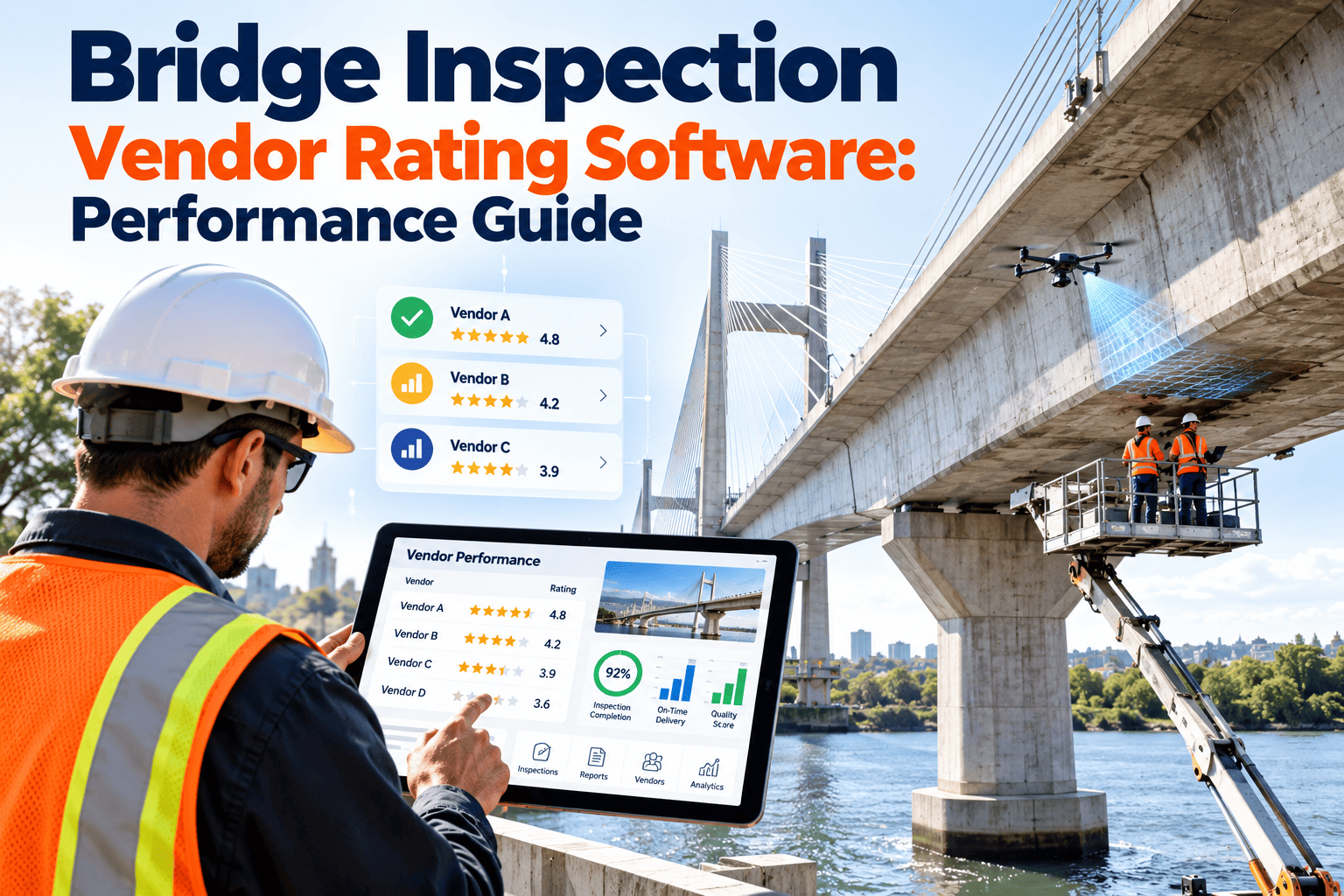
- Vendor scorecards based on tracked results
Never Let an Inspection Contract Lapse Unnoticed
See how contract dates, bridge records, and inspection schedules can live in one maintenance workflow.
Vendor Scorecard Measures Worth Tracking
Renewal Readiness Checklist
- Every active agreement has an owner and a backup owner.
- Notice deadlines are recorded separately from end dates.
- Covered structures match the current bridge inventory.
- Next inspection due dates are checked against contract end dates.
- Vendor qualification and insurance documents are current.
- Open inspection recommendations are reviewed before renewal.
- Approved renewals are filed with updated dates and scope.
How Oxmaint Supports Subscription Renewal Tracking
Oxmaint is built for maintenance operations, so the approach is to treat each agreement as a recurring task connected to bridge assets. It is not a procurement or contract lifecycle system.
Frequently Asked Questions
Is Oxmaint a contract management system?
No. It tracks renewal tasks and documents tied to maintenance. Book a demo to see the workflow.
Can one vendor contract cover many bridges?
Yes. Link all covered structures so a lapse shows its full impact.
What should we track beyond the end date?
Track the notice deadline, scope, pricing terms, and the next inspection due date.
How early should reviews start?
Allow enough time to rebid if needed. Many teams begin four to six months ahead.
Can we start with a few vendors?
Yes. Begin with your largest agreements, then sign up and expand.
Keep Every Bridge Covered, Every Renewal On Time
Give your team a single view of vendors, contracts, and inspection schedules across the bridge portfolio.