Bridge and Road Infrastructure Maintenance Tracking: Condition Assessment and Prioritization
By Taylor on March 9, 2026
A regional department of transportation spends millions each year reacting to potholes and emergency bridge repairs—often addressing the symptoms rather than the root causes of structural decay. Bridge maintenance alone requires $125 billion nationally to clear existing backlogs. Meanwhile, a critical overpass bearing that was inspected manually ten months ago is already showing micro-fractures invisible to periodic visual checks. Across the network, maintenance crews are trapped in a "worst-first" reactive cycle—fixing assets only after they fail, which costs significantly more than proactive preservation. This is the heavy toll of an outdated maintenance strategy.
In 2026, forward-thinking public works agencies are breaking this cycle. They are shifting to digital condition tracking with FCI (Facility Condition Index) scoring to prioritize maintenance, repairs, and capital improvements systematically. Powered by drone inspections, AI pavement analysis, and GIS mapping, this intelligent approach is orchestrated through a CMMS platform like Oxmaint. It ensures the right infrastructure gets the right intervention at the precise moment it's needed—maximizing taxpayer value, extending asset life, and protecting public safety. Start Free Trial.
Infrastructure 2026
Bridge and Road Infrastructure Maintenance Tracking
Move beyond "worst-first" repairs. Utilize digital condition assessments, FCI scoring, and CMMS orchestration to systematically prioritize pavement management and bridge preservation.
Lower total costs by shifting to proactive preservation
3×
Asset Lifespan Extension
Condition-based interventions extend road and bridge lifespans by up to 3× vs. complete reconstruction
Why the "Worst-First" Reactive Model is Failing
Historically, municipalities and DOTs have relied on a "worst-first" approach—waiting for a road to become heavily potholed or a bridge to show severe decay before authorizing major capital funds. This model is politically visible but financially ruinous. By the time infrastructure looks like it needs repair, the cost of intervention is exponentially higher than routine preservation. Without precise, continuous condition assessment, transportation agencies over-spend on emergency rebuilds while starving healthy roads of the cheap preventative maintenance (like seal coating) that would keep them functional for decades.
Worst-First Reactive vs. Condition-Based FCI Management
Understanding the shift from emergency-driven to data-driven infrastructure planning
Reactive / Worst-First
Failure-Driven
Trigger
Citizen complaints or structural failure
Inspection Method
Inconsistent manual patrols
Data Usage
Fragmented spreadsheets, siloed reports
Cost Profile
Massive capital spikes for full rebuilds
Safety Risk
High liability for accidents and damage
VS
Condition-Based / FCI
Data-Driven
Trigger
FCI score thresholds and predictive modeling
Inspection Method
Drone scanning, AI pavement analysis
Data Usage
GIS mapping, real-time asset tracking
Cost Profile
Low-cost proactive preservation saves millions
Safety Risk
Hazards neutralized long before failure
Advanced Condition Assessment Tools
Pavement condition indexes (PCI) and bridge structural health monitors are the new backbone of infrastructure maintenance. By utilizing mobile scanning, drones, and AI vision systems, departments of transportation can capture high-resolution defect data across vast highway networks without causing massive traffic disruptions.
Digital Condition Assessment Methods
Technologies driving the new era of infrastructure condition tracking
01
Bridge Drone Inspections
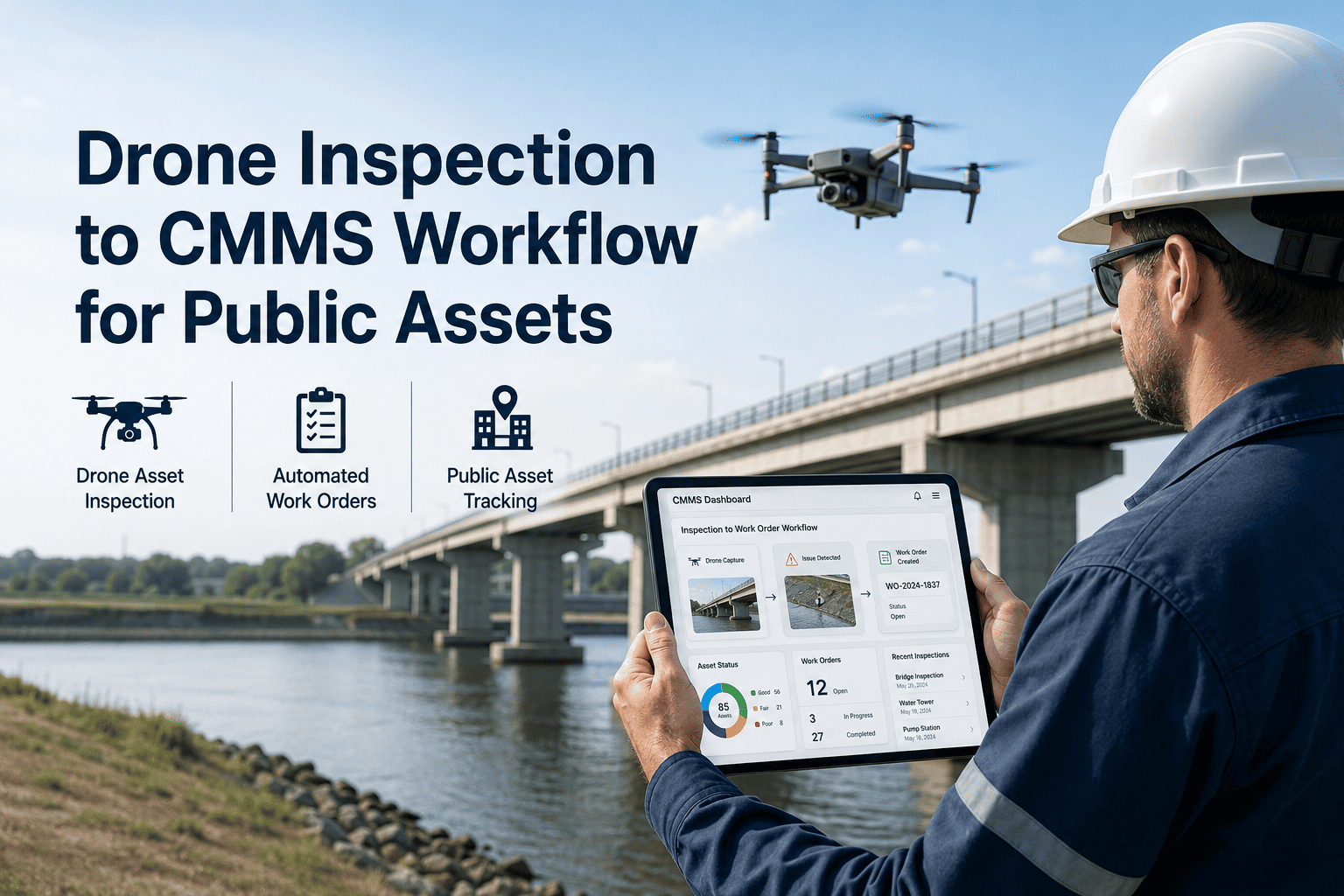
Drones scan under-bridge components, abutments, and piers to detect concrete spalling, exposed rebar, and joint failures without requiring expensive snooper trucks or lane closures.
Aerial Scanning
02
AI Pavement Analysis
Vehicle-mounted cameras process thousands of miles of road, automatically identifying rutting, alligator cracking, and potholes to instantly calculate a network-wide Pavement Condition Index (PCI).
AI Classification
03
IoT Structural Monitoring
Strain gauges, tilt sensors, and accelerometers permanently mounted on critical bridges stream real-time telemetry to detect abnormal load stress long before visible cracks form.
Real-Time IoT
FCI Pipeline: From Data to Prioritization
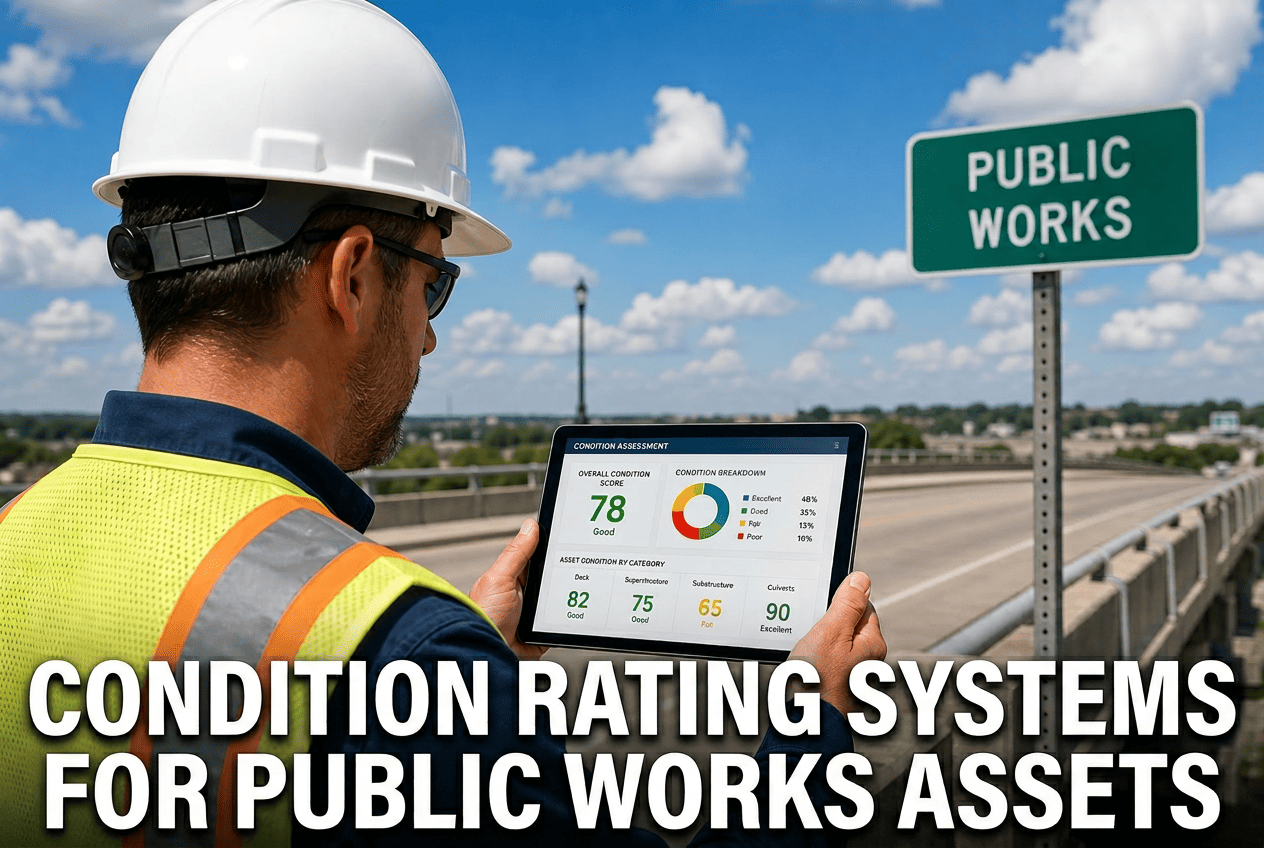
Gathering data is only half the battle. The Facility Condition Index (FCI) takes the estimated cost of needed repairs and divides it by the current replacement value of the asset. When tied into GIS mapping and risk scoring, this creates a clear, objective prioritization pipeline that tells transportation managers exactly which road or bridge to fix first to maximize budget impact.
Condition Intelligence & Prioritization Pipeline
How raw infrastructure data becomes an executed capital plan
The raw distress data immediately updates the Pavement Condition Index (PCI) for that specific road segment within the central asset database.
Phase 2 — GIS Overlay
Mapped on the Infrastructure Grid
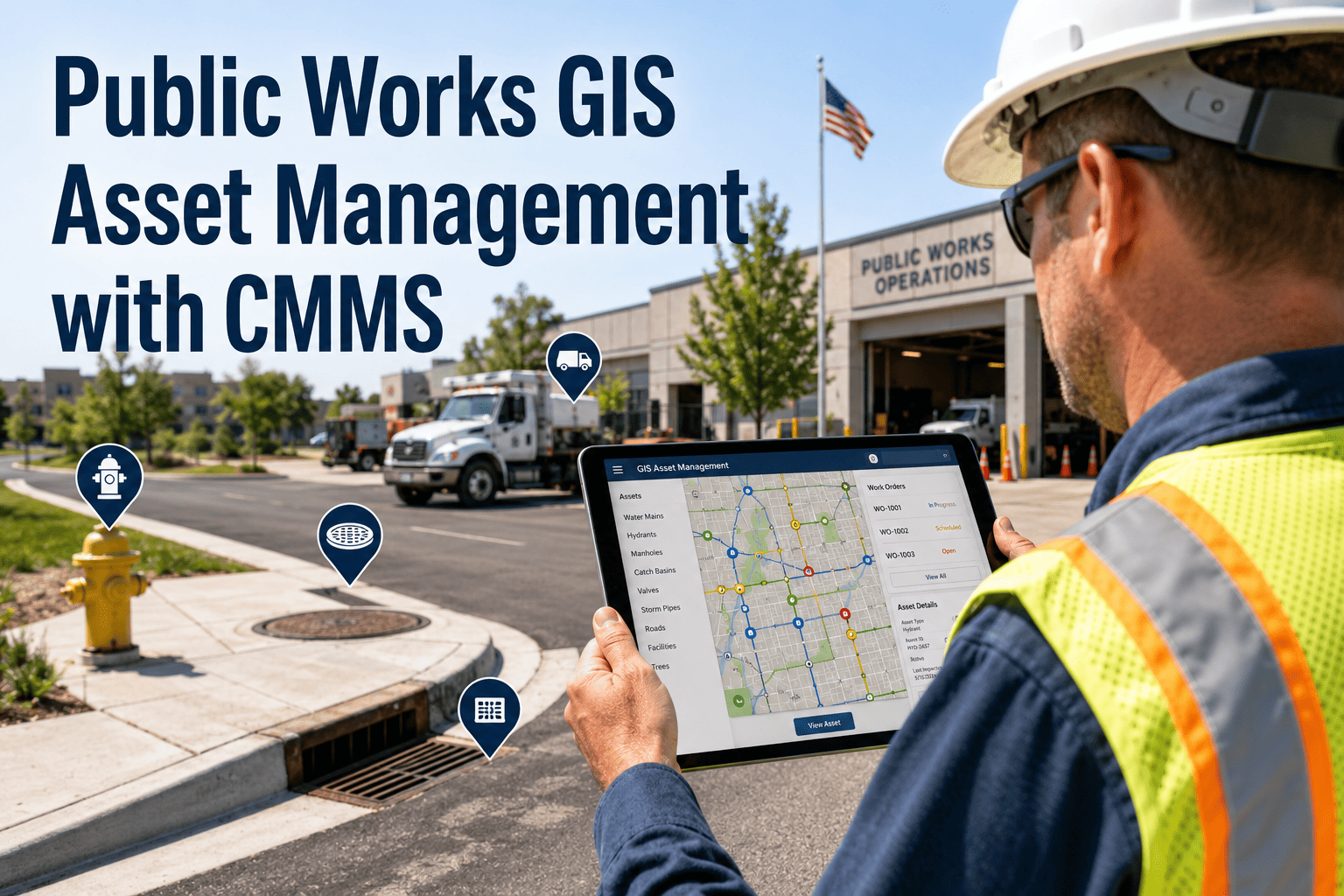
The degrading segment is plotted on a GIS map, displaying its proximity to high-traffic corridors, schools, and essential emergency routes.
Phase 3 — Capital Prioritization
Strategic Intervention Ranking
Algorithms calculate the cost-benefit of applying a slurry seal now versus a full mill-and-overlay next year, raising its priority above standard calendar PMs.
Phase 4 — CMMS Action
Oxmaint Auto-Generates Work Order
A work order with exact GPS coordinates, repair methodology, and required materials is assigned to the paving crew for rapid deployment.
FCI Impact
Objective Budgeting
Replaces political pressure with hard data to justify state and federal funding requests
CMMS: The Execution Engine for Public Works
Even the best data is useless if it doesn't translate to field action. Oxmaint serves as the execution engine for bridge and road maintenance, turning FCI data into organized, trackable work orders. This closes the loop from AI detection to crew dispatch to verifiable repair, ensuring accountability across public infrastructure teams.
Infrastructure CMMS Workflows
Transforming condition assessments into executed field maintenance
01
Automated Priority Routing
Oxmaint automatically escalates critical structural defects (like bridge joint separation) while batching lower-priority repairs (like sign replacements) by geographic zone to save drive time.
Smart Dispatch
02
Mobile Field Execution
Road crews access work orders on tablets, logging materials used, labor hours, and before/after photos directly from the job site—even in areas with no cellular signal.
Crew Mobility
03
Federal & State Compliance
Every bridge inspection and repair is permanently logged, making it simple to generate National Bridge Inventory (NBI) compliance reports and secure matched federal funding.
Audit Ready
Operational Comparison: Finding the Right Balance
Transitioning from a reactive to a condition-based model reshapes how public funds are deployed. Schedule a demo to see how Oxmaint helps you shift budgets from emergency fixes to sustainable preservation.
Maintenance Models in Public Infrastructure
Operational Metric
Reactive Worst-First
Basic Calendar PM
Condition-Based (Oxmaint)
Maintenance Trigger
Total failure / Citizen complaints
Years since last pave/repair
FCI thresholds & AI distress detection
Asset Preservation
None; asset runs to ruin
Generic treatments, often mistimed
Targeted treatments extend life 3×
Data Foundation
Ad-hoc notes, paper forms
Static spreadsheets
GIS, CMMS, real-time index scores
Budget Strategy
Unpredictable emergency bonds
Use-it-or-lose-it allocations
Defensible, multi-year capital forecasting
Cost Efficiency
Highest cost (Full rebuilds)
Moderate (Some over-maintenance)
Lowest cost (Precision preservation)
3×Extended road lifespan
80%Better budget accuracy
100%NBI Compliance
Prioritize the Infrastructure That Matters Most
Discover how Oxmaint integrates FCI scores, drone data, and GIS mapping to build an automated, defensible capital maintenance plan for your municipality.
The ROI of Condition-Based Infrastructure Management
For DOT directors and public works managers, justifying software investment to city councils requires hard numbers. Condition-based maintenance proves its worth by moving funds out of the reactive repair bucket and into highly efficient preservation activities, unlocking millions in taxpayer savings.
Cost Impact: Reactive vs. Proactive Infrastructure
Based on a mid-sized county managing 1,000 lane-miles and 150 bridges
Pavement Preservation
Early seal coating vs. late-stage full depth reconstruction
$2.5M Reconstruction
$600K Preservation
$1,900,000
Bridge Deck Remediation
Targeted epoxy sealing based on condition vs. full deck replacement
$1.8M Deck Replace
$400K Targeted Seal
$1,400,000
Inspection Efficiency
Replacing manual snooper truck rentals with drone/AI scanning
$1.2M Manual
$450K Autonomous
$750,000
Tort Liability & Emergencies
Avoiding damages paid out for pothole vehicle damage and sudden closures
$900K Liability
$200K Residual
$700,000
Total Annual Savings Potential
$4.7M+
Plus unquantifiable benefits in public trust, safety, and regional economic stability
Implementation Roadmap: Building a Modern Asset Framework
Adopting condition-based infrastructure maintenance is a phased process. It begins with establishing an accurate digital registry, applying baseline conditions, and gradually integrating automated data feeds to drive CMMS work orders.
Condition-Based Implementation Roadmap
Six steps to deploy intelligent maintenance across roads and bridges
01
Asset Registry
Digitize all lane-miles, bridges, culverts, and signage into Oxmaint CMMS with GIS boundaries.
02
Baseline FCI
Establish current Facility Condition Indexes and PCI scores using historical data and initial visual surveys.
03
Digital Assessment
Deploy AI vehicle scanning for pavement and drone imaging for bridges to refine condition data continuously.
04
CMMS Integrate
Connect assessment data directly to Oxmaint to trigger preventive work orders based on condition thresholds.
05
Capital Planning
Utilize multi-year deterioration models to justify budget requests and optimize repair sequencing.
06
Network Scale
Expand dynamic tracking across all county/state assets to fully eradicate worst-first repair habits.
Expert Perspective: The Power of Defensible Data
"
For years, our budget meetings were a shouting match over which district had the worst roads. Capital was allocated by political pressure, not structural need. Once we implemented digital condition tracking and centralized our FCI scores in a CMMS, the conversations changed completely. Now, we bring objective deterioration curves to the council. We can prove that spending $500,000 on pavement preservation today saves $4 million in reconstruction five years from now. It has completely transformed our agency's efficiency.
— Commissioner of Public Works, Regional DOT
Objective Prioritization
Remove bias from capital allocation. FCI and PCI scores dictate exactly where funds will have the highest long-term impact on network health.
Grant Justification
Federal and state matching grants increasingly demand rigorous asset management plans. CMMS data provides the exact proof of need required to win funding.
Reduced Liability
A documented, condition-based inspection and repair workflow demonstrates municipal diligence, severely limiting liability in the event of infrastructure-related accidents.
Public works departments that transition to data-driven infrastructure management are not just fixing roads—they are safeguarding the economic arteries of their regions. By combining automated condition assessments with the execution power of a modern CMMS, they deliver the transparency, safety, and fiscal responsibility that citizens demand. Schedule a consultation to build your infrastructure management framework.
Upgrade Your Infrastructure Management with Oxmaint
Join forward-thinking transportation agencies using Oxmaint to orchestrate condition assessments, track FCI scores, dispatch road crews, and master capital planning—all from a single platform.
What is the Facility Condition Index (FCI) for bridges and roads?
The Facility Condition Index (FCI) is a standard benchmark used to objectively assess the health of an infrastructure asset. It is calculated by dividing the cost of deferred maintenance and needed repairs by the current replacement value of the asset. A lower score (typically under 10%) indicates good condition, while a higher score indicates critical degradation. For roads, this is often expressed as the Pavement Condition Index (PCI). Tracking these scores in a CMMS allows agencies to prioritize repairs systematically rather than reacting to failures.
Why is condition-based preservation better than "worst-first" repairs?
A "worst-first" approach waits until a road or bridge is structurally compromised to fix it, requiring highly expensive complete reconstruction. Condition-based preservation identifies minor wear early (via AI scanning or drones) and applies low-cost treatments like crack sealing, seal coating, or targeted epoxy. Spending $1 on preservation early in an asset's lifecycle often saves $4 to $6 in rehabilitation costs later, stretching municipal budgets dramatically.
How does a CMMS integrate with drone and AI pavement inspections?
Modern CMMS platforms like Oxmaint can ingest data from third-party inspection tools via APIs. When a drone detects concrete spalling on a bridge abutment, or an AI camera detects alligator cracking on a highway, the data is pushed to Oxmaint. The system then automatically generates a localized work order containing the defect imagery, GPS coordinates, and severity level, dispatching it to the appropriate maintenance crew.
How does tracking infrastructure maintenance help with securing funding?
State and federal grant programs (like the FHWA) require rigorous, data-backed evidence of need to award infrastructure funds. An infrastructure CMMS provides an unbreakable audit trail of historical maintenance, current FCI scores, and projected deterioration curves. This objective data removes the guesswork and proves to granting authorities that the agency is practicing responsible asset management, greatly increasing the chances of winning capital funding.
Can our field crews easily use this technology?
Yes. While the backend calculations (FCI, deterioration modeling) are complex, the field interface is simple. Road and bridge crews use a mobile CMMS app on their tablets or smartphones. They receive a clear list of daily work orders with exact map locations, step-by-step repair checklists, and the ability to snap "after" photos to close out tasks. This replaces lost paper tickets and ensures real-time updates from the field to the central office. Book a demo to see the mobile execution in action.