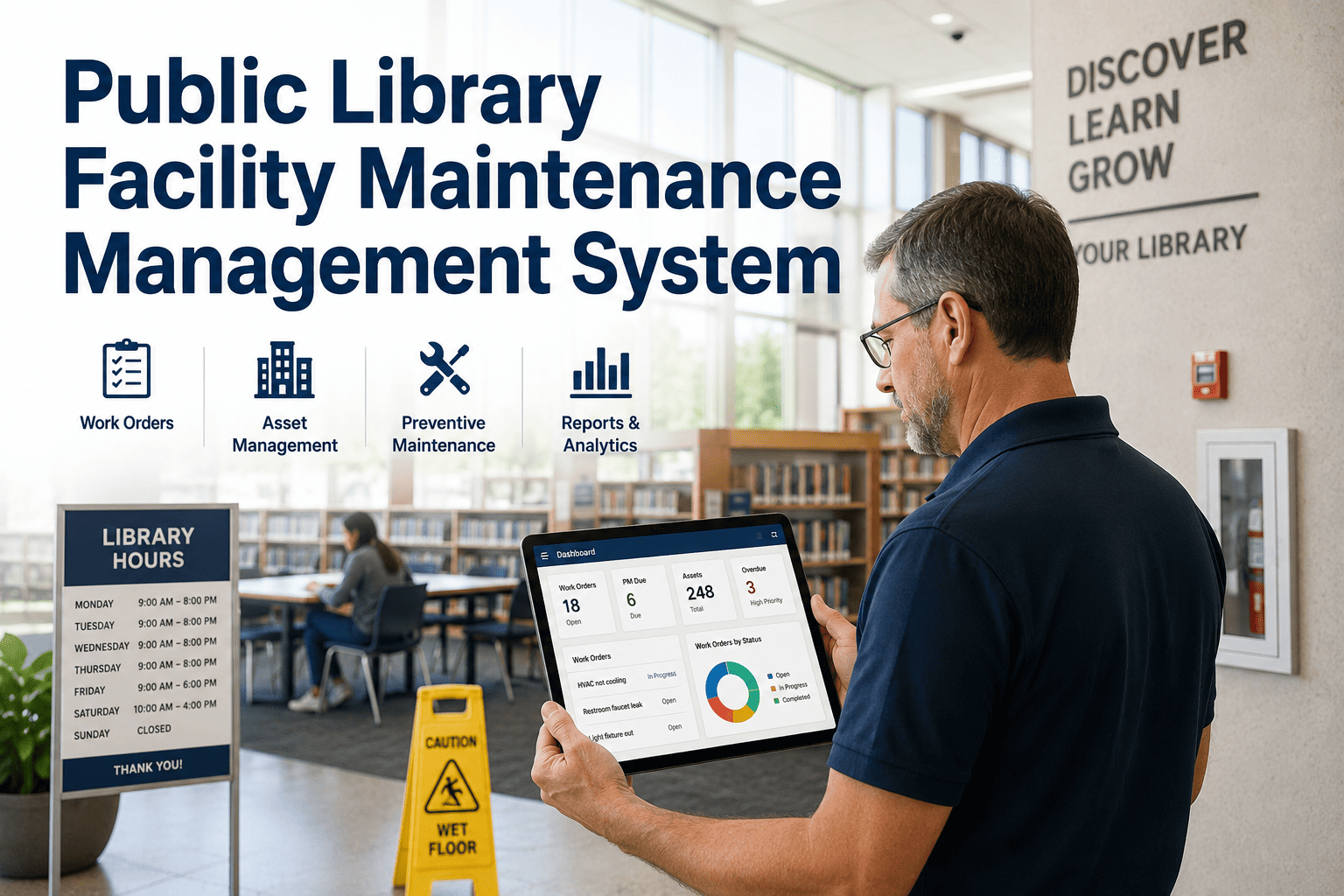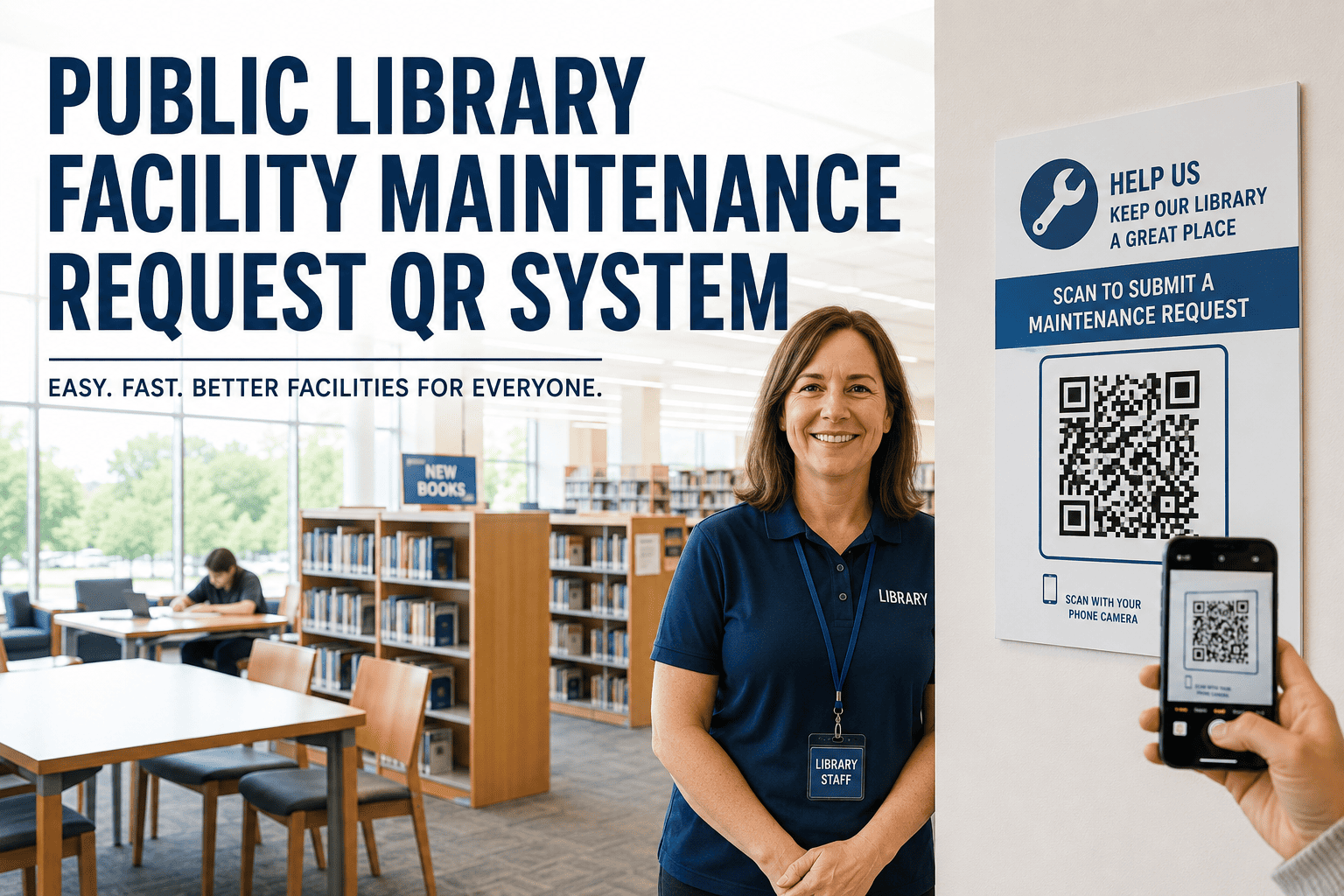
Library staff spend their days helping patrons — not chasing down maintenance requests. But when the HVAC trips in the children's section, a restroom is out of service, or a safety hazard appears in the stacks, fast reporting is critical. OxMaint's QR-based maintenance request system puts a direct line to your facilities team on every wall, desk, and door — so staff can report issues in seconds and maintenance crews get automatically routed work orders with photos, location, and priority level.
PUBLIC LIBRARY FACILITIES
Scan. Report. Fixed. Library Maintenance as Simple as Checking Out a Book.
OxMaint QR codes let any staff member submit a detailed maintenance request in under 30 seconds — no login, no app download, no phone calls to the facilities desk.
How It Works — QR to Resolved in 4 Steps
1
Scan the QR Code
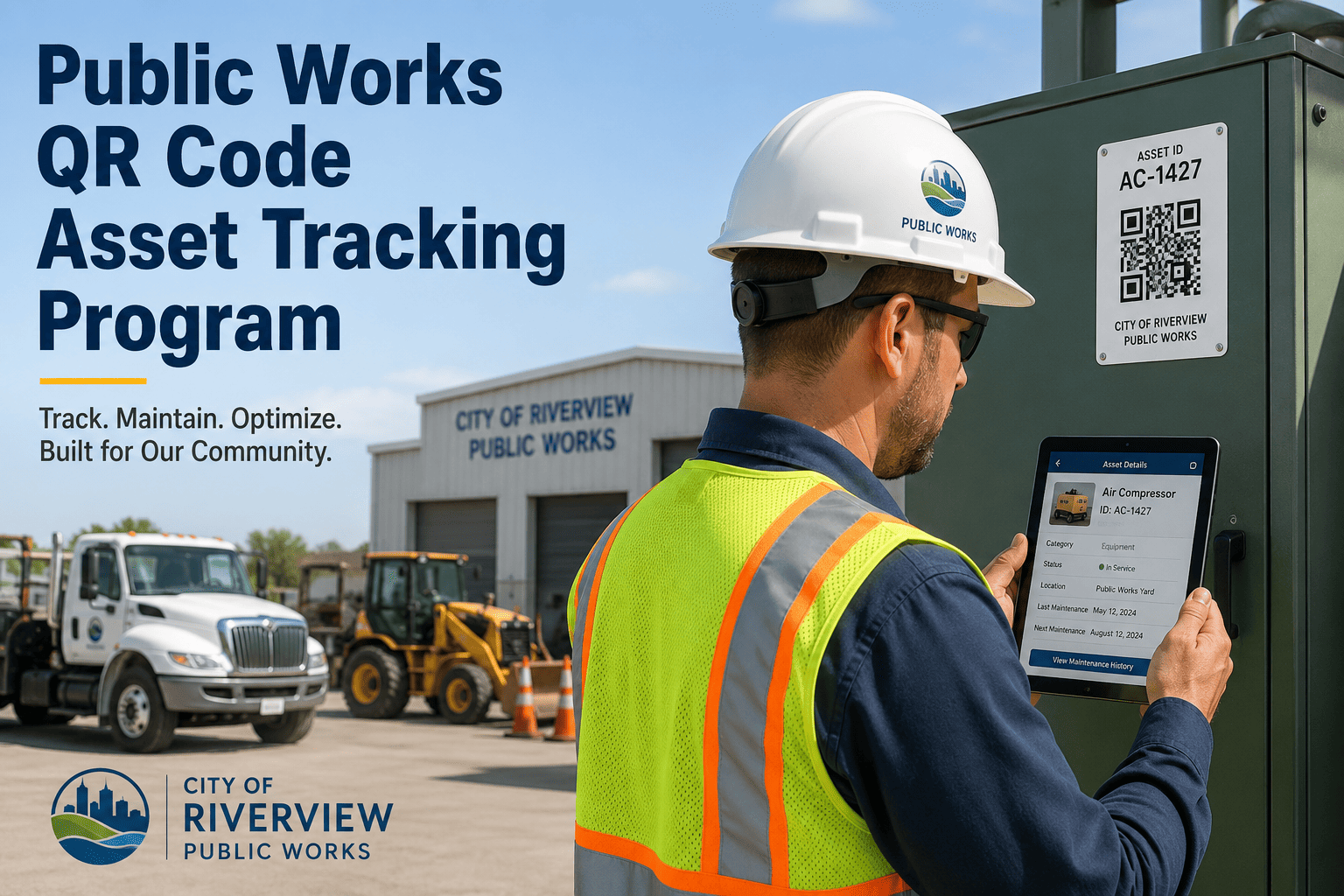
Staff or patrons scan a QR code posted in the location where the issue occurred. No app install, no login required — just a phone camera.
2
Submit the Request
The mobile form pre-fills the location and asset. Staff describe the issue, add a photo, and mark urgency — all in under 30 seconds.
3
Auto-Routed Work Order
OxMaint instantly creates a work order and routes it to the right technician based on issue type, location, and priority — no phone calls or emails needed.
4
Resolved & Tracked
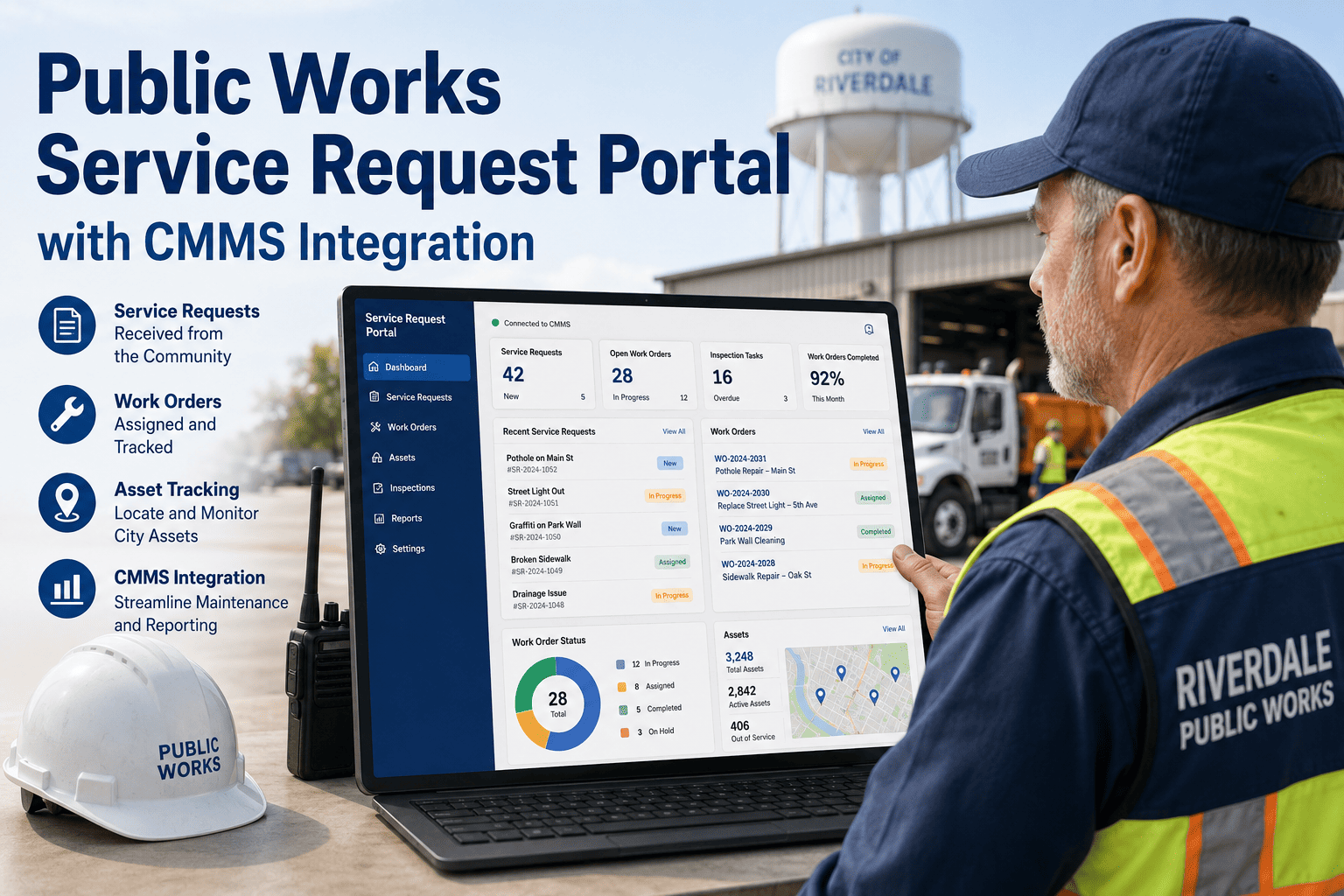
The requester gets a status notification. Managers see every open, in-progress, and completed request on a single dashboard with response time analytics.
Where to Place QR Codes in Your Library
HVAC Zones
Temperature complaints, air quality issues, and ventilation problems are reported directly from the affected room to your HVAC technician.
High volume
Restrooms
Fixture failures, soap and supply shortages, and cleanliness issues go directly to custodial or plumbing crews with a single scan.
Critical
Lighting Panels
Burned out fixtures, emergency lighting failures, and flickering ballasts are reported with location accuracy to the inch — no guessing "which room."
Safety
Computer Stations
IT and electrical issues at public workstations are logged with the specific terminal number pre-filled from the QR code on the desk.
Patron services
Exterior Entrances
Door hardware failures, accessibility ramp issues, and exterior lighting outages are reported instantly — critical for ADA compliance and liability.
ADA compliance
Staff Break Rooms
Appliance failures, plumbing issues, and infrastructure problems in staff areas are tracked separately from patron-facing requests with appropriate priority.
Internal
OxMaint vs. Traditional Maintenance Requests
| Factor | Phone / Email Requests | OxMaint QR System |
|---|---|---|
| Time to submit request | 5–15 minutes | Under 30 seconds |
| Location accuracy | Verbal description | GPS + pre-filled asset tag |
| Photo documentation | Rarely attached | Required at submission |
| Request tracking visibility | None for requester | Real-time status notifications |
| Response time analytics | Not available | Automated dashboard reporting |
| After-hours reporting | Limited / voicemail | 24/7 via QR code scan |
EXPERT REVIEW
Patricia Dunmore, CFM, LEED AP
Director of Facilities — Regional Library System, 14 Years Public Building Management
Before QR-based work request systems, our biggest documentation gap was issues that were reported verbally and never made it into the maintenance log. A staff member would mention to a colleague that the carpet near the elevator was buckling, that colleague would forget to call facilities, and three months later someone trips and there's a slip-and-fall claim with no record that anyone ever reported it. QR codes in high-traffic areas changed that completely. Every reported issue is time-stamped, location-tagged, and in the system within seconds. For public buildings with liability exposure, that documentation trail is worth as much as the faster response times. I also saw our patron satisfaction scores for building cleanliness and comfort improve measurably in the first year — faster reporting leads to faster resolution.
Frequently Asked Questions
Do library staff need to create an OxMaint account to submit maintenance requests via QR code?
No account is needed. QR codes link to a public-facing mobile form that any staff member or patron can access with their phone's camera. The form is pre-configured with the location and asset — submitters only need to describe the issue, add a photo, and tap submit. Facility managers and technicians use the full OxMaint platform to manage, prioritize, and close work orders. Sign up free to generate your first library QR codes.
Can the system route different types of issues to different vendors or crews automatically?
Yes. OxMaint's routing rules automatically assign work orders based on issue category and location. HVAC issues go to your mechanical contractor, plumbing requests go to the in-house plumber, IT issues route to the IT team, and janitorial requests go to custodial supervisors. This eliminates the dispatch bottleneck and ensures every request lands with the right person without a facilities manager manually triaging each one. Routing rules are fully configurable by library branch and issue type.
How does OxMaint help library managers demonstrate maintenance responsiveness to city or county administrators?
OxMaint generates monthly and annual maintenance performance reports showing total requests received, average response time by issue type, resolution rates, and backlog trends. These reports can be exported in PDF or Excel format for budget justification, annual reports to library boards, and public works department reviews. Libraries that can show quantified response time improvements and declining backlog trends are significantly better positioned in capital budget discussions. Book a demo to see a sample library maintenance report.
What happens when a safety issue like a wet floor or tripping hazard is reported after hours?
After-hours safety submissions trigger an urgent work order and send immediate SMS and email alerts to the on-call facilities contact. The system timestamps the report and records who was notified, creating the incident documentation trail that protects the library from liability claims. If the hazard cannot be immediately addressed, the work order status shows "response pending" with timestamps — demonstrating that the organization acted on the report as fast as possible under the circumstances.
READY TO MODERNIZE YOUR LIBRARY?
Every Issue Reported. Every Request Tracked. Every Patron and Staff Member Heard.
OxMaint QR codes transform how your library handles maintenance — faster reporting, smarter routing, and complete documentation for every issue in every branch.