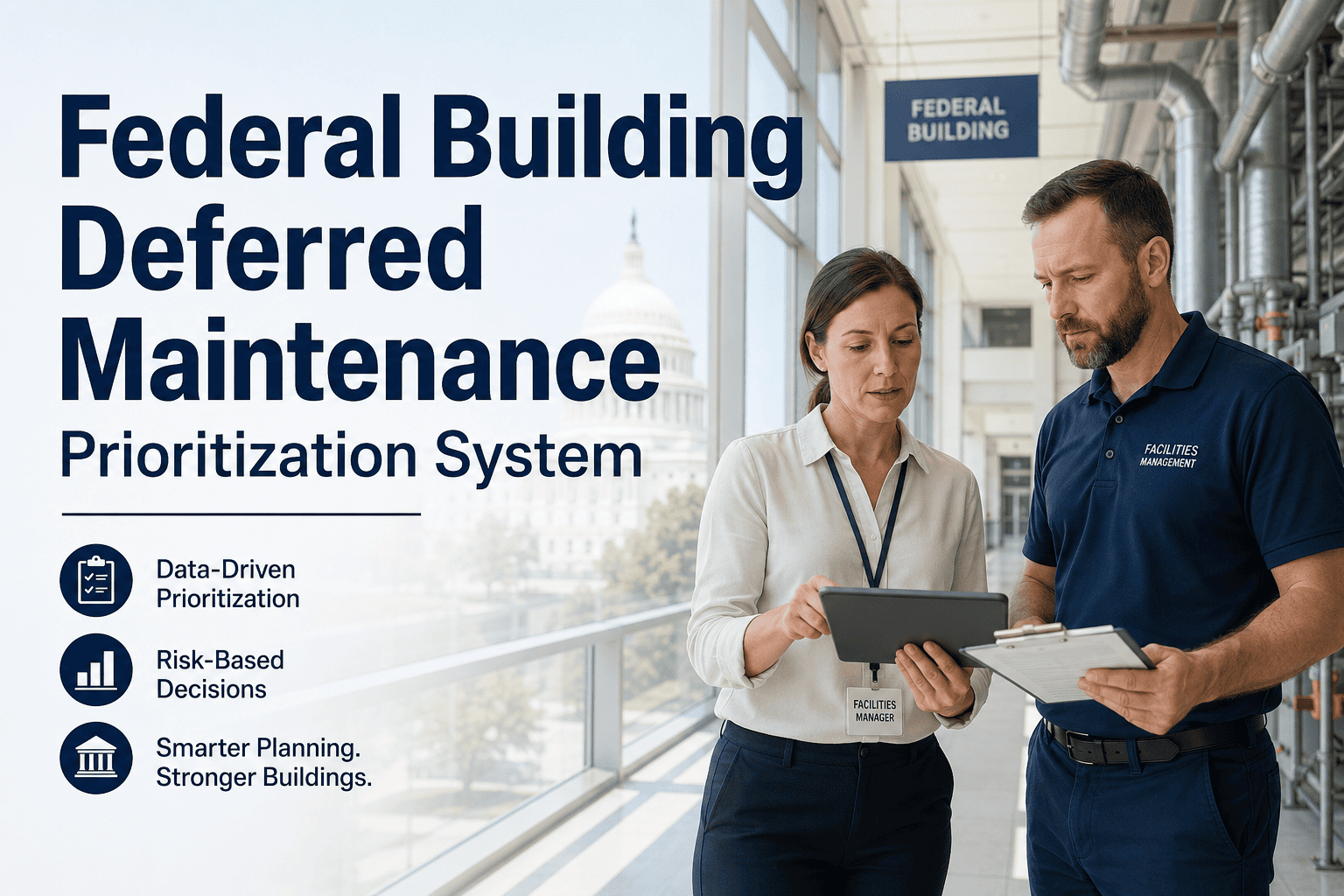
The federal government faces an estimated $200 billion in deferred maintenance across its civilian building portfolio — from courthouses and VA medical centers to GSA office complexes and national labs. Without a structured prioritization system, facility managers are forced to make repair decisions on instinct and squeaky-wheel politics rather than data. OxMaint applies risk-based scoring to your entire repair backlog, so every dollar goes to the maintenance action with the highest asset health, compliance, and mission continuity impact.
CASE STUDY
How Federal Facility Teams Are Using OxMaint to Cut Deferred Maintenance Backlogs by 40%
Risk scoring + asset health monitoring + compliance tracking — all in one platform built for government facility managers.
The Deferred Maintenance Problem in Federal Buildings
Deferred maintenance — repairs that have been identified but not yet funded — compounds at roughly 10 to 15% per year in federal buildings. A $50,000 HVAC system that needed a compressor replacement last year may need full system replacement this year. Without a ranked, data-driven backlog, federal facility teams spend their budgets reactively on the loudest failure rather than the highest risk.
$200B+
Estimated federal civilian building deferred maintenance
10–15%
Annual cost escalation on deferred repairs
45%
Federal buildings with FCI above 0.10 (poor condition)
OxMaint's 5-Factor Prioritization Score
OxMaint scores each deferred maintenance item across five dimensions and generates a composite priority score that drives your maintenance backlog queue. No more spreadsheet debates — every repair is ranked by objective data.
FACTOR 1
Safety & Code Risk
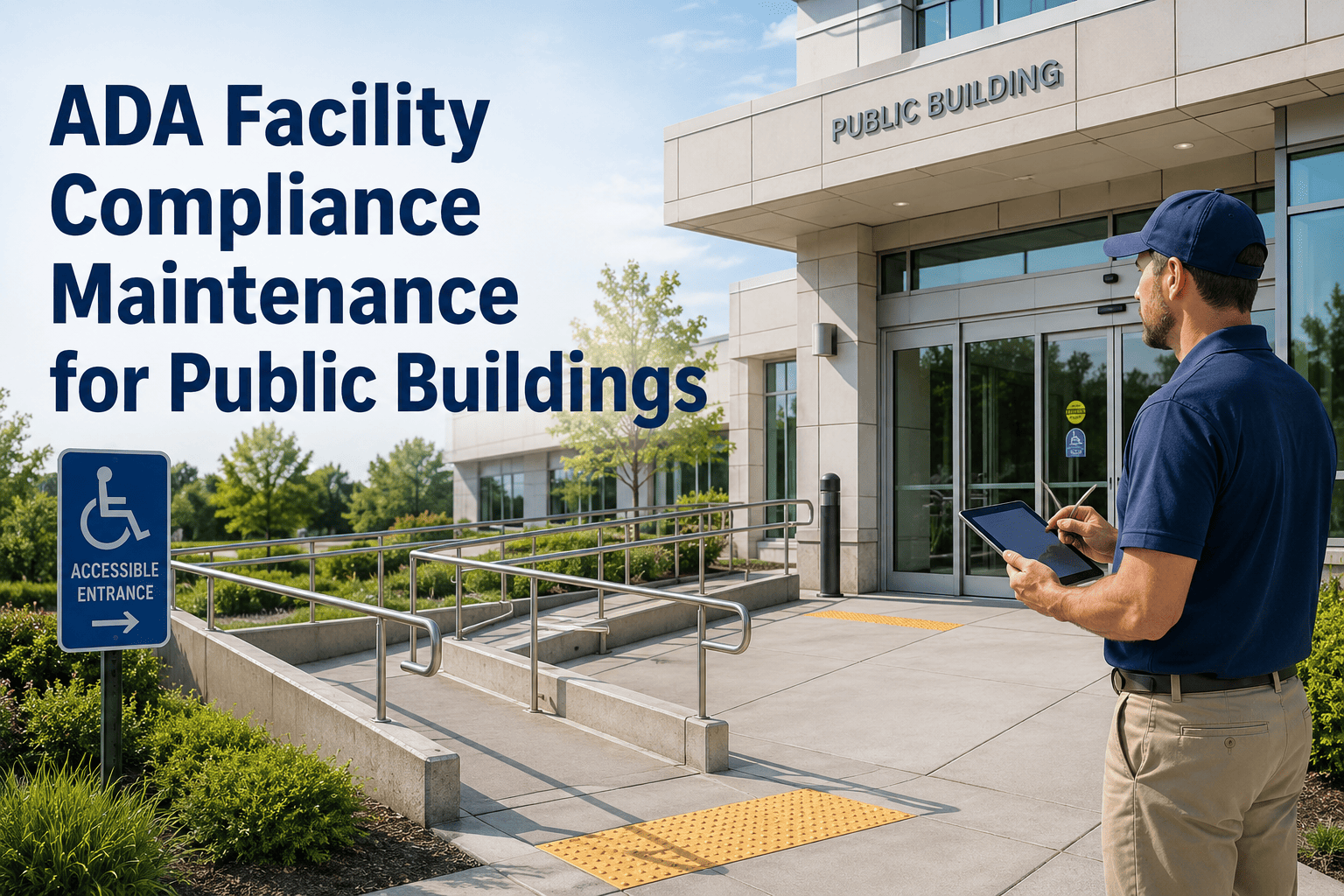
Life safety violations, ADA non-compliance, and fire code deficiencies receive the highest weight. Federal facilities with OSHA or NFPA violations trigger immediate escalation.
FACTOR 2
Asset Health Index
OxMaint tracks condition ratings from inspection history, maintenance frequency, and age against ASHRAE/GSA useful life benchmarks to generate a real-time asset health score for each building system.
FACTOR 3
Mission Continuity Impact
Failures that would disrupt federal operations — HVAC in a server room, elevators in a VA clinic, power distribution in a courthouse — are weighted higher than non-critical systems.
FACTOR 4
Cost Escalation Rate
Items with high cost-of-delay multipliers are scored to surface deferred work where waiting one more budget cycle doubles the repair cost. This drives the "fix now vs. defer" budget decision.
FACTOR 5
Regulatory Compliance Exposure
EPA, EPA-ENERGY STAR, and federal sustainability mandates (E.O. 14057) require documented maintenance actions on energy systems. Compliance-linked items are elevated in the priority queue to avoid regulatory findings.
Facility Condition Index — Quick Reference
| FCI Range |
Condition Rating |
Recommended Strategy |
Backlog Action in OxMaint |
| 0.00 – 0.05 |
Good |
Preventive maintenance — sustain condition |
Scheduled PM work orders |
| 0.06 – 0.10 |
Fair |
Address high-priority backlog items first |
Risk-scored repair queue |
| 0.11 – 0.30 |
Poor |
Major renovation or system replacement planning |
Capital project work orders |
| Above 0.30 |
Critical |
Evaluate for consolidation or disposal |
Executive dashboard alert |
CASE RESULTS
40%
Reduction in deferred maintenance backlog in Year 1
3.2x
ROI on preventive maintenance vs reactive repairs
100%
Audit-ready compliance documentation
EXPERT REVIEW
Colonel (Ret.) Marcus Webb
Federal Facilities Director — 24 Years DoD and GSA Building Operations
The problem with federal deferred maintenance isn't funding — it's prioritization. Budget cycles force you to choose which repairs to fund, and without a defensible scoring methodology, those decisions get made by whoever screams loudest. OxMaint's risk-weighted priority queue gave our team a way to walk into budget meetings with data, not anecdotes. When you can show OMB that HVAC failure at Building 7 will cost $480K next year versus $180K today, and that it scores highest on mission continuity impact, the budget allocation decision becomes straightforward. That kind of documentation also protects facility managers from second-guessing when a lower-priority failure does occur.
Frequently Asked Questions
How does OxMaint calculate the Facility Condition Index for a federal building portfolio?
OxMaint calculates FCI as total deferred maintenance cost divided by current replacement value for each building. Replacement values are imported from GSA or agency real property data, and deferred maintenance costs are tracked from inspection findings, condition assessments, and flagged work orders. The FCI updates automatically as work orders are completed and new deficiencies are logged.
Sign up free to see how your building portfolio FCI is calculated.
Can OxMaint support federal reporting requirements like OMB A-11 or GSA real property reporting?
Yes. OxMaint generates structured maintenance and asset condition reports that align with federal real property reporting requirements. Data exports include asset condition ratings, deferred maintenance cost summaries, corrective action histories, and FCI trends — formatted to support OMB A-11 capital planning submissions, FRPP data calls, and GSA facility management reviews. The platform also maintains the full audit trail required for inspector general reviews.
What happens when a new inspection finds a previously unknown deficiency in a federal building?
New deficiencies logged by field inspectors or contractors are immediately added to the deferred maintenance queue and scored by the 5-factor priority model. The building's FCI updates automatically, and if the new deficiency changes the priority ranking significantly, the system alerts the facility manager and suggests a revised repair sequence. All deficiency records are permanently retained for compliance documentation.
Book a demo to see a live inspection-to-backlog workflow.
How does OxMaint handle multi-building federal campuses with different agency tenants?
OxMaint supports multi-building portfolio views with building-level and campus-level FCI dashboards. Each tenant agency can be assigned separate work order queues and reporting access, while the facility management team sees the consolidated view. This structure is common for federal campuses where a single facility management office supports multiple agency tenants with different operational priorities and budget authorities.
Stop Guessing. Start Prioritizing by Risk.
Federal facility managers use OxMaint to rank every deferred repair by safety, cost, and mission impact — and defend every budget decision with data.