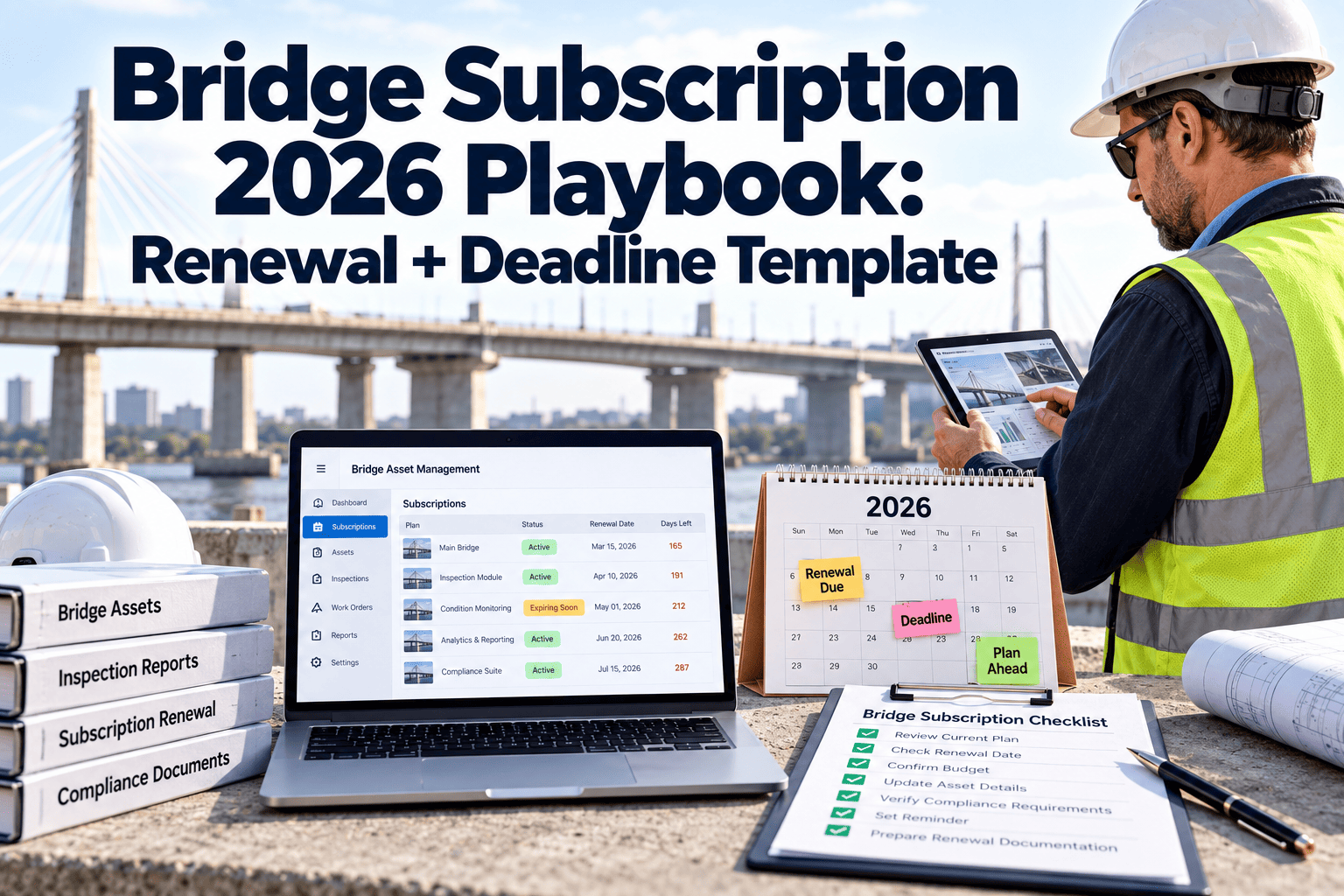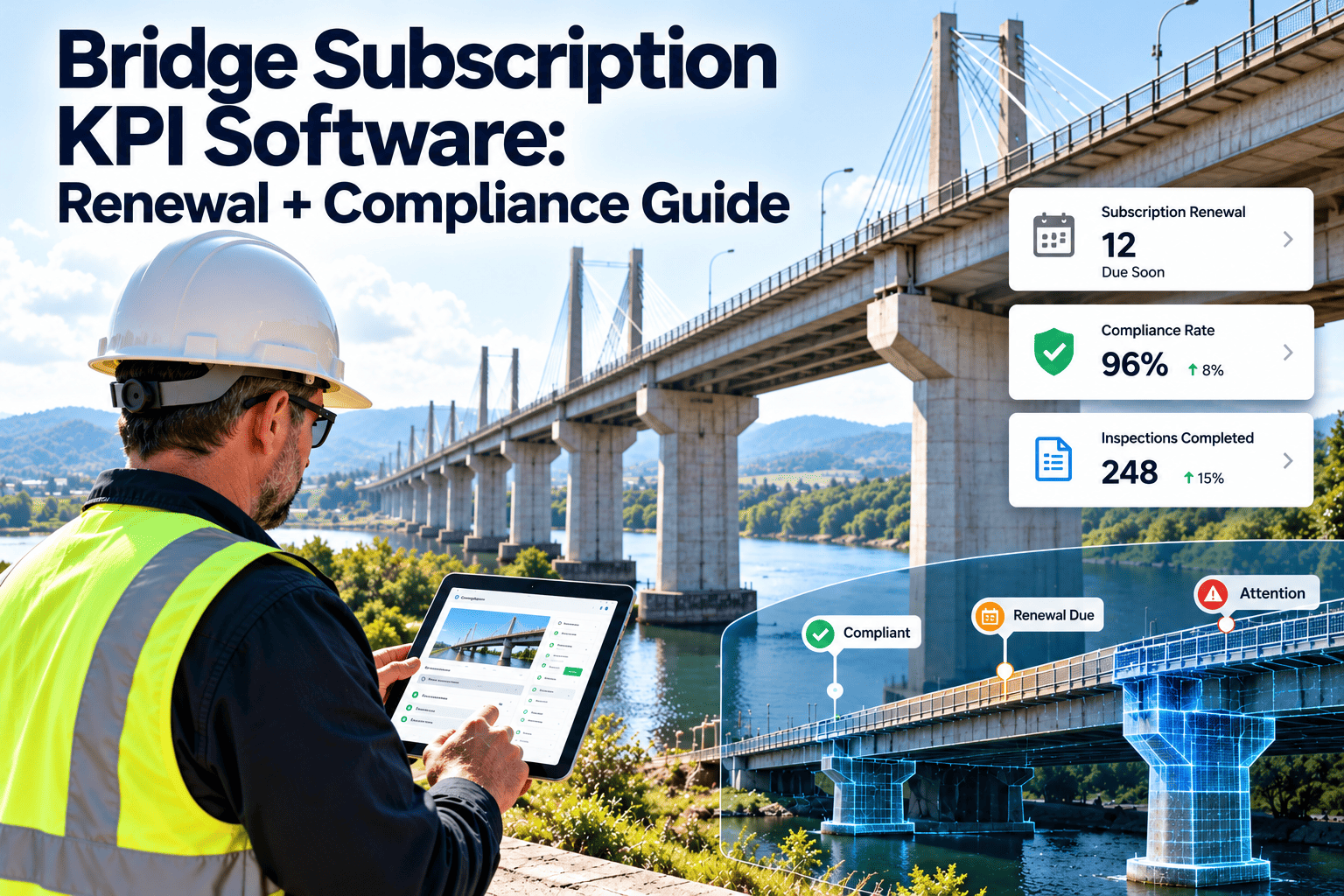
Bridge programs run on recurring commitments: inspection services, load rating software, structural health monitoring data, underwater diving teams, scour monitoring and specialty testing. Each one renews on its own date, and a missed renewal can leave an inspection cycle uncovered or a monitoring feed dark. State DOT teams that track these commitments with KPIs catch gaps while they are still cheap to fix. This guide explains the renewal, deadline and vendor coverage KPIs that matter, and how a maintenance management platform with scheduling and vendor records supports them.
Bridge Subscription KPI Software: Renewal-on-Time, Deadline Compliance and Vendor Coverage
Know which bridge services renew next, which deadlines are at risk, and which structures have no active vendor behind them.
What Counts as a Bridge Subscription
The term covers any recurring service or license that supports bridge safety, condition data or compliance reporting. Listing them is the first step, because most agencies find they track only a few.
- Routine and in-depth inspection contracts
- Underwater and fracture-critical specialists
- Load testing and nondestructive evaluation
- Bridge management and load rating licenses
- Structural monitoring data feeds
- Mapping, drone and imagery services
- Scour and channel monitoring
- Traffic control and access equipment
- Deck, joint and bearing maintenance contracts
Why Renewals Slip
Dates held by individuals
The person who knows a renewal is due changes roles, and the date goes with them.
Procurement lead time ignored
A renewal needing approval and funding cannot start two weeks before expiry.
No link to inspection cycles
Inspection due dates and vendor contract dates are managed in different files.
Coverage assumed, not verified
Teams assume a vendor covers a region or bridge type until a deadline proves otherwise.
The Three KPIs Defined
| KPI | How to calculate | What it reveals |
|---|---|---|
| Renewal-on-time percent | Subscriptions renewed before expiry divided by subscriptions that came due in the period | Whether renewals are managed ahead of expiry or in a scramble |
| Deadline compliance | Required inspections and reports completed by their due date divided by those due | Whether services behind the schedule are delivering in time |
| Vendor coverage | Bridges with an active qualified vendor for each required service divided by total bridges | Where a lapse or capacity gap would leave a structure unserved |
Setting sensible targets
Targets should reflect your own history and rules. Start by measuring a baseline for a quarter, then set improvement goals by service type, since a critical inspection contract deserves a tighter target than a convenience license.
Deadline Compliance in Context
Federal National Bridge Inspection Standards set inspection frequencies, and routine inspections generally run on a 24-month cycle, with other intervals for certain bridge types and special inspections. Confirm requirements with your state program.
The intervals above are an example cadence. Adjust them to your procurement lead times.
Stop Finding Out About Expiry on the Expiry Date
See how scheduled reminders, vendor records and reporting can keep every bridge service on its renewal timeline.
Vendor Coverage: Finding the Gaps Before They Matter
Coverage is a map of services against structures. Gaps appear where a specialized service depends on one vendor or a single region.
Example layout only. Replace with your own districts and services.
Questions the coverage map answers
- Which bridge types depend on a single specialist?
- Which contracts expire in the same quarter and strain one vendor?
- Where would a vendor failure delay a required inspection?
Operational Impact of Missed Renewals
- Services pause until paperwork clears
- Inspection schedules shift
- Monitoring data has gaps
- Required inspections risk running late
- Rushed procurement raises cost
- Staff time shifts to chasing renewals
- Weaker condition history
- Harder compliance reporting
- Less leverage in vendor negotiation
Building the Tracking Workflow
How a CMMS Helps
Scheduling and reminders
Recurring tasks can mirror renewal milestones, so the right owner is prompted well before a service lapses.
Vendor and asset records
- Keep contract terms, contacts and service areas with each vendor
- Link vendors to structures and inspection work orders
- Record performance, cost and response history
Dashboards and compliance reporting
Dashboards can display upcoming renewals, overdue deadlines and coverage gaps. Exportable records support internal review and external reporting.
Trends in Bridge Program Management
Frequently Asked Questions
Keep Every Bridge Service Renewed, Covered and On Schedule
Track renewals, deadlines and vendor coverage in the same system that manages your bridge maintenance work.