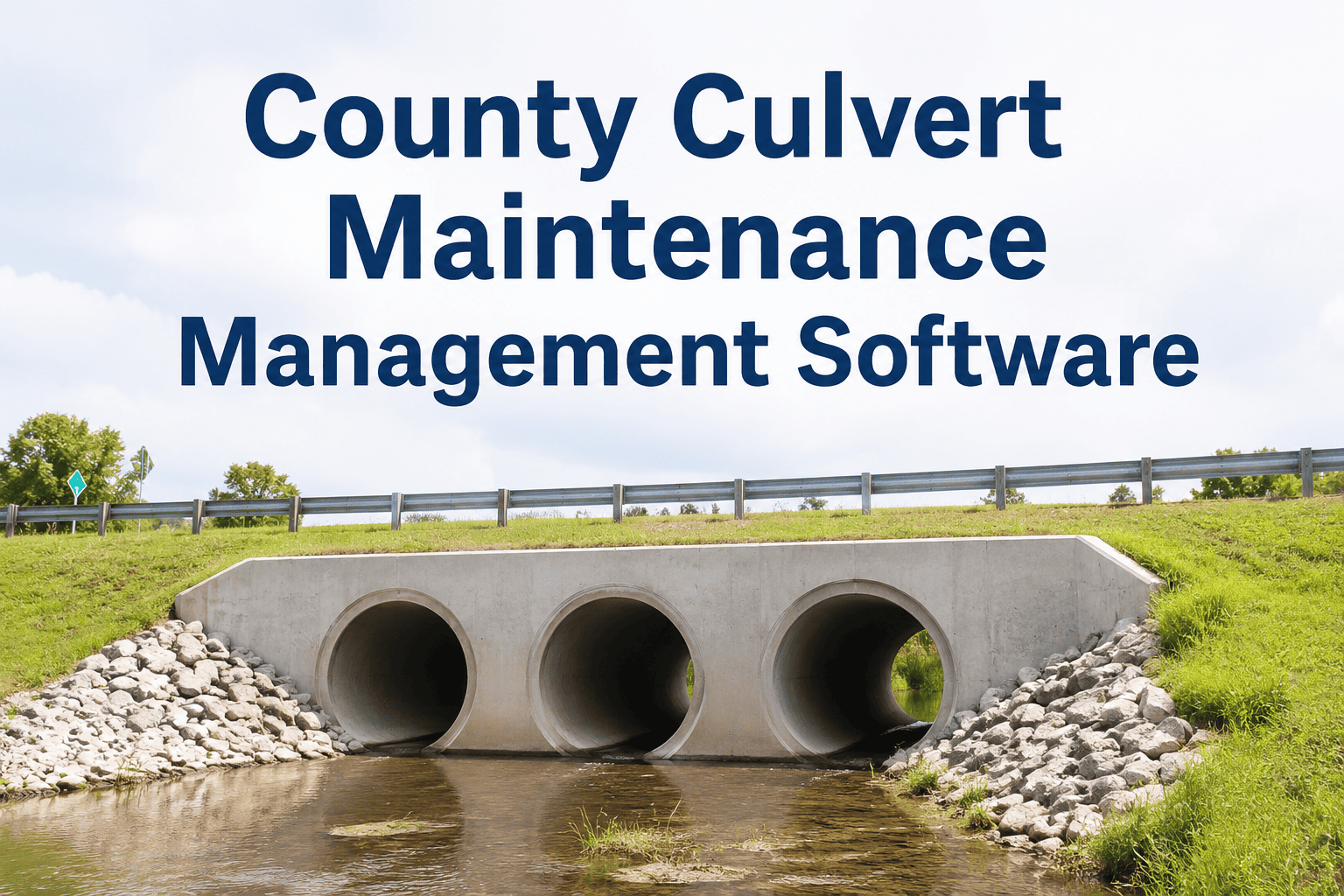
County culvert systems are among the most underinspected and least digitally managed infrastructure assets in local government — yet culvert failures are among the most expensive, averaging $285,000 per emergency repair event when road wash-out, traffic closure, and environmental remediation costs are included. Most county engineers manage culvert inventories through handwritten field notes, aging GIS exports, and institutional memory held by a handful of veteran employees. When those employees retire, the inventory knowledge leaves with them. OxMaint's asset management and preventive maintenance platform allows county public works teams to build a structured culvert inventory with GPS coordinates, condition ratings, and historical inspection records, then generate PM schedules based on culvert type, age, drainage area, and failure history. Counties implementing systematic culvert PM programs reduce emergency repair events by 58% and cut reactive repair spend by over $200,000 annually on a typical mid-sized culvert portfolio of 800–1,200 structures.
County Culvert Maintenance Management Software
How county engineers use OxMaint to build auditable culvert inventories, schedule preventive inspections, and eliminate the emergency repair events that consume stormwater maintenance budgets.
Why Culvert Maintenance Fails Without Structured Asset Management
Culverts are invisible infrastructure — they sit below roads and driveways, out of daily sight, until they fail. This invisibility creates four management failures that compound into large emergency repair budgets.
Most counties cannot accurately count their culvert structures without a field survey. Structures installed decades ago may not exist in any digital record. An unknown asset cannot be scheduled for inspection or budgeted for replacement.
When culverts are inspected at all, the schedule is typically annual for all structures regardless of age, diameter, material type, or drainage area size. A 24-inch corrugated metal pipe under a collector road carrying 500 acres of drainage deserves more frequent attention than a 12-inch concrete pipe under a driveway.
Inspector observations recorded on paper — sediment depth, crack rating, end section condition, scour depth — never make it into a system where trends can be tracked across inspection cycles. Deterioration that is visible in the data pattern is invisible to the engineer managing the program.
Without structured condition tracking, culvert replacement decisions are made reactively — after failure — rather than proactively based on deterioration trends. The average cost difference between planned culvert replacement and emergency replacement is 3.8x, making the planning failure extremely expensive.
OxMaint Culvert PM Workflow: From Inventory to Capital Plan
Import existing GIS data or build the inventory through field data collection using OxMaint's mobile app. Each culvert structure captures GPS coordinates, road name, pipe material, diameter, length, installation year if known, outlet type, drainage area classification, and current condition rating. QR asset tags are applied to accessible headwalls for future inspection efficiency.
OxMaint generates PM schedules for each culvert based on configurable risk factors — structures under collector roads with large drainage areas on 6-month cycles, residential structures in good condition on 24-month cycles, structures with prior condition issues on 90-day monitoring cycles. Risk-based scheduling focuses inspector time where deterioration is most likely, rather than spreading it uniformly across the inventory.
Inspectors complete structured condition assessments in the OxMaint mobile app — rating inlet condition, pipe condition, outlet and end section condition, sediment accumulation percentage, and vegetation encroachment. Photos are attached at each rating point. The assessment takes the same time as paper but generates a complete digital record that automatically updates the asset's condition trend.
When inspection findings exceed configurable thresholds — sediment above 40%, structural cracking rated moderate or worse, scour depth exceeding threshold — OxMaint automatically generates a corrective work order with the inspection findings and photos attached. High-severity findings escalate to the county engineer immediately via mobile notification.
OxMaint's condition trend analysis identifies culverts where deterioration trajectories will reach replacement thresholds within 1, 3, and 5 years. Finance directors receive a capital plan built on actual field condition data rather than age-based estimates — making grant applications for stormwater infrastructure funding significantly more competitive.
Walk through the complete culvert management workflow — from mobile inventory collection and risk-based PM scheduling through inspection recording and capital planning. Book a 30-minute demo with the OxMaint public works team.
Culvert Program Performance: Paper-Based vs. OxMaint
| Program Metric | Paper / Spreadsheet | OxMaint Digital | Gain |
|---|---|---|---|
| Inventory completeness | 55–70% of structures | 98%+ of structures | +40 pts |
| Inspection schedule compliance | 48% | 91% | +43 pts |
| Emergency repair events per year | 12.4 avg. (800 structures) | 5.2 avg. | -58% |
| Time from inspection to corrective WO | 14 days avg. | Same day | 14x faster |
| Capital plan based on actual condition | Rarely | Every cycle | Fully data-driven |
| Inspection hours per structure | 1.8 hrs (incl. report write-up) | 0.7 hrs | 61% faster |
County culvert programs that transition from reactive to proactive management typically see emergency repair cost reductions of 50–65% within two years. The critical enabler is not the inspection itself — most counties already do inspections. It is the ability to track condition over time and identify deterioration trends before they become failures. Digital inspection records that automatically update asset condition history make this possible in a way that paper inspection forms never could.
Frequently Asked Questions
Stop Budgeting for Culvert Emergencies. Start Preventing Them.
County engineers who implement OxMaint for culvert asset management build complete, auditable inventories, execute risk-based PM programs, and produce the capital plan data that wins infrastructure funding. Book a 30-minute demo tailored to your county's culvert portfolio size and current program status.