Dam owners rarely lose control of maintenance in a single event. The loss is gradual. A seepage weir is cleaned late, a spillway joint repair slips a season, an instrument stays out of service for a budget cycle, and each item becomes part of a growing backlog. A digital twin adds a new layer, because it produces condition data faster than most teams can act on it. The challenge is turning that data into a ranked, funded and documented list of work. This guide explains how a CMMS can connect twin condition data to deferred maintenance scoring so the backlog reflects real risk.
Dam Deferred Maintenance Software: Turn Twin Condition Data into a Ranked Backlog
What Dam Deferred Maintenance Actually Means
Deferred maintenance is work that is known, needed and not yet done. On a dam, it covers more than painting or mowing. It includes gate and hoist servicing, drain cleaning, concrete joint sealing, riprap repair, vegetation control, instrument calibration and outlet works exercising.
Routine items that slip
- Embankment vegetation and animal burrow control
- Toe drain and relief well cleaning
- Spillway debris and joint maintenance
- Gate, valve and hoist lubrication and exercising
- Instrument calibration and replacement
Items that signal real risk
- Increasing seepage or turbid flow
- Settlement or movement beyond expected trends
- Gates that fail to operate on demand
- Instrumentation gaps near known concerns
- Repeat findings across consecutive inspections
The same backlog list often contains both groups. Without scoring, they compete for the same limited budget on equal terms.
Why Backlogs Grow on Dam Programs
Findings live in reports, not systems
Monitoring data is separate from work
Priority is based on the loudest voice
Staff and access limits
Weak evidence for funding requests
Where the Digital Twin Fits
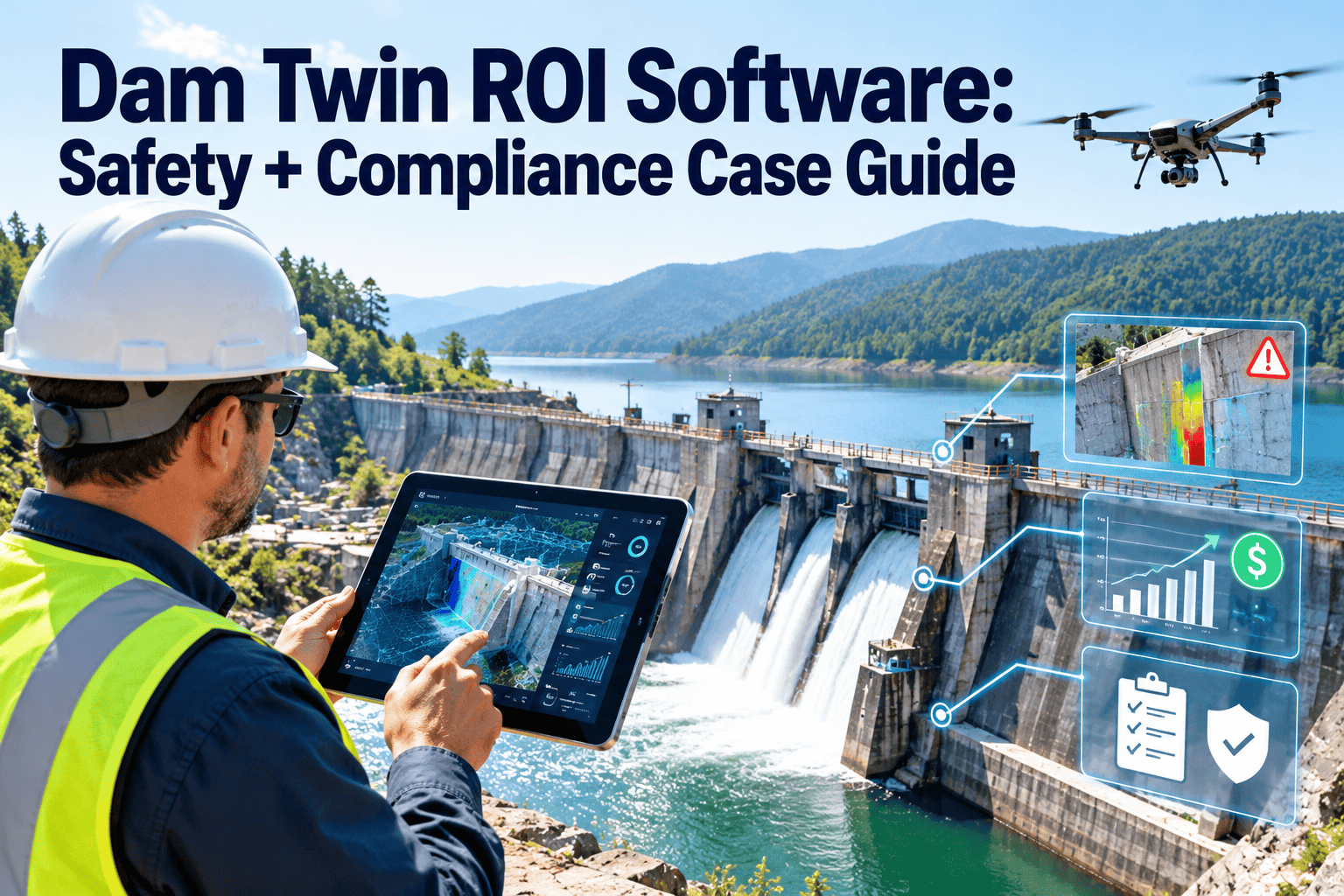
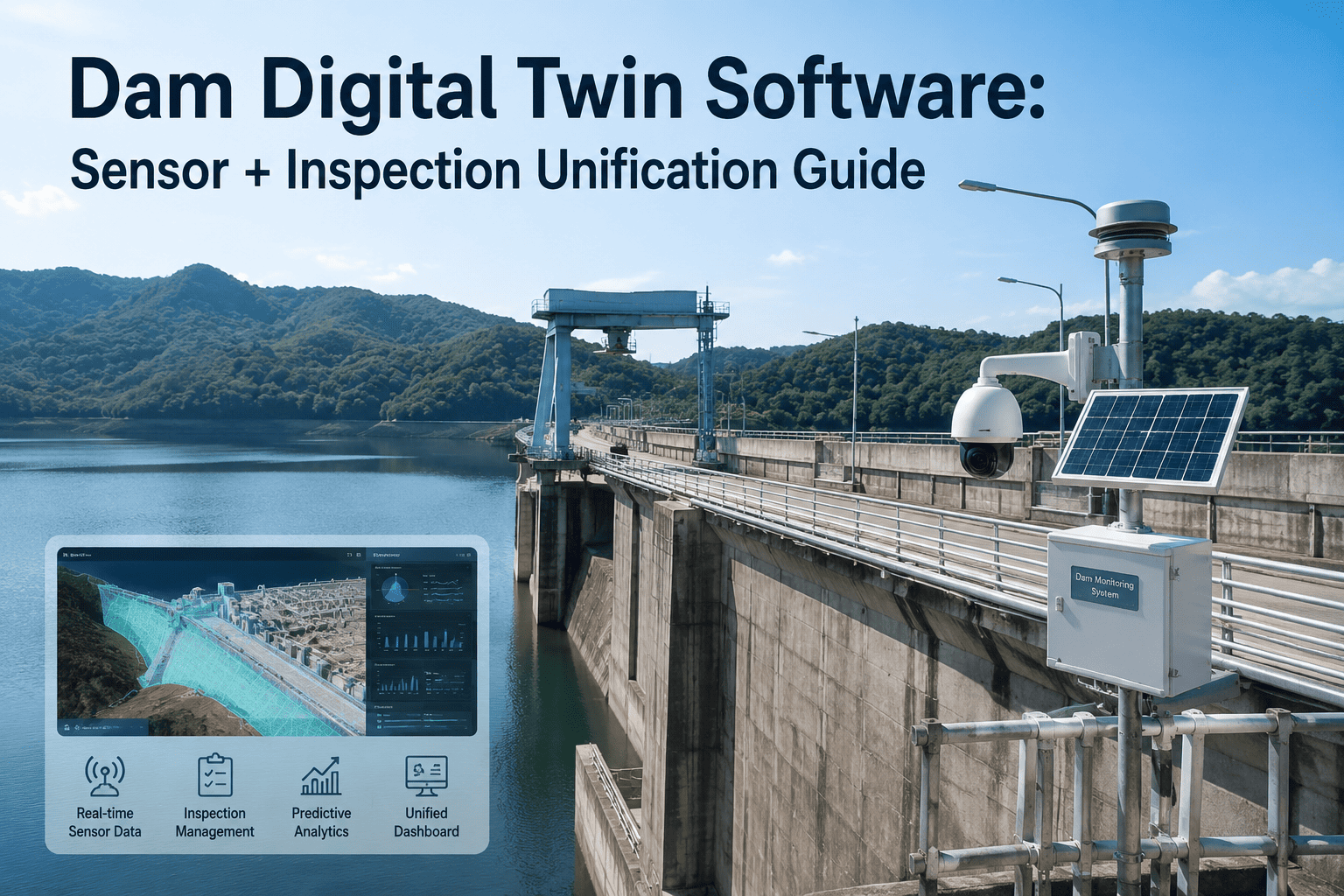
A dam digital twin is a structured model of the dam, combined with live and historical data. It may include geometry, instrument readings, reservoir level, inspection imagery and drone survey outputs. Its value to maintenance is context.
What a twin contributes to the backlog
The twin shows what is happening. The CMMS records what the organisation decided to do about it, and whether it was done.
A Practical Backlog Scoring Model
There is no single required formula. Owners and regulators use different risk frameworks, and state dam safety programs differ. A workable model combines a small number of factors that can be audited.
| Scoring factor | Question it answers | Typical data source |
|---|---|---|
| Condition | How degraded is the component and is it getting worse? | Inspection ratings, twin trends, instrument readings |
| Failure mode relevance | Does this item affect a potential failure mode identified for this dam? | Risk analysis, PFMA outputs, engineer review |
| Consequence | What is downstream if the function is lost? | Hazard classification, inundation studies, emergency plan |
| Detectability | Would a problem be seen before it escalates? | Instrument coverage, inspection frequency |
| Age of deferral | How long has the item been open and how often was it carried over? | Work order history |
| Regulatory exposure | Has a regulator or independent reviewer cited it? | Inspection reports, correspondence |
Priority tiers
Give Every Deferred Dam Item an Owner, a Score and a Date
Before and After: Managing Deferred Items
Without a linked system
- Recognised concerns tracked in report appendices
- Monitoring alerts handled by email
- Priority argued case by case
- Carried-over items repeated each year
- Funding requests built manually from photos and notes
With twin data feeding a CMMS
- Every concern is an asset-linked record
- Threshold exceedances create reviewable requests
- Scoring is consistent and visible
- Aging items are flagged automatically
- Evidence packages are built from history
From Finding to Closure: The Maintenance Workflow
Capture
Classify
Score
Plan
Execute
Verify
The final verification step matters. A closed work order does not prove the condition improved, so the next twin reading should confirm it.
Oxmaint Capabilities Relevant to Dam Programs
Asset management
Inspections
Preventive maintenance
Work orders
Condition-based workflows
Reporting
Backlog KPIs Worth Tracking
| KPI | What it shows | Action trigger |
|---|---|---|
| Open recognised concerns | Known issues awaiting action | Any concern without owner or date |
| Backlog age distribution | How long items stay deferred | High-priority items beyond target age |
| Carry-over rate | Share of planned work moved to next period | Repeated carry-over of the same item |
| PM completion rate | Routine work done on schedule | Declining trend at specific dams |
| Instrument availability | Monitoring points in service | Gaps near active concerns |
| Repeat finding rate | Issues recurring after closure | Indicates root cause not addressed |
Compliance and Documentation
Dam safety regulation in the United States is mainly handled by state programs, with federal dams under agency requirements. Inspection frequency, reporting and emergency action plan expectations vary by jurisdiction and hazard classification.
Records reviewers expect to see
- Inspection reports with documented follow-up of each deficiency
- Maintenance history for gates, outlets and spillways
- Instrument calibration and replacement history
- Evidence of operations and maintenance plan execution
- Emergency action plan equipment checks and contact verification
Always confirm current requirements with your state dam safety office or governing agency. A CMMS stores the evidence, but the owner remains responsible for regulatory interpretation.
Implementation Checklist
Instrument Thresholds and Review Triggers
Twin platforms and monitoring systems often generate alerts, but an alert is not a decision. Each instrument type needs a defined response so a reading becomes a reviewed action rather than a notification that is ignored.
| Data source | Condition signal | Suggested CMMS response |
|---|---|---|
| Piezometers | Pore pressure above expected range for reservoir level | Engineering review request linked to the embankment zone |
| Seepage weirs | Rising flow or change in clarity | Inspection task and drain cleaning work order |
| Survey monuments | Movement beyond the expected trend | Surveyor verification and engineer assessment |
| Drone imagery | New cracking, erosion or vegetation growth | Condition update and backlog rescoring |
| Gate position sensors | Slow travel or failed test operation | Corrective work order and test repeat |
Rules that keep alerts useful
- Set thresholds with the responsible engineer, not only the vendor defaults
- Separate seasonal variation from true change by comparing like reservoir levels
- Route every alert to a named owner with a response time
- Record the decision even when no work is needed, so the reasoning is auditable
- Review false alarms quarterly and retune thresholds
Common Mistakes When Scoring Dam Backlogs
Scoring cost instead of risk
Treating all dams the same
Letting scores go stale
Ignoring combined effects
No link to capital planning
Governance: Who Owns Which Decision
Deferred maintenance decisions cross several roles. Clear ownership prevents items from sitting between operations, engineering and finance.
Operations and maintenance staff
- Record findings during rounds and inspections
- Complete routine PM and corrective work
- Report access and safety constraints
Dam safety engineers
- Confirm condition ratings and failure mode relevance
- Approve deferral of any high-priority item
- Verify closure and monitor trends afterward
Asset and finance managers
- Convert ranked items into budget requests
- Track deferral cost and funding status
- Report backlog reduction to executives
Executives and boards
- Approve risk tolerance and funding levels
- Review aging of high-priority items
- Receive evidence-based backlog reports
A documented deferral decision, with the name of the approver and the reason, protects the organisation far better than an item that simply remains open.
Reporting the Backlog to Leadership
Executives rarely need every work order. They need a view that explains exposure, progress and funding needs in a few measures.
- Number of open high-priority items by dam and hazard class
- Median age of open items, split by priority tier
- Items closed this period versus items added
- Estimated cost to clear each tier, with funding status
- Deferral approvals and their expiry dates
- Trend in instrument availability near recognised concerns
When these measures come from the same system that holds work orders and inspection records, numbers can be traced back to source evidence during a board or regulatory review.
Seasonal and Event-Driven Reviews
Dams respond to weather and reservoir operations, so the backlog should be revisited after major events, not only on a fixed schedule.
- After large floods, spillway use or rapid drawdown, create a post-event inspection task
- After earthquakes or significant storms, rescore items on affected components
- Before winter and flood seasons, confirm access roads, gates and power supplies are ready
- After vegetation season, verify embankment clearing and rodent control are complete