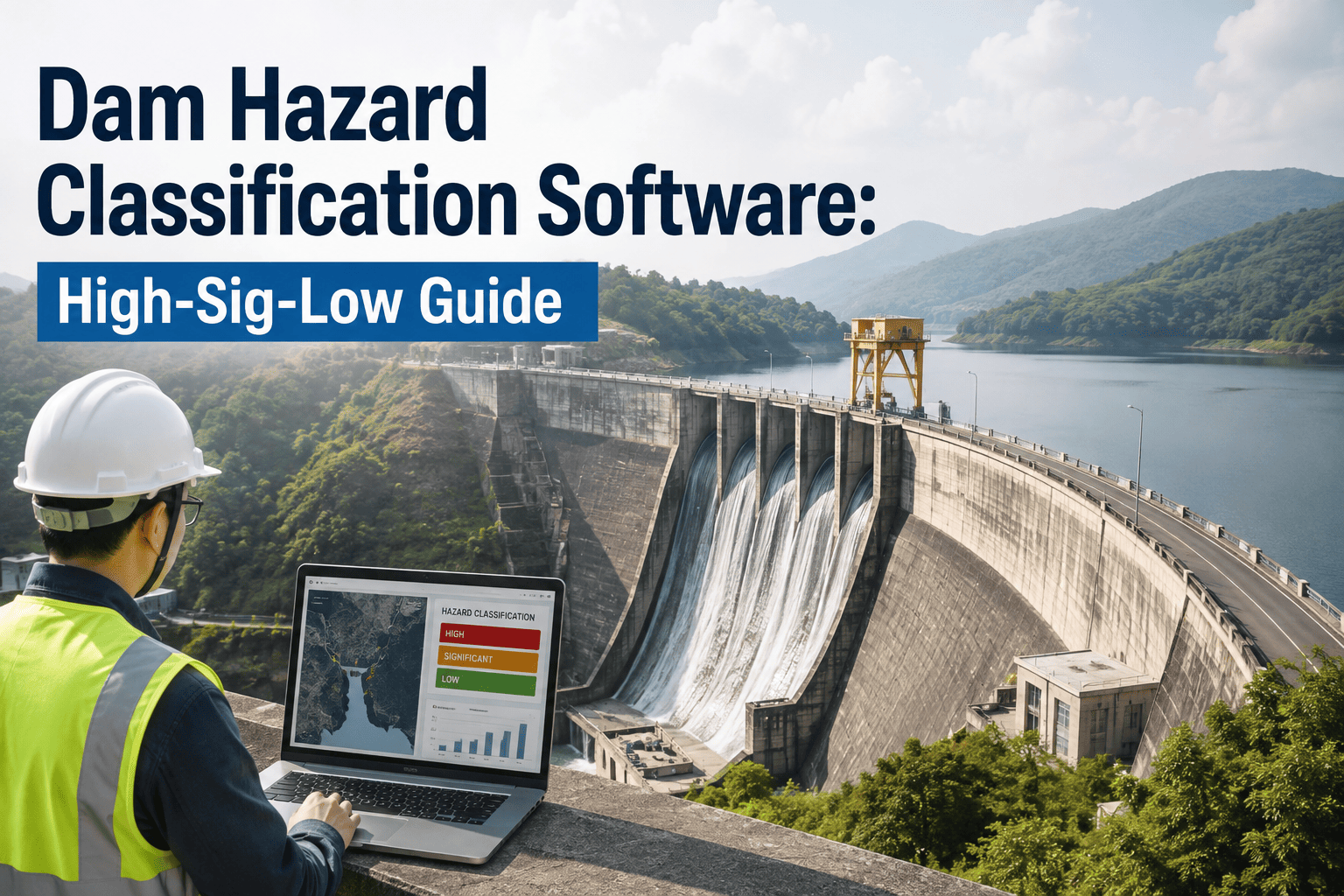
A dam's hazard classification has nothing to do with whether it is falling apart — it describes what happens downstream if it fails, regardless of how sound the structure is today. That distinction trips up a surprising number of owners: a well-maintained, structurally sound dam can still carry a High hazard classification simply because homes were built in the floodplain below it after the dam was constructed. Classification drives everything that follows — inspection frequency, emergency action plan requirements, and eligibility for federal rehabilitation funding — which is why tracking it accurately, per dam, per state requirement, is not optional paperwork. Start a free trial with Oxmaint to manage High, Significant, and Low hazard classifications across your entire dam inventory in one place.
Dam Hazard Classification Software for High, Significant, and Low Hazard Dams
Track hazard classification, inspection intervals, and emergency action plan status across every dam in your inventory — organized the way state dam safety agencies actually review it.
Hazard Classification Measures Consequence, Not Condition
Hazard potential classification, as defined under FEMA's Federal Guidelines for Dam Safety, categorizes a dam according to the probable consequences of failure or misoperation — not the structural condition of the dam itself. A dam in excellent physical condition can still be classified High hazard if downstream development means failure would likely cause loss of life. Conversely, a poorly maintained dam surrounded by open land may remain Low hazard because the consequence of failure stays limited to the owner's own property.
This distinction matters operationally because classification, not condition, is usually what determines how often a dam must be inspected, whether an emergency action plan is required, and what level of engineering review applies to any modification. Downstream development changes over time even when the dam itself does not, which means classifications need periodic reassessment — a dam classified Low hazard a decade ago may need reclassification today if a subdivision was built in its floodplain since.
High, Significant, and Low Hazard — What Each One Means
Failure or misoperation will probably cause loss of human life. These dams carry the strictest inspection frequency, mandatory emergency action plans, and the closest regulatory scrutiny of any classification.
No probable loss of human life, but failure can cause major economic loss, environmental damage, or disruption of lifeline facilities such as roads or utilities serving a community.
No probable loss of human life and low economic or environmental losses. Consequences of failure are principally limited to the dam owner's own property.
How Classification Breaks Down Across the U.S. Dam Inventory
The National Inventory of Dams, maintained by the U.S. Army Corps of Engineers and updated on a recurring cycle, has historically shown roughly a quarter of the nation's tens of thousands of dams classified as High or Significant hazard, with the majority still Low hazard. Most dams in the inventory are state-regulated and privately owned, which places the day-to-day burden of tracking classification, inspection schedules, and reclassification triggers squarely on individual owners and operators rather than a single federal system.
Inspection and Emergency Planning Expectations by Class
| Hazard Class | Typical Inspection Cycle | Emergency Action Plan | Regulatory Attention |
|---|---|---|---|
| High Hazard | Annual or more frequent | Required, tested regularly | Highest — routine agency review |
| Significant Hazard | Every 1–3 years | Typically required or strongly recommended | Elevated — periodic agency review |
| Low Hazard | Every 3–5 years | Often optional, owner discretion | Standard — owner-managed compliance |
| All Classes | Confirm exact interval with state dam safety office | Requirements vary by state statute | Classification reviewed periodically for accuracy |
Exact intervals and requirements vary by state dam safety program — treat the ranges above as a general reference and confirm specifics with your state regulator.
Stop Tracking Hazard Class and Inspection Dates in Separate Files
Oxmaint keeps hazard classification, inspection history, and EAP status attached to each dam record, so nothing slips past its required review date.
Why Accurate Classification Also Protects Grant Eligibility
FEMA's Rehabilitation of High Hazard Potential Dams grant program exists specifically to help owners of dams classified High hazard fund technical, planning, design, and construction work needed to address safety deficiencies. Eligibility depends directly on documentation: the dam must carry a current High hazard classification from the state or territory dam safety agency, sit within a jurisdiction with an approved hazard mitigation plan that accounts for dam risk, and have an emergency action plan approved or in progress under state law.
A classification record that is out of date, inconsistent across departments, or missing supporting inspection history can quietly disqualify an otherwise eligible dam from funding it badly needs. Keeping classification, EAP status, and inspection history together in one system is not just good practice — it is often the difference between a clean grant application and a rejected one.
How Oxmaint Manages Dam Hazard Classification at Scale
Assign High, Significant, or Low hazard status to each dam record, with the classification date and reviewing agency logged alongside it.
Set inspection cadence per hazard class so High hazard dams are never left waiting on the same schedule as a Low hazard structure.
Track emergency action plan approval status and testing dates per dam, flagged automatically as review dates approach.
Flag dams due for a classification review, particularly where downstream land use may have changed since the last assessment.
Keep classification history, inspection records, and EAP documentation together, ready to support a rehabilitation grant application.
Review classification and compliance status across an entire dam portfolio at once, instead of checking each dam's file individually.
Frequently Asked Questions
Does a High hazard classification mean the dam is unsafe?
No. Classification reflects the probable consequences of failure based on downstream development, not the dam's current structural condition. Start a free trial to track classification separately from inspection findings.
Can a dam's hazard classification change over time?
Yes. Classification is typically reviewed periodically and can change if downstream development increases the potential consequences of failure. Book a demo to see reclassification alerts in action.
Who determines a dam's hazard classification?
The state or territory dam safety agency with jurisdiction over the dam typically assigns and periodically reviews the classification, following criteria consistent with FEMA's federal guidelines.
Is an emergency action plan required for every hazard class?
EAP requirements vary by state, but High and Significant hazard dams are the most likely to require one, while Low hazard dams often have more flexibility.
How does classification affect eligibility for federal dam rehabilitation grants?
Programs like FEMA's Rehabilitation of High Hazard Potential Dams grant require a current High hazard classification along with an approved or in-progress emergency action plan and hazard mitigation plan coverage.
Manage Every Hazard Classification From One Dam Safety Record
Oxmaint keeps hazard classification, inspection schedules, and emergency action plan status together for every dam you manage — free trial, no credit card required.