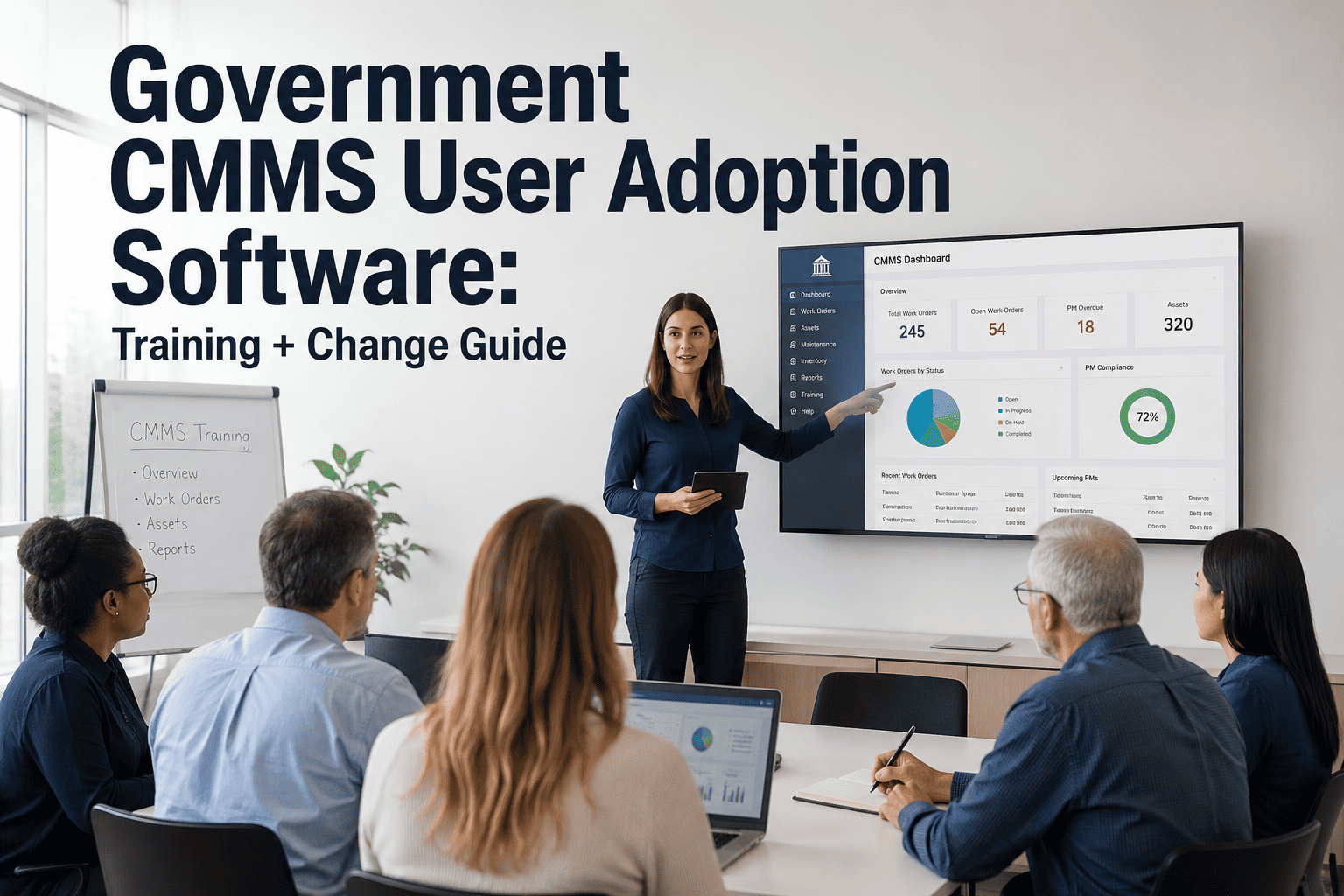
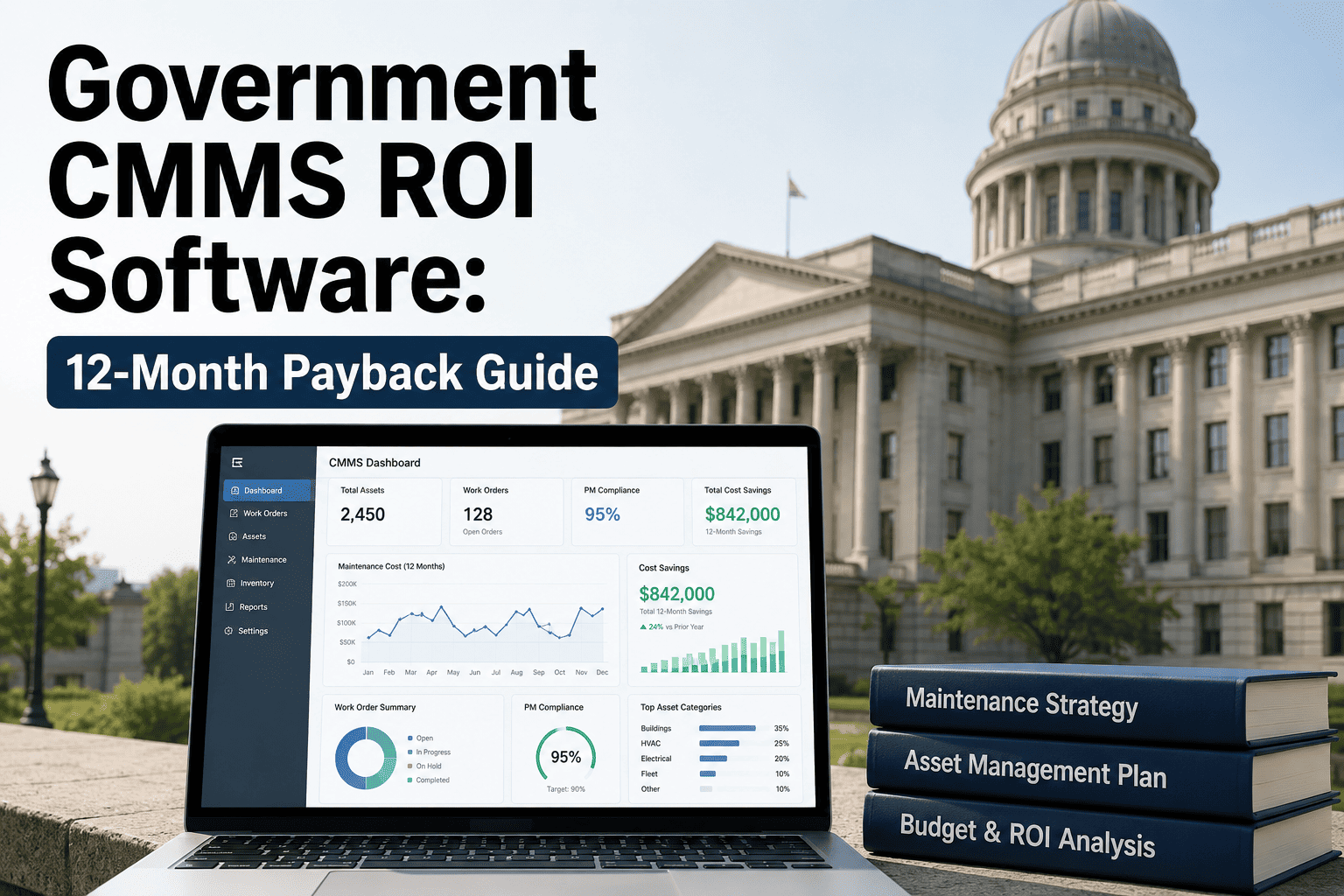
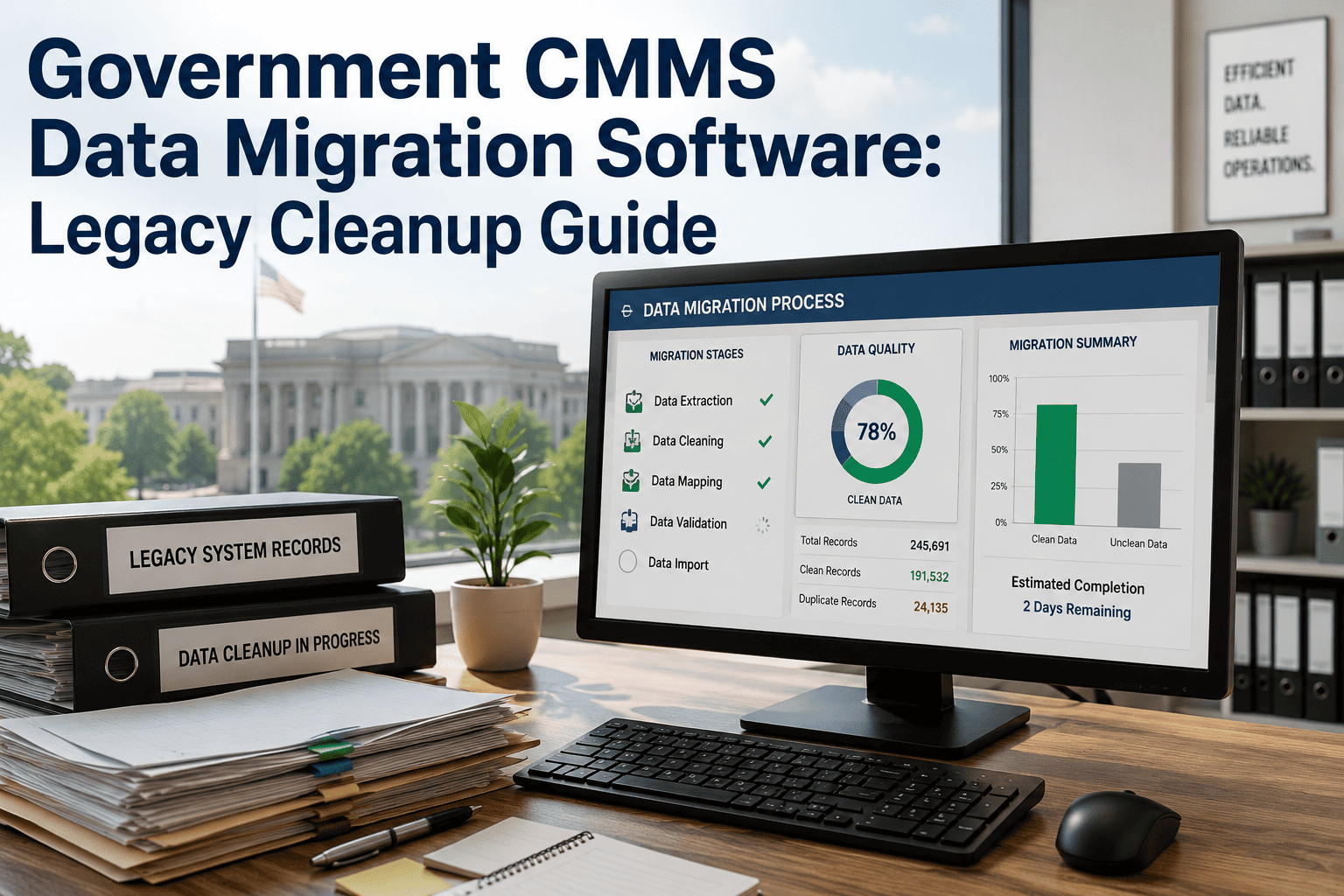
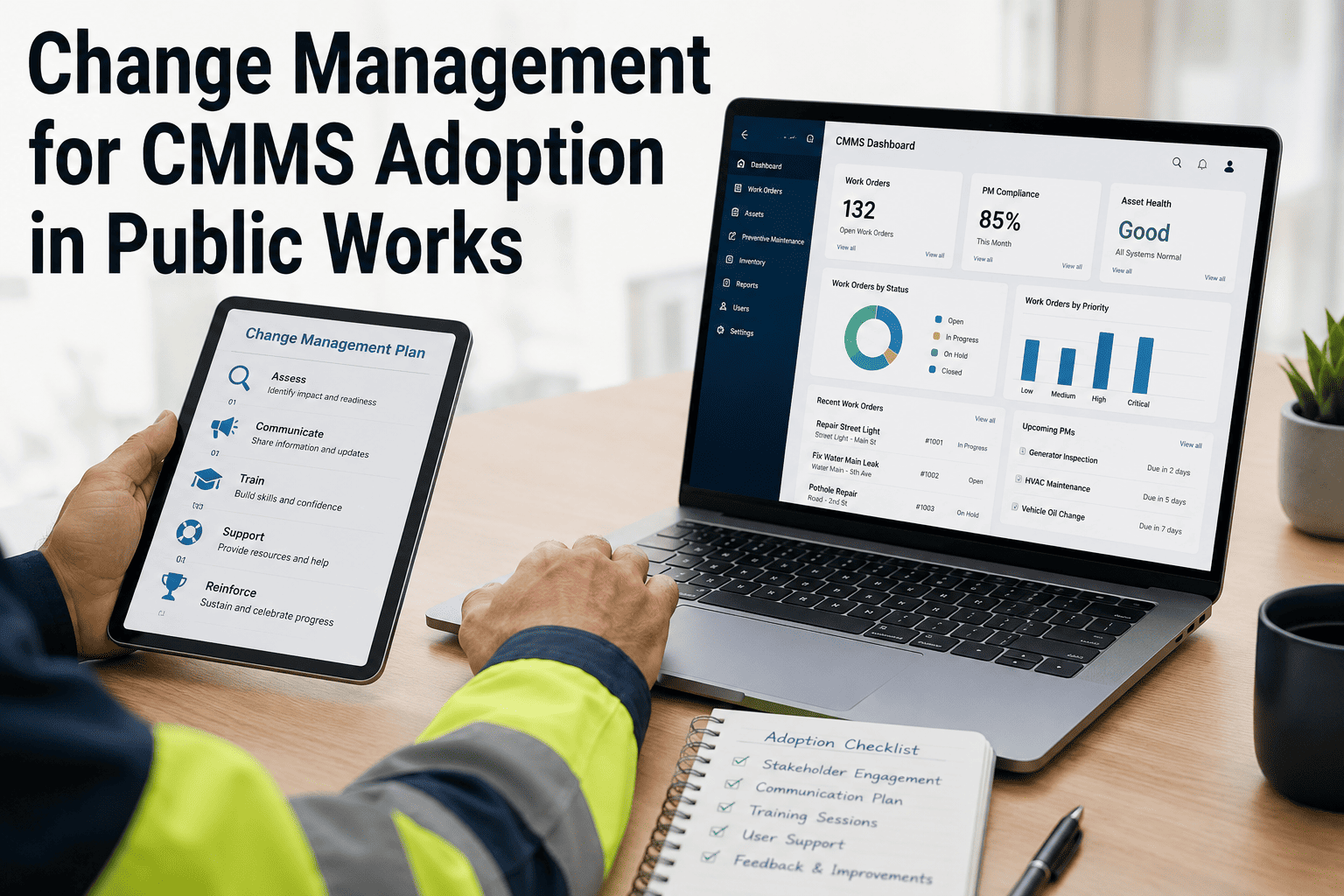
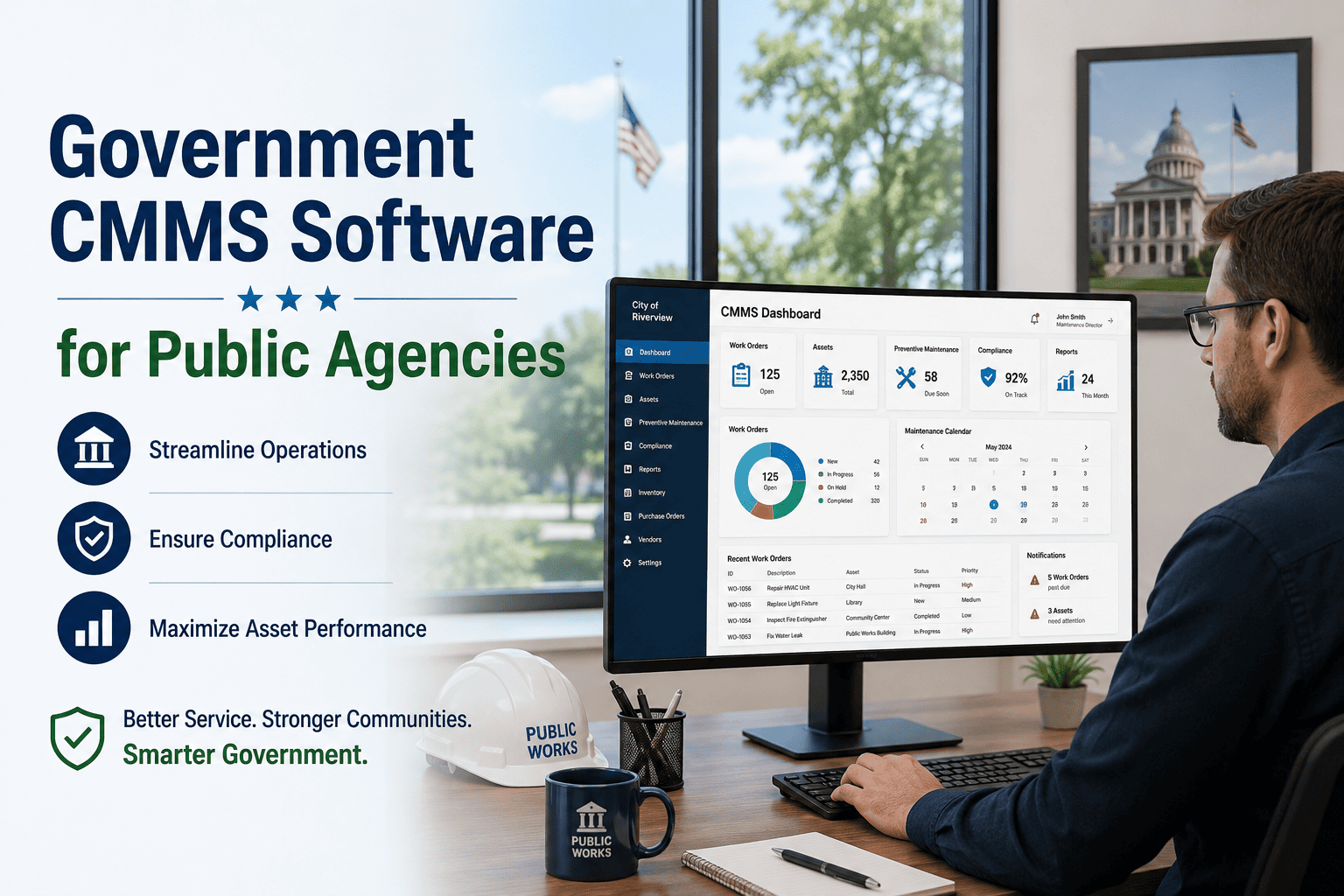
Government agencies buy CMMS software for the right reasons — compliance, uptime, budget visibility — and then watch adoption stall within ninety days because nobody planned for the humans who have to use it every day. A public works crew that has logged repairs on paper for fifteen years does not change habits because a system was procured. Adoption is a discipline with its own steps: readiness assessment, role-based training, supervisor reinforcement, and a change management plan that survives staff turnover and budget cycles. Agencies that treat rollout as a training event rather than a sustained program see usage drop below 40% within the first year, and the software becomes shelfware that auditors still expect to see populated. This guide breaks down exactly how public agencies build lasting CMMS adoption, department by department, and where OxMaint's onboarding structure is built specifically for government teams that cannot afford a failed rollout.
62%
Of public agency CMMS rollouts report usage below expectations after year one
4–6 wks
Typical time before untrained crews revert to paper work orders
3x
Higher sustained adoption rate when supervisors are trained before technicians
90 days
Window in which adoption habits become permanent or collapse
The Adoption Problem
Why Government CMMS Rollouts Stall Before They Start
Public sector maintenance teams are not resistant to technology — they are resistant to tools that make their job harder without anyone asking why. Rollouts fail for predictable, repeatable reasons, and every one of them is preventable with the right sequencing.
Training Delivered Once, To Everyone
A single all-hands session cannot serve a technician entering work orders in the field, a supervisor approving them from an office, and a procurement clerk reconciling purchase orders. Generic training produces generic recall — most of it forgotten within a week.
No Identified Champions
Every crew has one or two workers other technicians naturally ask questions. Rollouts that skip identifying and equipping these informal leaders lose the peer-to-peer reinforcement that actually drives habit change.
Paper Stays Available as a Fallback
If a paper work order pad is still on the truck, it will be used the first time the app is slow, the signal drops, or a technician forgets a password. Adoption requires removing the fallback, not just offering an alternative.
Supervisors Trained Last, Or Not At All
When supervisors cannot answer basic questions about the system, technicians read that as a signal the tool is optional. Supervisor fluency has to come before crew-wide rollout, not after it.
Structured Onboarding
OxMaint Is Built for the Way Public Agencies Actually Train Their People
Role-based onboarding paths, offline-capable mobile entry for field crews, and a supervisor dashboard that flags who has not logged in — so adoption gaps are visible before they become permanent habits.
Role-Based Training
A Training Framework Built Around Who Actually Touches the System
Every role in a public works or facilities department interacts with a CMMS differently, and each one needs training scoped to what they will actually do — not a walkthrough of every feature in the platform.
Field Technicians
Mobile Entry and Work Order Basics
A 20-minute session covering opening a work order, logging parts and hours, capturing a photo, and closing a job — practiced on their own device, on an actual asset, before the first shift alone.
Supervisors
Approval Workflows and Team Dashboards
Supervisors need fluency in assigning work, approving completed jobs, and reading the adoption dashboard that shows which technicians have not logged activity in the last week.
Facilities Admins
Asset Setup and Preventive Maintenance Scheduling
Admins own the asset registry, PM schedules, and inventory thresholds — the configuration work that determines whether the system produces useful data or noise.
Procurement and Finance
Purchase Orders and Budget Reporting
Finance staff need training on reconciling purchase orders against actual parts usage and exporting the cost reports that support next year's budget request.
The Rollout Sequence
The Five-Stage Change Management Timeline That Actually Works
01
Readiness Assessment
Before any training begins, map current workflows, identify who does what today, and flag departments with the highest resistance risk so extra coaching time is planned in advance.
02
Identify and Equip Champions
Select one respected technician per crew, train them a week ahead of everyone else, and let them answer floor-level questions during rollout week instead of routing everything to IT.
03
Phased Rollout by Crew
Launch one crew or facility at a time rather than the entire department at once, so early issues get fixed before they scale across the organization.
04
Weekly Reinforcement Coaching
Short check-ins for the first month catch bad habits — skipped closeouts, missing photos, incomplete parts logs — before they harden into routine.
05
Sustain With Visible Metrics
Publishing adoption and compliance rates to supervisors monthly keeps the system a living part of operations rather than a compliance box checked once at launch.
See It In Action
Watch How a Phased Rollout Looks Inside OxMaint
A walkthrough of the role-based training paths, the supervisor adoption dashboard, and the offline mobile app that keeps field crews working without signal.
What to Track
The Adoption Metrics That Tell You the Rollout Is Working
Daily Active Technician Login Rate
Target 85%+
Work Orders Closed Same-Day
Target 70%+
PM Compliance Rate
Target 90%+
Paper Fallback Incidents Per Month
Target under 5%
Common Questions
Government CMMS Adoption — What Agency Leaders Ask
How long does it realistically take a public works crew to adopt a new CMMS?+
Most crews reach steady daily use within four to six weeks when training is role-based and a champion is on the floor. Skipping either step commonly pushes true adoption past six months.
Start a free trial to see the onboarding path built for this timeline.
Who should be trained first — supervisors or field technicians?+
Supervisors first, always. Crews look to their supervisor for signals about whether a tool is mandatory, and a supervisor who cannot answer basic questions undermines the entire rollout in week one.
What causes technicians to revert back to paper work orders?+
Slow app performance, unreliable offline mode, and an available paper pad on the truck are the three most common causes. Removing the paper fallback after week two is one of the highest-leverage changes an agency can make.
How do we measure whether our CMMS rollout is succeeding?+
Track daily login rate, same-day work order closure, and PM compliance weekly for the first ninety days. A dashboard that surfaces these numbers to supervisors automatically removes the need for manual audits.
Book a demo to see the adoption dashboard.
Does staff turnover reset the adoption process?+
It resets it for the new hire only, not the whole crew, as long as onboarding materials and a champion structure already exist. Agencies without a repeatable onboarding path effectively restart training with every new employee.
OxMaint · Government CMMS Adoption
Give Your Rollout the Structure That Public Agencies Actually Need
Role-based onboarding, a supervisor dashboard that flags adoption gaps, and offline mobile entry built for crews working without signal — OxMaint is structured around how public agency maintenance teams actually operate day to day.