Data-driven decision making in public works is the practice of using asset performance data, work order histories, and real-time field inputs to guide infrastructure maintenance, budget allocation, and resource planning. Agencies that transition from intuition-based management to data-driven municipal operations typically reduce unplanned downtime by 30 to 50 percent while extending the useful life of critical infrastructure. Public works data analytics transforms raw maintenance logs into actionable insights, allowing maintenance and reliability teams to shift from reactive firefighting to preventive and predictive strategies. By implementing a modern CMMS, your team can eliminate spreadsheet silos and start making reliable, defensible decisions. Explore how OxMaint makes this transition seamless when you Start Free Trial today.
Is your public works agency still betting millions on gut feelings?
Relying on tribal knowledge and disconnected spreadsheets costs municipalities up to 30% of their annual maintenance budgets in wasted labor and premature asset replacement. Data-driven government operations eliminate guesswork—turning every work order and sensor reading into a measurable strategy that protects public infrastructure and saves taxpayer dollars.
Why data-driven municipal operations outperform intuition
Under ISO 55000 asset management standards, agencies that capture and analyze complete asset lifecycles achieve up to 40% lower total cost of ownership compared to those operating reactively. The gap between leading and lagging municipalities is not budget size—it is data infrastructure.
How to build a data-driven public works operation: A 4-month roadmap
Transitioning to public sector data-driven maintenance does not happen overnight. It requires a structured rollout that digitizes records, standardizes data capture, and integrates analytics into daily workflows.
Digitize & Centralize Asset Data
Audit your existing infrastructure and migrate from paper logs and decentralized Excel spreadsheets into a centralized CMMS. Catalog every asset, from traffic lights to sewer pumps, capturing critical metadata like install date, manufacturer, and warranty status. This establishes the single source of truth required for municipal data analytics.
Standardize Work Order Inputs
Enforce mandatory data fields for every maintenance request and completion record. Technicians must log failure codes, labor hours, parts consumed, and root cause notes. Clean, structured data is the fuel that makes data analytics in public works actually work.
Automate Preventive Schedules
Transition from time-based preventive maintenance to usage-based triggers. Link meter readings, mileage, and operational hours to automated work order generation. This prevents over-maintaining healthy assets and under-maintaining critical ones.
Activate Analytics Dashboards
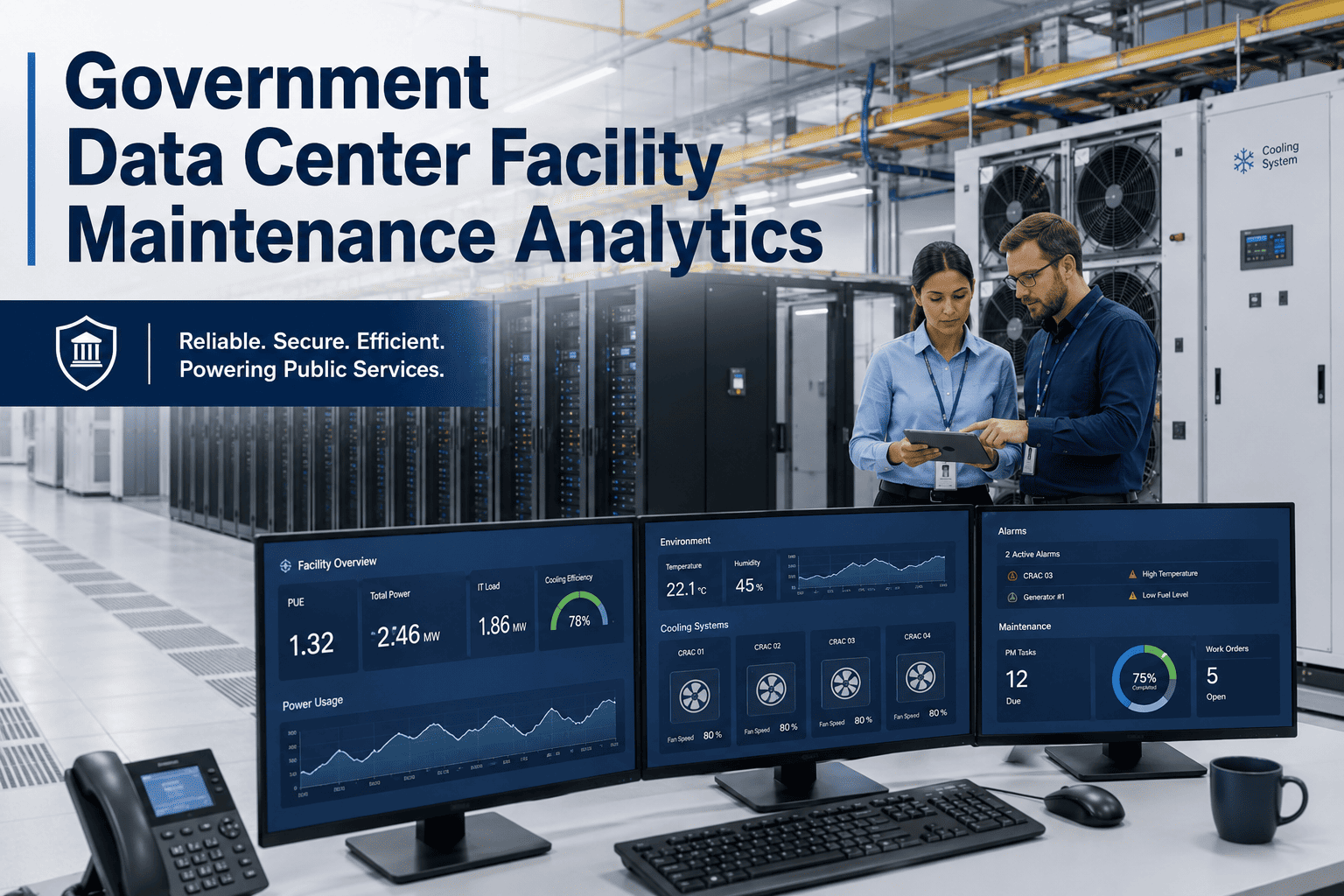
Roll out live KPI dashboards to department heads. Track Mean Time Between Failures (MTBF), Mean Time to Repair (MTTR), and asset downtime costs. Use these public works data decisions to justify budget requests and capital replacement plans with hard numbers.
Reactive maintenance vs. data-driven public works decisions
The difference between a reactive agency and a data-driven one is measured in millions of dollars and thousands of wasted labor hours. See how the two approaches compare across critical operational metrics.
| Operational Metric | Reactive / Spreadsheet-Based | Data-Driven (OxMaint CMMS) |
|---|---|---|
| Maintenance Strategy | Run-to-failure; fire-drill repairs | Predictive and usage-based prevention |
| Asset Visibility | Silos in paper files and local drives | Real-time, cloud-based dashboards |
| Downtime Costs | High; unplanned outages disrupt services | Minimized; 30-50% reduction in unplanned downtime |
| Budget Justification | Based on historical estimates and gut feel | Backed by OEE, MTBF, and failure trend data |
| Compliance & Audit | Weeks of manual record gathering | Instant reporting; FMCSA/ISO 55000 ready |
| Spare Parts Inventory | Overstocked critical parts; emergency purchasing | Optimized stock levels based on usage analytics |
Turn your public works data into better decisions today
See how OxMaint's AI-powered analytics can cut your downtime and optimize your maintenance budget in weeks, not years.
How OxMaint powers data-driven government operations
OxMaint is an AI-powered CMMS and EAM platform built to turn raw asset data into predictable, cost-saving maintenance strategies. Here is how our platform transforms public works operations into data-driven powerhouses.
AI-Powered Predictive Analytics
OxMaint analyzes historical work order data and sensor inputs to predict asset failures before they happen. Teams can address wear and tear during scheduled downtime, cutting unplanned outages by up to 50% and eliminating costly emergency contractor call-outs.
Centralized Asset & Inventory Tracking
Replace disconnected spreadsheets with a single source of truth for every pump, vehicle, and HVAC unit. OxMaint automatically links spare parts inventory to specific assets, ensuring technicians have the right parts on hand and reducing inventory carrying costs by up to 25%.
Real-Time Mobile Work Orders
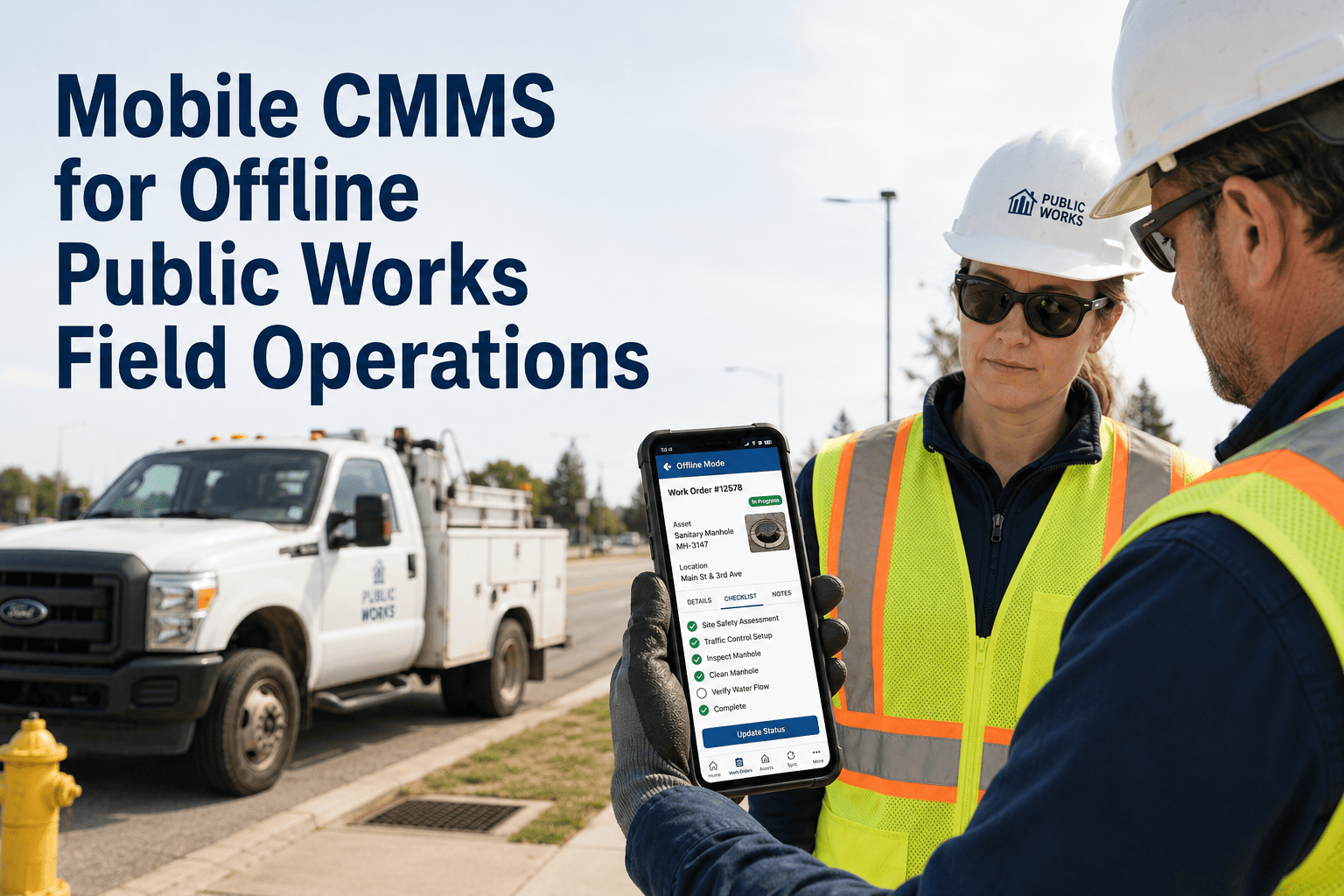
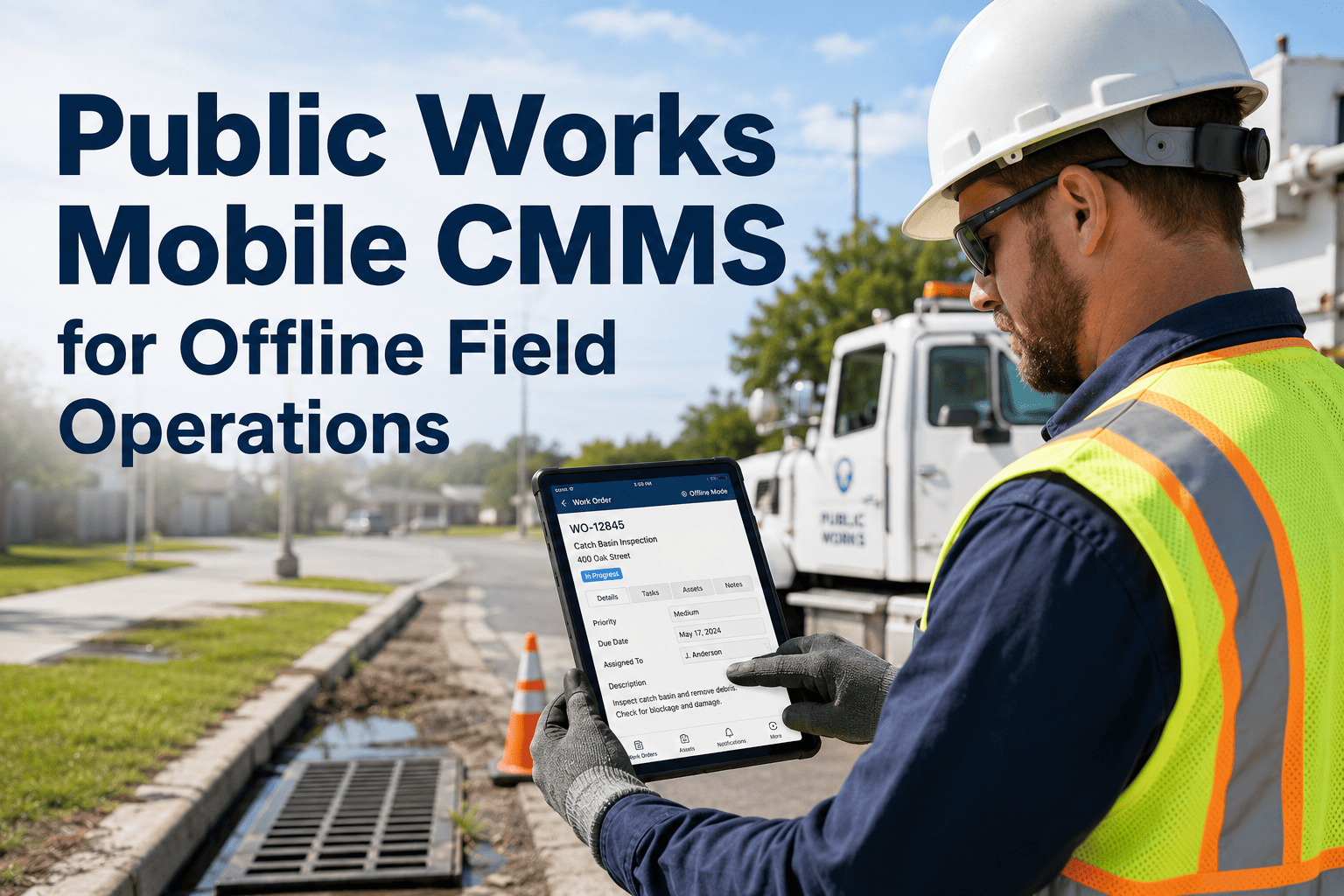
Empower field crews with mobile work order access. Technicians capture failure codes, photos, and completion notes on-site, feeding clean data directly back into your municipal data analytics engine without double entry or paperwork delays.
Automated Compliance Reporting
Generate FMCSA, ISO 55000, and internal audit reports with one click. OxMaint maintains a tamper-proof, time-stamped log of every maintenance action, keeping your government decision data defensible and your agency audit-ready year-round.
Public works data analytics: Common questions
What is data-driven decision making in public works?
Data-driven decision making in public works is the practice of using real-time asset performance data, historical work order logs, and predictive analytics to guide maintenance schedules, budget allocations, and infrastructure planning. Instead of relying on guesswork or institutional memory, agencies use verifiable data to extend asset life and reduce operational costs. You can see this in action by scheduling a walkthrough at Book a Demo.
How does a CMMS improve government data analytics?
A CMMS improves government data analytics by centralizing all maintenance operations into a single database. It automatically captures labor hours, parts usage, and asset downtime, creating clean structured data that can be analyzed for trends, allowing agencies to transition from reactive repairs to predictive maintenance strategies.
How long does it take to transition to a data-driven municipal operation?
Most mid-sized public works agencies can transition to a data-driven operation within 2 to 4 months. The timeline depends on the volume of legacy paper records to digitize and the adoption rate of field crews, but modern cloud-based CMMS platforms like OxMaint are designed for rapid deployment and easy onboarding.
Is OxMaint suitable for smaller municipal departments?
Yes, OxMaint is built to scale. Smaller departments can start with core work order and asset tracking modules and expand into advanced predictive analytics as their data matures. The platform is designed to replace spreadsheets without requiring an enterprise IT team to manage it.
Can data-driven maintenance reduce public works budgets?
Yes. By shifting from reactive to preventive and predictive maintenance, agencies typically reduce unplanned downtime by 30 to 50 percent and cut emergency repair costs significantly. Optimizing spare parts inventory and extending asset lifecycles also contribute to measurable, year-over-year budget reductions.
Ready to modernize your public works operation?
Join the agencies using OxMaint to turn asset data into better decisions, lower costs, and reliable public infrastructure.
Free 14-day trial · No credit card