Green Infrastructure Maintenance: Rain Gardens, Bioswales, and Permeable Pavement
By Taylor on February 27, 2026
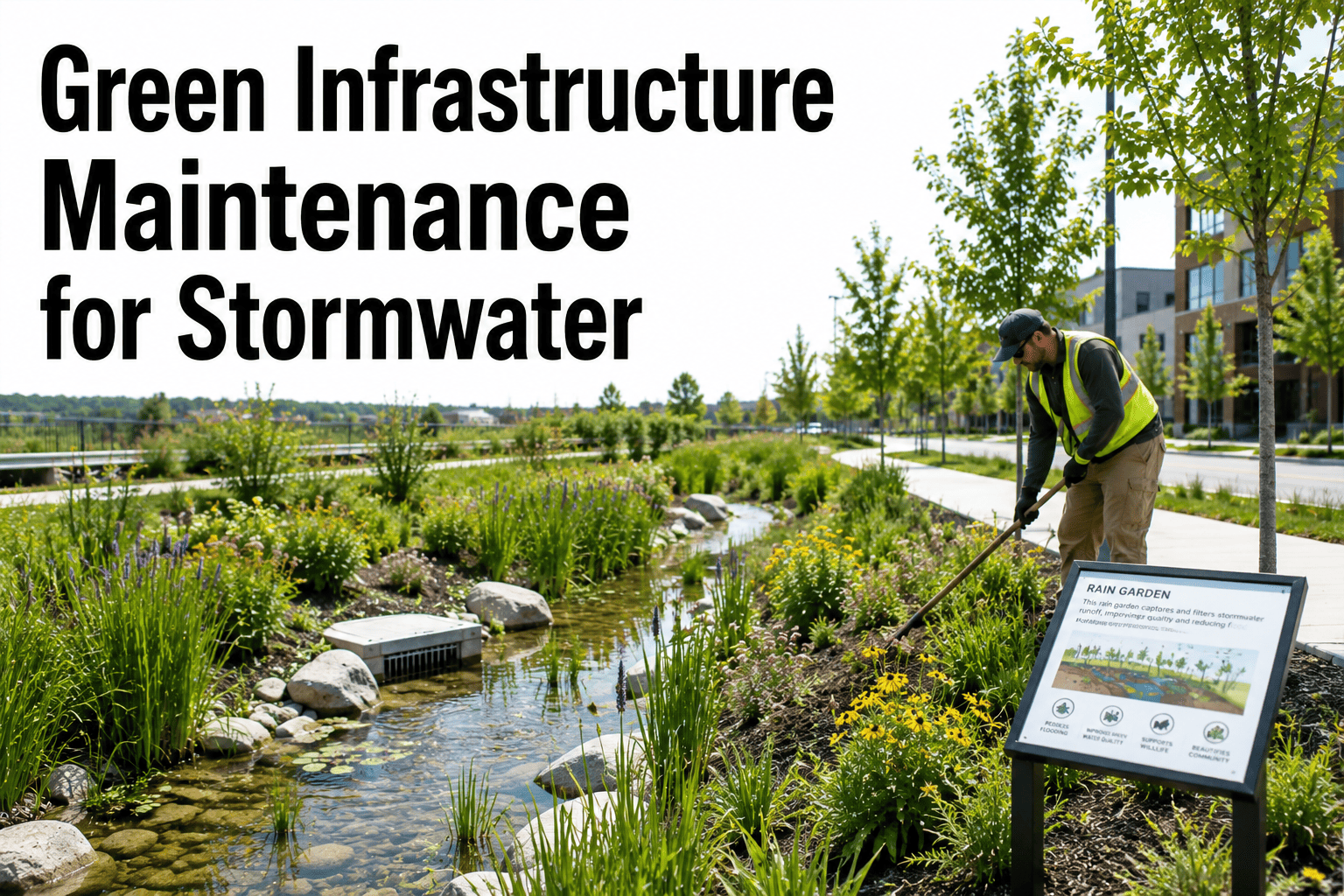
Municipal green infrastructure—rain gardens, bioswales, and permeable pavement—are the modern, living arteries of urban stormwater management. Designed to filter pollutants, prevent flooding, and recharge groundwater, these systems are replacing miles of traditional grey infrastructure in cities across the globe. However, when a municipality spends millions installing a network of beautiful bioswales only to have them fail from sediment clogging and overgrown weeds within three years, the consequences are severe: localized flooding, polluted runoff entering waterways, and loss of public trust. The problem: maintaining living, breathing infrastructure requires specialized vegetative care, precise sediment removal, and continuous performance monitoring that traditional public works schedules aren't built to handle. In 2026, the transition to digital tracking and predictive CMMS (Computerized Maintenance Management Systems) is making it economically viable for municipalities to maintain green stormwater assets so they function exactly as designed. But adopting a new maintenance paradigm requires proving the numbers. This guide provides the complete ROI model for deploying a digital CMMS for Green Infrastructure Maintenance — from inlet cleaning cost reduction to regulatory compliance savings, with documented payback timelines that justify investment to city councils and environmental grant reviewers. Start with Oxmaint for free and see the difference digital tracking makes for your green infrastructure program.
The Real Cost of Failing Green Stormwater Infrastructure
Before building an ROI model, it helps to understand what is at stake. The numbers behind deferred green infrastructure maintenance are staggering — and they compound every year that specialized care falls below the rate of sediment accumulation and weed growth. Here is what municipalities without modern tracking technology face every storm season.
$4B
repair backlog
Estimated U.S. municipal green infrastructure restoration backlog growing annually
45%
failure rate
Percentage of bioretention assets failing to meet infiltration design specs within 5 years
3-5x
ROI multiple
Documented return on digital CMMS tracking programs within 18 months
These are not edge cases. They represent the daily reality for public works departments operating dispersed green stormwater networks without modern inspection technology. The good news: municipalities deploying digital tracking programs report 30-50% lower routine maintenance costs, 60% faster response to clogged inlets, and dramatically improved compliance with MS4 permits. Book a demo with Oxmaint to see how these savings apply to your specific environmental infrastructure portfolio.
What Drives ROI in Technology-Enabled LID Maintenance
Not every technology investment delivers returns. Many cities have purchased generic work order systems only to discover that managing "living assets" requires specialized data structures for vegetative health and soil infiltration rates. When building an ROI model for sustainable stormwater maintenance, these are the value drivers that separate proven returns from expensive experiments.
Inspection Savings
30-50% Lower Per-Asset Inspection Cost
Digital mobile apps allow field crews to log sediment accumulation, plant health, and inlet blockages in seconds, replacing cumbersome paper forms. Photos are instantly tied to the specific asset record, eliminating post-inspection data entry.
Failure Prevention
Avoid Complete Bioretention Rebuilds
Predictive tracking triggers sediment removal before it permanently blinds the engineered soil media. A single avoided total rebuild of a clogged bioswale saves more than the annual software subscription.
Contractor Management
Verify Landscaping Vendor Performance
Require contractors to upload before/after photos and complete digital checklists directly into the CMMS for every rain garden maintenance visit. Stop paying for inadequate weed removal or missed pruning cycles.
Regulatory Compliance
Automated MS4 Permit Reporting
When regulators request proof of green stormwater BMP maintenance, generate comprehensive, date-stamped logs of all vegetative care, sediment removal, and inspections with one click, eliminating weeks of manual report generation.
Flood Mitigation
Pre-Storm Preparedness Alerts
System automatically routes crews to clear known problem inlets and permeable pavement sections based on upcoming weather forecasts, ensuring maximum capacity when the storm hits.
Grant Advantage
Data-Backed Environmental Funding
Detailed lifecycle cost data, infiltration trending, and documented maintenance histories give municipalities the quantified evidence that EPA and state-level green infrastructure grant applications require.
Oxmaint integrates vegetative tracking, sediment management, contractor verification, and MS4 compliance into one platform built for municipal public works. See why cities choose Oxmaint to automate green infrastructure maintenance.
Head-to-Head: Top Platforms for Green Infrastructure Management 2026
We evaluated the most capable platforms across the criteria that matter to environmental and public works departments: specialized tracking for living assets, mobile field app usability, contractor portal access, MS4 compliance reporting, and total cost of deployment. Here is an honest comparison to help you shortlist the right fit for your green stormwater network.
Recommended
Oxmaint AI
Municipal public works and environmental departments
Specialized fields for plant health and soil infiltrationContractor verification portal with photo uploadsAutomated pre-storm inlet clearing dispatch
Deep integration with Esri ArcGISHandles traditional grey infrastructure alongside greenRobust permitting and code enforcement modules
Enterprise pricing model
Cartegraph
Mid-to-large city infrastructure management
Strong focus on OCI (Overall Condition Index) scoringScenario builder for budget forecastingNative citizen request integration
Tiered user-based pricing
Lucity (CentralSquare)
Comprehensive municipal operations
Extensive public works modules (water, sewer, fleet)Customizable inspection forms for BMPsStrong historical reporting for compliance
Enterprise deployment
UpKeep
General facility and field maintenance
Highly intuitive mobile interface for field crewsQuick deployment without heavy IT involvementEasy inventory tracking for landscaping supplies
Per user / month subscription
Fiix
Equipment and dispersed asset tracking
AI-driven predictive maintenance insightsCustomizable asset hierarchies for complex bioswalesOpen API for IoT sensor integration (e.g., soil moisture)
Per user / month subscription
Platform capabilities reflect publicly available data as of early 2026. Every city's green infrastructure network is different — the best way to evaluate is hands-on. Create a free Oxmaint account and run it alongside your current maintenance process to see real results on your rain gardens and bioswales.
Why Oxmaint Wins for Municipal Green Infrastructure
Plenty of generic work order systems can track when a pump needs fixing. The real test is whether a platform can track the survival rate of native plantings, schedule vacuum sweeping for permeable pavement based on porosity readings, and verify that landscaping contractors removed sediment without damaging the engineered soil. Oxmaint is built around one principle: living infrastructure requires dynamic, specialised maintenance tracking.
Dynamic Vegetative Care Scheduling
Schedule specific tasks based on the season and plant establishment phase. Trigger weekly watering work orders during the first year of a new rain garden, transition to monthly weeding in year two, and automate annual spring pruning alerts. Never lose an asset to drought or invasive species neglect again.
Contractor Verification Portal
Give landscaping vendors limited access to view their assigned bioswale maintenance routes. Require them to complete digital checklists (e.g., "Was sediment removed from forebay?", "Were invasive weeds removed by root?") and upload geo-tagged before/after photos before an invoice is approved.
Permeable Pavement Lifecycle Tracking
Track infiltration test results over time. Set automated alerts to dispatch regenerative air vacuum sweepers when porosity drops below critical thresholds, preventing the expensive necessity of completely milling and replacing clogged porous asphalt or pavers.
Automated MS4 Compliance Reporting
Instantly generate reports detailing every green stormwater BMP inspection, routine maintenance action, and corrective repair performed within your jurisdiction. Demonstrate compliance to regulators with a few clicks, backed by photo evidence and date-stamped logs. Sign up for Oxmaint to explore compliance dashboards.
Before & After: What Changes With Digital Green Infrastructure Maintenance
The shift from reactive landscaping to proactive digital maintenance is not incremental — it is transformational for public works and environmental departments.
Traditional Maintenance Methods
Rain gardens treated like standard landscaping (mowed instead of pruned)
Inlets clear only after citizens complain about street flooding
Paper inspection forms lost or illegible when MS4 audits occur
Contractors paid without verification of sediment removal
Permeable pavement clogs irreparably due to missed sweeping schedules
45%
average functional failure rate within 5 years due to improper maintenance
Digital CMMS Tracking
Specialized vegetative care tasks assigned with specific instructions
Pre-storm automated routing clears known problem inlets
Digital, photo-backed records instantly ready for regulatory reporting
Contractors upload required photo proof before invoice approval
Vacuum sweeping triggered by automated porosity decline alerts
95%+
long-term functionality rate with extended asset lifecycles
Modernize your green stormwater program without the risk. Oxmaint's free tier lets you run a real pilot on your rain gardens and bioswales — no procurement cycle, no contracts, no consultant fees.
The ROI Numbers: Documented Returns From Digital LID Programs
City managers and finance directors need hard numbers to justify software investment. The evidence from forward-thinking municipalities is clear — public works departments that deploy digital green infrastructure CMMS programs see measurable returns across multiple dimensions within the first 12-18 months.
50%
Lower Inspection Time
Mobile apps eliminate paper forms and duplicate data entry
80%
Faster Reporting
Automated generation of MS4 compliance reports
40%
Fewer Replacements
Proactive care prevents total failure of engineered soils and plantings
3-5x
ROI Multiple
Documented return from contractor accountability and asset preservation
These improvements compound over time as historical data helps your team optimize maintenance frequencies. Create your free Oxmaint account and start tracking asset condition metrics within the first 30 days.
Your 4-Step Path to Proving Technology ROI
Building a green infrastructure maintenance program should not take years. Use this streamlined framework to go from evaluation to documented ROI in months.
1
Inventory & Baseline
Map your existing rain gardens, bioswales, and permeable pavements into the CMMS. Document baseline costs: current contractor spend, estimated staff hours for inspections, and historical costs for major rehabilitations due to neglect.
2
Pilot Digital Inspections
Equip a subset of your field team with the mobile app. Have them log sediment depth, plant health, and photo evidence during routine routes. Compare the speed and data quality against traditional paper methods.
3
Enforce Contractor Accountability
Onboard your landscaping vendors to the portal. Require digital checklist completion and photo proof for the pilot area before invoice processing. Document the reduction in follow-up complaints and missed work.
4
Automate Reporting & Scale
Generate your first automated MS4 report using the captured data. Present the time savings, improved asset conditions, and contractor accountability metrics to city leadership to secure full deployment funding. Schedule a walkthrough to plan your city's rollout.
The municipalities that will successfully transition to green infrastructure are the ones treating it like real infrastructure, not just roadside landscaping. When we moved to a digital CMMS, we stopped paying contractors for work they didn't do, and we finally had the data to prove to regulators that our bioswales were actually infiltrating water. It paid for itself in the first storm season just by preventing three major street floods.
Director of Environmental Services, Mid-Sized City
Your Community Deserves Green Infrastructure That Works
Oxmaint brings together vegetative care scheduling, sediment tracking, contractor portals, and automated compliance reporting in one platform built for municipal agencies. Stop managing living assets with paper forms. Ensure your rain gardens, bioswales, and permeable pavements function as designed — with documented ROI that justifies every dollar invested.
How is maintaining green infrastructure different from traditional landscaping?
Traditional landscaping focuses purely on aesthetics. Green stormwater infrastructure (GSI) focuses on engineering function—specifically water infiltration and pollutant removal. While a landscaper might mow a rain garden, proper GSI maintenance requires careful pruning of specific native species, removing fine sediment that blinds the engineered soil media, clearing inflow cuts, and ensuring the underdrain systems are functioning. A specialized CMMS tracks these specific functional metrics, not just "mow and blow" schedules.
What are the specific maintenance requirements for permeable pavement?
Permeable pavement requires regular regenerative air vacuum sweeping to remove fine particulates from the void spaces. If neglected, the surface seals over and acts like regular asphalt, causing runoff. A CMMS tracks porosity test results over time and automatically schedules vacuum sweeping before the pavement completely clogs, avoiding the massive cost of milling and replacing the surface. Sign up for Oxmaint to set up pavement tracking.
How does a CMMS help with MS4 permit compliance?
Municipal Separate Storm Sewer System (MS4) permits require proof that structural BMPs (Best Management Practices) are being inspected and maintained. Without a CMMS, staff spend weeks digging through paper files and spreadsheets to build annual reports. With Oxmaint, every inspection, photo, and maintenance action is digitally logged and date-stamped, allowing you to generate comprehensive, regulator-ready compliance reports with a single click.
Can we hold outside contractors accountable using this software?
Yes. One of the highest ROI features is the contractor portal. Instead of trusting that a vendor properly weeded and removed sediment from a bioswale, you assign the work order through the system. The contractor must use the mobile app to check off specific tasks and upload geo-tagged before and after photos before they can mark the job complete and submit an invoice.
What is the ROI timeline for a digital green infrastructure program?
Most municipalities see measurable ROI within 12-18 months. Savings are realized through: (1) eliminating contractor overpayment via photo verification, (2) 50% reduction in administrative time spent on regulatory reporting, and (3) avoiding the $15,000-$50,000 cost of completely rehabilitating failed, clogged bioretention cells through proactive, scheduled sediment removal. Book a demo to build a projected ROI model for your city.