For K-12 school districts across America, maintaining aging buildings is a daily battle against crumbling infrastructure, budget shortfalls, and regulatory mandates that grow more demanding every year. The American Society of Civil Engineers estimates the national school facility maintenance backlog at $85 billion — a number that grows each year as deferred maintenance compounds into structural failures, HVAC breakdowns during heat waves, and plumbing emergencies that force school closures. Traditional maintenance in most districts runs on paper work orders, custodians who carry decades of institutional knowledge in their heads, and reactive repairs that consume budgets meant for preventive care.
A single HVAC compressor failure during a September heat wave can send 600 students home for three days while the district scrambles for an emergency contractor at premium rates. A roof leak discovered on Monday morning has already damaged classroom ceilings, ruined textbooks, and triggered a mold remediation process that will cost ten times what a proactive inspection would have caught. Oxmaint CMMS transforms school facility management by centralizing HVAC preventive maintenance schedules, tracking plumbing system conditions, monitoring fire safety compliance, managing roof and envelope inspections, and giving facility directors real-time visibility across every building in the district. This guide outlines the maintenance framework necessary to keep every school building safe, healthy, and ready for learning. Start free trial today.
K-12 Facility Guide 2026
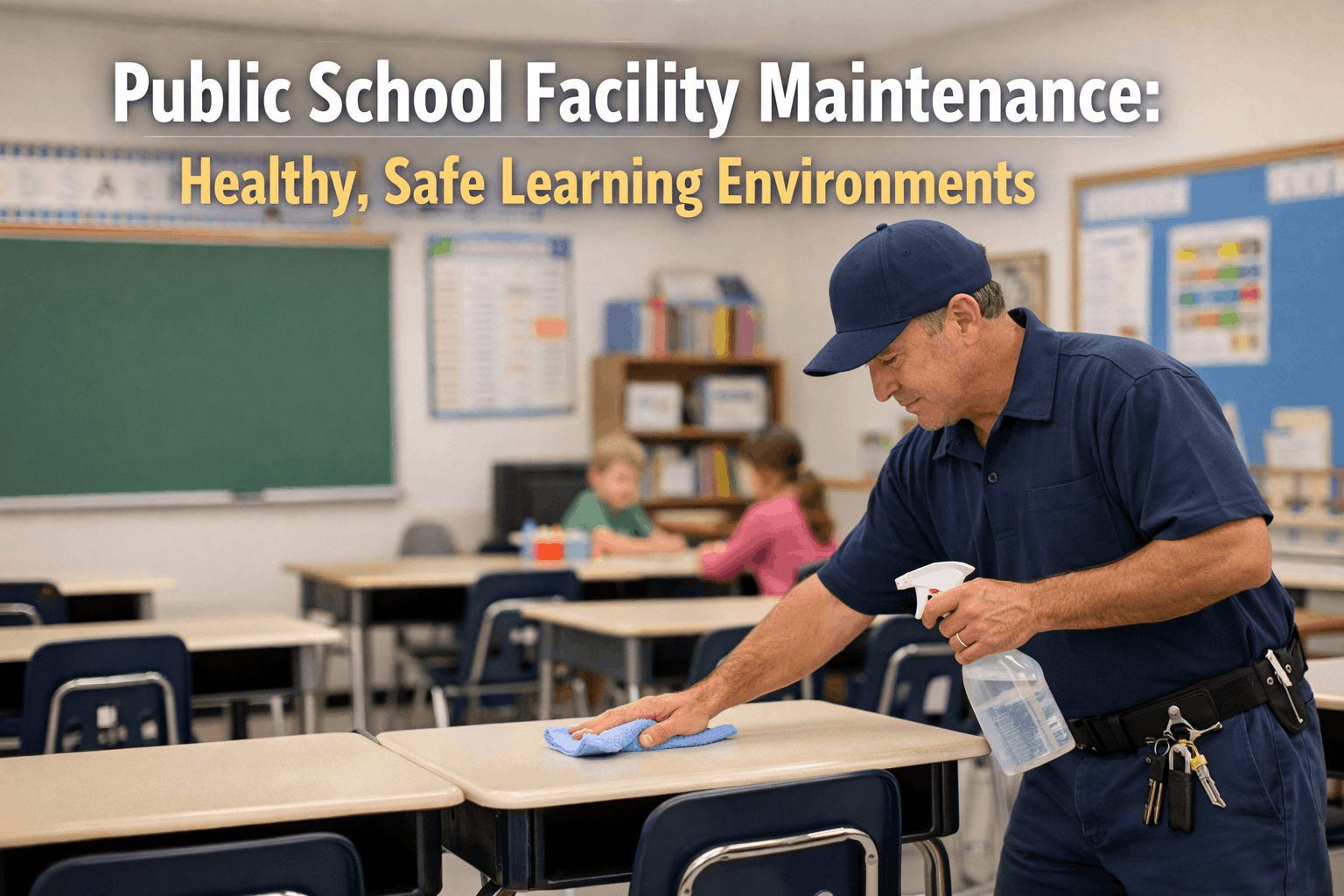
Public School Facility Maintenance: Healthy, Safe Learning Environments
The US faces an $85 billion school maintenance backlog. From aging HVAC systems to leaking roofs and outdated fire alarms, this guide equips school facility managers with strategies to prioritize critical repairs, automate preventive maintenance, and maximize every dollar in tight district budgets.
$85BNational Maintenance Backlog
53%Schools Need HVAC Updates
36%Report Poor Air Quality
14,000Districts Need CMMS
The District Maintenance Maturity Spectrum
School district maintenance programs typically fall into one of three operational categories. While the majority of districts operate in "Reactive" mode — repairing boilers only after they fail on the coldest Monday of the year, fixing roof leaks only after ceiling tiles collapse into classrooms — Oxmaint helps districts advance toward "Proactive" and "Predictive" maintenance, where scheduled inspections and sensor data prevent failures before they disrupt the school day.
Planned (Scheduled PMs)
30%
Predictive (Data-Driven)
12%
Critical Facility Maintenance Systems
School buildings are complex operational environments where mechanical, electrical, plumbing, and safety systems must function reliably every school day. A comprehensive CMMS acts as the central repository for all maintenance obligations, ensuring HVAC units, roofing, plumbing, fire safety, electrical, and indoor air quality systems are inspected, serviced, and documented on schedule — across every building in the district.
School Building Maintenance CheckpointsFacility Readiness
HVAC
Heating, Ventilation & Cooling
Filter replacement, coil cleaning, refrigerant checks, thermostat calibration, belt and bearing inspection. Ensuring adequate ventilation rates per ASHRAE 62.1 for classroom air quality.
IAQ Critical
Roofing
Roof & Building Envelope
Semi-annual roof inspections, flashing and membrane condition assessment, gutter and downspout clearing, window seal integrity checks, and exterior wall moisture intrusion testing.
Leak Critical
Plumbing
Water Systems & Fixtures
Backflow preventer testing, water heater servicing, fixture leak repair, drinking fountain lead testing compliance, and sewer line inspection with camera scope per EPA guidelines.
Health Safety
Fire/Life
Fire Safety & Alarms
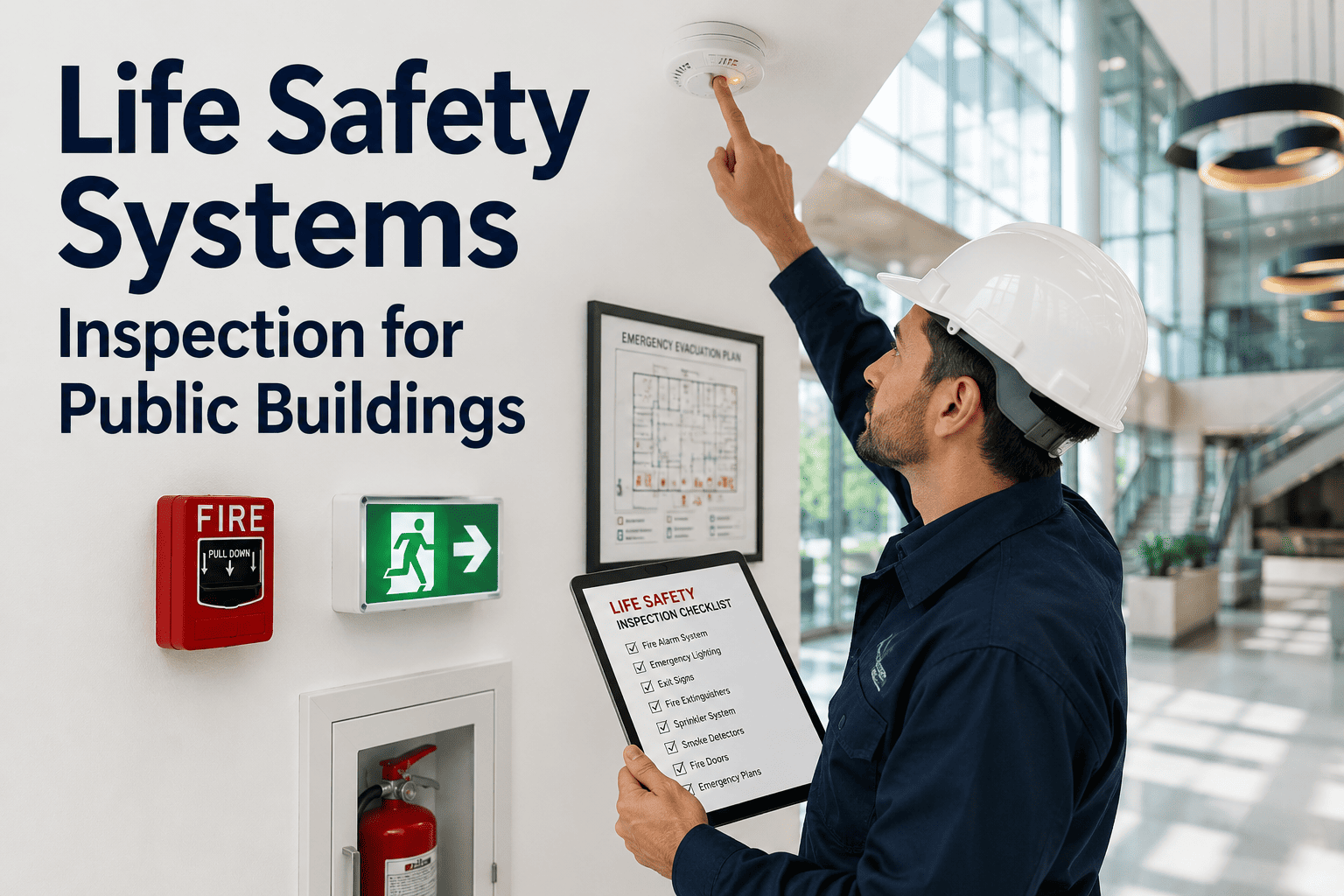
Fire alarm panel testing, sprinkler system inspection, extinguisher servicing, emergency lighting battery checks, and fire door closer verification per NFPA 101 Life Safety Code.
Code Required
Electrical
Power & Lighting Systems
Panel inspection, circuit breaker testing, emergency generator load testing, lighting ballast replacement, outlet and switch condition checks, and surge protection verification.
Safety Critical
Grounds
Site & Playground Safety
Playground equipment inspection per CPSC guidelines, parking lot surface and striping, sidewalk trip hazard repair, athletic field maintenance, and ADA accessibility compliance checks.
Liability Risk
Facility Failure Risk Matrix
In school facility operations, not all failures carry equal weight. A burned-out hallway light is an inconvenience; a boiler failure in January sends 800 students home and makes the evening news. A failed fire alarm panel during an occupied building is a life-safety emergency that triggers state investigation. This risk matrix helps facility directors prioritize maintenance tasks based on impact to student safety, learning continuity, and district liability.
5
Life Safety
Fire system failure, structural collapse risk, gas leak, or electrical hazard in occupied building. Immediate evacuation and closure required.
4
School Closure
Complete HVAC failure, major water main break, or sewage backup. Building cannot be occupied. Students sent home, media coverage follows.
3
Partial Disruption
Classroom or wing closure due to roof leak, localized HVAC failure, or plumbing issue. Students relocated within building. Instruction continues.
2
Degraded Comfort
Poor air quality, inconsistent temperatures, or slow-draining fixtures. Complaints from staff and parents but building remains operational.
1
Cosmetic
Peeling paint, stained ceiling tiles, cracked floor tiles. No safety or operational impact. Scheduled during summer break.
Give Every School the Maintenance It Deserves
Oxmaint simplifies school district facility management. Schedule HVAC filter changes, track roof inspection cycles, monitor fire safety compliance, manage plumbing repairs, and give your school board real-time building condition data — all from one secure, cloud-based platform.
Core Maintenance Program Elements
A robust school facility maintenance program is composed of interconnected maintenance modules covering every building system. Implementing these as digital workflows in Oxmaint ensures inspection consistency, proper documentation, budget tracking, and reliable building operations across every school in the district — whether you manage 5 buildings or 150.
Core
HVAC Preventive Care
Monthly / Quarterly / Seasonal
Filter replacement cycles, coil cleaning, belt inspection, refrigerant level checks, economizer calibration, and BAS setpoint verification. Critical for IAQ compliance and energy efficiency.
FiltersCoilsBeltsRefrigerant
Critical
Fire & Life Safety
Monthly / Annual
Fire alarm panel testing, sprinkler flow tests, extinguisher inspections, emergency exit lighting checks, fire door verification, and kitchen hood suppression system servicing per NFPA code.
AlarmsSprinklersExtinguishersExit Lights
Compliance
Water Quality & Plumbing
Per EPA Schedule
Drinking fountain lead testing, backflow preventer certification, water heater anode rod inspection, fixture leak repair, and sanitary sewer line camera inspection to prevent classroom flooding.
Lead TestingBackflowWater HeatersSewer Lines
Prevention
Roof & Envelope
Semi-Annual / Post-Storm
Membrane and flashing inspection, drain clearing, ponding water assessment, window caulk condition, and exterior wall moisture testing. Prevents the leaks that cause mold and ceiling damage.
MembraneFlashingDrainsCaulking
Safety
Playground & Grounds
Weekly / Seasonal
Playground equipment hardware checks, fall zone surfacing depth measurement, parking lot pothole and crack sealing, sidewalk trip hazard survey, and athletic field drainage inspection.
EquipmentFall ZonesParking LotsADA Access
Efficiency
Energy & Lighting
Quarterly / Annual
LED retrofit tracking, occupancy sensor verification, generator load testing, panel thermal scanning, and utility meter monitoring to identify consumption anomalies and reduce energy costs.
LED UpgradesGeneratorsPanel ScansUtility Audits
Building Types & Unique Challenges
Different school building types present unique maintenance challenges. A 1960s elementary school with original single-pane windows and a steam boiler demands a fundamentally different maintenance strategy than a 2015 middle school with a VRF HVAC system and a green roof. The facility program must adapt to the age, construction type, and occupancy pattern of each building.
Elementary Schools (K-5)
Small Fixture Heights (Child Scale)
Playground Equipment Intensive
Cafeteria Grease Trap Demands
Restroom Fixture Abuse (Young Users)
Art & Science Room Ventilation
Middle & High Schools (6-12)
Gymnasium & Locker Room HVAC Load
Science Lab Exhaust & Gas Systems
Auditorium Sound & Lighting Systems
Higher Vandalism & Abuse Rates
Athletic Field & Stadium Maintenance
Aging Buildings (Pre-1980)
Asbestos Abatement Management
Lead Paint & Lead Pipe Remediation
Obsolete Boiler & Steam Systems
Single-Pane Window Energy Loss
Code Compliance Retrofit Requirements
The Cost of Deferred Maintenance
The deferred maintenance pyramid illustrates a painful truth: for every emergency school closure, there are dozens of skipped inspections and ignored preventive maintenance tasks underneath. Deferring a $200 HVAC filter change today becomes a $12,000 compressor replacement next year and a $250,000 full system replacement in five years — all while students breathe degraded air in classrooms where they spend six hours every day.
$50 - $500
Preventive Maint
Filter changes, belt replacements, roof drain clearing, fire extinguisher checks. Planned during non-school hours. Zero disruption.
Frequency: High
$5k - $50k
Reactive Repair
Failed compressor, burst pipe, roof leak causing ceiling collapse, boiler shutdown. Emergency contractor at premium rates. Classrooms offline.
Frequency: Medium
$250k+
System Replacement / Closure
Full HVAC replacement, mold remediation requiring building closure, structural repair, or state-ordered facility shutdown for code violations.
Frequency: Low (But Devastating)
Your Students Deserve Buildings That Work
Don't wait for boiler failures and roof collapses to consume your capital budget. Oxmaint provides the digital infrastructure to schedule preventive maintenance, track building conditions, document compliance inspections, and give your school board the data they need to fund facility improvements.
CMMS Features for School Districts
A specialized Computerized Maintenance Management System (CMMS) is the command center behind district-wide facility operations. It links building condition assessments with work orders, connects HVAC runtime data with filter replacement schedules, documents fire safety compliance for state inspectors, and ensures that facility health is monitored in real-time so issues are resolved before they affect the school day.
A
Mobile Work Orders
Custodians and maintenance techs receive, update, and close work orders from smartphones. Teachers submit requests via a portal that auto-routes to the right trade — plumbing, HVAC, electrical, or custodial.
B
Automated PM Scheduling
Set recurring preventive maintenance tasks for every building system — HVAC filters, roof inspections, fire extinguisher checks, backflow tests — with auto-generated work orders that never get forgotten.
C
Multi-Building Dashboard
View open work orders, PM compliance rates, and spending by building across the entire district. Identify which schools have the highest backlog and allocate resources where they are needed most.
D
Compliance Documentation
Generate proof-of-inspection reports for fire marshals, state facility auditors, EPA lead testing requirements, and indoor air quality assessments. Every inspection timestamped and exportable.
E
Budget & Cost Tracking
Track maintenance spending by building, by system, and by trade. Compare reactive vs. preventive costs to build the data-driven case for capital improvement funding at school board presentations.
F
Summer & Break Scheduling
Plan and schedule major maintenance projects — floor stripping, deep cleaning, roof repairs, HVAC overhauls — during summer break and holiday periods when buildings are unoccupied for minimum disruption.
Frequently Asked Questions
Q. How does a CMMS help school districts reduce the $85 billion maintenance backlog?
A CMMS doesn't eliminate the backlog overnight, but it prevents it from growing. By automating preventive maintenance schedules — HVAC filter changes, roof inspections, plumbing checks, fire safety tests — the system ensures that routine care happens on time, every time. This prevents the small failures ($200 filter change) from compounding into emergency replacements ($12,000 compressor, $250,000 full HVAC system). Over time, districts that run consistent PM programs see reactive repair costs drop by 30-50%, freeing budget for planned capital improvements that actually reduce the backlog. The data captured in the CMMS also provides the documented evidence facility directors need to justify capital funding requests to school boards and state agencies.
Start your free trial to build your district's maintenance baseline.
Q. How often should school HVAC systems be inspected and serviced?
HVAC maintenance frequency depends on system type and local conditions, but most school districts should follow this baseline: air filters replaced every 1-3 months during occupied periods (monthly in dusty or high-pollen environments), coil cleaning twice per year (before cooling and heating seasons), belt inspection quarterly, refrigerant level checks annually, economizer calibration before each season change, and BAS setpoint verification monthly. ASHRAE Standard 62.1 requires minimum outdoor air ventilation rates in classrooms — typically 15 CFM per person — which cannot be maintained if filters are clogged or economizers are malfunctioning. Oxmaint automates all of these schedules and tracks compliance by building so no school falls behind.
Q. What fire safety inspections are required for school buildings?
School fire safety requirements vary by state but generally follow NFPA 101 Life Safety Code and local fire marshal requirements. The typical inspection schedule includes: fire alarm panel testing monthly, sprinkler system flow test annually, fire extinguisher inspection monthly with annual certification, emergency and exit lighting testing monthly with 90-minute battery discharge test annually, fire door closer verification quarterly, kitchen hood suppression system inspection semi-annually, and a comprehensive fire marshal walk-through annually. CMMS-tracked compliance documentation is critical — fire marshals increasingly require digital proof of inspection history, and a single missed test can result in a building occupancy violation that forces temporary school closure.
Q. How can a small district with limited maintenance staff manage multiple buildings?
This is exactly where CMMS provides the most value. Small districts — especially those with 3-10 buildings and fewer than 5 maintenance staff — cannot afford the inefficiency of paper work orders, drive-by inspections, and memory-based scheduling. Oxmaint allows a small team to manage preventive maintenance across every building from a single dashboard, automatically generating and prioritizing work orders based on urgency and building conditions. Mobile access means the maintenance tech driving between buildings can receive, update, and close work orders without returning to the office. The system also helps small districts document deferred maintenance for state facility condition assessment reports and competitive capital improvement grant applications.
Book a demo to see how districts of every size use Oxmaint.
Q. Does Oxmaint help with indoor air quality (IAQ) compliance in schools?
Yes. Indoor air quality in schools is one of the most scrutinized facility issues in 2026, driven by post-pandemic ventilation awareness and the EPA's IAQ Tools for Schools framework. Oxmaint helps districts maintain IAQ compliance by scheduling HVAC filter replacements on time, tracking outdoor air damper and economizer calibration, documenting ventilation rate verification by classroom, managing humidity control system maintenance, and logging CO2 sensor readings where monitoring systems are installed. When a parent, teacher, or school board member asks about air quality in a specific building, the facility director can pull a complete HVAC maintenance history and IAQ compliance record from the CMMS in minutes — not hours of digging through paper files.