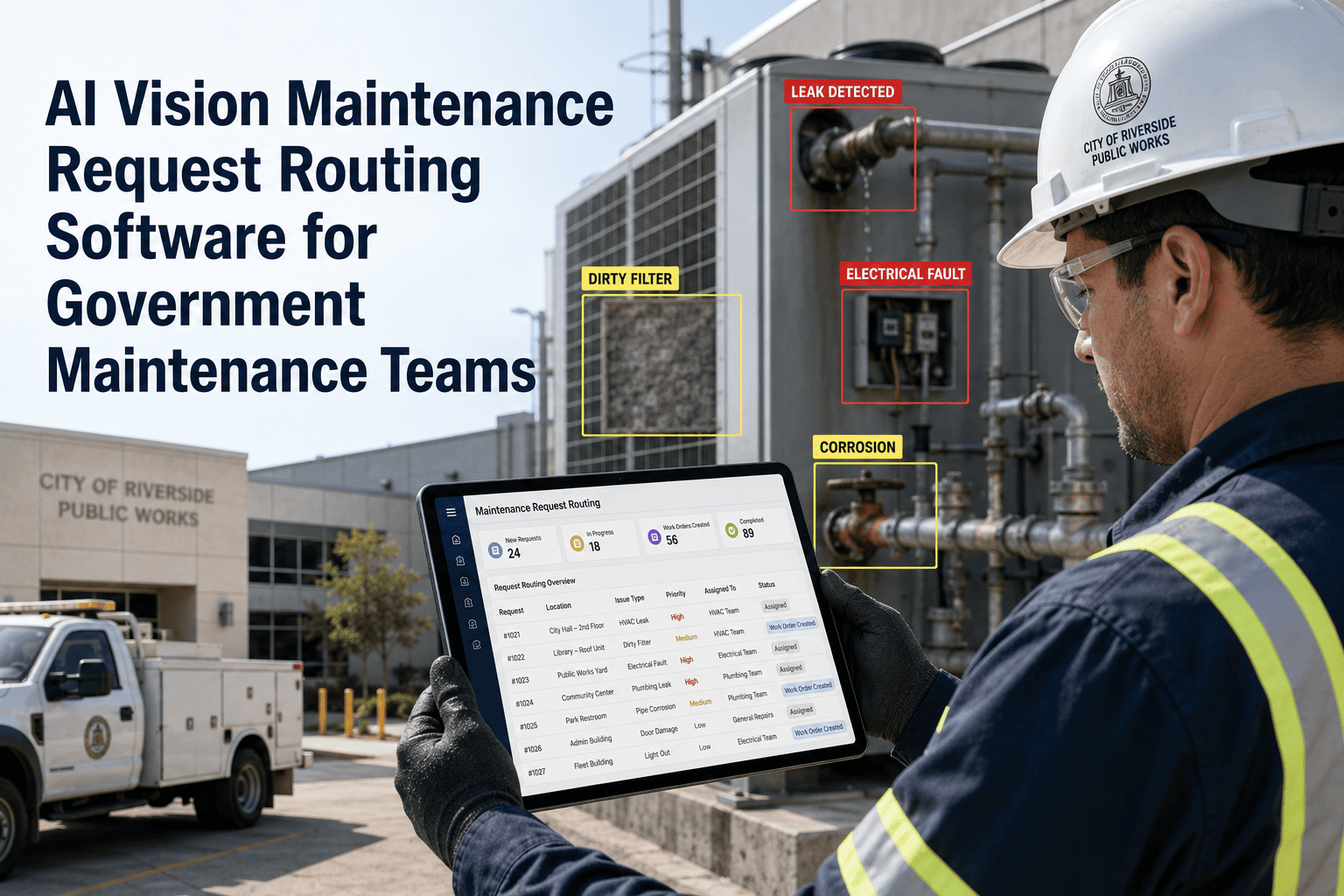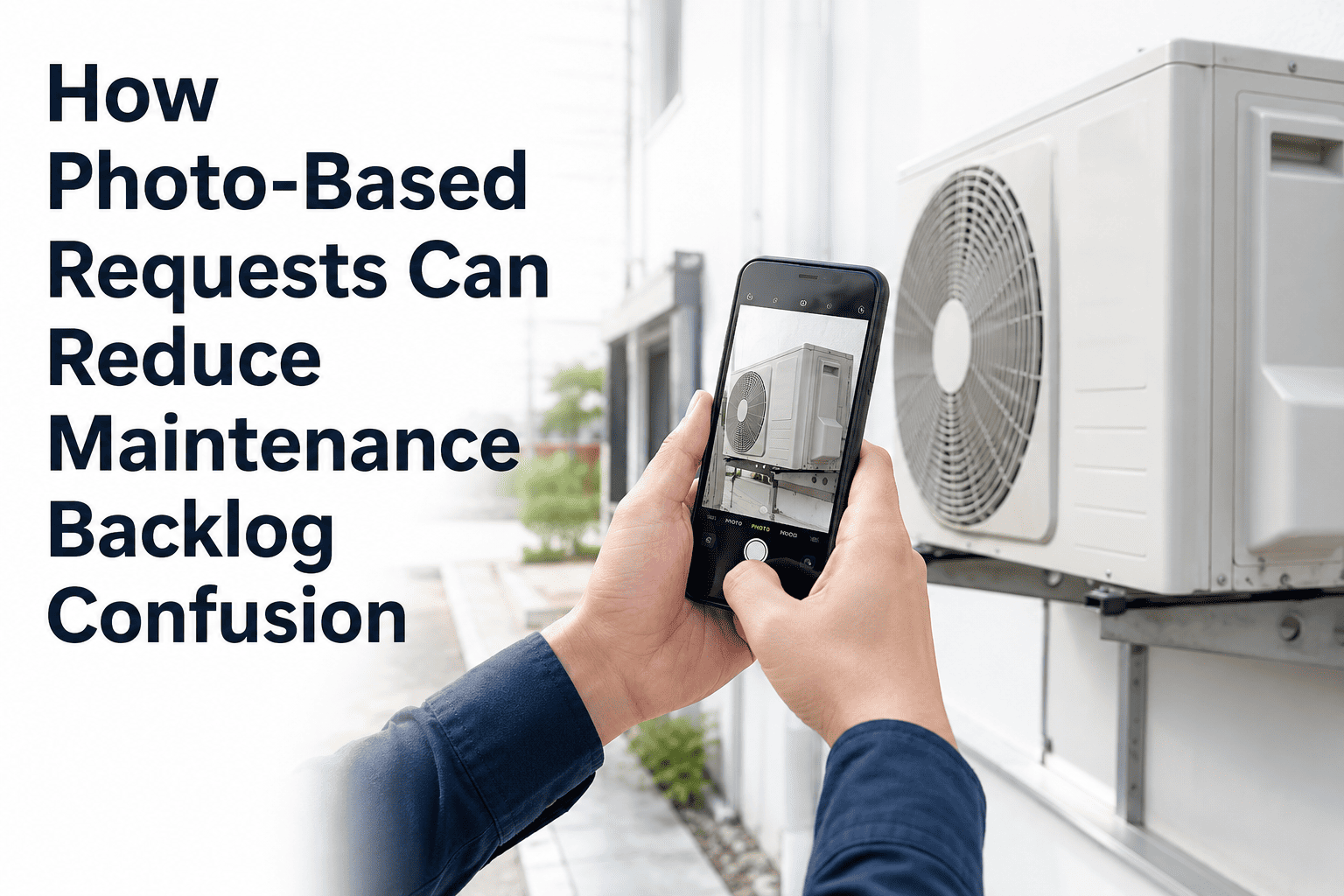
Government maintenance backlogs are not just a resource problem — they are often a clarity problem. When work requests arrive as vague verbal reports, text descriptions with no location context, or complaints that have passed through two supervisors before reaching the planning queue, maintenance teams waste significant time on diagnosis before any repair begins. The simplest intervention that consistently reduces this overhead is photo-based request submission: a structured workflow where every maintenance request includes a photo of the issue, an asset identifier, and a severity indicator, captured at the point of observation. Public works teams using OxMaint's photo-based work request module report backlog triage time dropping by 40 to 60 percent in the first quarter after implementation.
Why Government Maintenance Backlogs Stay Confusing
The backlog does not grow purely because of resource constraints. Much of it grows because unclear requests require back-and-forth clarification, cause wrong parts to be ordered, or send technicians to sites without enough information to complete the job. Each of those outcomes puts the work order back into the queue — making the backlog longer and more confusing than it needs to be.
Vague request submitted with no photo, no location, no asset ID
Planner spends 20–30 minutes clarifying before creating a work order
Technician arrives on site without right parts or full context
Work order reopens, returns to backlog — cycle repeats
What Changes When Every Request Includes a Photo
Give Your Team a Photo-First Request Workflow
OxMaint's photo-based work request system captures visual evidence, asset ID, and severity at submission — so every request enters the queue as a complete, actionable work order.
The Minimum Fields That Eliminate Backlog Confusion
| Field | Why It Matters | What Happens Without It |
|---|---|---|
| Photo of Issue | Planners prioritize accurately without site visit | Triage guess — wrong priority, wrong crew |
| Asset ID or QR Scan | Links request to full repair history and BOM | Technician arrives without context or parts |
| Location / Zone | Eliminates dispatch ambiguity on large sites | Crew spends time locating the issue instead of fixing it |
| Severity Indicator | Auto-routing to correct priority tier | All requests enter queue as equal — backlog grows undifferentiated |
| Submitter Contact | One-touch follow-up if additional context needed | Back-and-forth chain through supervisors to reach original observer |
Our maintenance backlog was not primarily a staffing problem — it was a clarity problem. We had 80 open work orders, and on any given morning my planners spent two hours just figuring out what they were actually looking at before they could prioritize anything. We switched to a photo-required submission policy using OxMaint: scan the asset tag, take a photo, select severity, submit. In six weeks, our triage time dropped from two hours to 20 minutes. The backlog cleared by a third, not because we hired more people, but because every work order now told my technicians exactly what they were going to before they left the yard.
Frequently Asked Questions
What do you do when field staff resist adding photos to their maintenance requests?
Resistance usually comes from two sources: the perception that adding a photo takes more time, and lack of clarity about what a good photo looks like. Both can be addressed with a short demonstration showing that scanning an asset QR code and taking one photo takes under 45 seconds and eliminates the three clarification calls that typically follow a text-only request. Making photo submission a system requirement — not optional — is also more effective than making it a policy recommendation. OxMaint's mobile submission flow is designed to make photo capture the natural first step, not an add-on.
How do we handle photo-based requests for infrastructure assets that don't have asset tags installed yet?
For untagged assets, the interim solution is location-based submission — GPS coordinates or a mapped zone selector that identifies the asset by physical location rather than a tag scan. The photo itself serves as the primary evidence, and the planner can associate the request with the correct asset record during triage. This is also a useful signal for QR tag deployment priority: assets that generate frequent photo requests without tag scans are the ones that would benefit most from physical tagging. The OxMaint demo shows how location-based and tag-based submission work side by side.
Can photo-based requests be submitted by members of the public, or only by maintenance staff?
Public-facing submission is a significant advantage for government maintenance teams responsible for community infrastructure. A QR code on a public facility, posted at street level, allows residents to submit photo-based maintenance requests directly into your work order queue — eliminating the phone/email chain that currently introduces delays and information loss. Public submissions can be configured to enter a moderated queue with a planner review step before a work order is created, ensuring citizen reports are validated before entering the active backlog. This model is used by municipal teams for parks, roads, and public building maintenance.
How should we handle photo privacy for government facilities where photography may be restricted?
Facility-specific photo policies should be built into the submission form as a configurable option — restricted facilities display a notice at the point of submission, and submitters select from approved angle or zone restrictions rather than taking unrestricted photos. For sensitive government facilities, photo evidence can also be replaced with a structured symptom selection checklist that provides planners with equivalent diagnostic value without requiring photographic documentation. OxMaint's inspection forms support both photo-based and text-based structured submission modes, allowing each facility type to be configured appropriately.
Does the photo quality matter, or is any photo better than no photo for backlog triage purposes?
Any photo is better than no photo for triage purposes, but photo quality does affect diagnostic value. A blurred photo from 10 feet away can confirm the general area and rough severity, while a clear close-up allows a planner to identify the specific defect type, estimate repair scope, and select the right parts before dispatch. Brief visual guidance — "take one close photo from arm's length" — built into the submission form UI produces significantly better diagnostic quality without requiring photography training. Over time, as AI vision capabilities are added to the workflow, photo quality also affects how accurately automated defect classification can assist with triage. Start a free trial to see how OxMaint guides photo submission in the field.
Every Maintenance Request Should Arrive With a Photo. Make That the Default.
OxMaint's structured photo-based request system eliminates triage guesswork, reduces site revisits, and gives your government maintenance team a clear, complete backlog — not a pile of unverifiable complaints.