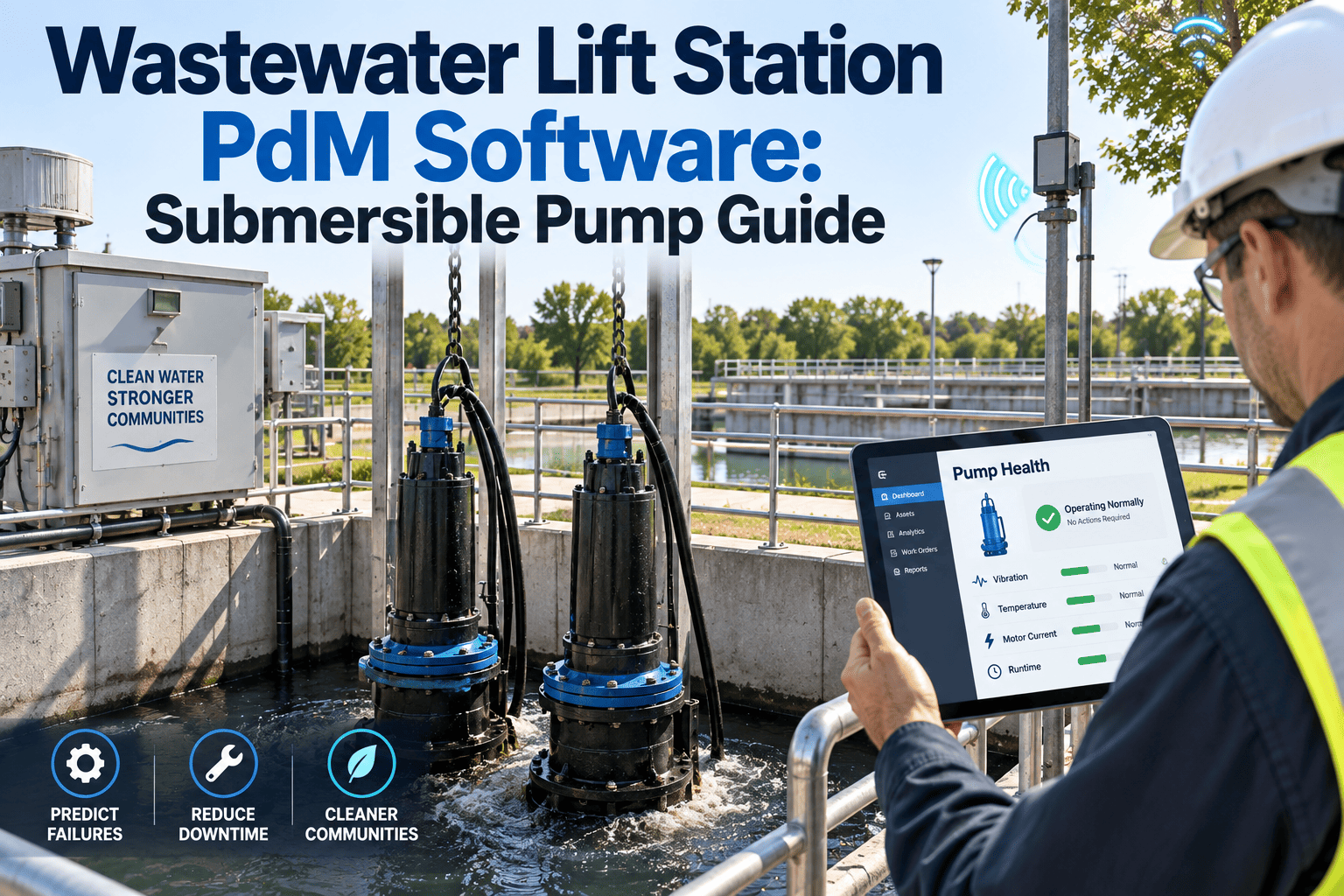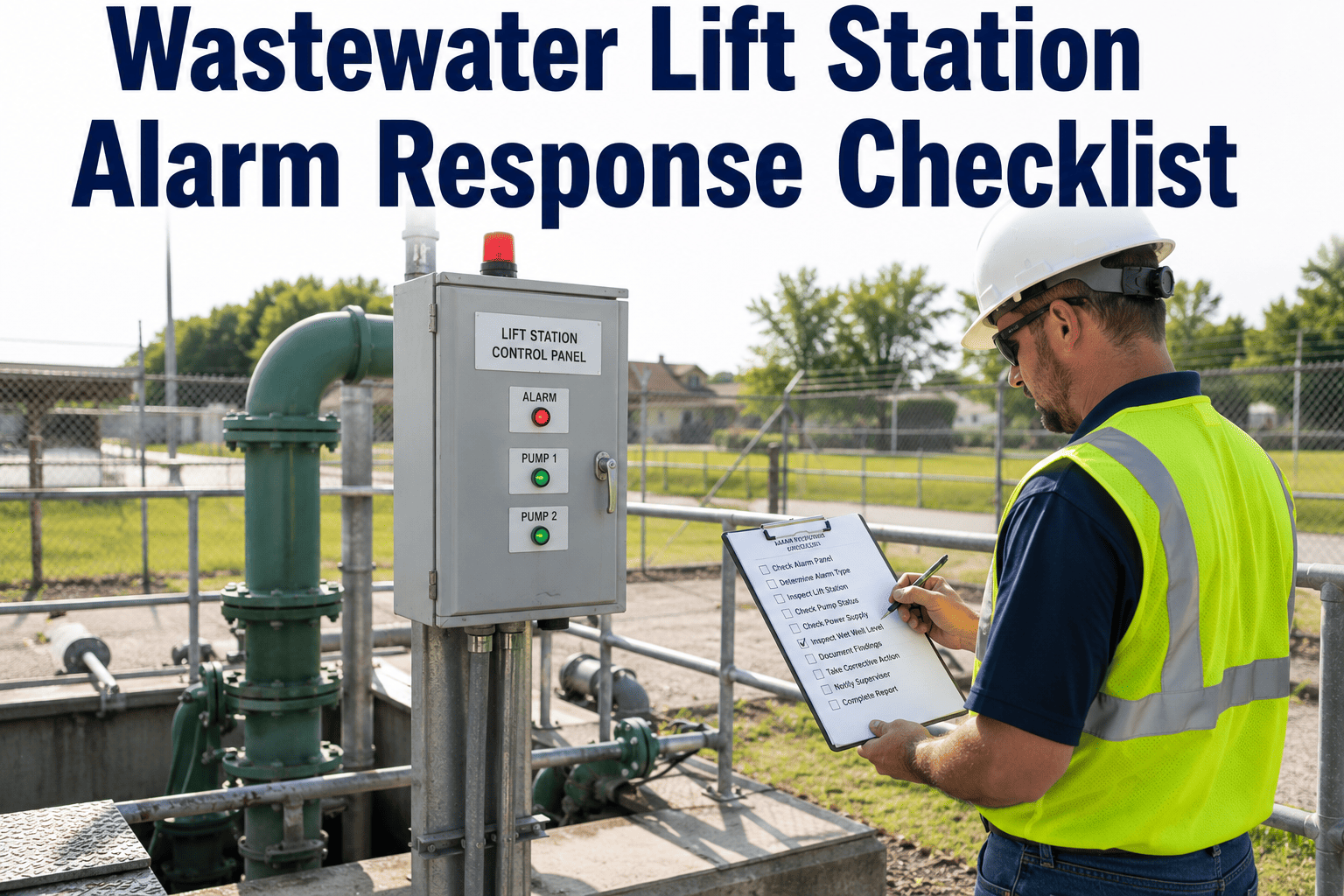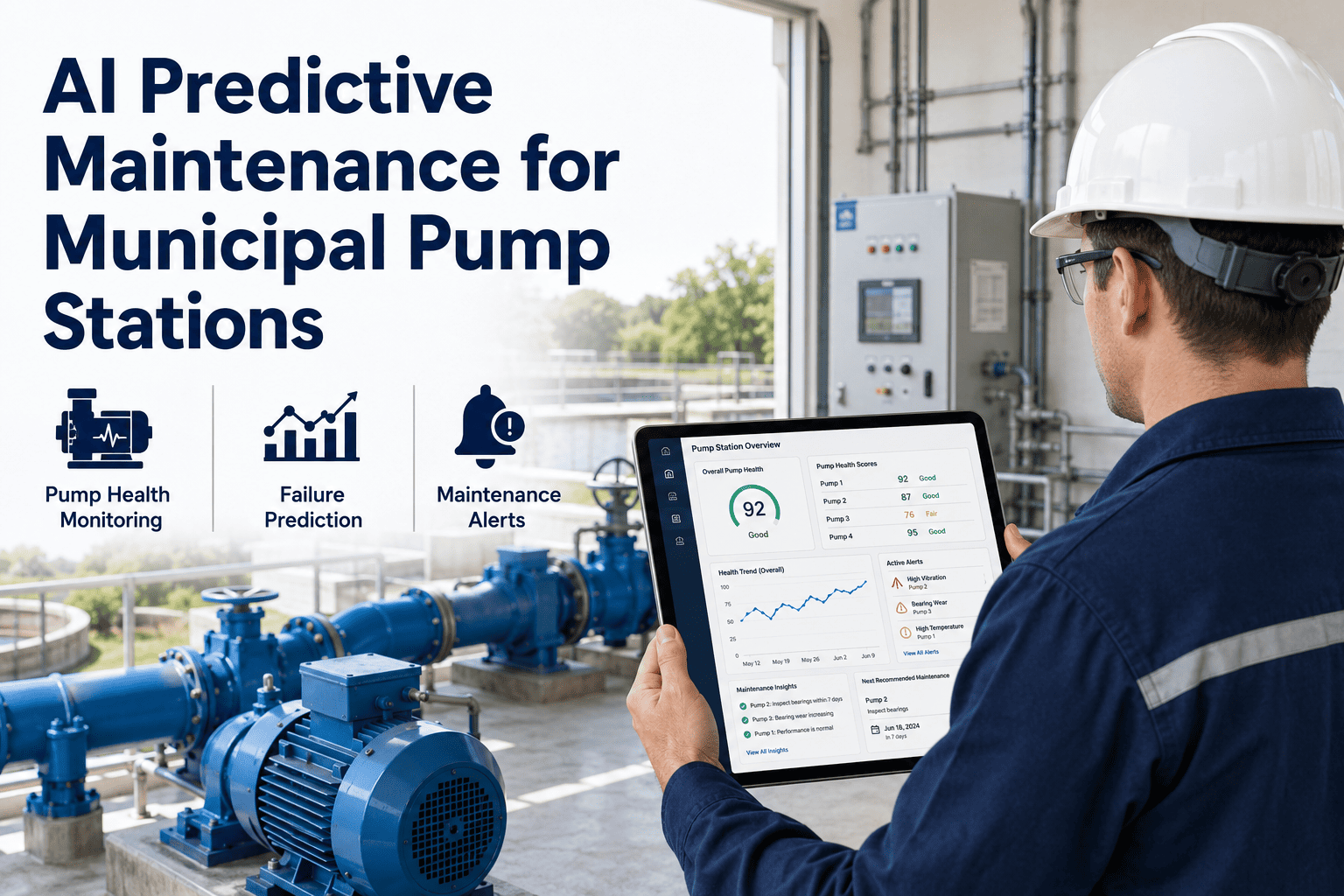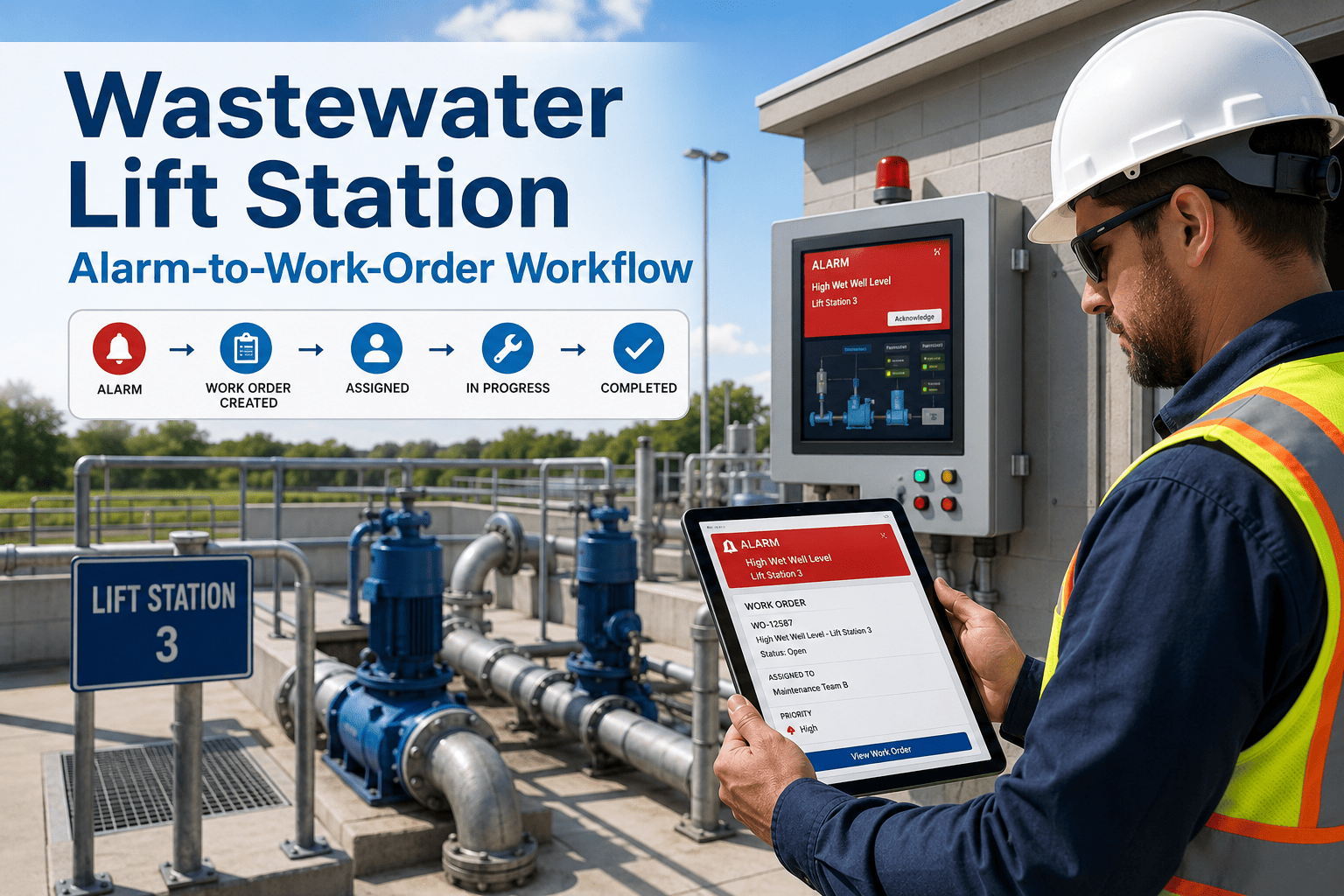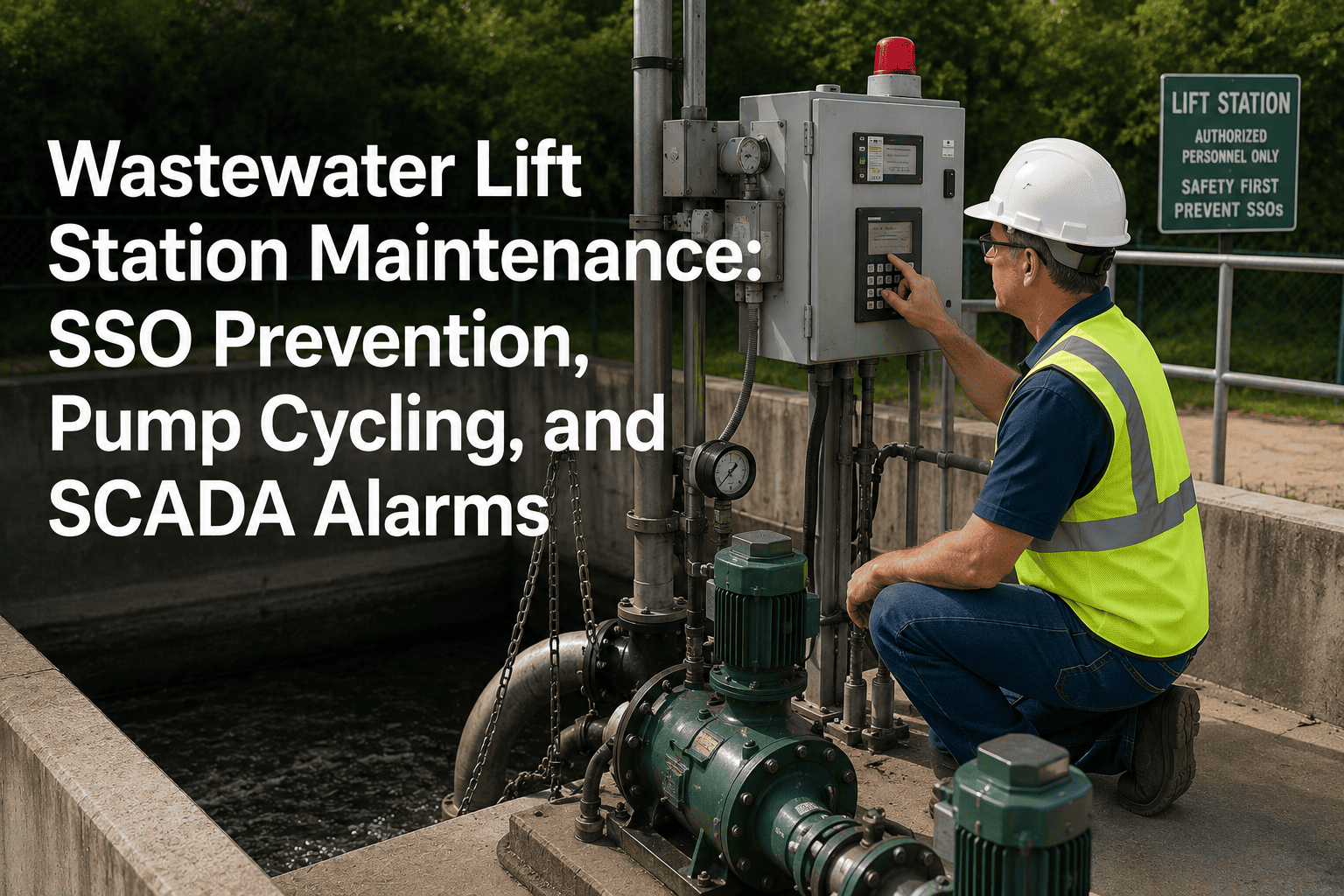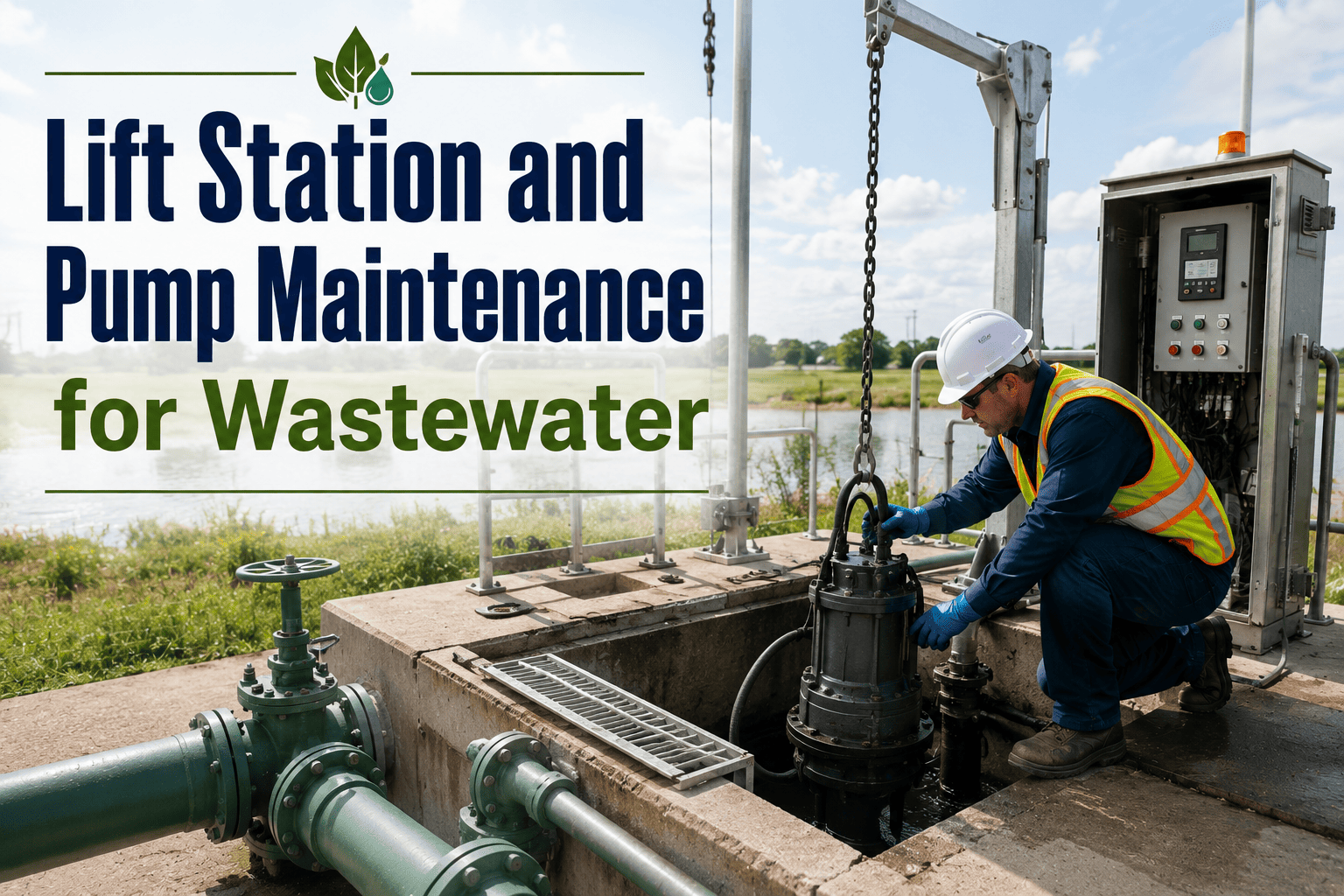
A lift station is the single point in a wastewater collection system where an entire neighborhood's sewage either keeps moving toward treatment or backs up into streets, basements, and local waterways. There is no gravity fallback once the pumps stop; sewage simply has nowhere else to go. The EPA estimates tens of thousands of sanitary sewer overflows happen across U.S. utilities every year, and pump or power failure at a lift station is one of the leading causes behind them. Operators who build a maintenance program around wet well levels, pump cycling, and electrical health catch the failure before it turns into an overflow, a fine, or a call from the health department. See how utilities are structuring that program with a free trial or a quick demo.
Lift Station and Pump Maintenance for Wastewater Utilities
A failed lift station does not stay contained to one manhole, it backs up the whole basin behind it. Here is what keeps the pumps running and the sewage moving.
The Failure Cascade Inside a Lift Station
A lift station rarely fails all at once. It fails in stages, and each stage gives a maintenance program a chance to intervene before the wet well ever reaches its high-level alarm. Knowing where a station sits on this path is what separates a routine work order from an emergency callout.
Fats, oils, wipes, and solids accumulate on the impeller and in the wet well, reducing pump efficiency long before anyone notices a problem.
Bearings, seals, and motor windings degrade under the added strain, but a calendar-based inspection schedule may not catch it for weeks.
The one component meant to catch a rising wet well, a float switch or level sensor, sticks or drifts out of calibration at the worst moment.
Sewage discharges before a crew can respond, triggering an SSO report, a possible fine, and a repair bill far larger than the maintenance it replaced.
Catch the Cascade at Stage One
Oxmaint tracks wet well levels, pump run hours, cycling frequency, and current draw for every lift station in one place, and turns an early wear signal into a scheduled work order instead of an emergency dispatch. Utilities running dozens to hundreds of stations use it to keep compliance documentation current without chasing paper logs.
Two Ways to Run a Lift Station Program
Most utilities do not choose reactive maintenance on purpose, it is what happens by default when inspection data lives on paper. The questions below show where the two approaches actually diverge.
| Question | Reactive Approach | Proactive Approach |
|---|---|---|
| How do you know a pump is wearing out? | Usually once it stops running | Current draw and run-time trends flag wear early |
| What happens when a float sticks overnight? | The wet well fills until someone reports it | A SCADA alarm routes straight into a work order |
| What does a failure end up costing? | Emergency crew, generator rental, possible fine | A scheduled seal or bearing replacement |
| Who tracks inspection compliance? | A paper log that is easy to fall behind on | A digital PM schedule with a full audit trail |
| How fast can a crew respond? | Delayed while parts and history are located | Parts and procedures pre-staged against the asset |
A Lift Station Maintenance Checklist by Frequency
A reliable lift station program is not one long list, it is four short ones run on their own clocks. Here is a starting structure most water and wastewater utilities can adapt to their own stations.
Signals Worth an Alert, Not Just a Log Entry
A maintenance log that only gets reviewed once a week cannot stop an overflow that builds overnight. These are the signals worth an immediate alert instead of a line in a spreadsheet.
A level trending upward outside the normal band, even before the high-level float, is the earliest warning of a pump or debris problem.
When one pump is carrying most of the run hours instead of alternating evenly, it is aging faster than its maintenance schedule assumes.
A rising or unstable amperage reading usually points to impeller drag, bearing wear, or a developing motor fault ahead of failure.
A float or level sensor that reacts late to changing conditions is a control failure waiting for the one night no one is watching.
Frequently Asked Questions
How often should lift station pumps be inspected?+
What is the difference between a lift station and a pump station?+
What causes most lift station failures?+
Can early pump wear actually be caught before failure?+
How does Oxmaint support wastewater lift station programs?+
Keep the Basin Moving, Not Backing Up
A lift station program built around wet well levels, pump cycling, and float response catches the failure while it is still a work order, not an overflow report. See what that looks like across your own stations in the first 30 days.