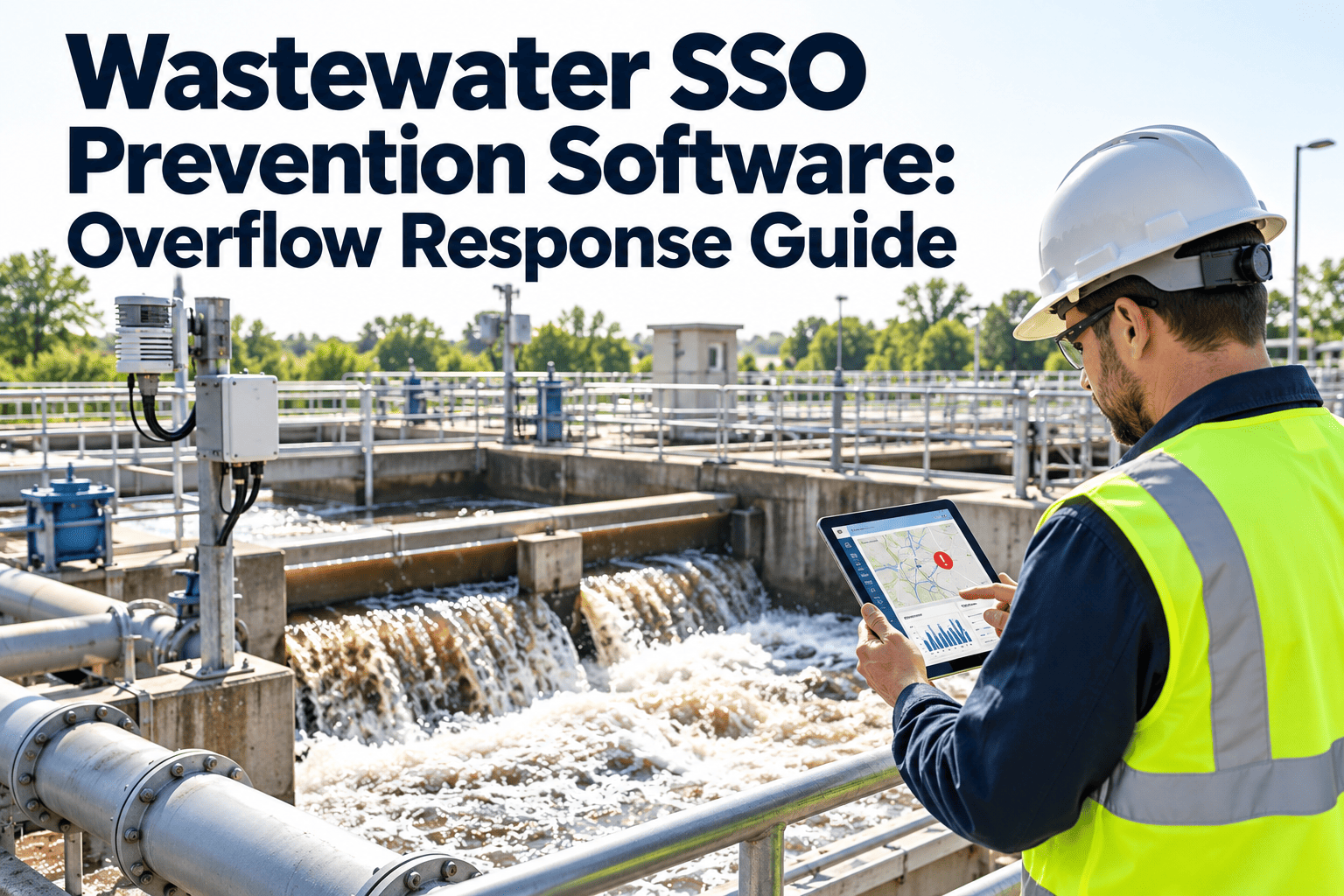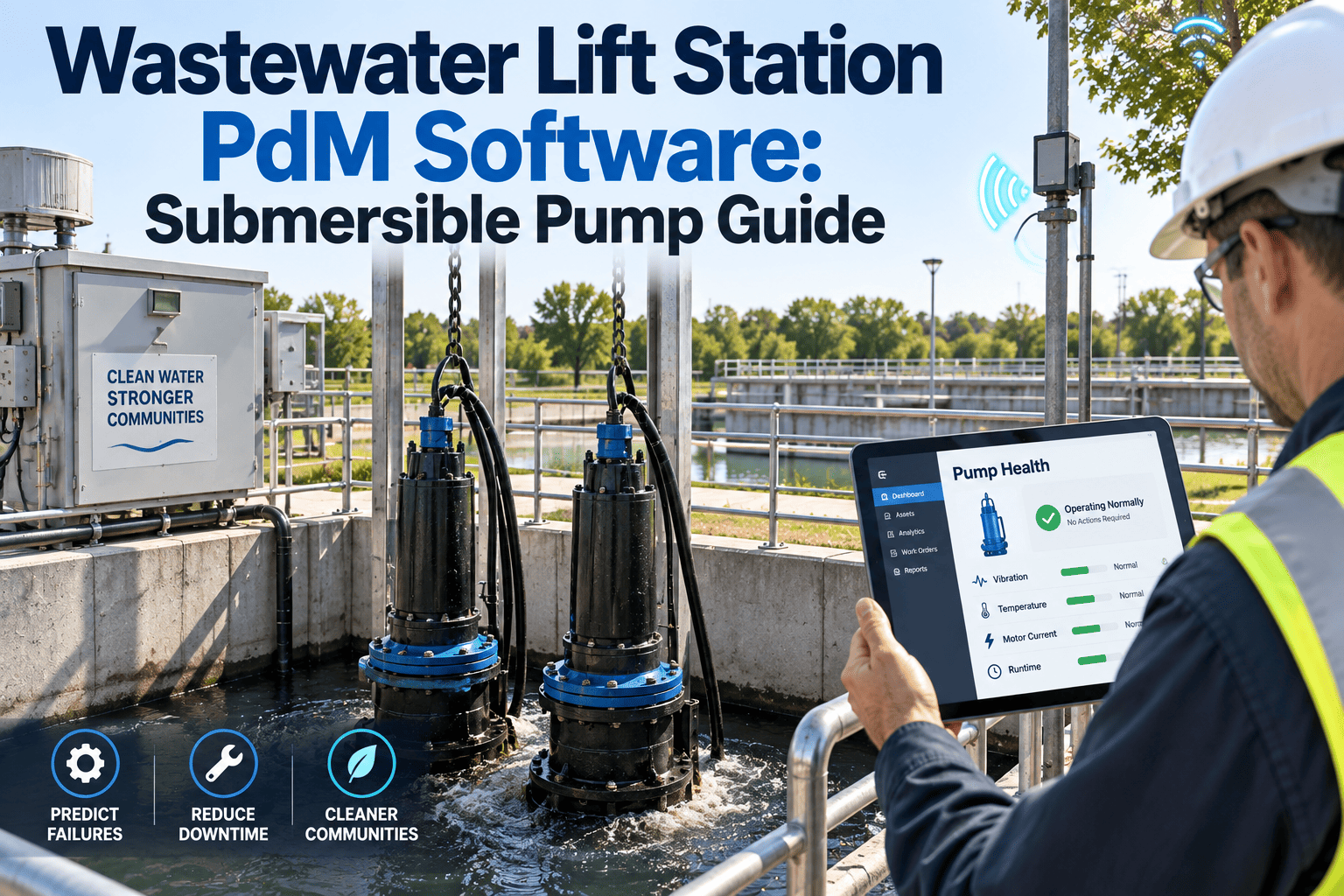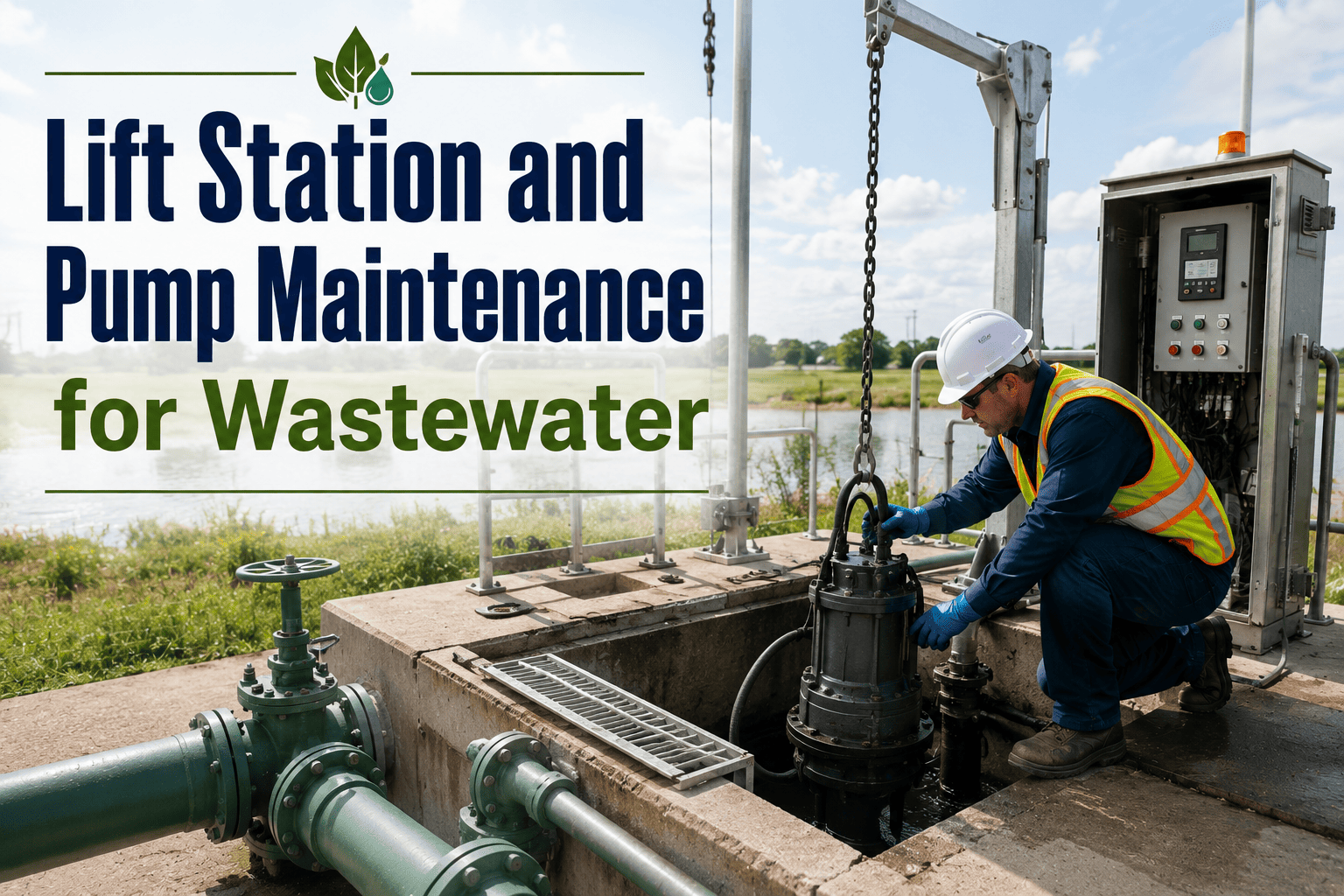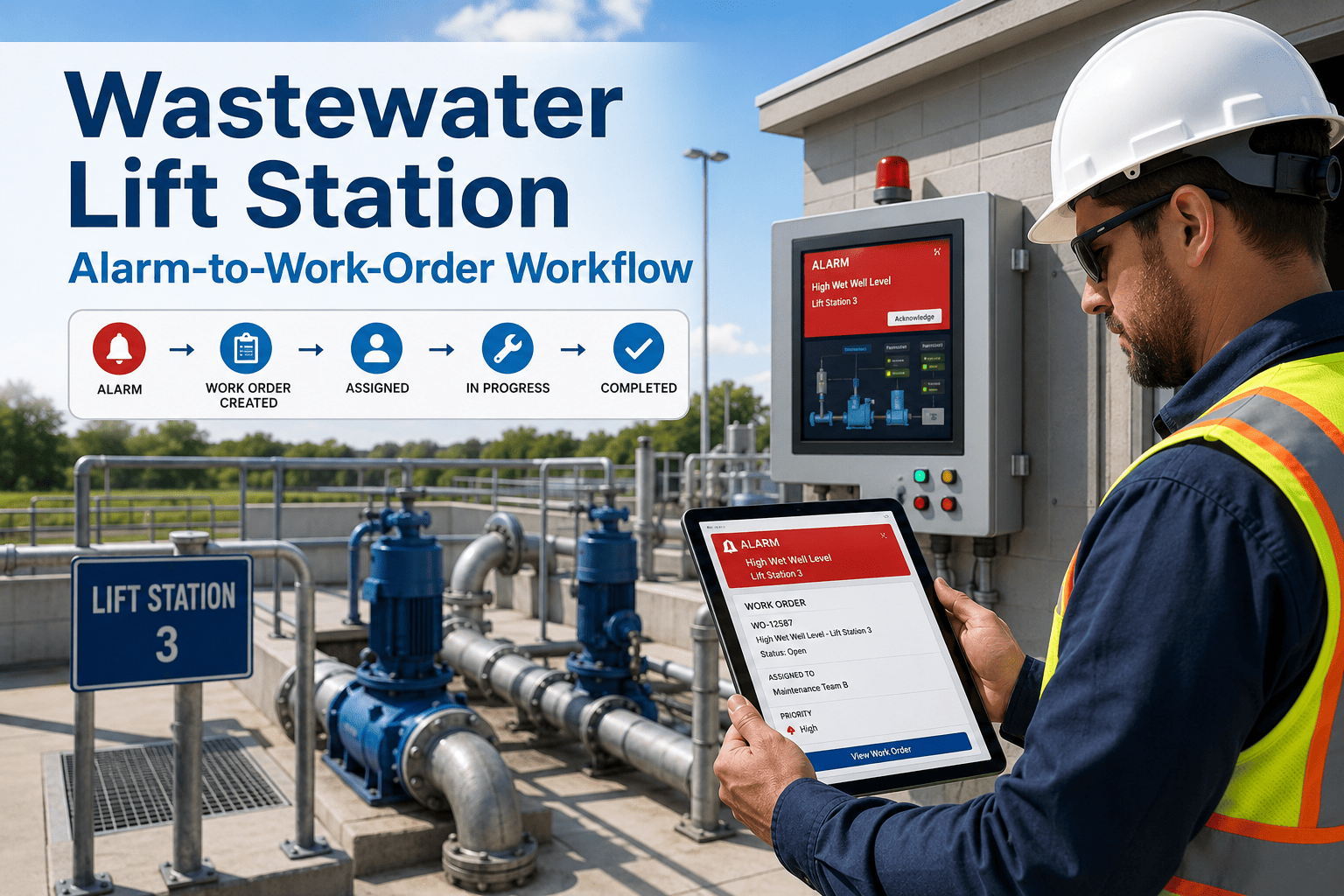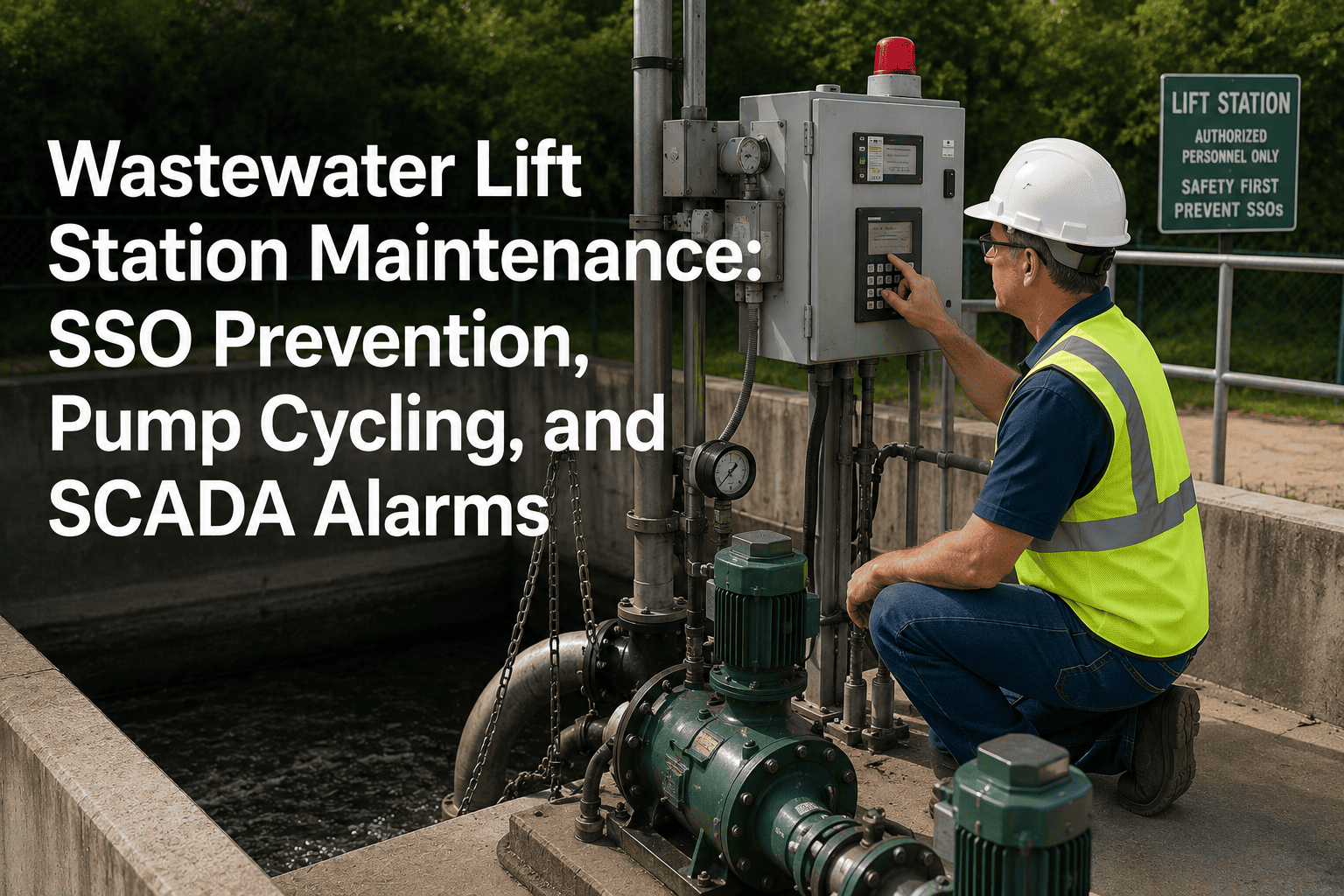
A wastewater lift station failure is never just a maintenance ticket — it is a sanitary sewer overflow waiting to happen, and an SSO brings 24-hour reporting clocks, NPDES permit violations, public-health liability, and EPA enforcement that can cost a municipality more than a decade of preventive maintenance combined. These stations run unmanned around the clock, so the alarm is usually the only warning anyone gets, and the gap between a contained event and a reportable spill is simply how fast that alarm becomes the right action by the right crew. This is a working checklist — print it, follow it, or run it from a phone — covering immediate response, diagnosis, containment, restoration, generator readiness, and the documentation an SSO report demands. See how OxMaint AI Alerts and Work Order Automation turn a SCADA alarm into a dispatched crew in seconds. Book a demo to watch an alarm become a work order live.
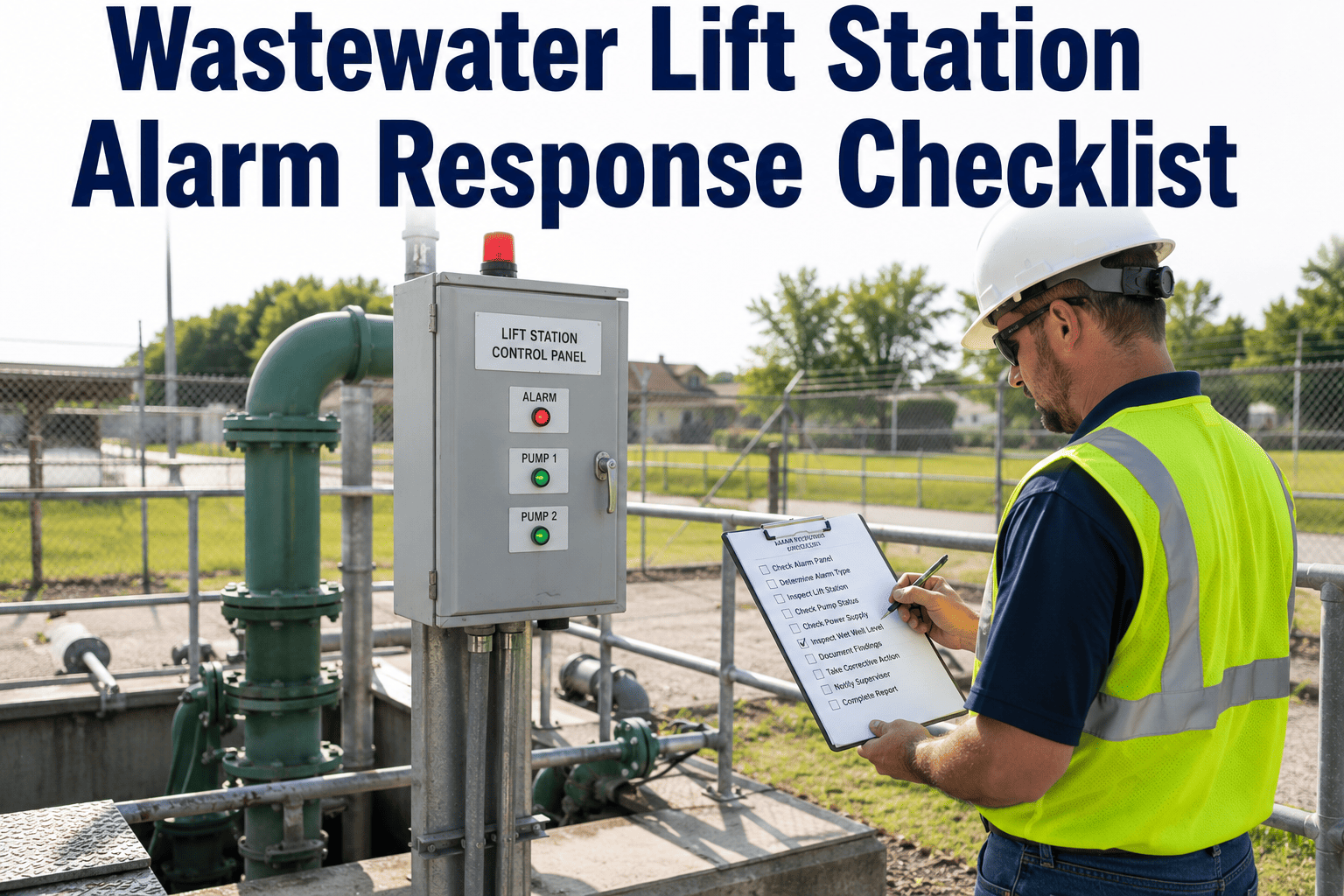
Wastewater Lift Station Alarm Response Checklist
A step-by-step response checklist linking SCADA alarms to inspection tasks, pump checks, overflow containment, generator readiness, and repair records — so a high-level alarm becomes a dispatched crew, not a spill on the evening news.
Know the Alarm Before You Check the Box
Each alarm carries a different urgency. Use this table to set the priority, then work the matching checklist below. Never dismiss a communication-loss alarm — a station you cannot see is a station that can overflow unwatched.
| Alarm | What It Signals | SSO Risk |
|---|---|---|
| High wet well level | Inflow exceeding pump-out; forming clog or capacity event | Elevated |
| High-high level | Overflow imminent within minutes | Critical |
| Pump fail / motor fault | Lost capacity; run-time or current spike | High |
| Power outage | No pumping without backup power | High |
| Communication loss | SCADA blind — station status unknown | Treat as high |
| Seal / vibration / moisture | Early mechanical wear before a trip | Developing |
Work Each Phase in Order
Check off every task before moving to the next phase. The goal is to stop the spill before it starts, restore normal pumping, and capture the record you will need if a single drop reaches the ground.
OxMaint AI Alerts learn each pump's normal baseline and flag deviation before motor protection trips it offline — utilities typically see a 70–80% drop in nuisance alarms, while a high-high level event auto-generates an emergency work order with the right crew already assigned.
Warning Signals That Precede an SSO
Most lift-station failures broadcast themselves in SCADA trends 12 to 48 hours before they become a spill. Add these to your routine review so a signal becomes a planned repair instead of a midnight emergency.
Preventive Cadence That Keeps the Alarm From Firing
Alarm response is the safety net; preventive maintenance keeps the net from being needed. Hold these intervals and the emergency checklist above stays unused.
| Preventive Task | Frequency |
|---|---|
| Alarm & float function test | Weekly |
| Standby generator test | Weekly |
| Float / level-sensor cleaning (FOG) | Monthly |
| Submersible pump inspection | Quarterly* |
| Check valve inspection | Quarterly |
| Wet well cleaning | Twice per year |
*Or whenever paired pump motor hours diverge by more than 10%.
The SSO Reporting Clock Starts at First Knowledge
Exact triggers vary by state and by your NPDES permit, so always confirm with your authority having jurisdiction — but the clock is short and it starts the moment your team becomes aware, not when the cleanup ends.
What Collection-System Professionals Say
An alarm only matters if it reaches the right person fast enough to act. The quiet killer in most utilities is nuisance alarms — when half the pages are false, crews start trusting none of them, and that is the night the real high-high slips through. Baseline the station to its own normal behavior, kill the noise, and suddenly every alarm that fires actually means something. That is the whole game in collection systems.
Collection System Operations Manager · 20 Years Lift Station & SCADAEvery SSO is a documentation failure before it is an equipment failure. When the regulator shows up, the maintenance history is what decides whether you face a notice or a consent order — it proves whether an adequate program existed before the spill. If your alarm times, response times, and repair records live in one system, the report writes itself. If they live in three places, you are exposed.
Wastewater Compliance Specialist · 17 Years NPDES & SSO ReportingFrequently Asked Questions
What's the difference between a high-level and a high-high alarm?
A high-level alarm warns that inflow is outpacing pump-out and gives you time to dispatch and diagnose; a high-high alarm means overflow is imminent and demands immediate bypass pumping and containment. Treat them as separate priority tiers, not the same event. Book a demo to see tiered alarm escalation.
How fast do I have to report a sanitary sewer overflow?
Most states require verbal notice within 24 hours of first knowledge — often for any spill reaching surface water or above a volume threshold — followed by a written report within about five days, with records kept on file for three years. Your NPDES permit and AHJ set the exact rule. Start free to auto-capture the report fields.
How do I cut down the flood of nuisance SCADA alarms?
Threshold-only alarms fire on normal variation; an AI baseline learns each pump's real operating pattern and alerts only on meaningful deviation, typically cutting nuisance alarms 70–80% once the model matures over six to eight weeks. Book a demo to see baseline alerting on your stations.
Turn Every Lift Station Alarm Into a Dispatched Crew and a Closed Record
From the first high-level page to the final SSO report, OxMaint connects SCADA alarms to work orders, response crews, and maintenance history — so spills get contained faster and your program is audit-ready every single day, not just after an incident.