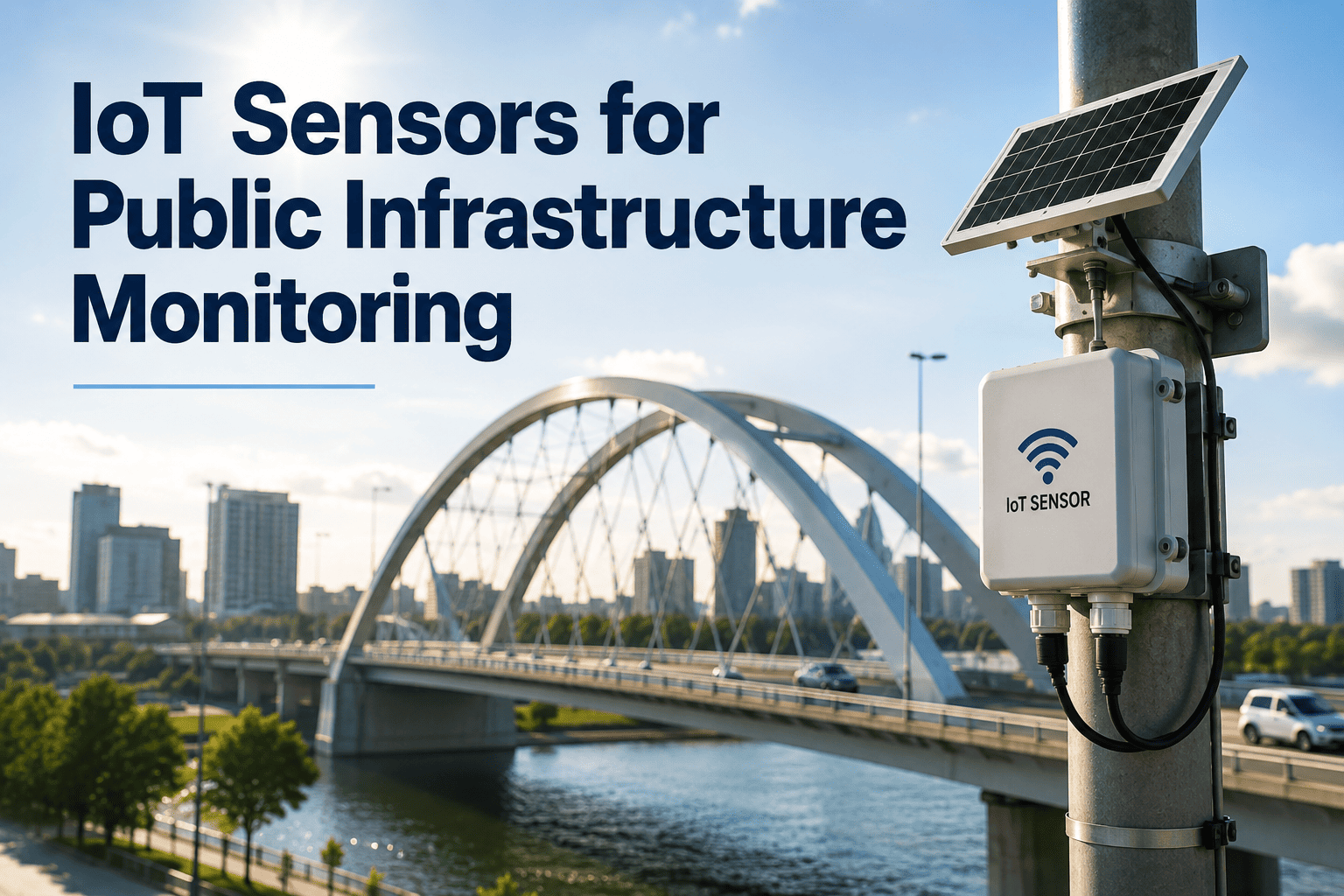
The municipal infrastructure manager faces a growing challenge: hundreds of IoT sensors deployed across water treatment plants, traffic intersections, and stormwater systems—yet 60% of devices report intermittently, gateway failures go undetected for days, and the promised real-time monitoring remains a patchwork of blind spots. The sensor hardware works perfectly—in the vendor's demo. But in the real world of extreme weather, aging infrastructure, and bandwidth limitations, IoT deployments underperform while maintenance costs escalate and critical alerts never reach the operations center.
This scenario isn't a technology failure—it's a sensor management failure. Municipalities investing in IoT infrastructure, smart city platforms, and connected monitoring capabilities achieve breakthrough situational awareness or expensive data graveyards based entirely on how they manage gateways, sensor networks, and data pipelines. The difference between 98% uptime and 55% data availability isn't the sensor selected—it's whether teams implement proper gateway architecture, maintain firmware lifecycles, and build redundancy that keeps critical monitoring operational through every condition. Organizations ready to achieve reliable IoT infrastructure can start with a platform designed for seamless sensor management.
Successful municipal IoT deployments follow proven sensor management principles that overcome the four reliability killers: gateway misconfiguration, network fragmentation, firmware neglect, and data pipeline failures. Cities mastering these principles achieve 99%+ sensor uptime within 12-18 months while those ignoring gateway management watch their IoT investments become expensive hardware generating zero actionable intelligence despite significant capital expenditure.
✓Gateway Health Monitoring: Real-time dashboard tracking every IoT gateway's status, connectivity, and throughput across your municipality
✓Automated Firmware Updates: Scheduled OTA updates with rollback capability—never miss critical security patches or feature releases
✓Sensor Lifecycle Tracking: Complete asset management from deployment through decommission with calibration schedules and replacement forecasting
✓Municipal-Specific Templates: Pre-configured monitoring profiles for water, traffic, stormwater, air quality, and utility infrastructure
✓Alert Escalation Engine: Multi-tier notification routing ensuring critical sensor failures reach the right personnel within minutes
✓Compliance Documentation: EPA, FCC, and state regulatory reporting generated automatically from sensor data and maintenance logs
Start your free trial today — No credit card required, full platform access, implementation support included
What if your IoT infrastructure delivered 99% uptime because your gateway management makes sensor networks self-healing?
The difference between smart city success and expensive hardware graveyards isn't technology—it's sensor management. Discover the proven strategies that transform unreliable IoT deployments into mission-critical monitoring infrastructure within 90 days.
Why IoT Sensor Deployments Fail in Municipalities
Understanding the root causes of IoT reliability failure reveals the path to successful sensor management. Municipalities blame hardware vendors, connectivity providers, or budget constraints—but the real problems run deeper. These four barriers appear universally regardless of sensor brand, network protocol, or city commitment to smart infrastructure.
The Four Reliability Killers
01
Gateway Misconfiguration
The Problem: IoT gateways deployed with default settings create single points of failure. One misconfigured gateway can silently drop 40% of sensor readings without triggering any alert—creating dangerous monitoring blind spots.
The Solution: Deploy municipal-grade gateway configurations with redundant uplinks, heartbeat monitoring, and automatic failover. Validate every gateway against a standardized commissioning checklist before connecting sensor endpoints.
02
Network Fragmentation
The Problem: Multiple sensor protocols (LoRaWAN, Zigbee, cellular, Wi-Fi) create isolated data silos. Operations teams juggle five dashboards across three vendor platforms—missing correlations and delayed response times.
The Solution: Implement unified gateway architecture normalizing all protocols into a single data pipeline. Centralize monitoring so every sensor feeds one operational dashboard regardless of communication technology.
03
Firmware Neglect
The Problem: 70% of municipal IoT devices run outdated firmware with known vulnerabilities and performance bugs. Manual update processes mean critical patches take months to deploy across hundreds of endpoints.
The Solution: Automate OTA firmware management with staged rollouts—update 10% of devices first, validate performance, then deploy fleet-wide. Schedule maintenance windows during low-impact periods with automatic rollback on failure.
Critical Reality: Municipalities addressing these four barriers systematically achieve 95-99% sensor uptime within 60 days. Those treating IoT as a set-and-forget deployment plateau at 50-65% data availability regardless of hardware quality or budget invested.
See how Oxmaint addresses all four barriers in the platform design itself.
Build Resilient Gateway Architecture Using Centralized Monitoring
Centralized gateway monitoring provides the most compelling operational leverage for IoT reliability because it delivers immediate, tangible visibility operations teams experience firsthand during daily routines. The transformation from reactive troubleshooting to proactive management demonstrates that structured sensor management reduces downtime rather than increasing complexity—converting the most skeptical infrastructure teams into IoT advocates.
Why Centralized Monitoring Drives Reliability
Operations teams resolve sensor failures 60% faster using centralized dashboards versus distributed vendor platforms because unified views surface correlated failures, automated alerts eliminate manual checking, and health scoring prioritizes critical issues. These efficiency gains are immediate and operational—not abstract future benefits requiring faith in technology promises.
Unified Dashboard vs. Multi-Platform Monitoring
Single-pane gateway visibility consolidates LoRaWAN, cellular, Zigbee, and Wi-Fi sensor data into one operational view. Eliminates context-switching across vendor portals that consumed 45% of troubleshooting time with fragmented monitoring approaches.
Automated Health Scoring vs. Manual Checks
AI-driven health algorithms evaluate gateway performance continuously—battery levels, signal strength, packet loss, and temperature. Auto-generates maintenance work orders before failures occur, creating predictive reliability versus reactive repairs.
Redundant Connectivity
Dual-path gateway configurations with automatic failover ensure critical sensors maintain connectivity during primary network outages. Eliminates the #1 operations concern: "What happens when cellular coverage drops?"
Edge Processing Capability
Gateway-level data filtering and preprocessing reduces bandwidth consumption by 70% while enabling real-time local alerts. Critical threshold breaches trigger immediate notifications without cloud round-trip latency delays.
Gateway Architecture Impact: Municipalities deploying centralized gateway monitoring as the IoT foundation achieve 98%+ uptime versus 60% when managing distributed vendor platforms independently. Teams experiencing immediate operational visibility become internal champions accelerating city-wide IoT expansion through proven reliability rather than vendor promises.
Deploy centralized sensor monitoring in your city starting today.
Municipal Compliance Requirements Solved
IoT sensor management with centralized gateway monitoring automatically addresses the municipal compliance requirements consuming excessive staff time under manual monitoring systems. Every sensor reading generates timestamped data logs with calibration verification, device health status, and chain-of-custody documentation—transforming regulatory audits from stressful data reconciliation into simple dashboard exports.
EPA
Environmental Monitoring: Water quality sensors, air quality stations, stormwater discharge monitors—all automatically logged with calibration certificates and data integrity verification exportable in seconds for regulatory reporting.
FCC
Wireless Compliance: Gateway transmission power levels, frequency usage, and interference monitoring—complete audit trail proving FCC compliance with automated spectrum management and device registration records.
NIST
Cybersecurity Standards: Device authentication, encrypted data transmission, firmware integrity verification—systematic records supporting NIST IoT cybersecurity framework compliance with zero manual documentation.
From Deployment to Optimization — A Municipal IoT Playbook with Checklists
The transformation from fragmented sensor deployment to optimized IoT infrastructure requires systematic gateway management following a proven 90-day sequence. This playbook builds operational reliability and team confidence progressively—each phase establishes foundations for the next while delivering measurable uptime wins sustaining momentum through inevitable technical challenges.
90-Day Municipal IoT Gateway Optimization Playbook
Follow this sequence to achieve 99%+ sensor uptime and full infrastructure ROI realization
✓Inventory all IoT assets cataloging every sensor, gateway, and communication module with firmware versions, deployment dates, and network configurations—establish baseline visibility across the entire sensor fleet.
✓Deploy centralized monitoring connecting all gateways to a unified dashboard with heartbeat checks every 5 minutes—eliminate blind spots where gateway failures go undetected for hours or days.
✓Configure alert thresholds for battery levels, signal strength, packet loss, and temperature on every gateway—automated notifications replace manual checking routines consuming staff hours daily.
✓Establish firmware baseline updating all devices to current stable versions using staged rollouts—10% pilot, validation, then fleet-wide deployment with automatic rollback on anomaly detection.
✓Document gateway topology mapping every sensor-to-gateway-to-cloud path with redundancy gaps identified—build the network architecture blueprint enabling Phase 2 resilience improvements.
✓Deploy redundant gateway paths for critical infrastructure sensors—dual-connectivity ensures water quality, flood, and traffic monitoring continues during primary network outages.
✓Implement edge processing enabling gateways to filter and preprocess data locally—reduce bandwidth by 70% while enabling real-time local alerts without cloud dependency.
✓Automate OTA firmware management with scheduled maintenance windows—system deploys patches during low-impact hours with validation checks and automatic rollback on failure detection.
✓Integrate predictive analytics using sensor health trends to forecast failures 30-60 days advance—schedule replacement before downtime occurs converting reactive repairs to planned maintenance.
✓Enable cross-system correlation connecting sensor data across departments—water pressure anomalies triggering traffic rerouting, air quality spikes activating HVAC adjustments in municipal buildings.
✓Activate AI anomaly detection using machine learning algorithms analyzing sensor patterns to identify infrastructure degradation before physical symptoms appear—true predictive intelligence.
✓Deploy digital twin models creating virtual representations of critical infrastructure informed by real-time sensor data—simulate scenarios and optimize maintenance strategies without field disruption.
✓Calculate comprehensive ROI measuring downtime reductions, emergency response improvements, compliance automation savings—communicate wins to city council building budget support for expansion.
✓Plan city-wide IoT expansion applying gateway management lessons to additional infrastructure domains—pilot success accelerates adoption across parks, facilities, and utility networks.
✓Implement continuous optimization with monthly performance reviews analyzing sensor data quality, gateway health trends, and coverage gaps—preventing infrastructure regression through systematic improvement.
Playbook Results: Municipalities following this 90-day sequence achieve 99%+ sustained sensor uptime delivering full projected ROI within 18 months. Cities skipping gateway management fundamentals plateau at 55-65% data availability generating minimal operational intelligence that rarely justifies infrastructure investment costs.
Overcoming IoT Deployment Challenges: The Top 5 Objections
Successful IoT implementation requires addressing stakeholder concerns with honest, specific responses rather than dismissive technology promises. Prepare project managers with effective counter-arguments to these five universal objections appearing across municipal sensor deployments.
Objection 1: "IoT sensors are too expensive for our budget"
Effective Response:
"Let me show the cost comparison: one emergency water main repair averages $45,000. A sensor monitoring that pipe costs $200 with a $15/month gateway fee. Three prevented emergencies in year one pay for 50 sensors. Can we review your top emergency repair costs and identify the highest-impact sensor placements?"
Objection 2: "We don't have IT staff to manage IoT infrastructure"
Effective Response:
"Modern gateway platforms are designed for operations teams, not IT specialists. Automated firmware updates, self-healing connectivity, and pre-configured municipal templates mean your existing maintenance crew manages sensors like any other asset. We'll train your team in one session—it's monitoring dashboards, not programming."
Objection 3: "Cybersecurity risks make IoT too dangerous"
Effective Response:
"Valid concern—and exactly why gateway management matters. Proper implementation includes encrypted communication, device authentication, network segmentation, and automated security patching. Managed IoT is actually MORE secure than unmonitored infrastructure because every device is tracked, updated, and auditable."
Objection 4: "We tried sensors before and they stopped working"
Effective Response:
"That's the most common experience—and it's a management problem, not a hardware problem. Previous deployments failed because nobody monitored gateway health, updated firmware, or replaced batteries proactively. With automated lifecycle management, sensors maintain 99% uptime. Let me show you exactly what went wrong last time and how we prevent it."
Objection 5: "The data is overwhelming and nobody uses it"
Effective Response:
"Raw data IS overwhelming. That's why gateway-level edge processing filters noise and delivers only actionable alerts. Instead of 10,000 data points daily, your team receives 5 prioritized notifications: 'Pump station pressure dropping—schedule inspection.' We configure what matters to YOUR operations, not dump raw telemetry."
Objection Handling Reality: Project managers trained in specific cost-benefit responses and demonstration techniques resolve stakeholder resistance 3x faster than those presenting generic smart city visions. Acknowledging legitimate technical concerns while demonstrating operational solutions converts skeptics into IoT advocates systematically.
Measuring IoT Gateway Management Success
Track these leading indicators weekly during 90-day optimization to identify reliability barriers proactively rather than discovering problems after sensor networks degrade. Municipal best practices emphasize measurement predicting long-term reliability versus lagging metrics revealing issues too late for intervention.
99%+
Gateway Uptime
Percentage of gateways maintaining continuous connectivity indicates infrastructure health. Declining uptime signals power, network, or hardware issues requiring immediate investigation.
<2%
Packet Loss Rate
Sensor data packets lost during transmission indicates network congestion or gateway capacity problems. Rising loss rates reveal infrastructure bottlenecks before they cause monitoring failures.
<15min
Mean Time to Detect
Average time between sensor failure occurrence and automated alert generation. Longer detection times indicate monitoring gaps requiring threshold reconfiguration or additional health checks.
Ready to achieve 99%+ sensor uptime and unlock full IoT infrastructure ROI?
Leading municipalities achieve IoT success through proven gateway management—not better hardware. Get the complete 90-day playbook transforming unreliable sensor networks into mission-critical monitoring infrastructure.
Conclusion: Gateway Management Determines IoT Success
Municipal IoT sensor management succeeds or fails based on gateway architecture and lifecycle management—not hardware specifications. The most advanced sensors, smartest AI analytics, and fastest communication protocols deliver zero value when gateways fail silently, firmware vulnerabilities go unpatched, and fragmented monitoring platforms hide critical infrastructure blind spots from operations teams.
Successful implementations treat IoT infrastructure as 80% management and 20% hardware. They invest time understanding gateway topology, addressing connectivity redundancy, and building automated lifecycle management converting fragile sensor networks into self-healing infrastructure. Municipal best practices prove that structured 90-day playbooks following proven gateway management principles achieve 99%+ sustained uptime versus 55-65% for deploy-and-forget approaches ignoring operational fundamentals.
The cities achieving breakthrough IoT results share common characteristics: centralized gateway monitoring as the operational foundation providing instant visibility, automated firmware and health management preventing failures before impact, and measurement of leading reliability indicators enabling proactive intervention. These gateway management fundamentals matter more than sensor selection because even perfect hardware fails when nobody monitors, updates, and maintains the network infrastructure connecting it.
Frequently Asked Questions
Q: How long does it take to achieve reliable IoT sensor uptime in municipalities?
A: Municipalities following structured gateway management playbooks achieve 99%+ uptime within 90 days using phased implementation: Days 1-30 focus on centralized monitoring and firmware baselines reaching 90% visibility. Days 31-60 deploy redundant connectivity and predictive analytics reaching 97% uptime. Days 61-90 enable AI-driven optimization and measure ROI. Deployments lacking gateway management discipline often plateau at 55-65% data availability indefinitely regardless of hardware quality or budget invested.
Q: What's the most common reason municipal IoT deployments fail?
A: Treating IoT sensors as deploy-and-forget hardware rather than managed infrastructure requiring ongoing gateway monitoring, firmware updates, and lifecycle management. When nobody monitors gateway health, devices fail silently creating monitoring blind spots that defeat the entire purpose of sensor deployment. The second most common failure: network fragmentation across multiple vendor platforms creating data silos where correlated infrastructure problems go undetected because no single dashboard shows the complete operational picture.
Q: How do we secure municipal IoT infrastructure against cyber threats?
A: Implement defense-in-depth starting with gateway-level security: encrypted device communication, certificate-based authentication, network segmentation isolating IoT traffic from enterprise systems, and automated firmware patching closing known vulnerabilities. Centralized gateway management enables continuous security monitoring—detecting unauthorized devices, anomalous traffic patterns, and configuration changes in real-time. Regular security audits and NIST IoT framework compliance verification ensure ongoing protection as threat landscapes evolve.
Q: Should we deploy sensors city-wide or start with a pilot area?
A: Always pilot in one infrastructure domain first to validate gateway architecture, refine monitoring thresholds, and prove operational value before city-wide expansion. Select a high-impact area with measurable outcomes—water distribution monitoring where leak detection ROI is quantifiable works well. Successful pilots documenting measurable wins (prevented emergencies, compliance automation) provide proof points accelerating multi-domain rollouts. Pilot teams become deployment champions at subsequent locations creating peer-to-peer knowledge transfer versus consultant-driven implementations facing higher operational resistance.
Q: How does edge processing improve municipal IoT gateway performance?
A: Edge processing at the gateway level filters raw sensor data locally—transmitting only meaningful changes and threshold breaches rather than every reading. This reduces bandwidth consumption by 60-70%, enables real-time local alerts without cloud round-trip latency, and maintains critical monitoring during internet outages. For municipalities, edge processing means flood sensors trigger immediate local sirens, water pressure drops generate instant crew notifications, and traffic anomalies adjust signal timing—all without waiting for cloud processing that may take minutes during high-load periods.
Q: What ROI difference exists between managed and unmanaged IoT deployments?
A: Municipalities achieving 99%+ sensor uptime through managed gateway infrastructure realize full projected ROI—5-8x returns within 3 years through prevented infrastructure emergencies, automated compliance, and predictive maintenance—while cities with unmanaged deployments at 55% data availability generate minimal actionable intelligence rarely justifying sensor investment costs. The uptime rate multiplies ROI because IoT benefits (predictive capabilities, real-time alerting, trend analysis) only materialize when sensors consistently deliver reliable data. Unmanaged deployments create expensive hardware graveyards where devices remain installed but non-functional, delivering zero operational improvement despite significant capital expenditure.