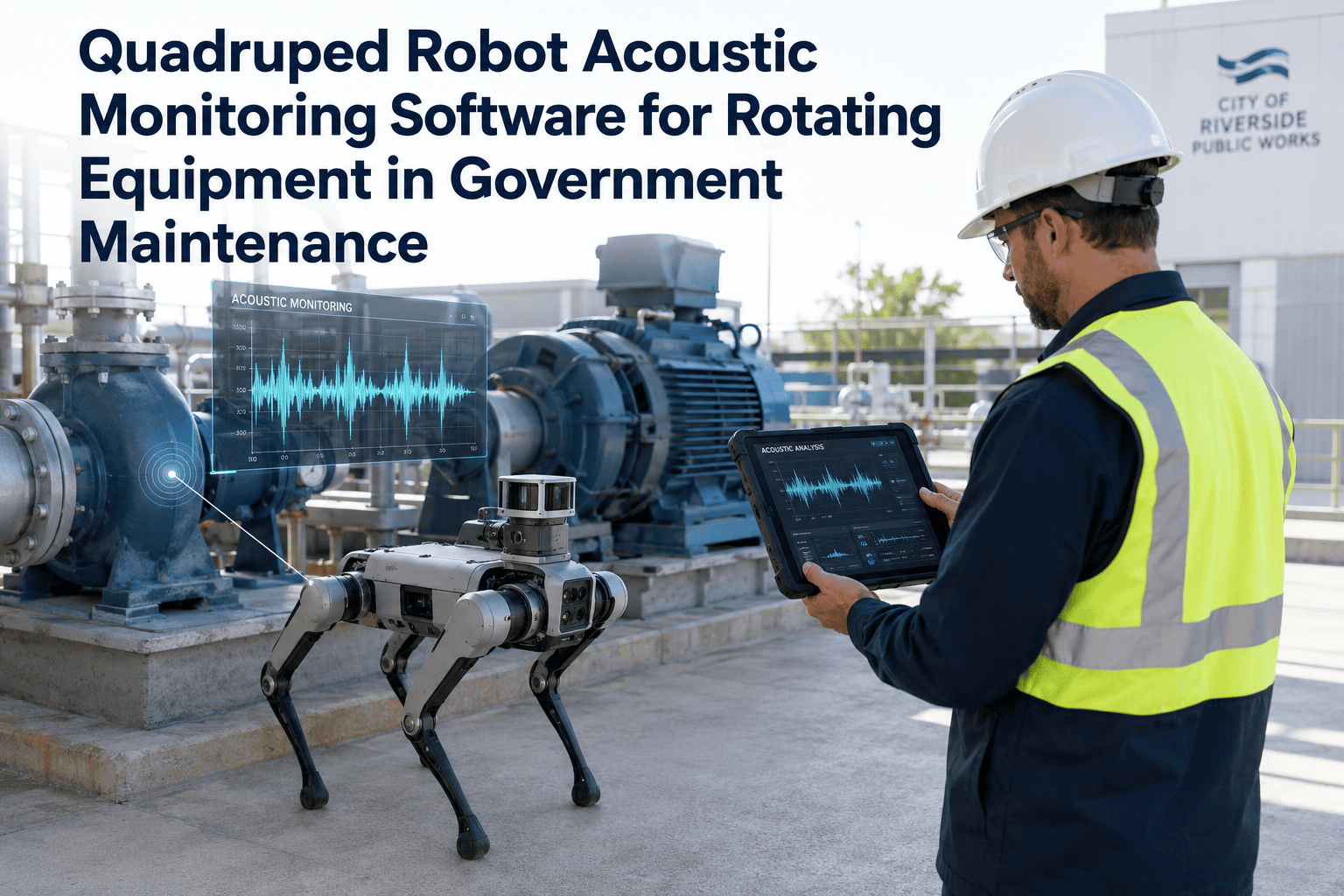
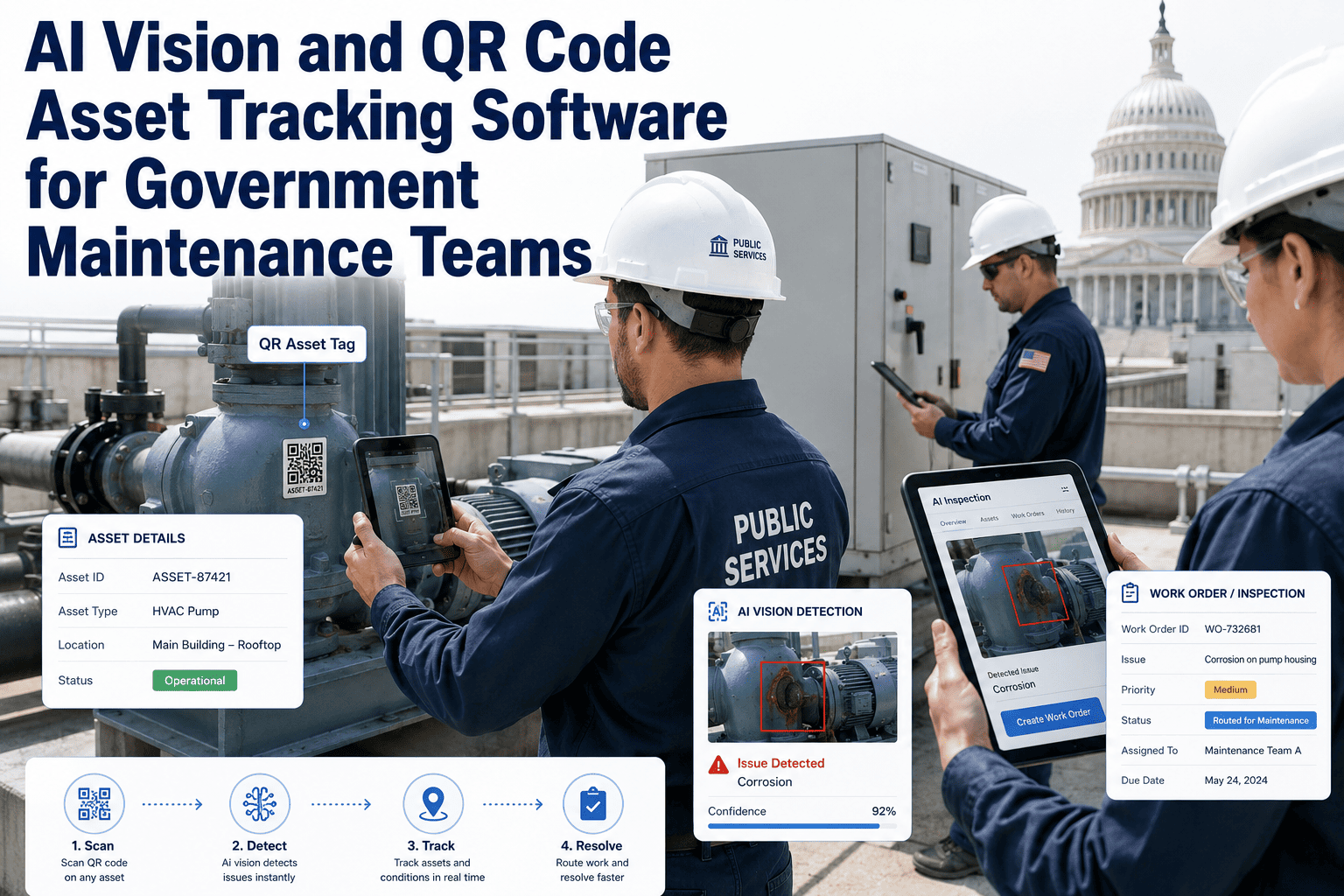
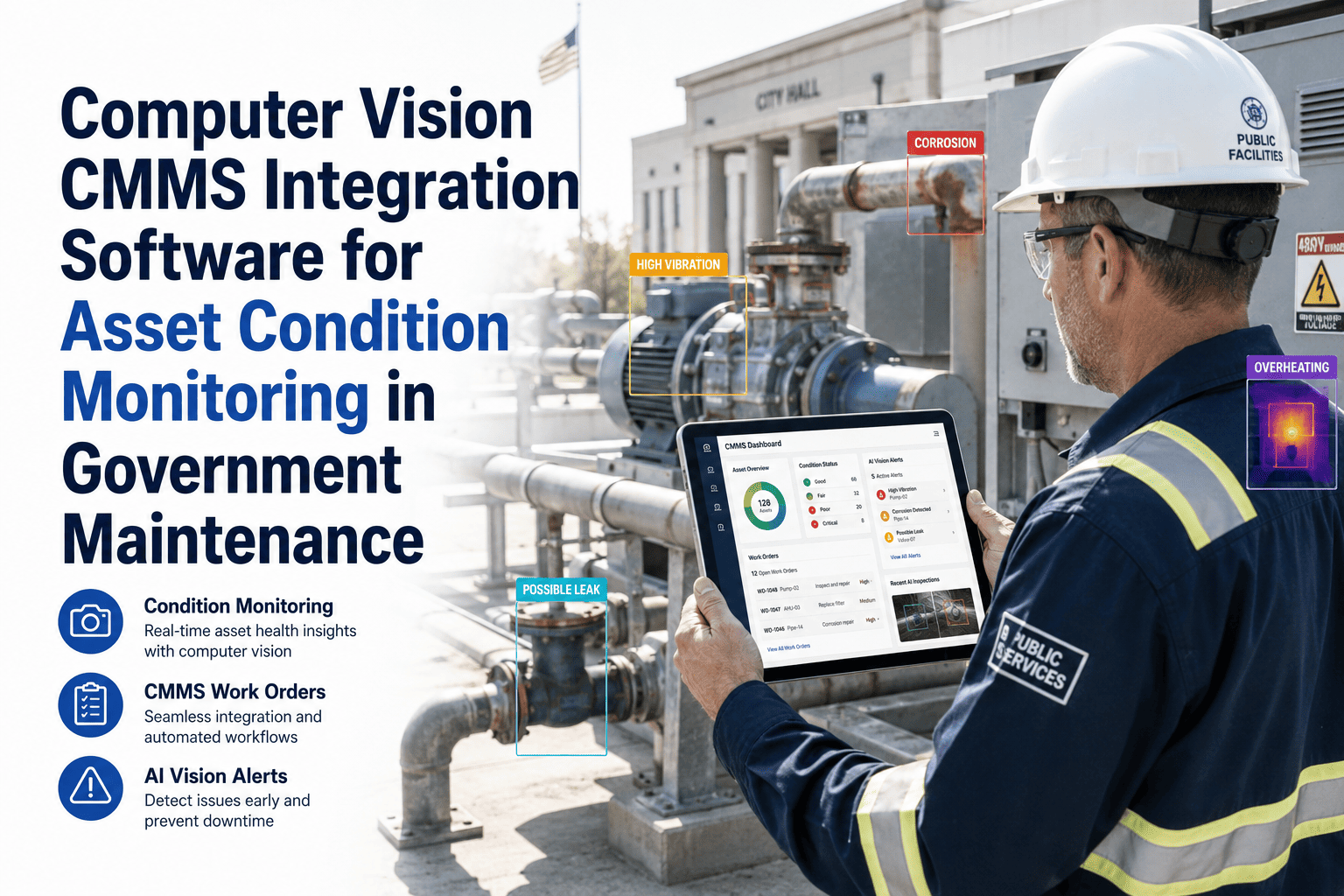
Rotating equipment — pumps, fans, compressors, motors, and turbines — fails with an audible signature long before the failure becomes visible or critical. Quadruped robots equipped with acoustic monitoring sensors can capture that signature on every scheduled patrol, identifying bearing wear, cavitation, imbalance, and lubrication loss at the earliest detectable stage. For government maintenance teams managing water treatment plants, ventilation systems, and utility pump stations, this early detection translates directly to avoided emergency replacements and maintained service continuity. Oxmaint's acoustic monitoring integration converts robot-captured sound signatures into asset condition scores, PM adjustments, and maintenance work orders without any manual interpretation step. Book a demo to see how acoustic findings from your rotating equipment fleet route into Oxmaint's predictive maintenance system, or sign up free to configure your first acoustic threshold rule.
Failure Signatures Acoustic Monitoring Detects First
Bearing Wear
High-frequency ticking or grinding pattern — detectable 4–8 weeks before seizure
Cavitation in Pumps
Irregular popping or rattling at mid-frequency — signal of fluid flow disruption
Rotor Imbalance
Cyclical vibration at rotational frequency — consistent interval pattern distinct from background
Lubrication Loss
Rising friction noise floor across gear mesh frequencies — early indicator before thermal rise
Acoustic Condition Tracking: How Oxmaint Manages the Data
Robot captures acoustic reading per equipment point
Reading scored against baseline and anomaly library
Asset condition score updated in Oxmaint registry
WO or PM adjustment triggered based on score delta
Trend line built across patrol cycles for each asset
Acoustic Monitoring Means Nothing Without the Maintenance System Behind It
Oxmaint gives every acoustic reading a home — asset record updated, PM adjusted, work order created, trend line extended. All automatic, all auditable.
Acoustic Monitoring ROI Data for Government Rotating Equipment
| Equipment Type |
Avg Failure Cost (Emergency) |
Acoustic Detection Lead Time |
Planned Repair Cost Reduction |
| Centrifugal Pump (Water Utility) |
$12,000–$35,000 |
3–8 weeks |
55–70% |
| HVAC Fan Motor |
$4,000–$18,000 |
2–6 weeks |
60–75% |
| Compressor (Treatment Plant) |
$25,000–$80,000 |
4–10 weeks |
50–65% |
| Gearbox (Pump Station) |
$30,000–$120,000 |
6–12 weeks |
65–80% |
Acoustic monitoring is the most underutilized predictive maintenance tool in government facilities. Most teams still rely on oil sampling or manual listening with a screwdriver — approaches that find problems days before failure, not weeks. Quadruped robots change that equation completely, but only if the readings connect to something that actually schedules the repair. A score sitting in a robot app is not a maintenance program.
— Reliability Engineer, Municipal Water and Wastewater Authority, 20 years in rotating equipment maintenance
Frequently Asked Questions
How does Oxmaint establish the normal acoustic baseline for a new piece of rotating equipment?
During onboarding, the platform collects the first three to five robot acoustic readings from each asset operating under normal load conditions and sets this as the baseline range. Subsequent readings are compared against this range, with alerts generated when a reading falls outside the configured tolerance band.
Start free to import your rotating equipment asset list and begin baseline configuration immediately.
Can acoustic monitoring data integrate with existing SCADA alarms for the same equipment?
Yes — Oxmaint can receive both acoustic anomaly data from robot patrols and SCADA alarm events for the same asset, correlating them in a single work order when both indicate the same asset deteriorating at the same time. This combined evidence makes priority decisions clearer and provides a stronger documentation record for post-repair audits.
Book a demo to review the SCADA-acoustic correlation workflow.
How are acoustic readings stored for government asset lifecycle records?
Each reading is stored as an attachment to the asset's condition history in Oxmaint — audio file, frequency analysis snapshot, and condition score — building a longitudinal record across every patrol cycle. This history supports lifecycle cost analysis, replacement timing decisions, and government capital planning with actual degradation data rather than manufacturer-estimated service life alone.
What happens when acoustic severity scores exceed a critical threshold during an off-hours robot patrol?
Oxmaint generates an emergency work order immediately and routes it to the on-call technician or supervisor based on the escalation rules configured for that asset class and time window. The full acoustic evidence, asset record, and recommended intervention are all included in the notification so the responding technician has context before arriving on site.
Talk to our team about configuring escalation rules for off-hours critical findings.
Your Rotating Equipment Is Telling You Something — Make Sure the CMMS Hears It
Oxmaint connects acoustic monitoring data from every robot patrol to the maintenance actions that prevent failures before they become emergencies.