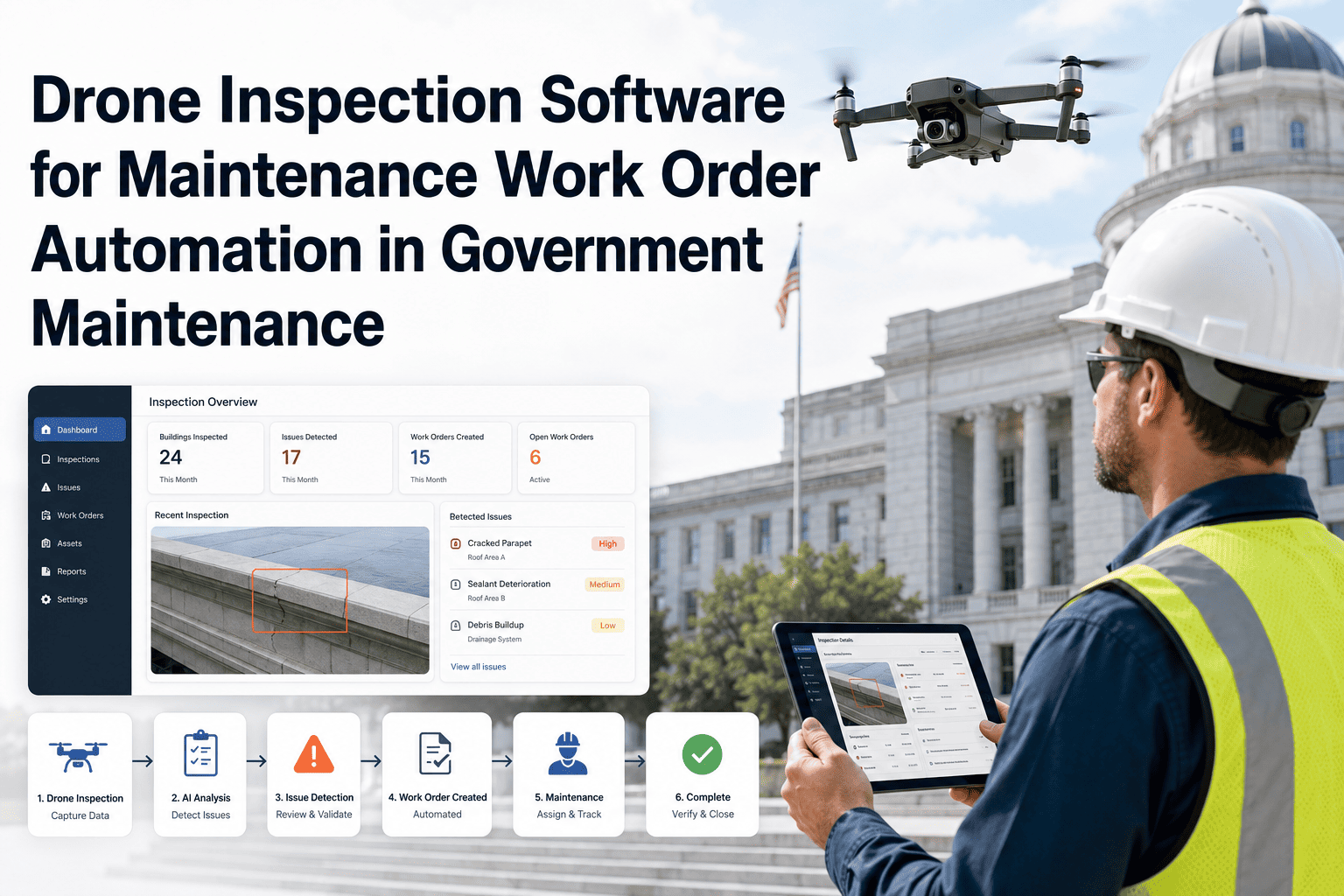
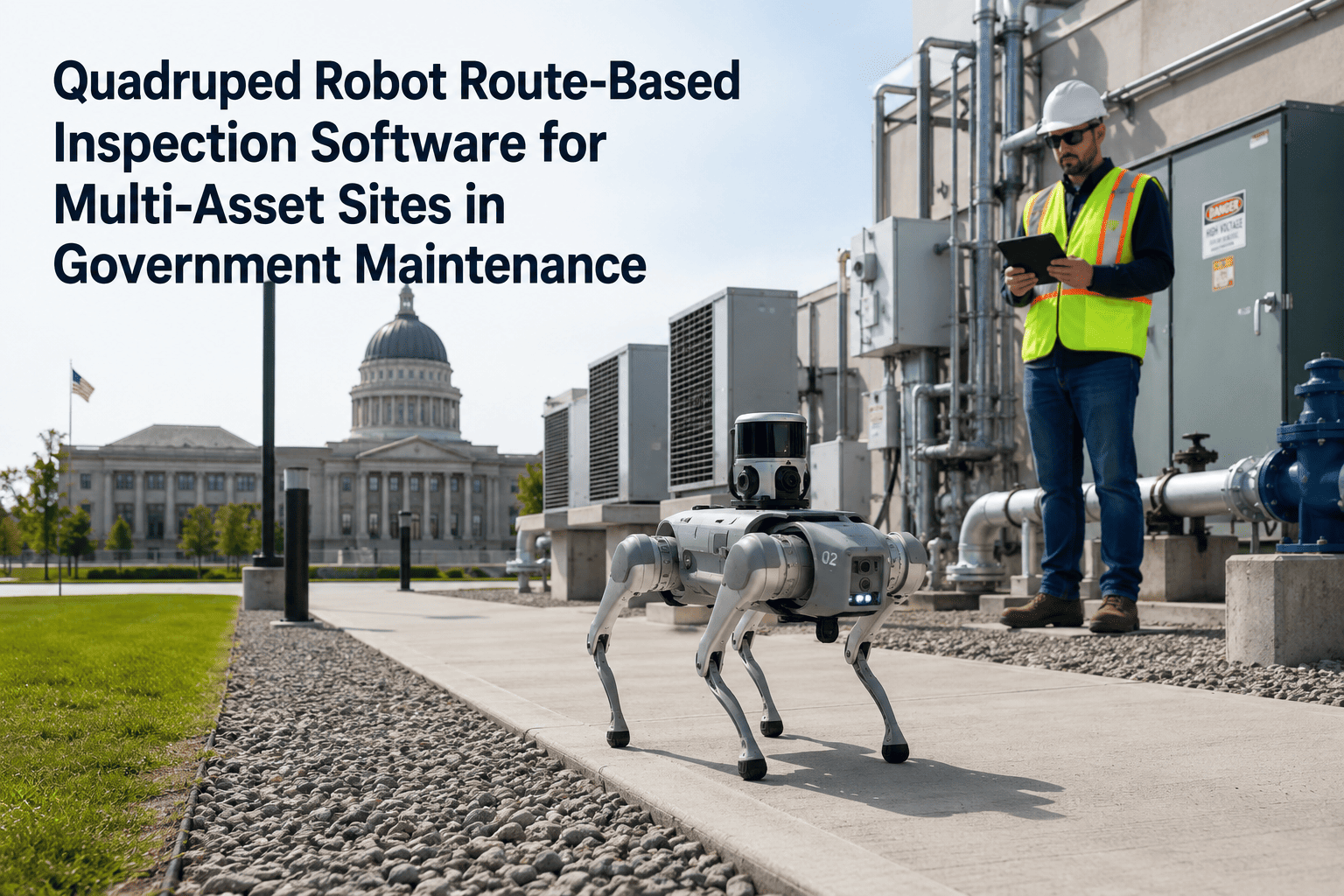
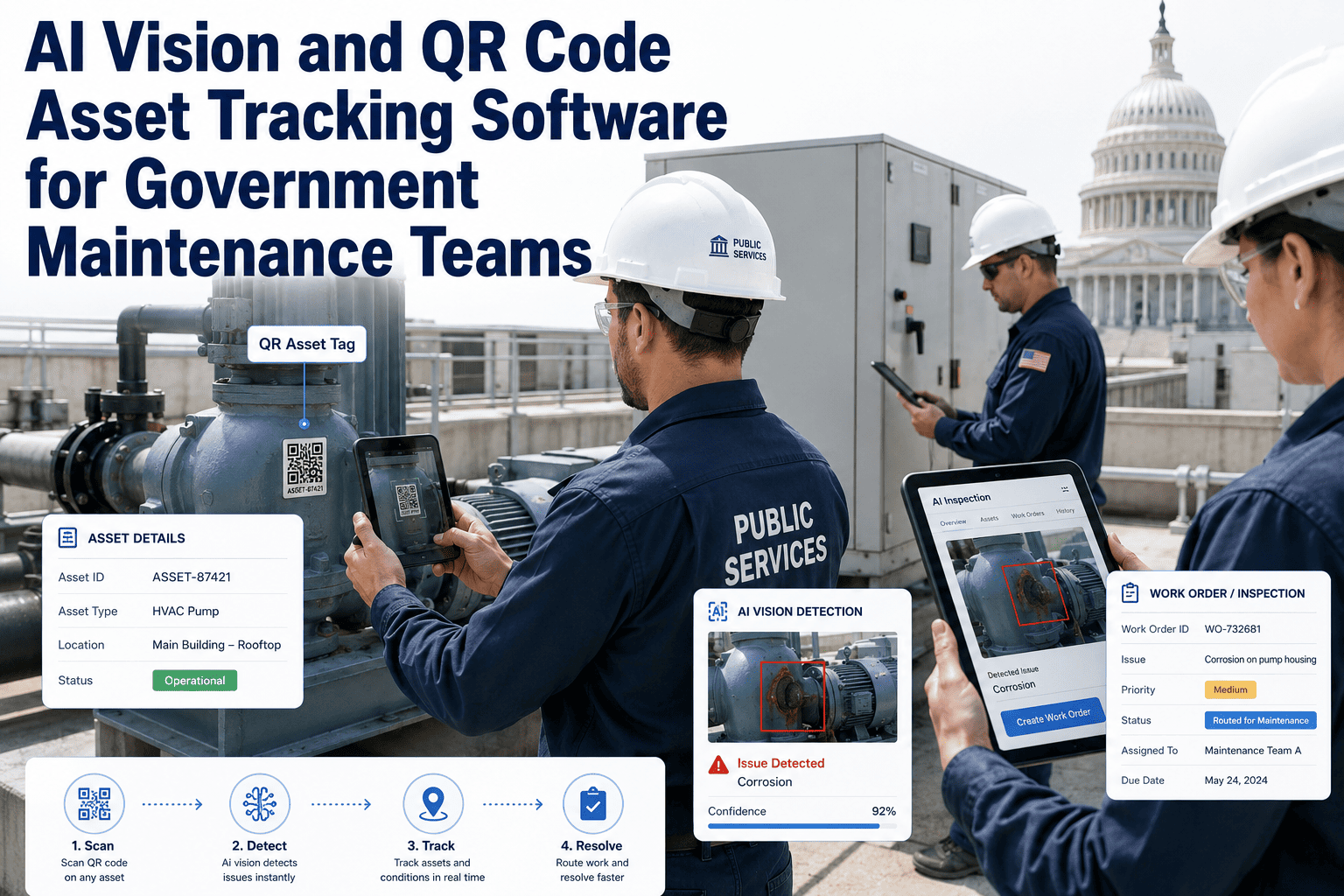
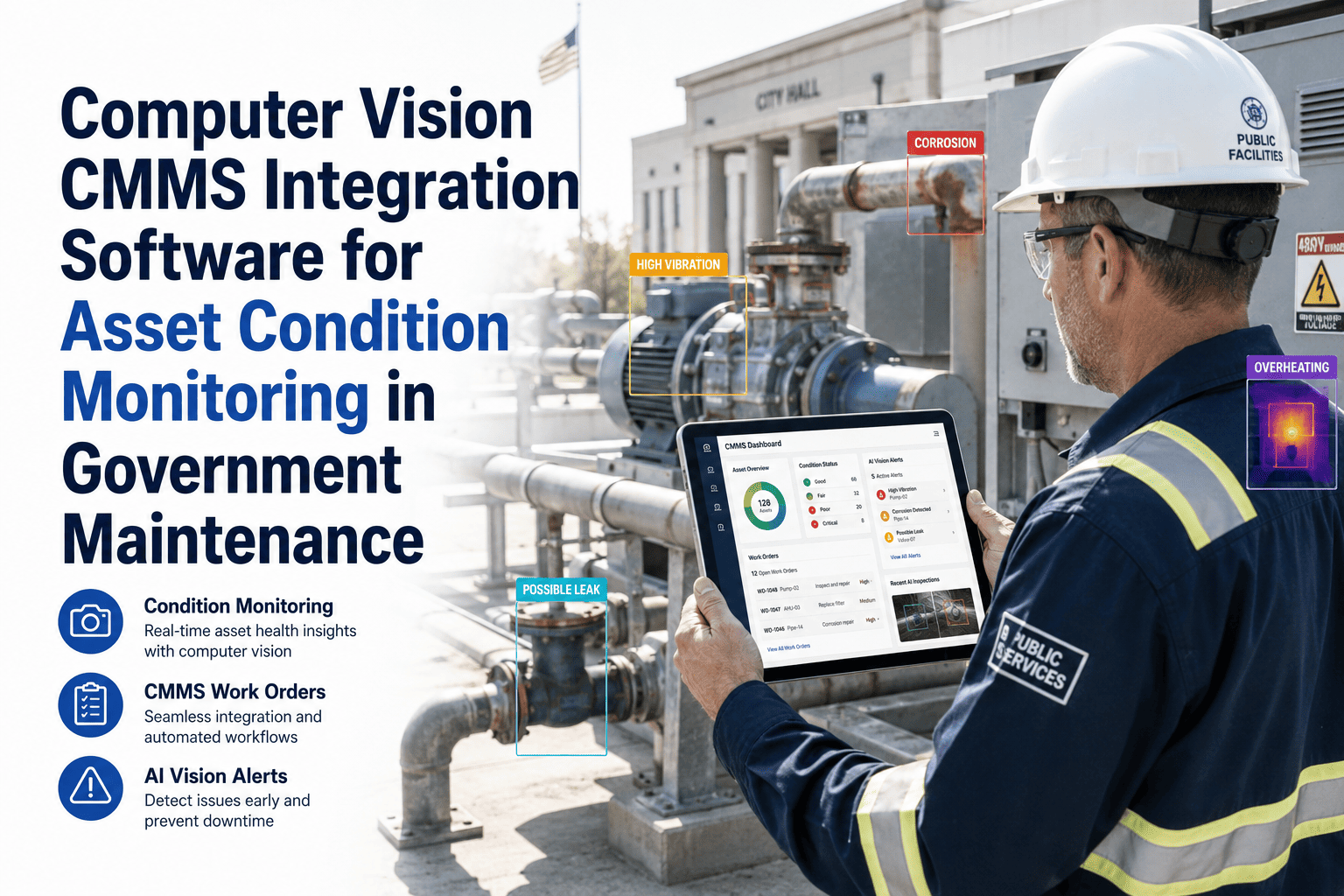
Government maintenance teams inherit an almost impossible portfolio: water treatment plants, public buildings, bridges, parks, and fleet yards, most of it built decades ago and inspected on whatever schedule a shrinking crew can manage. A four-legged robot that walks the same stairs, ramps, and uneven yards a human inspector would, carrying thermal and LiDAR sensors that never call in sick, changes what's actually possible to inspect on a fixed budget. The harder problem isn't getting the robot to walk the route, it's turning what it sees into a condition score, an audit trail, and a work order someone actually acts on, which is exactly the gap closed at oxmaint.
Why Government Facilities Are Turning To Four-Legged Inspectors
$1T+
National deferred maintenance backlog across government facilities, growing roughly $100 billion a year
52%
Of public works departments still operate without a structured maintenance management system
38%
Of federal facility maintenance spending is reactive rather than preventive
70%
Of preventive work gets deferred under a complaint-driven, worst-first model
What A Quadruped Robot Actually Sees
A modern inspection quadruped is a sensor platform with legs. Each sensor answers a different question about your asset's condition, and together they replace most of what a human inspector would carry up a ladder.
Thermal Imaging
Spots HVAC leaks, overheating electrical panels, and insulation gaps that are invisible to the naked eye until they become a service call.
LiDAR 3D Mapping
Builds a digital twin of the facility accurate enough to compare scan against scan and quantify deterioration over time.
Visual & PTZ Camera
Zooms in on gauges, switchgear, and structural details from a safe distance, with full-color imagery for the asset record.
Terrain Traversal
Climbs stairs and steps over curbs and debris, crossing gravel and uneven yards that stop a wheeled robot in its tracks.
Stop choosing which buildings get inspected this quarter
A fixed inspection budget shouldn't mean some assets only get checked when they fail. Oxmaint turns every robot patrol into a logged, comparable condition record.
From Robot Walk To Work Order
1
Patrol Completed
Robot walks an autonomous or pre-programmed route on a fixed schedule
2
Sensor Data Captured
Thermal, visual, and LiDAR readings tagged to the exact asset location
3
Condition Score Assigned
Reading compared automatically against the asset's baseline scan
4
Logged In Oxmaint
Score, image, and location attached to the asset's permanent history
5
Work Order Generated
Created automatically the moment a score crosses into repair territory
Condition Score, In Plain Numbers
1–2
Monitor
Asset matches expected parameters. Digital twin updated with current imagery. No maintenance action required.
3
Schedule Repair
Deterioration detected against the baseline scan. Plan corrective work within the next quarter.
4–5
Emergency Action
Immediate risk to safety or service. Work order dispatched the same day the reading is logged.
Manual Walkthrough vs. Quadruped + Oxmaint
Turn last quarter's deferred maintenance guesswork into a number
A short walkthrough shows how robot-captured condition scores roll up into the backlog report your finance committee actually wants to see.
The Robot Needs Maintenance Too
An inspection robot is itself an asset with a maintenance schedule. Skipping it just moves the unreliability from your buildings to the machine inspecting them.
Battery Health
Run a capacity check monthly and plan replacement once capacity drops below roughly 80% of original specification.
Leg Actuators & Joints
Inspect for wear and verify gait parameters. A stiff joint shows up as drift in the scan path before it shows up as a fall.
Sensor Calibration
Validate thermal camera accuracy and LiDAR distance readings against known references on a fixed interval.
Navigation & Mapping
Confirm localization accuracy hasn't drifted, especially after any change to the facility layout.
Frequently Asked Questions
Which quadruped robots does Oxmaint actually work with?
Oxmaint integrates with any robot platform that pushes structured sensor data over a REST API, including the major commercial quadruped and wheeled inspection platforms used in facility and infrastructure settings. As long as the robot reports asset IDs, sensor types, and measurements, the integration works the same way regardless of manufacturer. See the integration approach at
oxmaint.
Do we need a dedicated robot operator, or can existing staff handle this?
Most agencies start with one trained staff member running pre-programmed patrol routes, since current quadruped platforms are built for high-level navigation rather than manual piloting. As routes become routine, the same staff who manage existing inspection rounds typically take over scheduling and review without needing a robotics background.
How does this help with GASB 34 or grant-funded condition reporting?
GASB 34's modified approach asks agencies to demonstrate that infrastructure is maintained at or above an established condition level, which requires documented, repeatable condition assessments. Robot-captured scans logged in Oxmaint create exactly that record, with timestamped scores and images exportable in the format finance and audit teams need.
What happens to the data if the robot just walks past something normal?
Every patrol generates a record either way. A normal reading updates the asset's digital twin and condition history with no action required, so you still have a documented baseline for the next scan even when nothing was wrong this time.
Book a walkthrough to see how the scan-over-scan comparison view works.
Can a small public works department afford this, or is it built for big agencies?
The software scales to a single building or an entire public works portfolio, and a small department can start with one robot covering the buildings or systems carrying the biggest risk. The software cost is tied to the number of assets and robots you're tracking, not the size of the agency running it.
Give every public asset a condition record, not a guess
Connect your robot fleet to Oxmaint and turn every patrol into a logged condition score, a defensible audit trail, and a work order that writes itself.