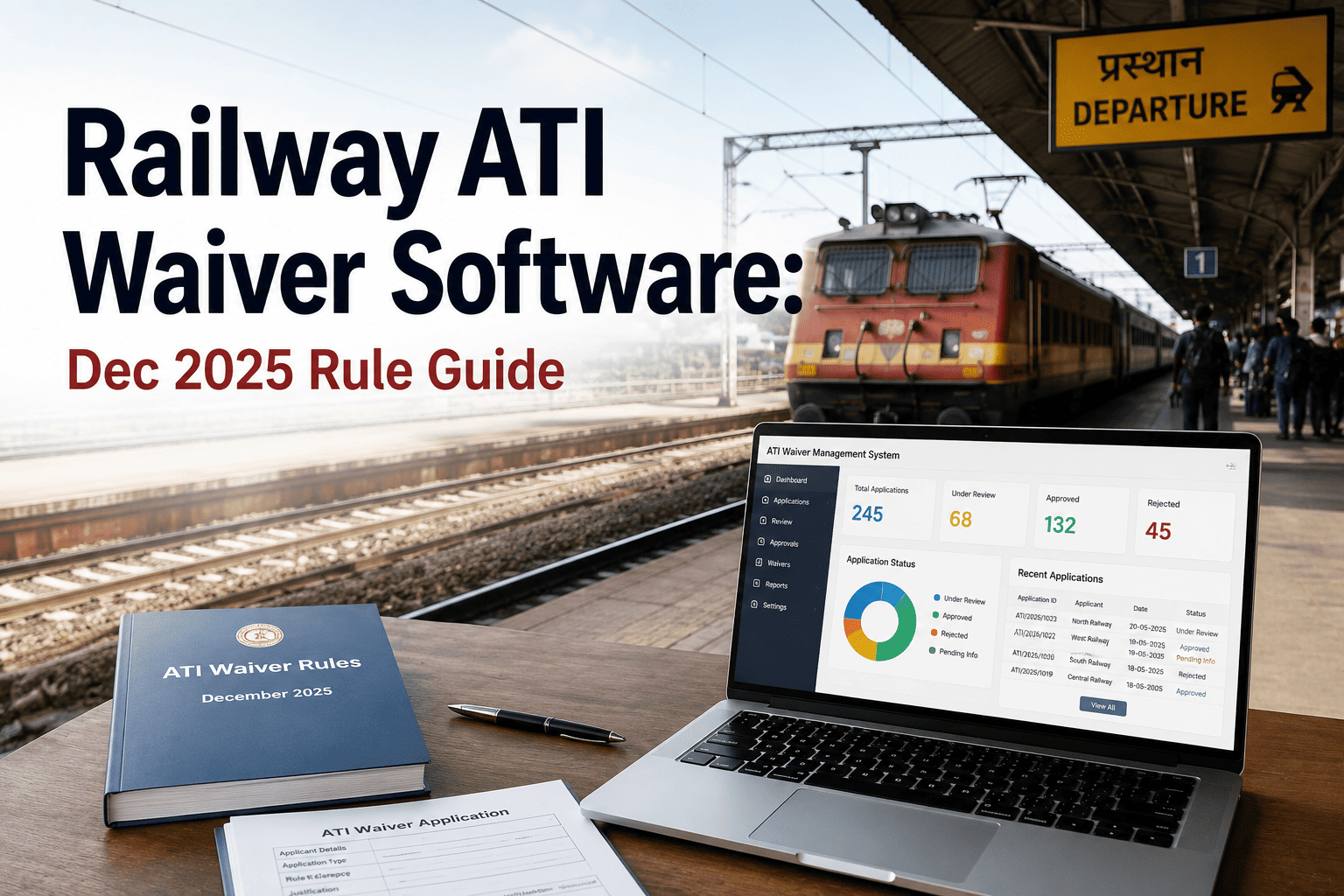
Railway reliability and compliance teams are entering 2026 with a new federal reality: the FRA's five-year Automated Track Inspection waiver, approved on December 5, 2025, changes how often certain track must be walked, how ATI data gets verified, and what records regulators expect on demand. CSX has told the FRA it plans to activate the waiver on parts of its network beginning July 1, 2026, and other Class I carriers are expected to follow with their own phased rollouts. For reliability engineers and FRA compliance managers, this is not a policy footnote — it is a new inspection rulebook that has to be tracked, documented, and defended segment by segment. Missing a monthly performance threshold or a verification record under this waiver does not just risk a compliance letter, it risks losing the waiver on that stretch of track. This page breaks down what the December 2025 waiver actually requires, how the CSX July 2026 rollout is expected to unfold, and how CMMS-based tracking through Oxmaint keeps that compliance audit-ready.
FRA Compliance · 2026
Railway ATI Waiver Software
Track the FRA's five-year Automated Track Inspection waiver, the CSX July 2026 rollout, and every monthly performance threshold in one CMMS built for rail compliance teams.
5 Years
Length of the temporary waiver the FRA's Railroad Safety Board approved on December 5, 2025, under Docket FRA-2025-0059
July 1, 2026
Date CSX plans to begin applying the waiver on portions of its network, with other Class I carriers expected to follow
Twice Weekly
Current visual inspection frequency under 49 CFR 213.233(c) that qualifying ATI-covered segments may reduce
90%
Reduction in track geometry defects the Association of American Railroads reports when ATI runs alongside visual inspection
The December 2025 Ruling
What the FRA's ATI Waiver Actually Changes
The waiver approved on December 5, 2025 does not hand track inspection over to machines. It gives railroads a narrow, data-gated path to reduce one specific type of visual inspection on segments where automated track inspection technology is running and proving itself. Compliance teams need to know exactly which rule changed, what has to be reported, and what stays exactly the same.
01
Reduced Visual Frequency, Not Removed
49 CFR 213.233(c) currently requires railroads to visually inspect main tracks carrying more than 10 million gross tons of annual traffic, or any passenger service, twice a week. On segments where ATI coverage is documented and performance thresholds are met, the waiver allows that frequency to be reduced. Track outside ATI coverage keeps the standard schedule with no change at all.
02
New Data-Sharing Requirements
Every railroad using the waiver has to map its ATI data to specific track segments and share it with the FRA. This lets the agency compare defect detection rates and inspection outcomes against segments still running the standard visual schedule, and decide whether the waiver should continue past its five-year window.
03
Human Verification Still Required
The waiver keeps qualified track inspectors in the loop. Defects flagged by an ATI run still have to be verified and closed out by a person before a segment is considered clear, and the FRA has said operations under the waiver will closely resemble earlier ATI test programs run by freight and commuter railroads.
Get Ready Before July 2026
Bring Your ATI Waiver Compliance Into One System Before CSX's Rollout Date
CSX has notified the FRA it plans to apply the waiver on parts of its network starting July 1, 2026, and other Class I railroads are watching closely. Teams that wait until the rollout date to organize segment maps, verification logs, and reporting data will be building the process under pressure. Oxmaint gives compliance managers one system to track ATI coverage, verification work orders, and monthly performance data before that date arrives.
Rule Comparison
Inspection Requirements Before and After the ATI Waiver
The table below lines up what 49 CFR 213.233(c) required before December 2025 against what changes for a railroad operating under the FRA's ATI waiver. Track outside ATI coverage is not affected by any of these changes.
Who Feels This First
Who Needs to Track This Inside a CMMS
The waiver reads like a federal policy update, but for the teams responsible for keeping a railroad compliant, it is a new set of records, deadlines, and verification steps that have to live somewhere. Four groups feel this first.
Class I Railroads
Compliance and Reliability Teams
Large freight railroads need to map which segments qualify for reduced visual frequency, track the ATI runs covering each one, and be ready to show the FRA a clean audit trail if a docket reviewer asks for it.
Transit
Passenger and Commuter Agencies
Agencies running mixed passenger and freight corridors have to keep the standard twice-weekly schedule wherever ATI coverage does not reach, while documenting the segments where it does.
Field
Track Inspectors and Supervisors
Every ATI-flagged defect needs a named inspector, a verification timestamp, and a closeout record. That is a work order, not a spreadsheet note, once regulators start asking for it.
Regulatory
Safety and Regulatory Affairs Staff
Someone has to watch the monthly performance thresholds and know before the FRA does if a segment is drifting toward losing its waiver eligibility.
One System, Every Segment
Turn ATI Waiver Requirements Into Trackable Work Orders
Segment maps, verification logs, and monthly threshold reports do not need to live in four different files. Oxmaint lets compliance teams tag assets to their FRA waiver status, route ATI-flagged defects into verification work orders, and pull the reporting data the docket requires, from the same place inspectors already use.
Implementation Path
Getting a Track Segment Ready for Waiver Compliance
1
Map ATI Coverage — Weeks 1–3
Identify which main track segments carry ATI runs today, cross-reference them against the 10-million-gross-ton and passenger-traffic thresholds in 213.233(c), and flag which ones are candidates for reduced visual frequency.
2
Connect ATI Data Feeds — Weeks 4–6
Bring geometry and defect data from ATI vehicles into a system that tags each alert to a specific segment, asset, and inspection window, instead of a standalone report that never reaches the CMMS.
3
Build the Verification Workflow — Weeks 7–10
Configure a work order type that fires whenever an ATI run flags a defect, assigns it to a qualified inspector, and requires a signed closeout before the segment is marked clear.
4
Report Monthly Performance — Ongoing
Set up a recurring export that matches what the FRA expects under Docket FRA-2025-0059, so a compliance manager can see a threshold slipping weeks before a reviewer does.
Early Indicators
What the Data Says So Far
Public FRA and AAR statements give an early read on what expanded ATI is producing. These are industry-reported figures, not a guarantee for every railroad or corridor.
Frequently Asked
Questions Compliance Teams Are Asking About the ATI Waiver
Does the FRA's ATI waiver remove visual track inspections entirely?
No. The waiver only allows a reduction in one type of visual inspection frequency on segments with documented ATI coverage and performance thresholds. Every other FRA inspection requirement stays in place, and flagged defects still need a human inspector to verify and close them. See how a CMMS keeps that verification step organized by
booking a demo.
What is Docket FRA-2025-0059?
It is the docket number for the temporary five-year waiver the FRA's Railroad Safety Board approved on December 5, 2025. It sets the terms railroads must follow to reduce visual inspection frequency, including the data-sharing and monthly performance requirements tied to the waiver.
When does CSX start using the waiver?
CSX has told the FRA it plans to begin applying the waiver on parts of its network on July 1, 2026. Other Class I railroads are expected to follow with their own phased rollouts once their data and verification processes are ready. Teams preparing for a similar rollout can
sign up free to start mapping segments now.
What happens if a railroad misses a monthly performance threshold?
The waiver ties continued reduced-frequency inspection to meeting predetermined monthly track safety performance thresholds. A railroad that misses a threshold risks losing waiver eligibility on the affected segment, reverting it to the standard twice-weekly visual schedule.
How does a CMMS help with ATI waiver compliance?
A CMMS gives compliance teams one place to tag segments with their waiver status, turn ATI alerts into verification work orders, and generate the reporting data the FRA expects.
Sign up free to see how Oxmaint structures this for rail teams.
Start Before the Next Rollout Date
Keep Your Railway Ready for Every Phase of the ATI Waiver
The five-year window is just getting started, and CSX's July 2026 rollout will not be the last. Compliance teams that build segment tracking, verification workflows, and reporting into a real CMMS now will be ready for whatever phase comes next, instead of scrambling when a new deadline lands.