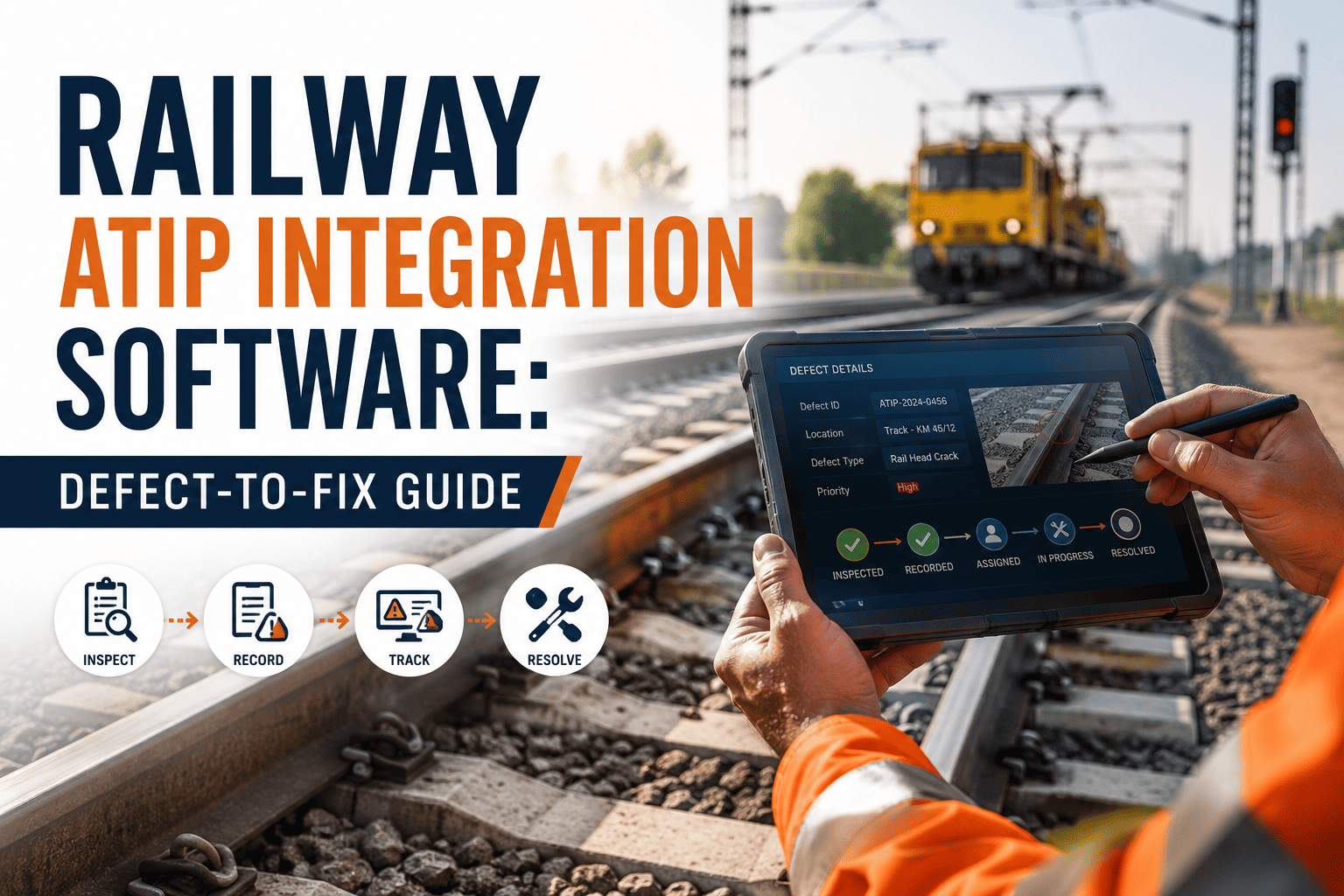
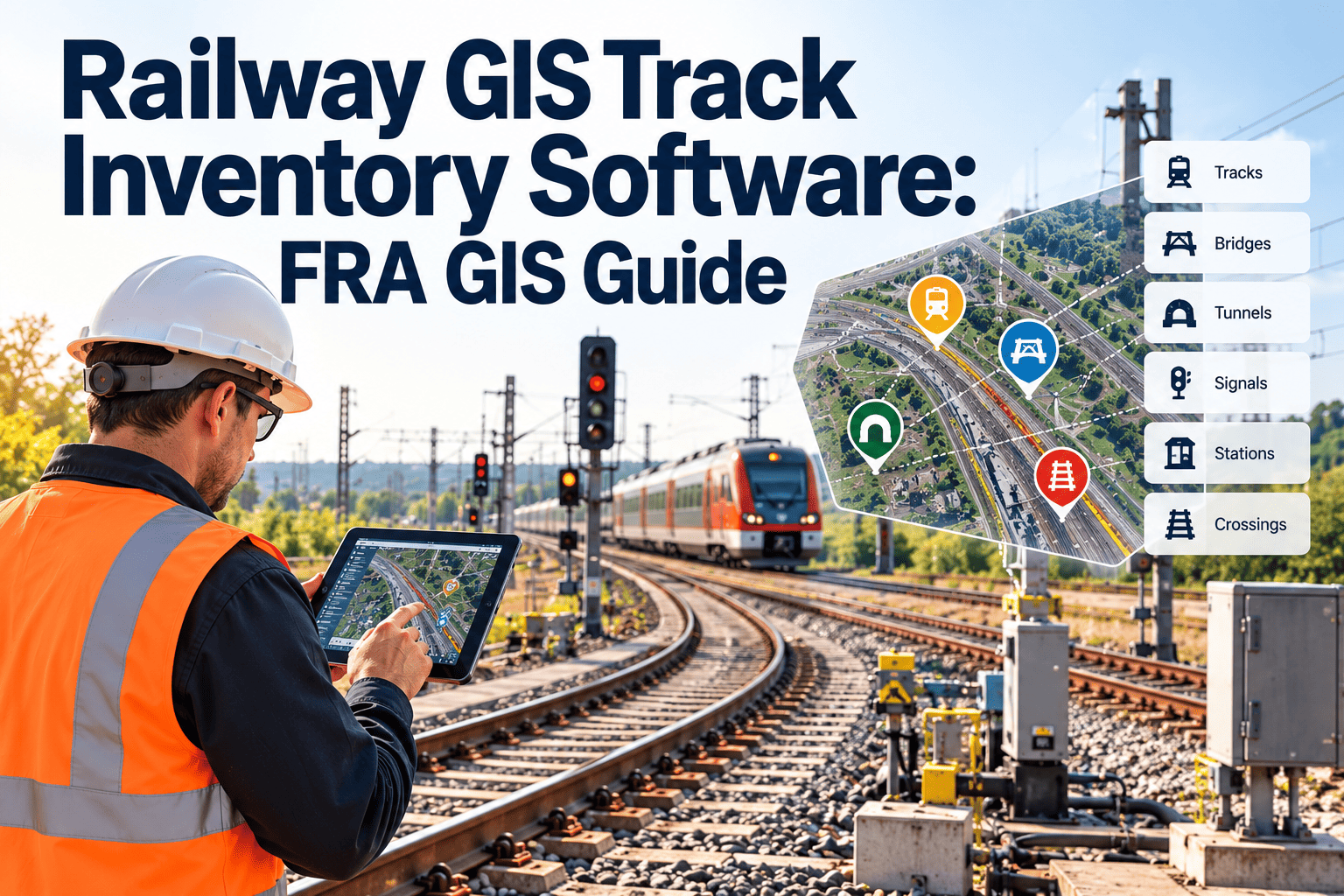
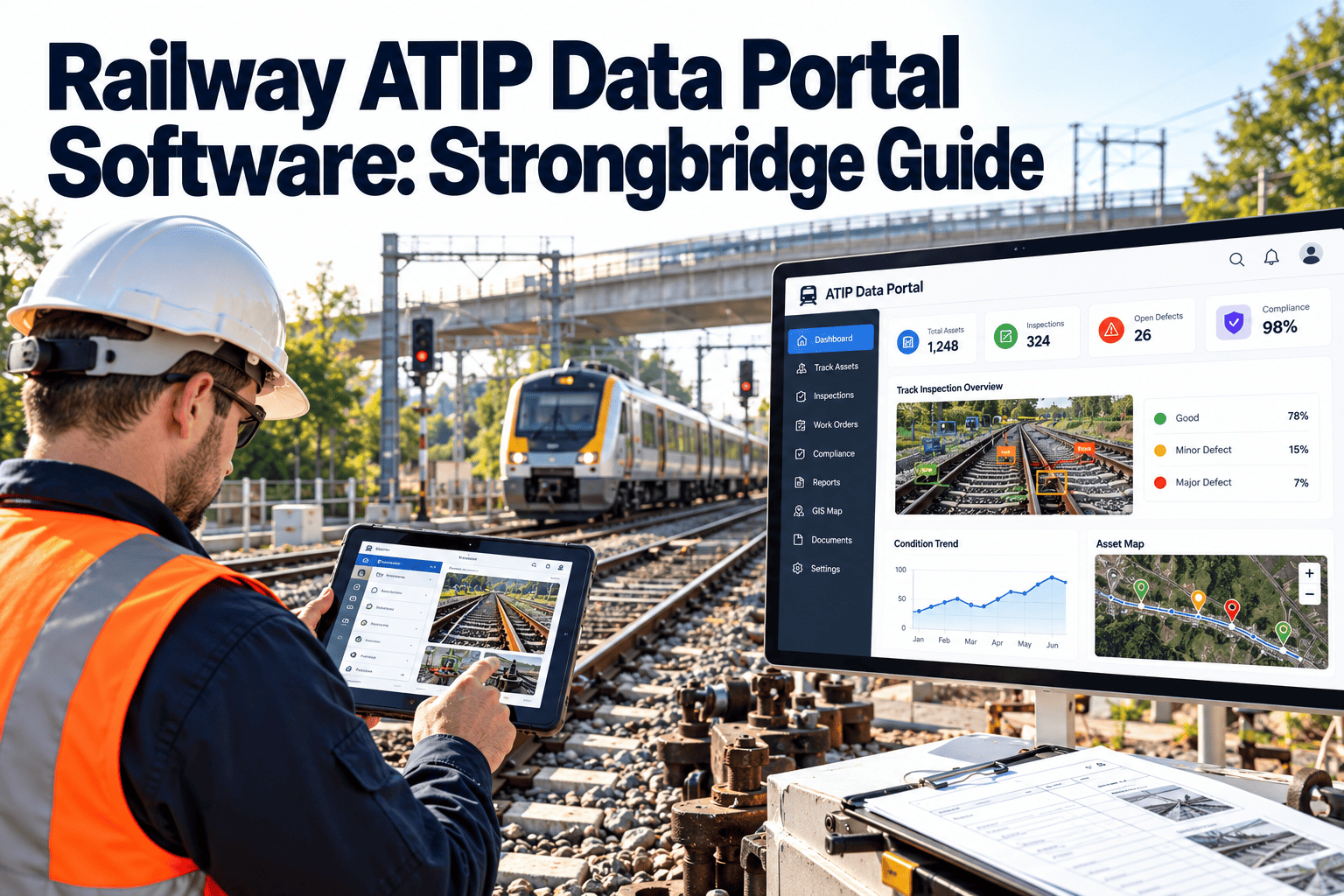
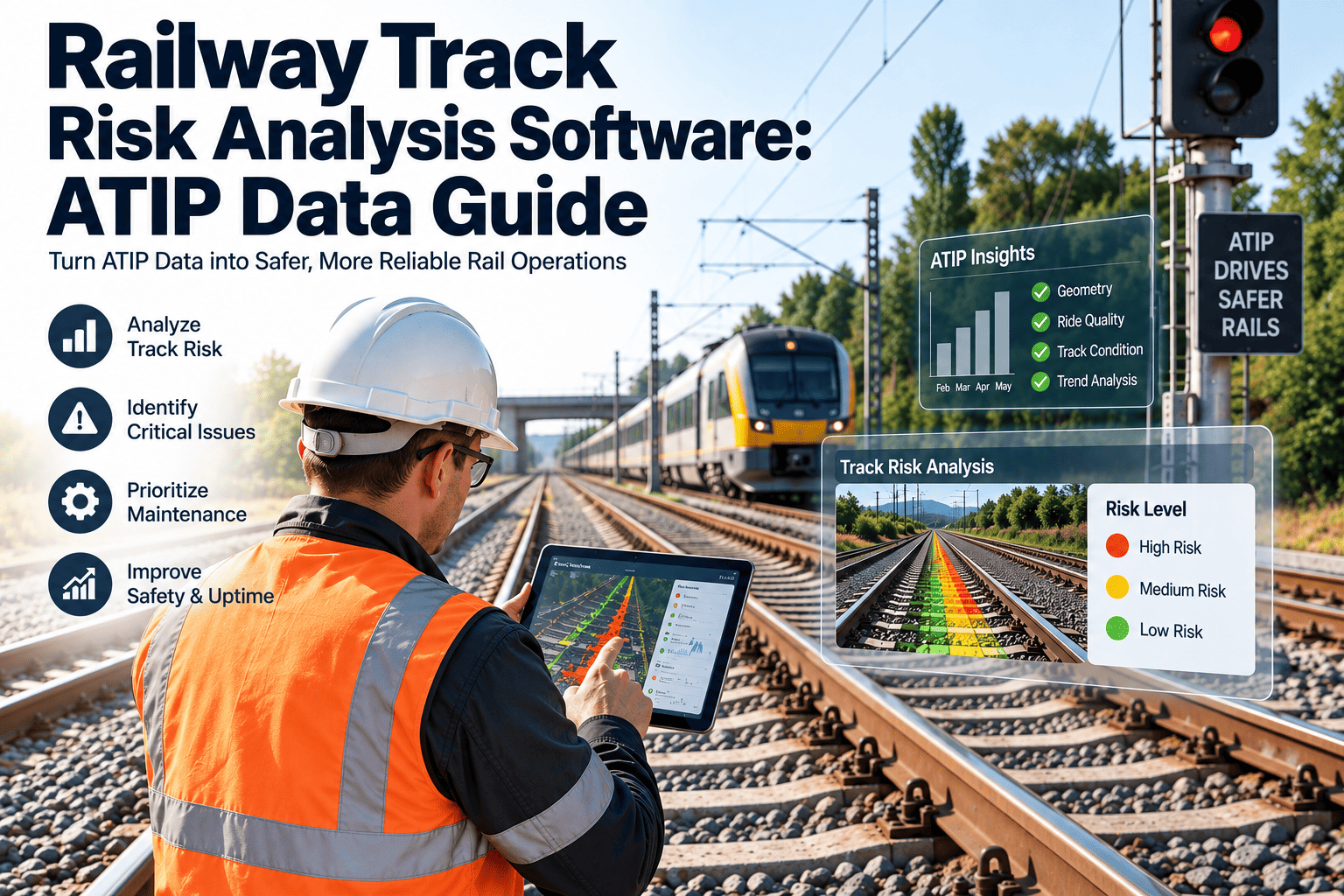
Every time an FRA-contracted geometry car runs your territory, it hands back a list of exceptions — gauge, cross-level, surface, alignment, and warp readings that fall outside the tolerance allowed for your track class. On paper that list looks like a simple to-do. In practice it becomes a spreadsheet nobody owns, an email forwarded between three departments, and a repair that only gets logged once a track inspector stumbles onto the same defect during a walking inspection weeks later. Class I railroads running thousands of directional miles cannot afford that gap between the moment ATIP data lands in an inbox and the moment a gang actually closes the exception. Sign in to OxMaint to see every ATIP exception become a located, tracked, and closed work order automatically.
Railway ATIP Integration · Defect-to-Fix Automation · OxMaint
From Geometry Car Exception to Closed Work Order — Without the Manual Handoff
OxMaint reads ATIP geometry files the moment they land, classifies every gauge, surface, alignment, cross-level, and warp exception against your track class, and opens a located work order before your track department has finished its morning coffee.
Why an ATIP Exception List Cannot Sit in an Inbox
A geometry car does not slow down for your workload. It measures every foot of track at speed, and the exception file it leaves behind is only useful for as long as the condition underneath it stays the same. The four numbers below are what actually happens between an exception being detected and a railroad answering for it — with or without software watching the clock.
3–14
days a geometry exception commonly sits unassigned when it is routed through email and spreadsheets instead of a work order system
61%
of track defect complaints traced back to an exception that was known and recorded, but never converted into a tracked repair task
96%
exception-to-work-order compliance achieved by roads that auto-generate work orders directly from the geometry file, milepost included
Minutes
not days — the time an integrated CMMS takes to turn a raw geometry car exception into a dispatched, located repair task
Anatomy of a Track Geometry Exception — What ATIP Actually Measures
ATIP cars do not report a single defect score. Every run produces five distinct geometry measurements, each with its own tolerance table tied to your FRA track class, and each capable of triggering a different repair response. Understanding what each parameter means is the first step to routing it correctly — the second step is making sure it never has to be understood by a human before a crew is dispatched.
GA
Gauge
The distance between the inside faces of the two rails. A widening gauge exception is one of the fastest-moving defect types — it can progress from a minor reading to a derailment-risk condition between successive geometry car runs, which is why OxMaint flags gauge exceptions for priority triage first.
XL
Cross-Level
The difference in elevation between the two rails at any single point. Cross-level exceptions cause rocking and lateral instability at speed, and are graded against tighter tolerances as authorized track speed increases — a reading acceptable at Class 2 speed can be an exception at Class 4.
SU
Surface
Vertical deviation of the rail running surface over a defined distance, sometimes called profile. Surface exceptions are the most common finding on aging ballast sections and typically map to tamping and ballast work rather than rail replacement.
AL
Alignment
Horizontal deviation of the rail from a straight or curved reference line. Alignment exceptions on tangent track and curves are evaluated differently, and curve alignment findings are frequently tied to underlying superelevation or subgrade issues rather than the rail itself.
WP
Warp
The rate of change of cross-level over a set distance — effectively how quickly the track twists. Warp exceptions are closely linked to rock-and-roll derailment risk on freight equipment and are treated as high-priority regardless of the track class involved.
MP
Milepost Location
Every one of the five measurements above is worthless to a maintenance gang without an exact, GPS-correlated milepost and track reference. OxMaint imports location data directly from the geometry file so no exception is ever routed as a vague "somewhere on the subdivision" task.
7
Average days between geometry car passes on a heavy freight corridor. Every exception discovered on one run has to be resolved, verified, and documented before the next run — or it becomes a repeat finding, a compliance flag, and in the worst case, grounds for an FRA speed restriction. OxMaint's defect-to-fix pipeline is built around that window: import, classify, dispatch, verify, and close, all inside the time before the next car runs.
Sign in to OxMaint to load your last geometry file and see the pipeline run.
The Defect-to-Fix Timeline — What Happens Inside OxMaint
Six stages sit between an ATIP file landing on a server and a track defect being permanently closed. Skipping or manually bridging any one of them is where railroads lose the days that turn a minor exception into a compliance incident.
1
Geometry File Ingest
OxMaint imports the raw ATIP or contractor geometry file directly — gauge, cross-level, surface, alignment, and warp readings, with milepost and track reference attached to every line.
2
Track Class Matching
Every reading is checked against the tolerance table for the actual authorized speed and track class of that segment, not a blanket default — the same measurement can be compliant on one subdivision and an exception on another.
3
Severity Classification
Exceptions are graded into priority tiers based on how far the reading exceeds tolerance and how fast that class of defect typically progresses, so gauge and warp findings never wait behind a cosmetic surface exception.
4
Work Order Generation
A work order is created automatically with milepost, exception type, measured value, tolerance limit, and required repair window already populated — no dispatcher retyping numbers off a PDF.
5
Field Repair & Verification
Crews receive the task on a mobile device, complete the repair against a digital checklist, and record measurements and photo evidence confirming the track is back within tolerance.
6
Compliance Record Closed
The closed work order, verification data, and timestamp are stored against that milepost permanently, forming the audit trail an FRA reviewer or internal safety audit will eventually ask for.
OxMaint Railway ATIP Integration
Every Exception, Every Milepost, Every Track Class — Handled the Same Way, Every Time
Manual exception routing depends on whoever opened the email that morning. An integrated pipeline does not have a bad day.
Track Class Response Windows — How Fast an Exception Has to Move
Federal Track Safety Standards tie every geometry tolerance to the track class and authorized speed of the segment where it was found. Higher track classes run tighter tolerances and shorter acceptable response windows, which means the same physical defect can be routine on a branch line and urgent on a mainline. The table below is a general reference for how response urgency scales with class — always confirm exact tolerance values and deadlines against your current FRA Track Safety Standards documentation.
| Track Class |
Typical Speed Range |
Tolerance Profile |
Common Exception Types |
Response Urgency |
| Excepted / Class 1 |
Up to 10–15 mph |
Widest tolerance |
Surface, minor gauge |
Scheduled repair |
| Class 2 |
Up to 25–30 mph |
Moderate tolerance |
Surface, alignment, gauge |
Priority repair |
| Class 3 |
Up to 40–60 mph |
Tighter tolerance |
Cross-level, warp, gauge |
Priority repair |
| Class 4 |
Up to 60–80 mph |
Tight tolerance |
Warp, cross-level, alignment |
Immediate response |
| Class 5+ |
80 mph and above |
Tightest tolerance |
All parameters, low margin |
Immediate response |
Exception Priority Levels — How OxMaint Grades What Comes In
Priority 1 — Immediate
Speed Restriction Risk
Gauge widening, severe warp, or cross-level readings near the derailment-risk threshold. OxMaint opens the work order and alerts the responsible track supervisor the moment the file is imported, before the exception is even manually reviewed.
Priority 2 — Scheduled
Progressive Defect
Alignment or surface exceptions that exceed tolerance but are not progressing quickly. These are queued into the next available gang cycle with a firm deadline tied to the next scheduled geometry car pass.
Priority 3 — Monitored
Watch Condition
Readings approaching but not yet past tolerance. OxMaint tracks the trend across successive geometry runs so a slowly worsening condition is caught before it ever becomes a Priority 1 exception.
Four Capabilities That Turn ATIP Data Into Fixed Track
GEO — Geometry Import
Direct Geometry File Import
OxMaint reads ATIP and contractor-run geometry files natively, mapping gauge, cross-level, surface, alignment, and warp readings straight to milepost and track segment — no manual re-entry from a PDF exception report.
What Gets Imported
Exception type, measured value, and tolerance limit
Milepost, track number, and subdivision reference
Run date and prior-exception history at the same location
DOC — Compliance Records
FRA-Ready Documentation
Every exception, work order, repair, and verification is stored against its milepost permanently, giving your track department a defensible audit trail the moment an FRA inspector or internal safety review asks for one.
What Gets Documented
Original exception reading and applicable track class tolerance
Repair action, crew, and completion timestamp
Post-repair verification measurement and photo evidence
MOB — Mobile Crew Tools
Field-Ready Mobile Workflows
Track gangs receive dispatched exceptions on a mobile device with the milepost, defect type, and repair checklist already loaded — closing the loop with a measurement and photo the moment the repair is complete.
Built For The Field
Offline-capable mobile access for low-signal territory
Digital repair checklists matched to exception type
GPS-confirmed location capture at time of repair
TRD — Trend Analysis
Cross-Run Trend Detection
OxMaint compares each new geometry run against the same milepost's prior history, surfacing segments that are trending toward exception before they cross the tolerance line — turning reactive repair into planned maintenance.
What Gets Tracked
Rate of change per parameter at each milepost
Repeat-exception segments across multiple geometry runs
Subdivision-level exception density for capital planning
Manual Exception Handling vs. an Integrated Defect-to-Fix Pipeline
Impact Area · Speed
Exception-to-Work-Order Time
Manually routed exceptions pass through email, a spreadsheet, and a dispatcher before a crew ever sees them — often days after the geometry car has moved on. An integrated pipeline opens the work order the moment the file is imported.
Days reduced to minutes
Impact Area · Compliance
Audit-Ready Documentation
Paper and spreadsheet trails are the first thing an FRA review pulls apart — missing verification measurements or undocumented repairs turn a routine audit into a finding. A closed digital work order cannot go missing.
Complete milepost-level trail
Impact Area · Safety
Repeat Exception Rate
Without cross-run trend tracking, the same segment can generate the same exception on three consecutive geometry car passes before anyone notices the pattern. Trend detection catches it after the first repeat.
Caught before it repeats
Frequently Asked Questions — Railway ATIP Integration
What file formats does OxMaint accept from ATIP or contractor geometry cars?
OxMaint imports standard geometry car exception exports along with common contractor formats used by track inspection vendors. Milepost, track reference, and measurement values map automatically, so your team is not reformatting files before they can be used.
Does OxMaint apply the correct tolerance table for each track class automatically?
Yes — each segment is matched to its authorized track class and speed before any reading is evaluated, so the same gauge measurement is graded correctly whether it was found on a branch line or a Class 4 mainline.
Can OxMaint handle exceptions that require a temporary speed restriction or waiver?
Priority 1 exceptions are flagged the moment they are imported, with the supervisor alerted before manual review, so a speed restriction decision and any associated waiver documentation can be actioned immediately rather than after a delayed review.
How does OxMaint integrate with existing track inspection and CMMS systems?
OxMaint connects with existing inspection sources and asset systems through standard integrations.
Book a demo to walk through your specific geometry car vendor and current CMMS setup.
How quickly can a track department start using OxMaint for ATIP integration?
Most track departments are importing their first geometry file and generating work orders within the first trial session.
Sign in to OxMaint to upload a recent exception file and see it converted into work orders directly.
Stop Letting Geometry Exceptions Wait for a Human to Read the Email
OxMaint turns every ATIP and contractor geometry exception into a located, prioritized, and documented work order the moment the file lands — closing the gap between what the geometry car found and what your gangs actually fixed.