The average government building already generates terabytes of untapped data annually — from HVAC controllers, utility meters, access systems, and BMS platforms — that no one is analyzing. Connecting this existing infrastructure to a smart maintenance platform converts passive data into predictive fault detection, energy optimization, and capital planning evidence. Government agencies doing this in 2026 cut emergency repair ratios by 40–66% and identify $200K–$400K in annual energy waste without purchasing a single new sensor. Schedule a demo to see how Oxmaint's IoT Sensor Hub connects your existing building infrastructure to predictive maintenance workflows.
A smart government building connects IoT sensors, BMS platforms, and SCADA systems to a unified maintenance management platform — enabling automated fault detection, predictive maintenance scheduling, energy optimization, and real-time asset condition monitoring. Oxmaint's IoT Sensor Hub, BMS Integration, Automated Fault Detection, and Energy Analytics modules deliver this to government facilities without replacing existing building infrastructure.
Why Most Government Buildings Are Already Smart — They Just Don't Know It
The majority of government buildings constructed after 2000 already have the sensor infrastructure to support predictive maintenance. The gap is not hardware — it is connectivity. HVAC controllers, utility meters, and BMS systems are generating the data. No platform is capturing, analyzing, or acting on it. Book a demo to see what data your existing building infrastructure is already generating.
Supply and return air temps, coil pressures, and filter differential pressure are logged by every modern building automation system — but viewed only when someone opens the BMS console to diagnose an already-failed component.
Smart meters record consumption in 15-minute intervals — enough resolution to identify HVAC systems running on weekend schedules, lighting left on in unoccupied wings, and equipment drawing abnormal load. The data sits in an unreachable utility portal.
Water and wastewater pump stations transmit flow rate, motor current, and vibration to SCADA — but without a CMMS connection, anomalies generate alarms rather than work orders, and nothing is documented for capital planning.
Badge reader logs reveal actual occupancy patterns across every zone in a facility — data that should drive HVAC scheduling, lighting, and security decisions but is captured only for access control purposes.
Connect Your Existing Building Infrastructure to Predictive Maintenance
Oxmaint's IoT Sensor Hub connects to your BMS, SCADA, utility meters, and sensor networks — no new hardware required to start generating predictive maintenance value from data you already own.
IoT Use Cases by Government Building System
Each building system generates a different data signature — and each requires a different analytical model to extract predictive value. Here is what Oxmaint's IoT integration delivers per system category.
Supply/return temp differentials, coil pressure, filter DP, and fan speed modeled against failure histories — predicting compressor failure 45–60 days out. Energy setback optimization reduces consumption 20–25%.
Vibration, motor current, and flow rate trends identify bearing degradation 30–90 days before failure. Avoided unplanned pump failure: $45K–$180K per event including emergency contractor and overtime costs.
Load monitoring and thermal imaging data detect insulation degradation and loose connections before arc flash or transformer failure — flagging panels approaching critical thresholds weeks before a scheduled inspection would catch them.
Moisture sensors and thermal imaging data correlated with precipitation events identify active membrane failures before interior damage occurs. Early detection saves $180K–$600K per roof replacement cycle.
Badge reader and occupancy sensor data drives HVAC scheduling — automatically adjusting zone temperatures based on actual occupancy rather than calendar schedules, eliminating conditioning of unoccupied spaces during nights, weekends, and holidays.
15-minute interval energy data analyzed against occupancy, weather, and equipment schedules — identifying waste sources, demand response opportunities, and equipment operating inefficiently outside normal performance bands.
What Oxmaint Delivers for Smart Government Building Programs
Oxmaint's IoT Sensor Hub connects to BMS, SCADA, utility meters, and sensor networks via OPC-UA, REST API, and MQTT — compatible with OSIsoft PI, Ignition, Wonderware, and GE iFIX. All connected data streams into the asset registry without replacing existing building controls infrastructure. Most agencies connect their first data source within 48 hours of configuration. Book a demo to confirm compatibility with your BMS platform.
Configurable threshold rules on every connected sensor trigger automated work orders when readings deviate from baseline — pre-populated with asset ID, sensor reading, anomaly type, and technician assignment. Every fault-triggered work order is timestamped, GPS-located, and linked to the originating sensor event for full audit documentation. No dispatcher required between detection and dispatch.
Oxmaint's Energy Analytics module ingests utility meter data, BMS setpoints, and occupancy readings — applying pattern analysis to identify HVAC setback opportunities, lighting inefficiencies, and demand peak avoidance windows. Recommendations generate actionable work orders to implement schedule changes, not just reports to ignore. Typical 20-building municipal portfolio identifies $200K–$400K in annual waste within 90 days. Schedule a demo to see energy analytics configured for your building portfolio.
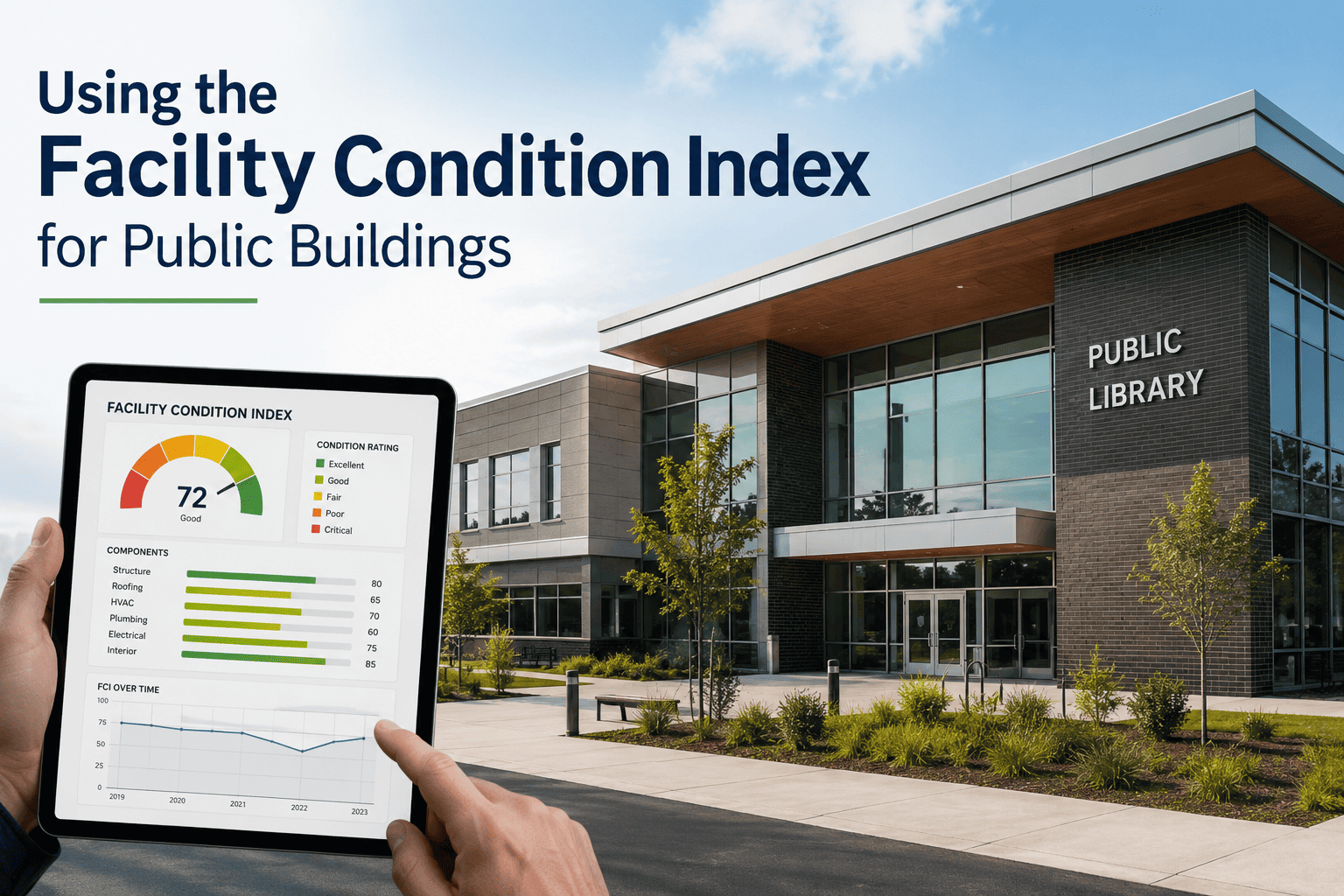
Sensor readings feed directly into Oxmaint's FCI scoring engine — updating asset condition scores continuously rather than at scheduled inspection intervals. A pump showing progressive vibration increase over 60 days sees its FCI score deteriorate in real time, automatically triggering a CIP planning entry before failure occurs. Capital planning stays current without additional engineering assessment cycles.
Smart Building Deployment — Before and After Oxmaint
IoT Integration Outcomes — Oxmaint-Deployed Government Agencies
Oxmaint IoT Platform Solutions
Purpose-built for the constraints of government operations — unionized workforces, fixed budgets, public records requirements, and the need for non-disruptive deployment across occupied facilities.
Universal connectivity layer for BMS, SCADA, utility meters, and IoT sensors via OPC-UA, REST API, and MQTT. Compatible with OSIsoft PI, Ignition, Wonderware, and GE iFIX — no hardware replacement required.
Direct integration with building automation platforms — pulling HVAC, lighting, and environmental control data into the asset management layer where it drives PM scheduling, fault detection, and FCI updates.
Configurable threshold rules on every connected sensor auto-generate work orders on anomaly detection — pre-populated with asset context and technician assignment. 100% sensor-to-work-order documentation coverage.
Pattern analysis on 15-minute interval utility data against occupancy and weather — identifying HVAC setback opportunities, lighting waste, and demand peaks. Recommendations generate actionable work orders, not just reports.
Sensor data feeds directly into FCI scoring — updating asset condition continuously rather than at inspection intervals. Capital planning evidence stays current within 24 hours without additional engineering assessment cycles.
Real-time sensor status, fault alert counts, and energy performance across every connected building — giving facilities directors and city managers a live infrastructure health view without manual compilation.
Frequently Asked Questions
Continue Reading
Connect Your Government Buildings to Smart Predictive Maintenance
Oxmaint's IoT Sensor Hub, BMS Integration, and Energy Analytics deliver predictive fault detection and energy optimization from your existing building infrastructure — live within 30–60 days, no hardware replacement required.