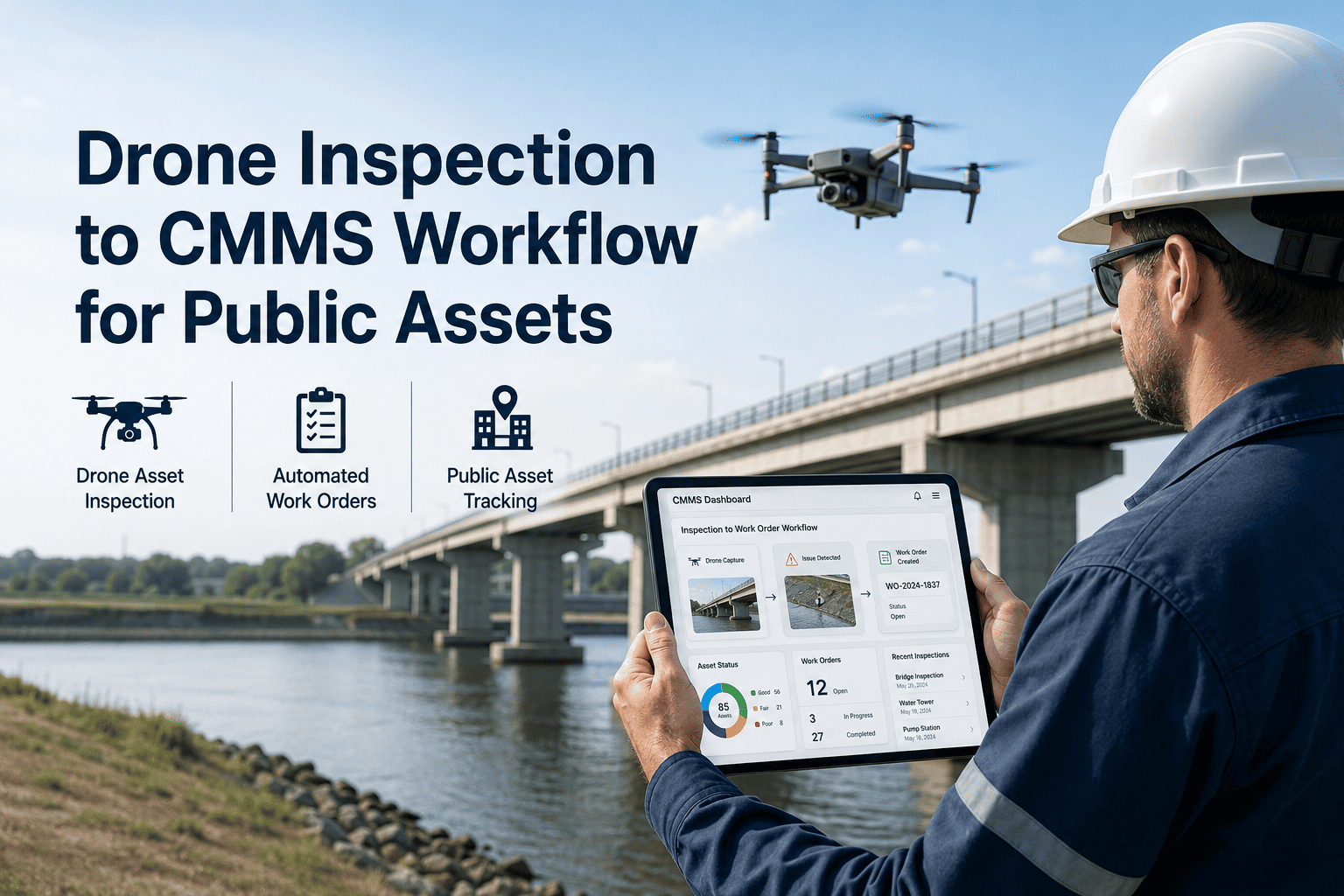
Southeast Asia's canal networks are among the most strategically critical—and most chronically under-monitored—infrastructure assets in the world. From the irrigation arteries of the Mekong Delta to the flood-control channels threading through Bangkok, Manila, Jakarta, and Ho Chi Minh City, these waterways sustain agriculture, enable navigation, manage flood risk, and support the livelihoods of hundreds of millions of people. Yet the majority of these systems are still managed with inspection methods unchanged since the 1970s: manual surveys, paper logs, and maintenance triggered only when a canal fails visibly. Oxmaint AI is changing that equation. By integrating drone inspection workflows, AI vision defect detection, IoT sensor telemetry, and automated work order management, public agencies across Southeast Asia are now achieving the kind of real-time canal visibility that was once accessible only to the most advanced water authorities in Europe and North America. Talk to our regional team about modernising your canal infrastructure programme.
Regional Infrastructure Intelligence — 2026 Edition
Southeast Asia Canals Modernization: AI, Drones & Predictive Maintenance
How public agencies across Thailand, Vietnam, Indonesia, the Philippines, and Malaysia are deploying AI-powered drone inspection, IoT sensor networks, and CMMS automation to protect the waterways that sustain their nations.
Regional Coverage
??Thailand
Flood control & irrigation channels
??Vietnam
Mekong Delta waterway networks
??Indonesia
Urban drainage & irrigation systems
??Philippines
National irrigation authority canals
??Malaysia
Coastal & agricultural waterways
The Modernisation Gap: Then vs Now
Traditional Approach
✕Annual or biannual walk inspections
✕Paper-based defect records with no geolocation
✕Maintenance triggered only after visible failure
✕No cross-agency data sharing or benchmarking
✕Emergency repair budgets dominate capital plans
✕High inspector risk in flood-prone or remote zones
✕Compliance reporting compiled manually from field notes
Oxmaint AI Modernised
✓Continuous IoT monitoring between drone survey cycles
✓AI-scored defects geo-tagged to exact canal asset record
✓Predictive alerts 6–18 months before structural failure
✓Unified dashboard spanning multiple agencies and regions
✓Planned maintenance replaces 80%+ of emergency spend
✓Drone coverage eliminates inspector entry into hazard zones
✓Auto-generated regulatory reports from live system data
$2.4T
Value of canal-dependent agriculture and navigation in Southeast Asia at risk from deferred maintenance
78%
Of Southeast Asian canal defects are detectable by drone AI before they cause operational disruption
5×
More canal kilometres inspectable per day with drone survey vs traditional walking inspection teams
65%
Average reduction in reactive emergency repair spend reported after AI predictive maintenance deployment
Three Layers of Canal Modernisation Technology
Effective canal modernisation in Southeast Asia requires technology that works across a wide range of conditions: monsoon-season flooding, remote rural access constraints, dense urban infrastructure, and varying levels of existing digital capability within agencies. Oxmaint AI is designed around three integrated technology layers that build on each other—delivering value from day one while creating the data foundation for increasingly advanced predictive capability over time.
Layer 1
Drone Inspection & AI Vision
Systematic drone survey missions replace walk inspections with AI-scored, geo-referenced defect detection across all canal structure types including embankments, lining, gates, weirs, and drainage structures.
Automated mission route planning per asset class
4K visual and thermal payload for subsurface detection
AI defect classification: cracks, erosion, vegetation, seepage
Flight log archiving with timestamped mission reports
Change detection between survey cycles for trend tracking
Layer 2
IoT Sensor Networks & LoRaWAN
Continuous structural and hydraulic monitoring via low-power IoT sensor meshes connected over LoRaWAN—delivering real-time condition data from even the most remote canal sections between drone survey cycles.
Water level, flow velocity, and turbidity sensors
Embankment settlement and tilt monitoring arrays
Configurable threshold alerts with tiered escalation
Solar-powered gateways for off-grid canal corridors
Real-time anomaly detection against seasonal baselines
Layer 3
CMMS Integration & Digital Twin
Drone findings and IoT anomalies automatically create prioritised work orders in your CMMS, while a live digital twin of your canal network accumulates inspection history and models long-term structural health trajectories.
Auto work order generation from AI defect and sensor alerts
Asset health scoring and condition trend dashboards
Parts and resource linkage to work order schedules
3D digital twin updated per inspection cycle
Regulatory and capital planning report automation
Oxmaint AI Platform
Built for Southeast Asia's Scale and Complexity
Oxmaint AI handles multilingual agency environments, remote solar-powered sensor deployments, and canal networks spanning thousands of kilometres—delivering a single inspection intelligence platform that works for village irrigation boards and national water authorities alike.
48hr
Onboarding to first live drone mission log in platform
API
Open integration with SAP, Maximo & national GIS systems
Solar
IoT gateway options for grid-independent canal corridor deployment
Canal Asset Types & Modernisation Priority Matrix
Not all canal assets carry equal risk or require the same inspection intensity. Oxmaint's modernisation methodology begins with a structured asset priority matrix—ranking canal components by failure consequence, inspection accessibility, and current data coverage gap. This ensures that drone and IoT resources are deployed where they deliver the highest public safety and operational value first, building the programme business case rapidly with measurable early wins.
Canal Asset Type
Primary Failure Modes
Drone Priority
IoT Sensor Type
Inspection Frequency
Earthen Embankment
Seepage, erosion, slope failure
Critical
Settlement + piezometer
Monthly drone / continuous IoT
Concrete Canal Lining
Cracking, joint failure, spalling
Critical
Crack meter, seepage weir
Quarterly drone / monthly IoT
Sluice & Regulator Gates
Seal failure, corrosion, jamming
Critical
Vibration, position sensor
Bimonthly drone / real-time IoT
Weirs & Drop Structures
Scour, undermining, overtopping
High
Water level, flow gauge
Quarterly drone / weekly IoT
Culverts & Cross-Drains
Blockage, structural collapse
High
Flow velocity, turbidity
Biannual drone / monthly IoT
Canal Towpaths & Access Roads
Surface degradation, subsidence
Medium
Settlement array
Annual drone / seasonal IoT
Pump Stations & Intakes
Mechanical failure, cavitation
High
Vibration, current, temperature
Quarterly drone / continuous IoT
Drone Inspection Workflow: From Mission Plan to Work Order
The power of drone inspection lies not in the flight itself but in the intelligence pipeline that converts raw aerial imagery into maintenance action. Oxmaint AI automates every step between mission planning and CMMS work order creation, eliminating the manual bottlenecks that cause inspection data to sit unactioned in shared drives for weeks after a survey is completed.
01
Mission Planning
Asset register drives automated route generation. Flight corridors optimised per canal section type, length, and defect history. No-fly zones and monsoon-season scheduling built in.
02
Survey Execution
Drone executes pre-planned mission autonomously. 4K visual and thermal imagery captured at defined waypoints. Flight log, GPS track, and weather data recorded automatically.
03
AI Defect Detection
Imagery processed by canal-trained AI vision model. Defects classified by type and severity. Each finding geo-referenced to the exact asset record in Oxmaint CMMS.
04
Work Order Generation
High-severity defects automatically generate CMMS work orders with image attachments, location, defect classification, and recommended remediation action. Zero manual transcription.
05
Trend & Change Analysis
AI compares current findings against previous survey cycles. Deterioration rates calculated per asset. Predictive maintenance scheduling updated based on observed degradation velocity.
Asset Intelligence
From Aerial Image to Closed Work Order — Automatically
Oxmaint AI eliminates the gap between drone survey completion and maintenance action. Every defect detected becomes a tracked, assigned, and closeable work order within minutes of image processing—not days after a manual review cycle.
<10 min
From drone image upload to AI-scored defect report
Auto
Work orders created without human review for critical severity defects
100%
Digital chain of custody from inspection image to repair sign-off
Maturity Roadmap: 1–5 Scale for Southeast Asian Canal Agencies
Canal agencies across Southeast Asia begin their modernisation journey from very different starting points. Some national irrigation authorities already have partial IoT deployments; others are managing thousands of kilometres of canal with paper ledgers. This maturity scale is calibrated specifically for the regional context—acknowledging the infrastructure diversity, funding cycles, and governance frameworks that shape how digital transformation proceeds in public water agencies across the region.
1Ad-hoc
2Reactive
3Digitising
4Predictive
5Autonomous
1
Ad-hoc / Paper
Manual walk inspections only. No digital records. Maintenance reactive to complaints or visible failure. Common in rural irrigation districts and smaller municipal canal authorities.
Next step: CMMS deployment & digital asset register
2
Siloed Digital
Basic GIS mapping and spreadsheet records. Some drone use but imagery unanalysed. No sensor integration. Work orders created manually days after inspection. Common across mid-tier agencies.
Next step: Integrate drone data with CMMS via AI pipeline
3
Scheduled Drone Programme
Regular drone surveys with AI defect scoring. Work orders generated from findings. Some IoT sensors deployed on critical structures but not yet integrated into CMMS alert workflows.
Next step: Real-time IoT integration & anomaly alert automation
4
Real-Time Integrated
IoT sensors stream continuously to AI anomaly engine. Drone data auto-ingested. Work orders auto-generated. Digital twin maintained. Predictive maintenance replacing reactive calendar programmes.
Next step: Predictive failure modelling & autonomous dispatch
5
Autonomous AI Operations
AI self-dispatches drones on sensor anomaly triggers. Failure probability modelled continuously across entire canal network. Regulatory reporting auto-generated. Zero unplanned closures. Goal state.
Status: Continuous model refinement & fleet expansion
Expert Perspective: The Case for Regional Modernisation
“
Our irrigation canal network serves over 400,000 farming households across three provinces. For years, we inspected it with teams of field engineers on motorcycles—good people doing their best with inadequate tools. We had a Category 3 embankment breach during the wet season that flooded 12,000 hectares of rice paddies and cost the agency more than two years of maintenance budget in a single emergency. When we deployed Oxmaint AI—drone surveys every six weeks, IoT water level monitoring at every main gate structure, automated work orders—the transformation was immediate. In the first season, we detected and repaired eleven embankment defects that would have been invisible until the next annual survey. Our emergency repair spend dropped by 71% in year one. Our field engineers now manage the programme from a dashboard instead of riding 200 kilometres of canal bank in the monsoon heat. The data does the patrolling.
— Director General, Provincial Irrigation Authority, Vietnam
400K+
Farm households served by modernised canal network
71%
Reduction in emergency repair spend in first year of AI deployment
11
Critical embankment defects detected and repaired before wet season failure
The canal systems of Southeast Asia are not failing for lack of dedicated public works professionals—they are failing for lack of data. The engineers, inspectors, and agency leaders managing these networks are working with information that is weeks, months, or years out of date by the time it reaches the decision-maker. Oxmaint AI closes that gap permanently. By combining drone inspection intelligence, continuous IoT monitoring, AI anomaly detection, and automated CMMS integration, canal agencies across the region can finally manage their assets on the basis of what is actually happening in the field—not what was observed on the last manual survey. Start modernising your canal infrastructure with the platform built for Southeast Asia's scale, climate, and ambition.
Get Started Today
Empower Your Canal Agency with Oxmaint AI
From drone mission planning to IoT sensor ingestion, AI defect scoring, and automated work order management—Oxmaint AI gives Southeast Asian canal authorities the complete modernisation platform to protect infrastructure, reduce costs, and keep citizens safe.
Free
Trial access including asset register setup and first drone mission log
5 Days
To first AI-scored inspection report after platform onboarding
Local
Implementation support across Thailand, Vietnam, Indonesia, Philippines & Malaysia
Frequently Asked Questions
How does drone inspection work in Southeast Asia's monsoon conditions?
Oxmaint's drone inspection programme is designed around Southeast Asia's seasonal rainfall patterns. Mission schedules are automatically adjusted to prioritise inspection of high-risk assets during the dry season when access is safest and post-monsoon condition assessment is most critical. For urgent inspection needs during wet season, mission parameters can be configured to operate in light-rain conditions using weather-resistant drone platforms. Where flying is not possible, IoT sensor data provides continuous condition monitoring between survey windows, ensuring that no structural changes go undetected during any period of the year.
Can Oxmaint AI handle canal networks that span multiple provinces or agencies?
Yes. Oxmaint AI is designed for multi-agency, multi-region deployment. The platform supports separate organisational structures, permission levels, and reporting hierarchies within a single system—allowing national-level oversight dashboards while maintaining agency-level operational control. Canal assets across provinces can be viewed in a unified GIS-based map interface, and national reporting on aggregate condition, maintenance spend, and defect trends can be generated automatically without manual consolidation across agencies. This is particularly relevant for regional irrigation authorities, national water ministries, and ADB or World Bank-funded canal rehabilitation programmes requiring portfolio-level reporting.
What AI defect types can be detected in Southeast Asian canal structures?
Oxmaint's AI vision models are trained on canal infrastructure imagery including Southeast Asian construction typologies such as compacted earth embankments, unreinforced concrete lining, brick-faced channels, and timber sluice structures. Detectable defect classes include surface cracking and spalling on concrete lining, erosion and slumping on earthen embankments, vegetation encroachment and root damage, corrosion and structural deformation on gate and weir components, seepage staining and efflorescence, and debris accumulation at intake structures. The models improve continuously as new regional imagery from Oxmaint deployments is incorporated into training datasets.
How do IoT sensors connect from remote rural canal sites with no power or internet?
Oxmaint's IoT deployment architecture is specifically designed for off-grid rural canal environments. LoRaWAN sensors operate for 5–10 years on battery power, eliminating the need for mains electricity. Solar-powered LoRaWAN gateways provide multi-kilometre wireless coverage across canal corridors. Where cellular or WiFi backhaul is unavailable at the gateway, satellite modem options maintain reliable data connectivity even from the most remote sites. Sensor readings are stored locally at the gateway during any connectivity interruption and synchronised automatically when connection is restored, ensuring continuous data integrity regardless of network conditions.
What is the typical implementation timeline and cost payback for a Southeast Asian canal authority?
Implementation timelines vary by network scale. A single provincial authority with 500–2,000 km of canal can typically complete asset register setup, initial drone programme configuration, and IoT sensor deployment in 8–16 weeks. The first AI-scored inspection reports are usually available within the first month. Cost payback is typically achieved within 6–18 months, driven primarily by reduction in emergency repair expenditure, inspector labour savings, and avoidance of crop or flood damage incidents. For larger national-scale programmes, phased implementation starting with highest-hazard assets enables early ROI demonstration that supports ongoing funding authorisation through government budget cycles.