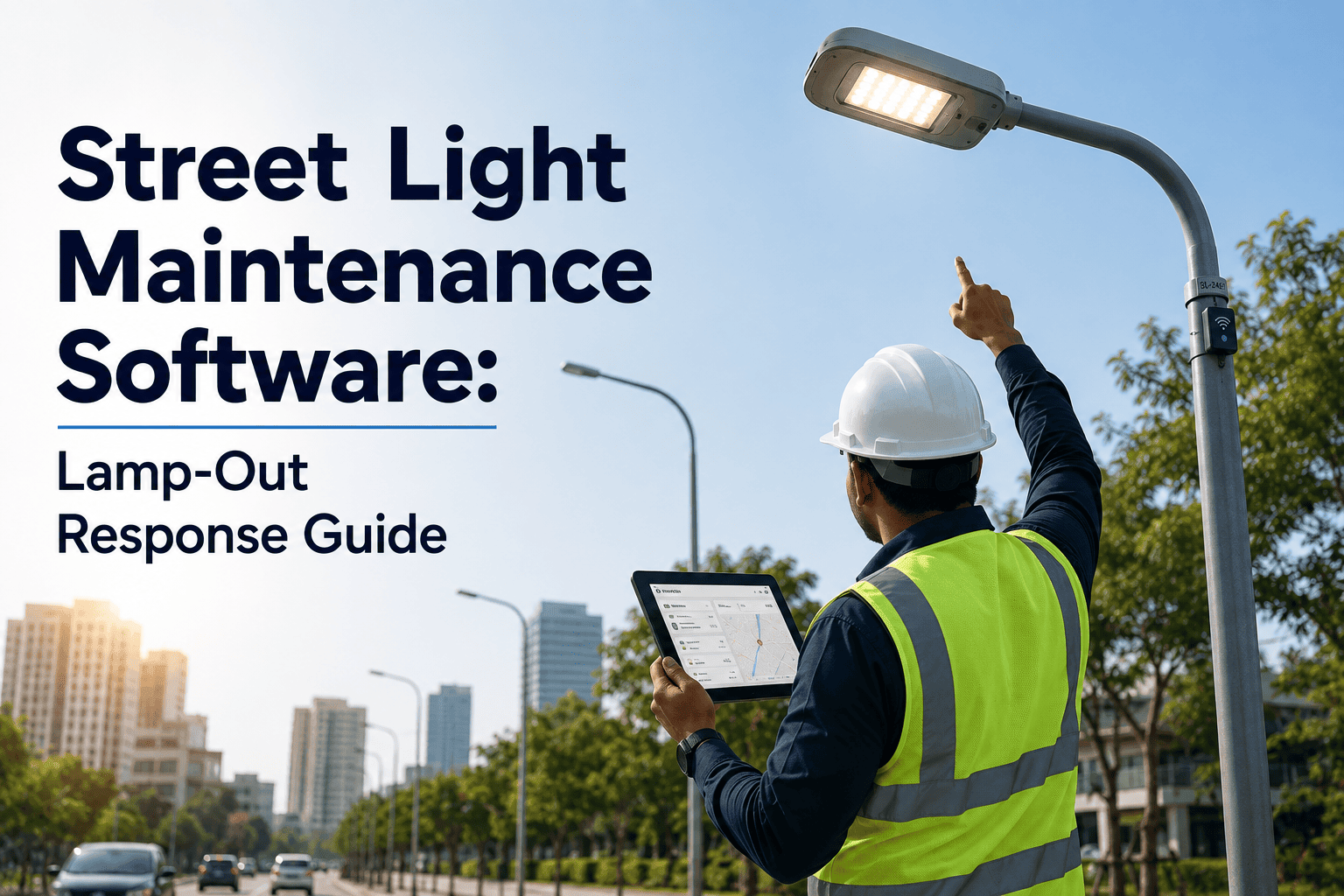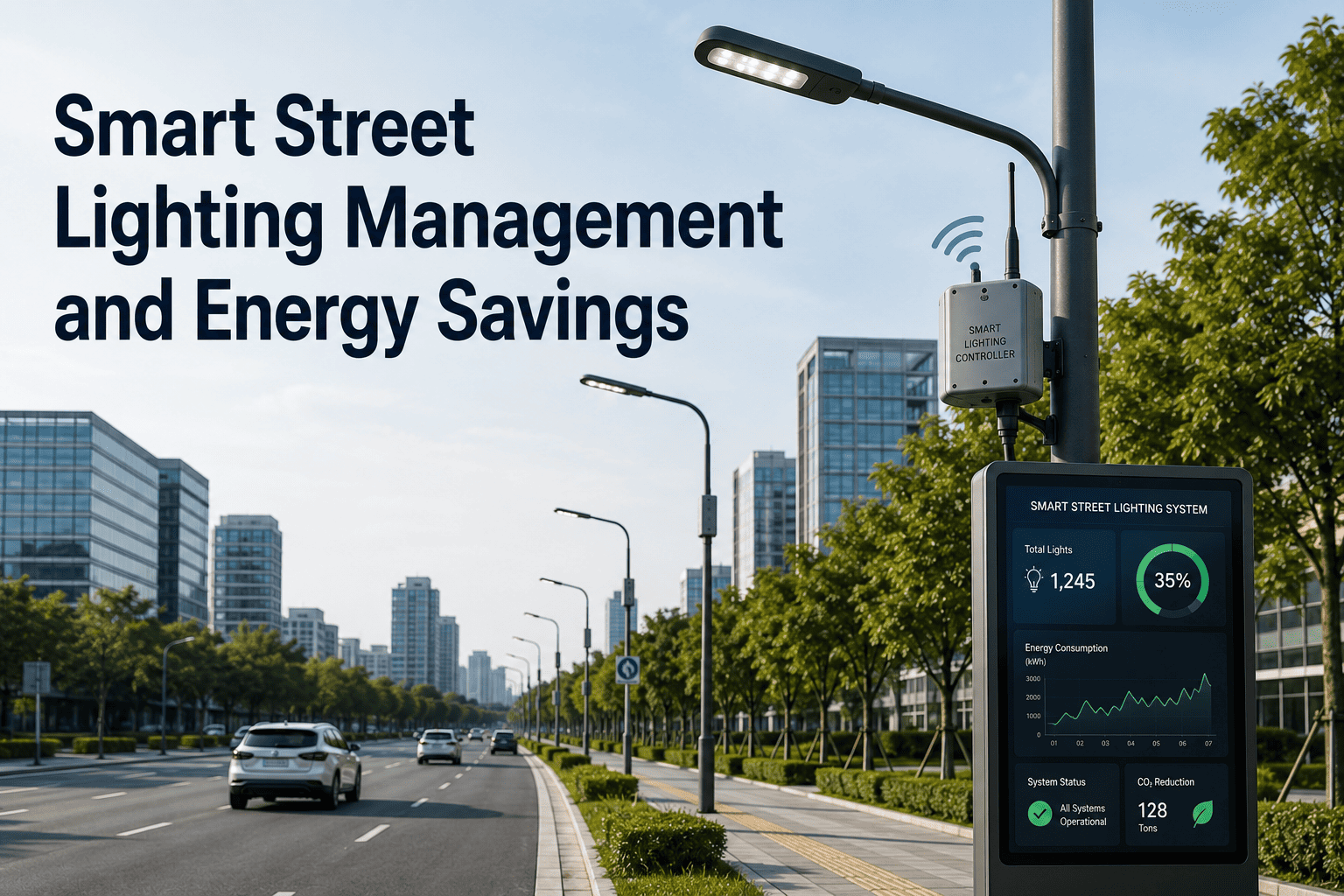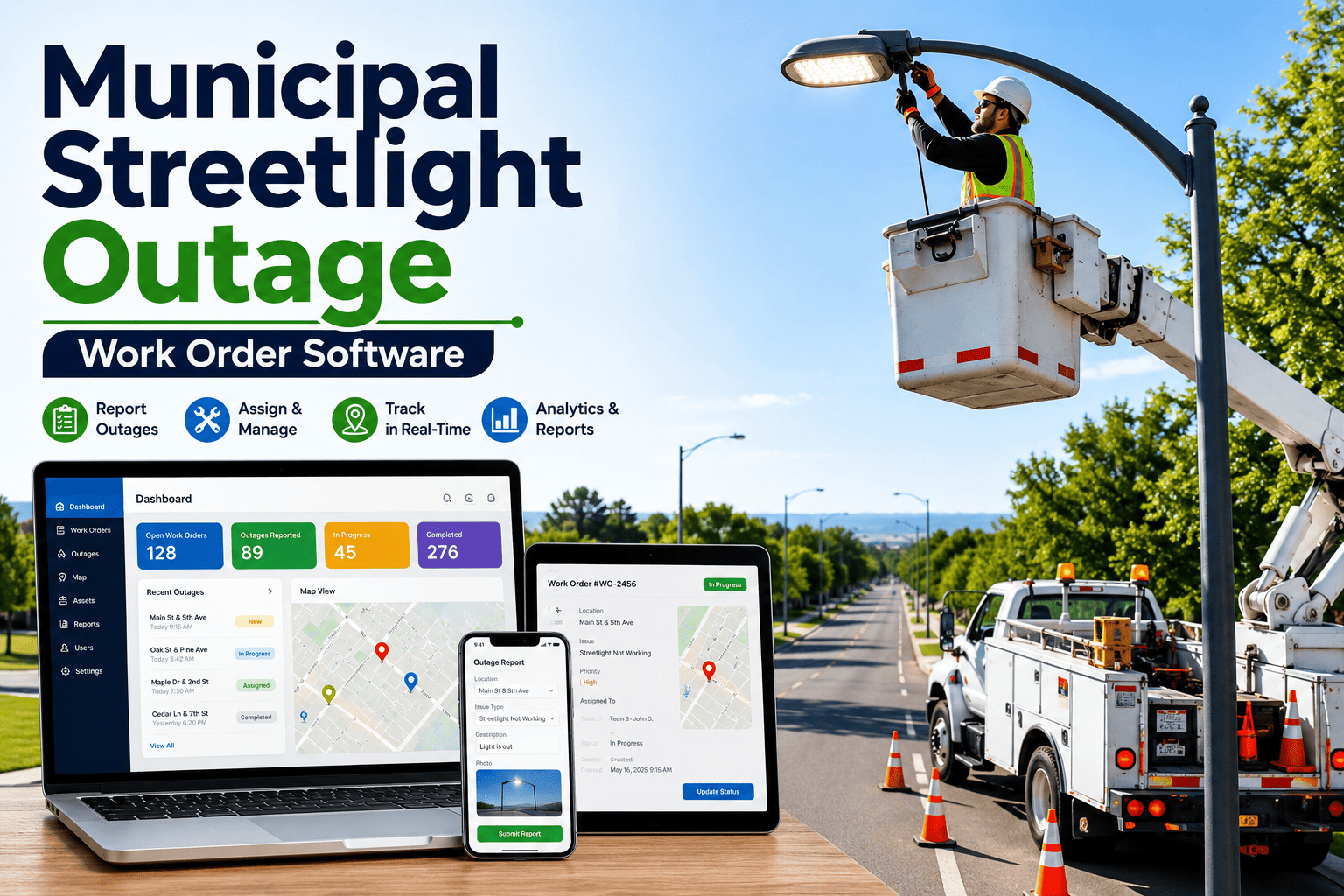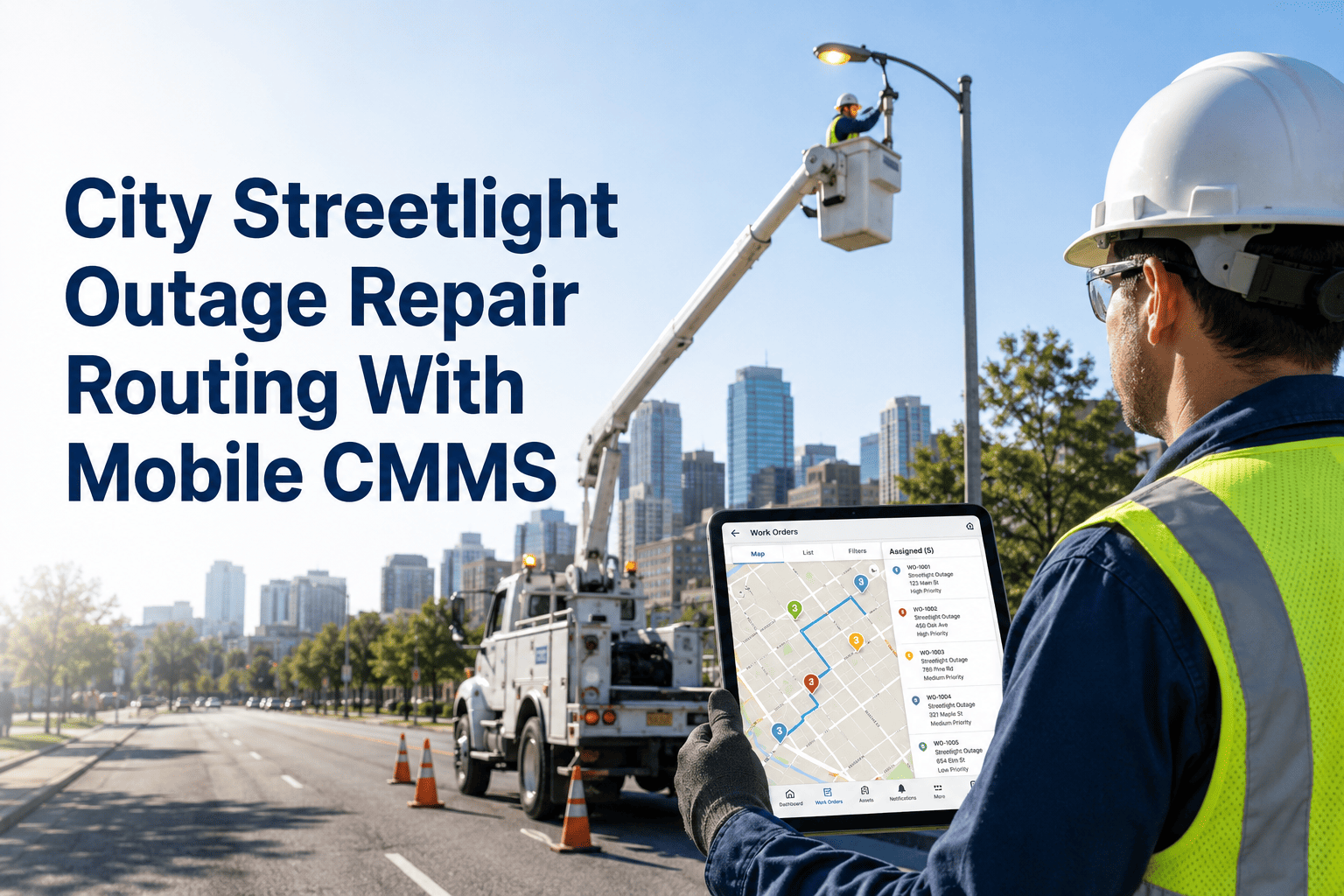
Most cities do not repair their own street lights anymore — a contractor does, working off a work order that has to specify the pole, the fault, the parts needed, and a deadline the city can actually enforce. NYC DOT holds its street lighting contractors to a four-hour response for emergencies like a fallen pole and ten days for everything else. Other utilities hold theirs to fifteen days. Those numbers only mean something if someone is tracking which pole was dispatched when, whether the crew showed up with the right ballast or photocell already in hand, and whether the finished repair was actually verified before the ticket closed. Most of that tracking still happens across phone calls, emails, and a contractor's own paperwork — which is exactly where dispatch delays, missing materials, and unverified sign-offs slip through. Start a free trial with OxMaint to see contractor coordination that runs on one shared record instead of a phone tag chain.
Street Light Contractor Coordination Software for Dispatch, Materials, and Sign-Off
Give every outsourced repair a single record — from crew dispatch, to the parts pre-staged for the job, to a verified completion sign-off — so an SLA deadline is something you can actually prove was met.
Why Contractor Coordination Falls Apart on Street Lighting Programs
Outsourcing street light repair to a contractor does not remove the coordination work — it just moves it across an organizational line. Every one of these gaps costs response time, and every one of them is preventable with a shared record.
Dispatch Lives in Email
A ticket gets forwarded from 311 to a public works inbox to a contractor's dispatcher, with no timestamp anyone can point to later.
Crews Arrive Without Parts
A truck rolls to a pole for a suspected ballast failure without the ballast on board, turning one visit into two.
Duplicate Reports Go Untracked
The same outage gets reported by multiple residents and dispatched more than once, wasting a crew visit that could have gone to a different pole.
Completion Isn't Verified
A contractor marks a ticket closed with no photo or confirmation that the light is actually back on, and the city has no way to check without a site visit of its own.
The Three Links Every Outsourced Repair Depends On
A street light repair is only as reliable as the weakest link between the outage report and the closed ticket. Three links matter most.
Crew Dispatch
The outage, its location, and its priority reach the contractor's crew with a timestamp the city can measure the SLA clock against — not a forwarded email thread.
Materials Pre-Stage
Likely fault type — photocell, ballast, wiring — is flagged before the truck rolls, so the crew shows up with the part instead of discovering the need for a second trip.
Completion Sign-Off
A photo, parts used, and a technician confirmation close the ticket — evidence the city can check without rolling its own truck to verify the fix.
Street Light Repair Priority Tiers and Typical Response Windows
| Priority Tier | Example Condition | Typical Response Window |
|---|---|---|
| Emergency | Downed pole, exposed live wiring | Hours, often 4-hour response |
| Safety-Related | Dark intersection or high-pedestrian corridor | 1 to 3 business days |
| Standard Outage | Single bulb, photocell, or ballast failure | 5 to 15 business days depending on jurisdiction |
| Underground / Major Repair | Conduit fault, circuit-level failure | 2 or more weeks, scheduled separately |
Turn Your SLA Into a Number You Can Actually Track
OxMaint gives every street light repair one record from dispatch to sign-off — timestamped, parts-tagged, and photo-verified — so your contractor's response window is measured automatically instead of estimated from memory.
How OxMaint Coordinates Street Light Repairs With Outside Crews
Outages Land in One Queue
Resident reports, night-run survey findings, and internal flags all create a single work order per pole, automatically catching duplicate reports on the same fixture before a second crew gets dispatched.
Priority and Parts Are Flagged Together
Each work order carries a priority tier and, based on fixture history, a likely parts list — so the contractor's crew is pre-staged before the truck leaves the yard.
Dispatch Time Is Timestamped Automatically
The moment a work order is assigned to a crew, the SLA clock starts — giving both the city and the contractor a shared, unambiguous record of when the window opened.
Sign-Off Requires Proof, Not Just a Status Change
A repair cannot close without a photo of the working fixture and the parts used logged against it, giving the city verification without a second site visit.
What a Verified Completion Sign-Off Actually Needs
What Cities and Utilities Report After Centralizing Contractor Coordination
Street Light Contractor Coordination — Common Questions
How fast should a contractor respond to a downed pole versus a routine outage? +
Why does grouping poles by circuit matter for contractor dispatch? +
How can a city verify a contractor's repair without sending its own crew to check? +
What causes the most avoidable delays in outsourced street light repair? +
Can this kind of coordination system integrate with an existing 311 or resident-reporting system? +
Stop Coordinating Contractors Through Phone Calls and Forwarded Emails
OxMaint keeps dispatch, materials pre-stage, and completion sign-off on one shared record for every street light repair — so your SLA becomes something you can measure, not something you hope your contractor is meeting.