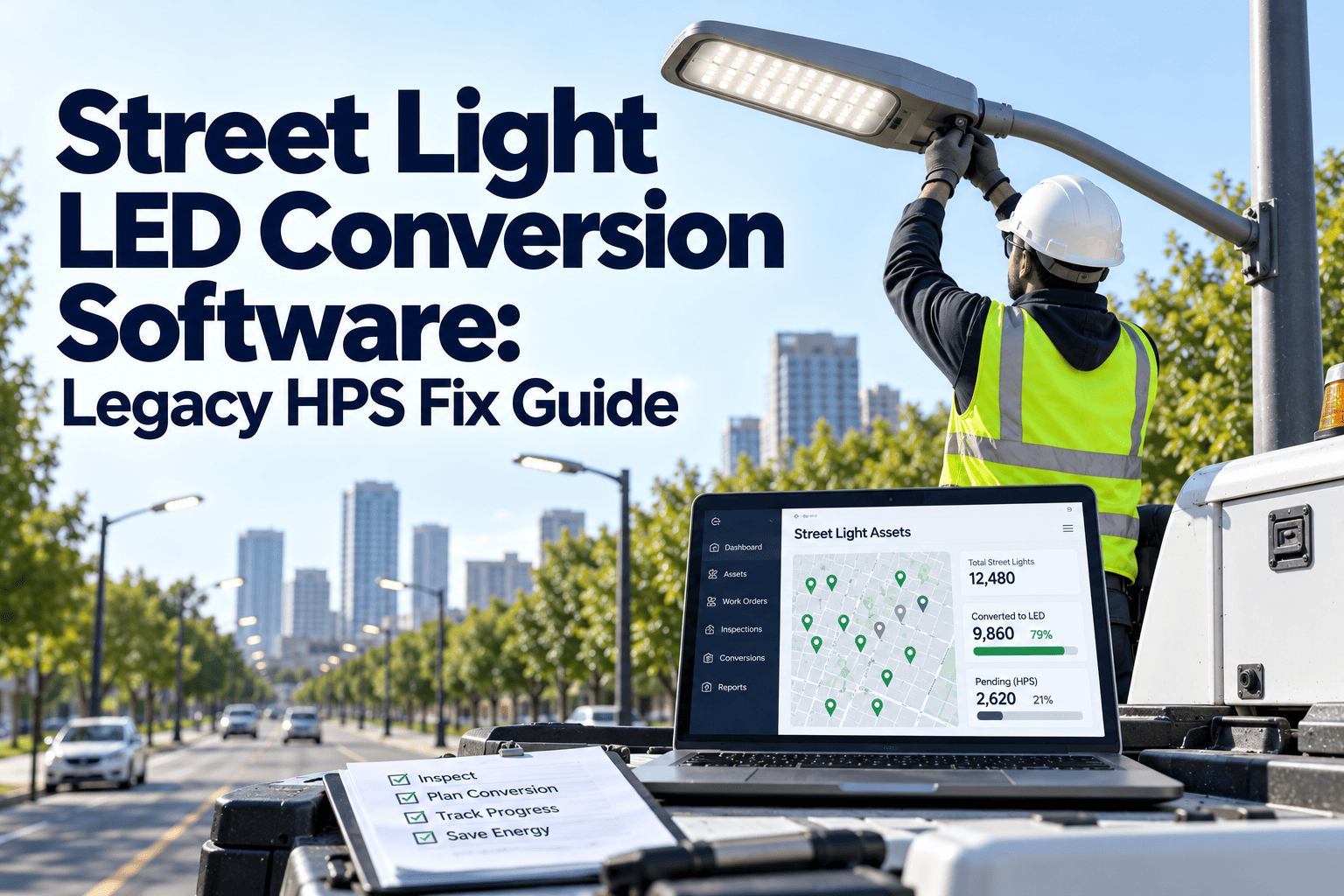
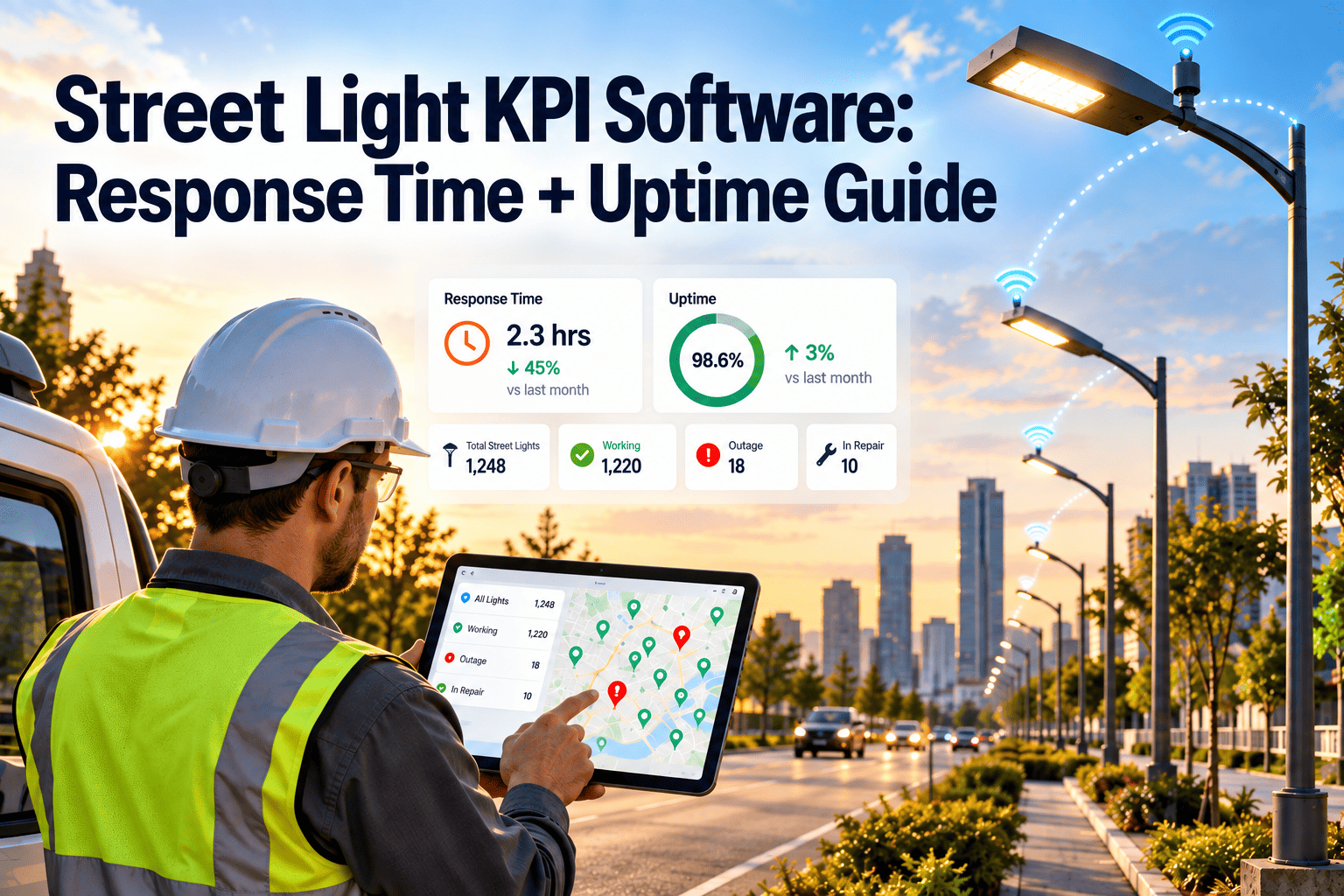
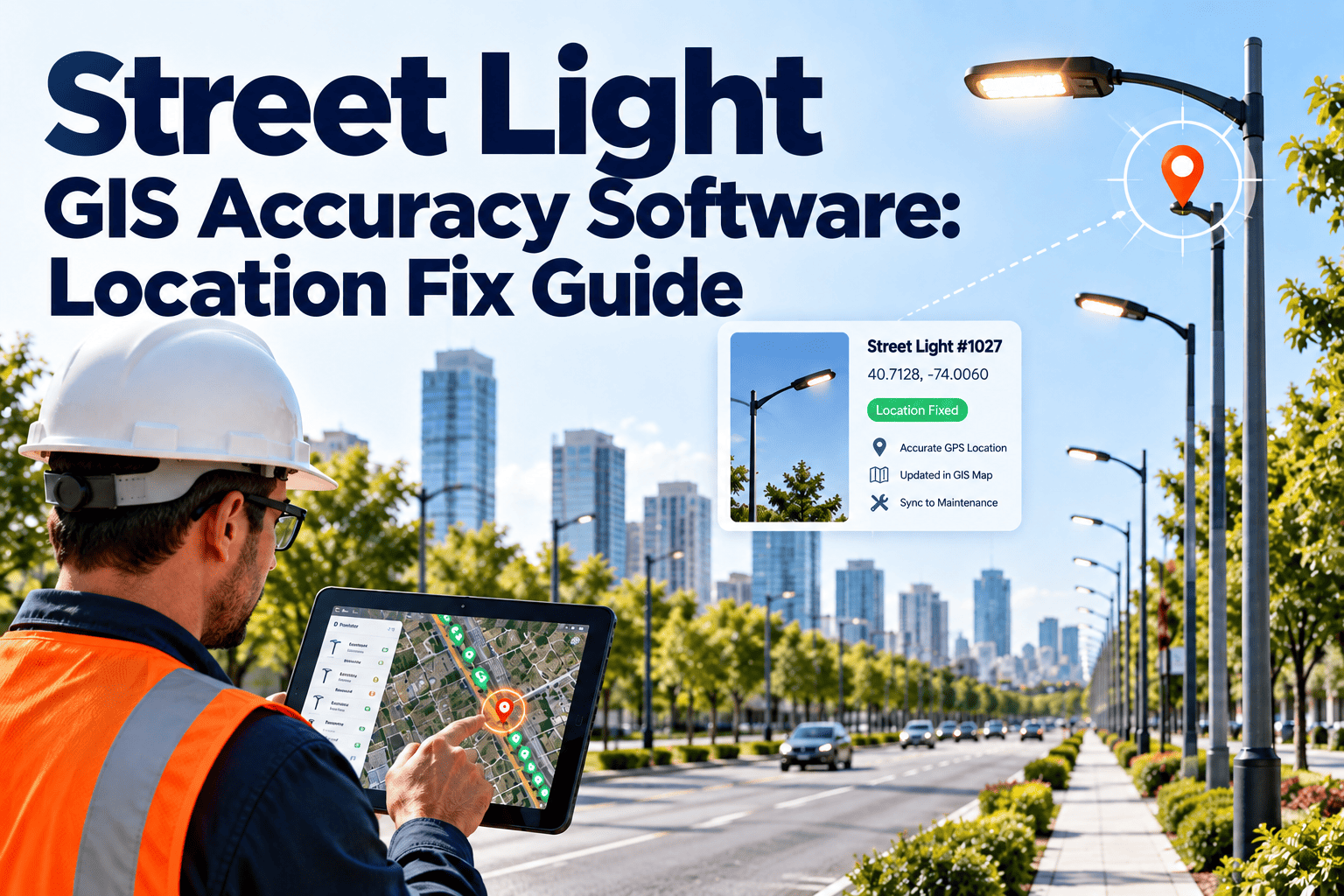
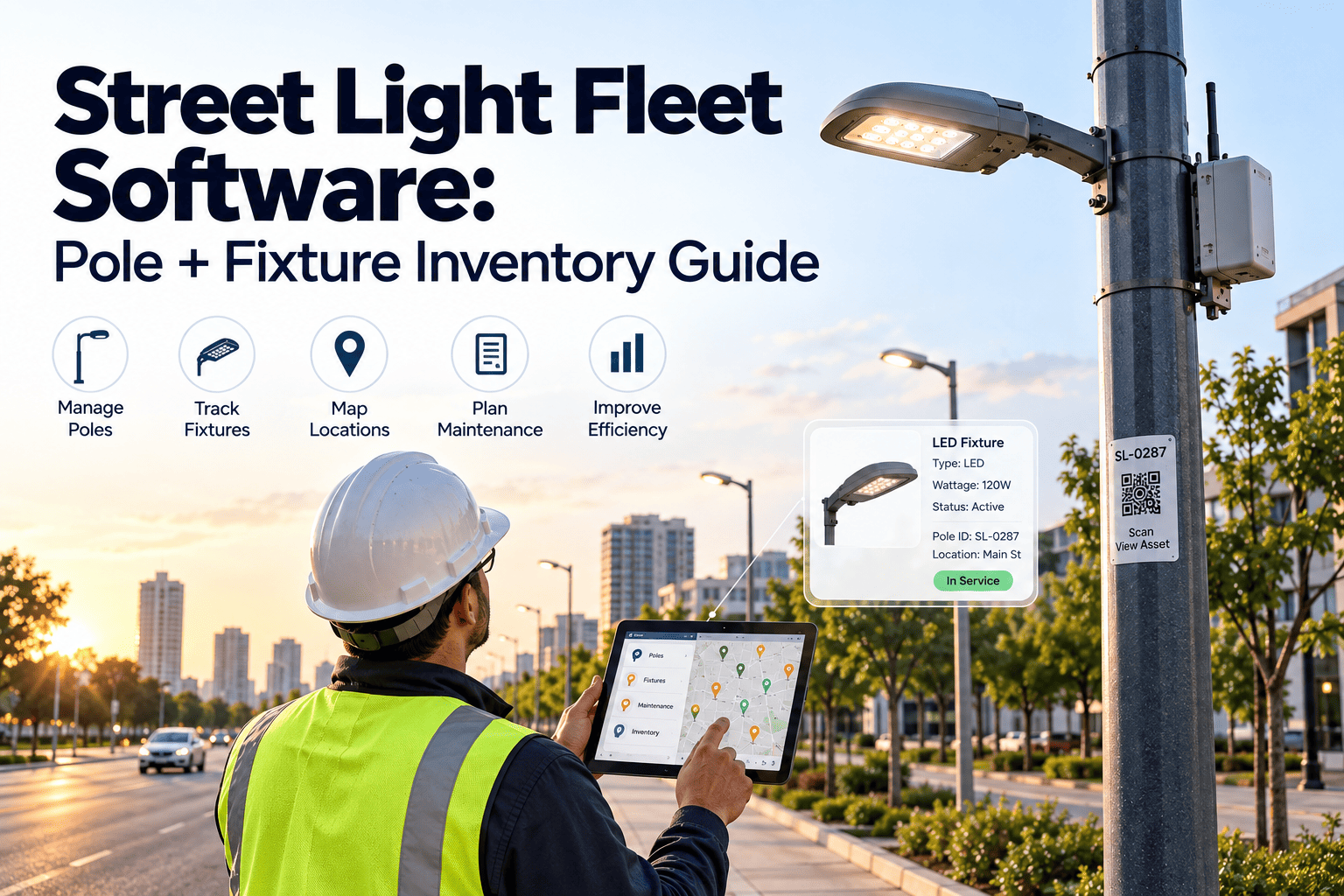
Somewhere on every city's utility bill is a line item that hasn't shrunk in fifteen years: street lighting. Thousands of high-pressure sodium and metal halide fixtures installed in the 1990s and 2000s are still burning through kilowatt-hours the way they always have, while LED technology sitting one aisle over in the fixture catalog uses roughly half the power for the same or better light output. Cities that have already converted — Houston's 165,000-fixture program among the largest in the country — report cutting street lighting energy use by 40 to 60 percent and eliminating relamping trips that used to cost more in labor than the bulb itself. The hold-up is rarely the technology; it is tracking which of thousands of poles have been converted, which are still legacy, and which need a truck roll this month, a job a CMMS handles well at oxmaint.ai.
Municipal Energy Programs — 2026 Conversion Guide
Fixing Legacy HPS and Metal Halide Street Lights With an LED Conversion Program
Legacy HPS and metal halide fixtures cost more than the electricity bill shows once relamping labor, ballast failures, and rising utility rates are added in. This guide covers what LED conversion actually saves, how to phase a citywide rollout, and how to track it without losing a single pole.
40-60%Typical energy reduction converting HPS or MH fixtures to LED
4xLonger rated lifespan for LED fixtures versus HPS lamps
15-25%Share of a typical municipal electricity budget spent on street lighting
$100+Typical cost of a single bucket-truck dispatch for one relamp
The Wattage Swap: What LED Actually Replaces
The easiest way to see the savings is fixture by fixture. Each bar pair below shows a common legacy wattage next to its typical LED replacement, scaled to actual draw so the gap is visible at a glance rather than buried in a spec sheet.
100W HPS Cobrahead
58% less energy draw
250W HPS Roadway
63% less energy draw
400W HPS Arterial
56% less energy draw
1000W MH High-Mast
65% less energy draw
What Legacy Fixtures Cost Beyond the Power Bill
The kilowatt-hour savings get most of the attention, but crews chasing HPS and metal halide failures know the real cost shows up elsewhere in the budget.
Constant Relamping Cycles
HPS lamps typically need replacing every two to three years, and each truck roll to swap one bulb often costs more than the bulb itself.
Ballast Failures
Aging ballasts fail independently of the lamp, doubling the diagnostic time crews spend on a single outage report.
Warm-Up and Restrike Delay
Metal halide fixtures can take up to fifteen minutes to reach full brightness after a power flicker, leaving a corridor dim during an outage.
Poor Color Rendering
HPS light renders color so poorly that witness descriptions and camera footage both suffer, a real factor in safety and liability reviews.
Rising Utility Rates
Utility rates have climbed steadily in most markets, so every kilowatt-hour a legacy fixture wastes now costs more than it did five years ago.
Unpredictable Failure Timing
Without a tracked conversion schedule, outages get reported one dark pole at a time instead of being addressed as part of a planned rollout.
A Five-Phase Rollout That Doesn't Overwhelm the Budget
Cities rarely convert every fixture at once, and they do not need to. A phased rollout spreads the capital cost across budget cycles while still delivering visible energy savings from the first phase onward.
01
Inventory and Audit
Catalog every pole by fixture type, wattage, age, and condition to establish a true baseline and identify the highest-cost fixtures to convert first.
02
Pilot Corridor
Convert one high-traffic corridor first to validate light levels, resident response, and actual measured energy savings before scaling citywide.
03
Phased Citywide Rollout
Sequence remaining neighborhoods by fixture age and wattage, converting the least efficient, highest-cost fixtures ahead of newer legacy stock.
04
Legacy Stock Decommissioning
Retire remaining HPS and metal halide inventory, ballasts, and lamps, and close out utility rebate paperwork tied to each converted fixture.
05
Verify and Report Savings
Compare metered energy use before and after conversion to confirm projected savings and build the report council and utility partners expect.
Legacy Fixture vs. LED Fixture Operating Profile
Laid side by side, the operating differences explain why conversion pays for itself well before the fixtures reach end of life.
| Factor | Legacy HPS / Metal Halide | LED Replacement |
| Typical lamp life |
2-3 years before relamping |
10-15 years before replacement |
| Energy draw for equivalent light |
Baseline wattage plus ballast loss |
40-60% less power for equal or better output |
| Startup behavior |
Warm-up and restrike delay after outage |
Instant full brightness |
| Color rendering |
Poor, orange-tinted light |
High CRI, natural white light |
| Maintenance model |
Reactive truck rolls per failure |
Scheduled, far less frequent service |
We knew LED would cut our power bill, but the bigger shift was on the maintenance side. Our crews used to spend a huge share of their week chasing HPS outages one pole at a time, usually reported by a resident weeks after the lamp actually failed. Once we had a tracked conversion program and could see fixture type and age pole by pole, we sequenced the rollout by which blocks were costing us the most, and the energy savings showed up on the utility bill within the first billing cycle after each phase went live.
— Public Works Director, mid-size city street lighting program
Turn Your Conversion Rollout Into a Tracked Program
Oxmaint gives your team one system to sequence phases, log fixture status pole by pole, and prove the energy savings to council and utility partners.
Frequently Asked Questions
How much energy does LED street lighting actually save versus HPS?
Most municipal conversions report a 40 to 60 percent reduction in energy use per fixture, with some high-wattage metal halide replacements running even higher. See how this tracks fixture by fixture at
oxmaint.ai.
Does converting to LED reduce maintenance costs too?
Yes. LED fixtures typically last four times longer than HPS lamps and remove ballast failures entirely, cutting the number of truck rolls a crew has to make for routine relamping.
Do cities have to convert every street light at once?
No. Most programs phase the rollout by corridor or neighborhood, starting with the highest-wattage, highest-cost fixtures first.
Book a demo to see how a phased plan gets tracked pole by pole.
What LED wattage replaces a typical 250W HPS street light?
A 250W HPS fixture is commonly replaced with a 60-70W LED fixture delivering equal or better light output, a reduction of roughly 60 percent in power draw.
How does a CMMS help manage a citywide LED conversion program?
A CMMS tracks every pole's fixture type, wattage, and conversion status in one place, letting a city sequence phases by cost impact and report verified savings instead of estimating from spreadsheets.
Start Tracking Your Street Light Conversion Today
Move your legacy HPS and metal halide inventory onto one system that sequences phases, logs fixture status, and proves the energy savings.