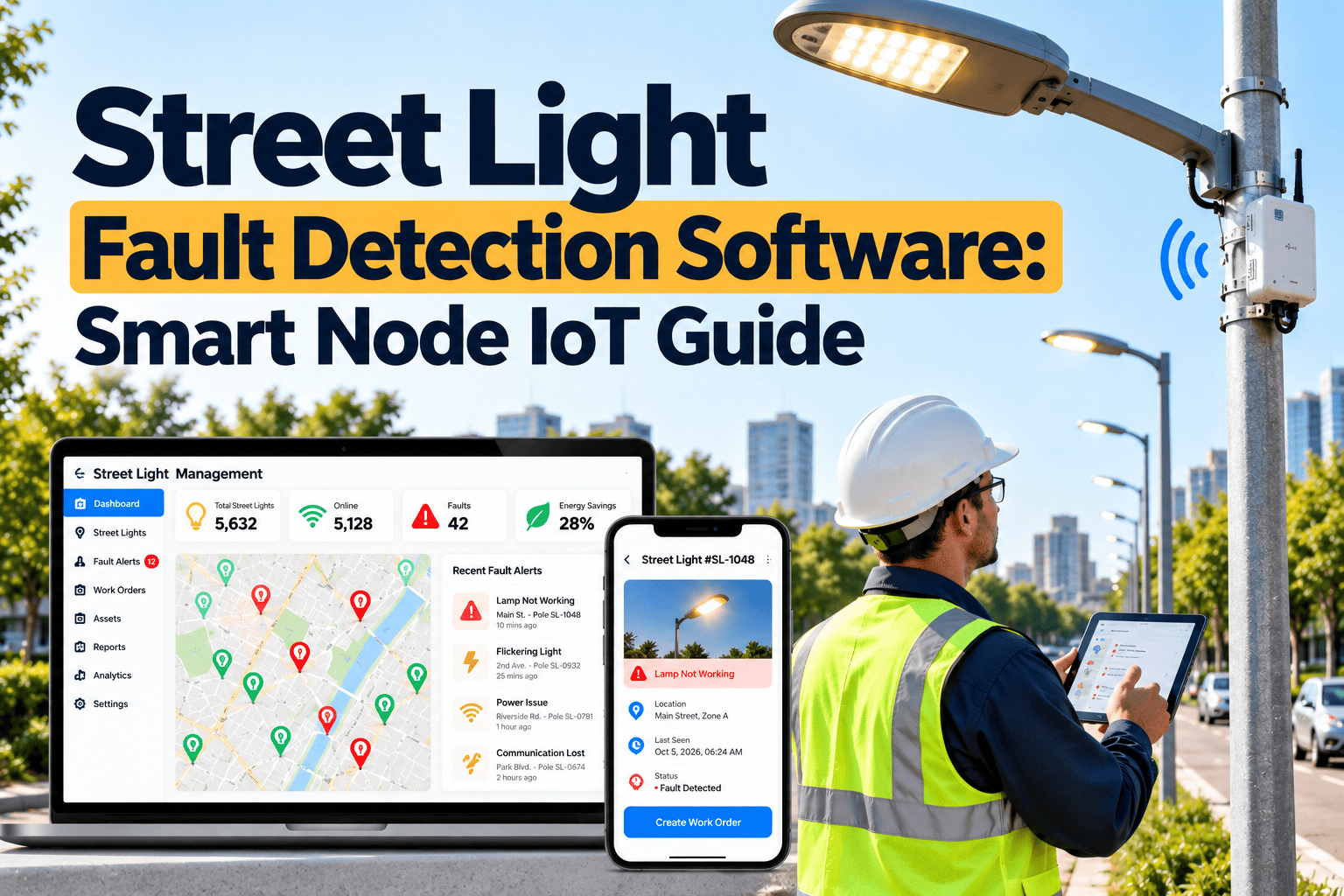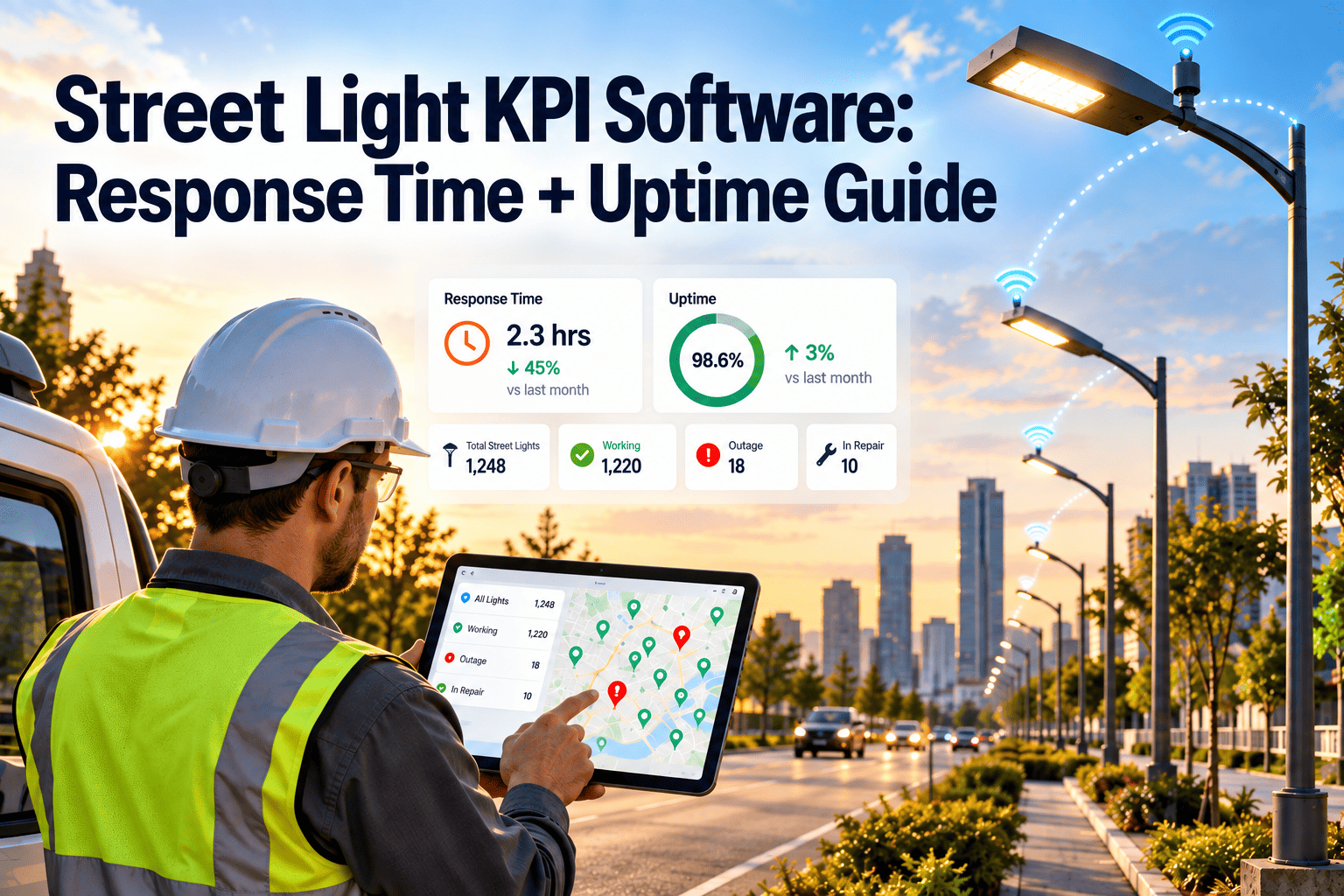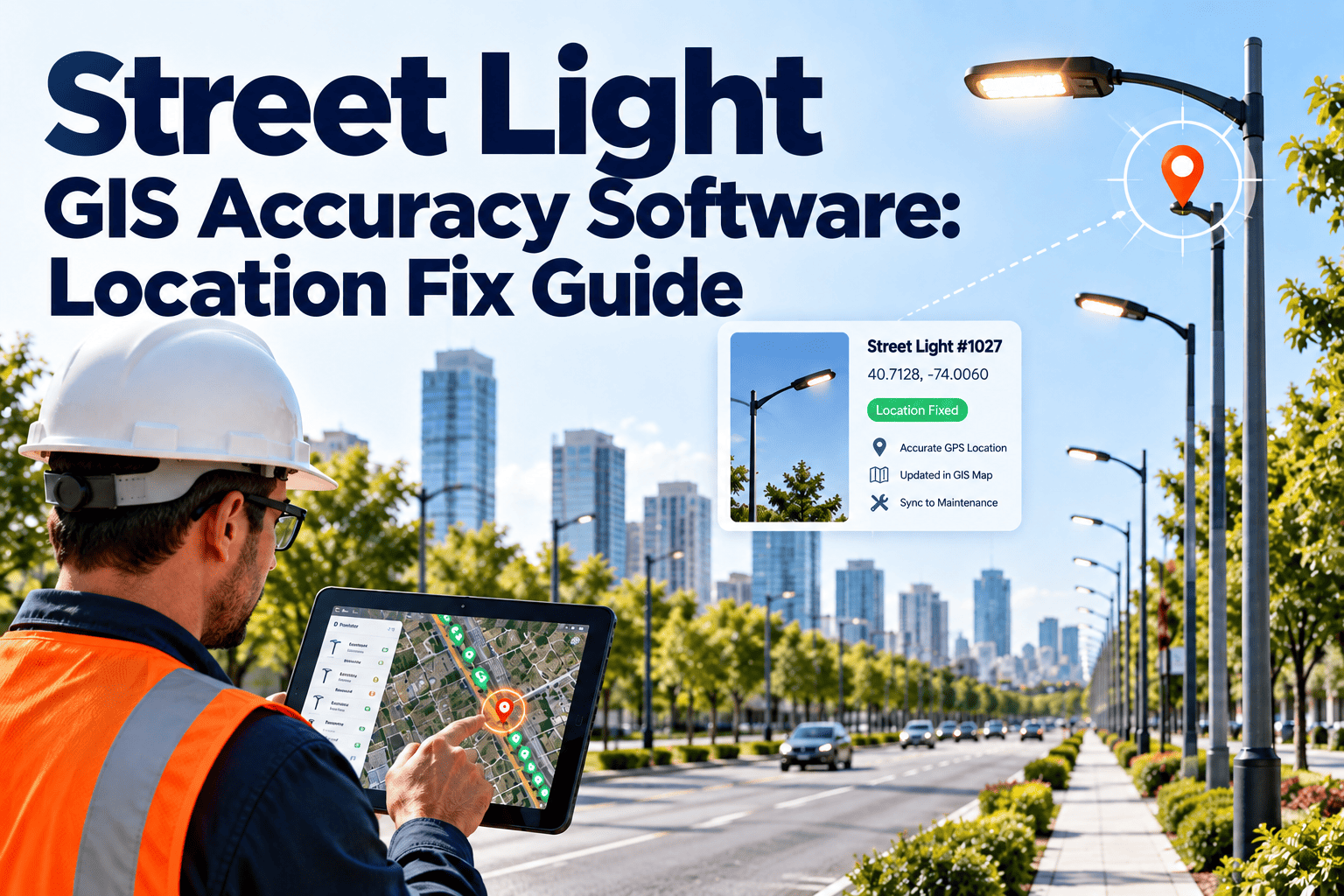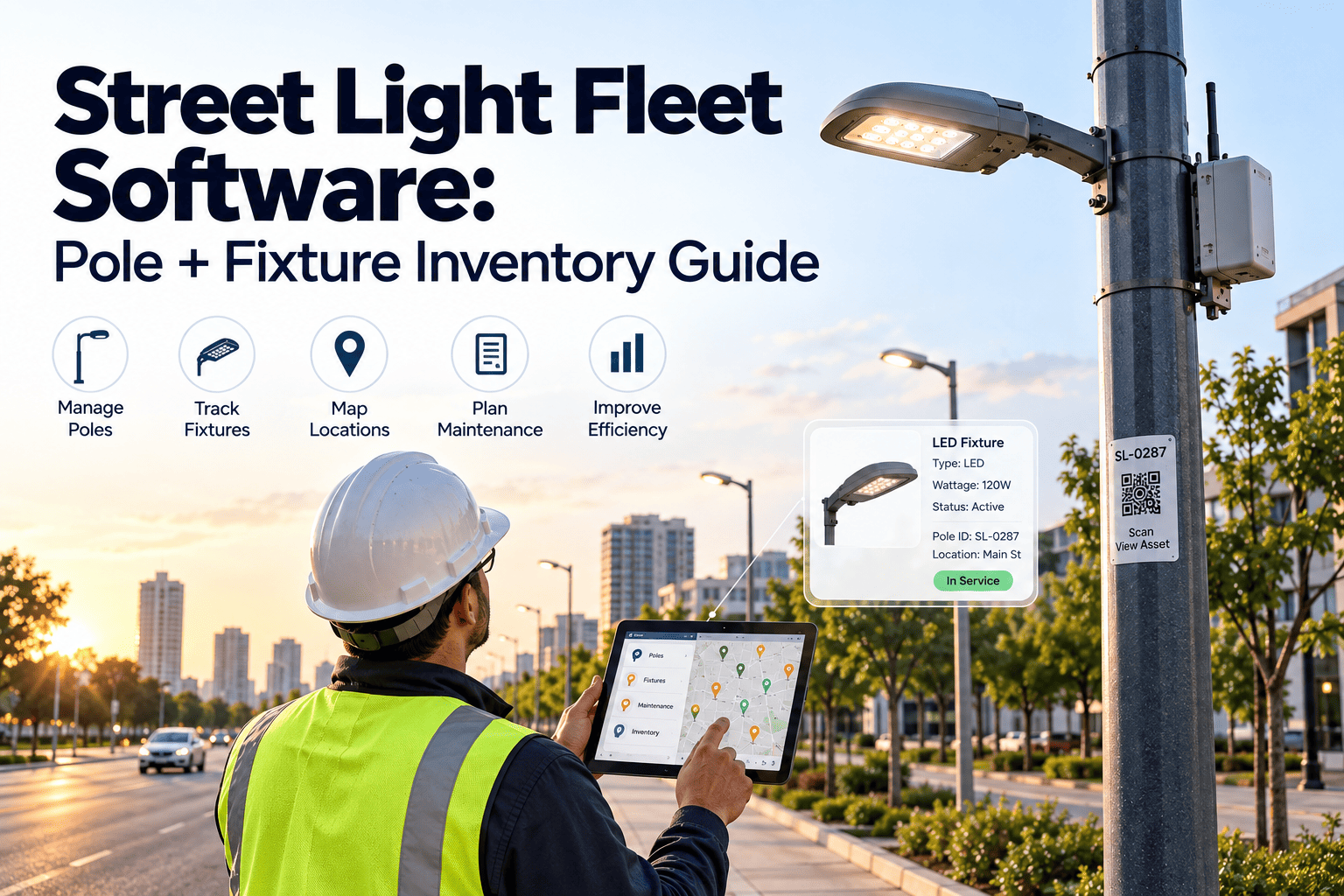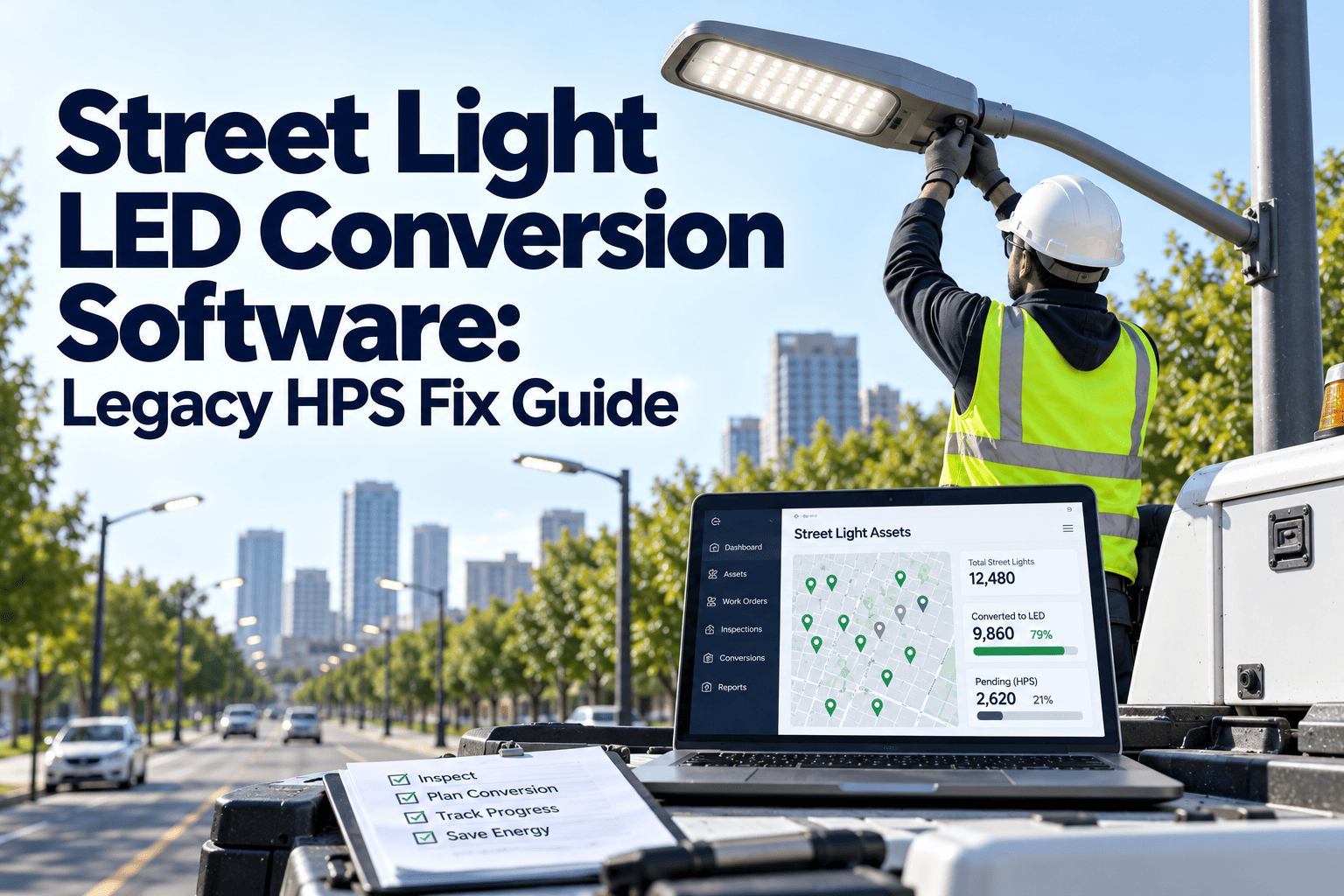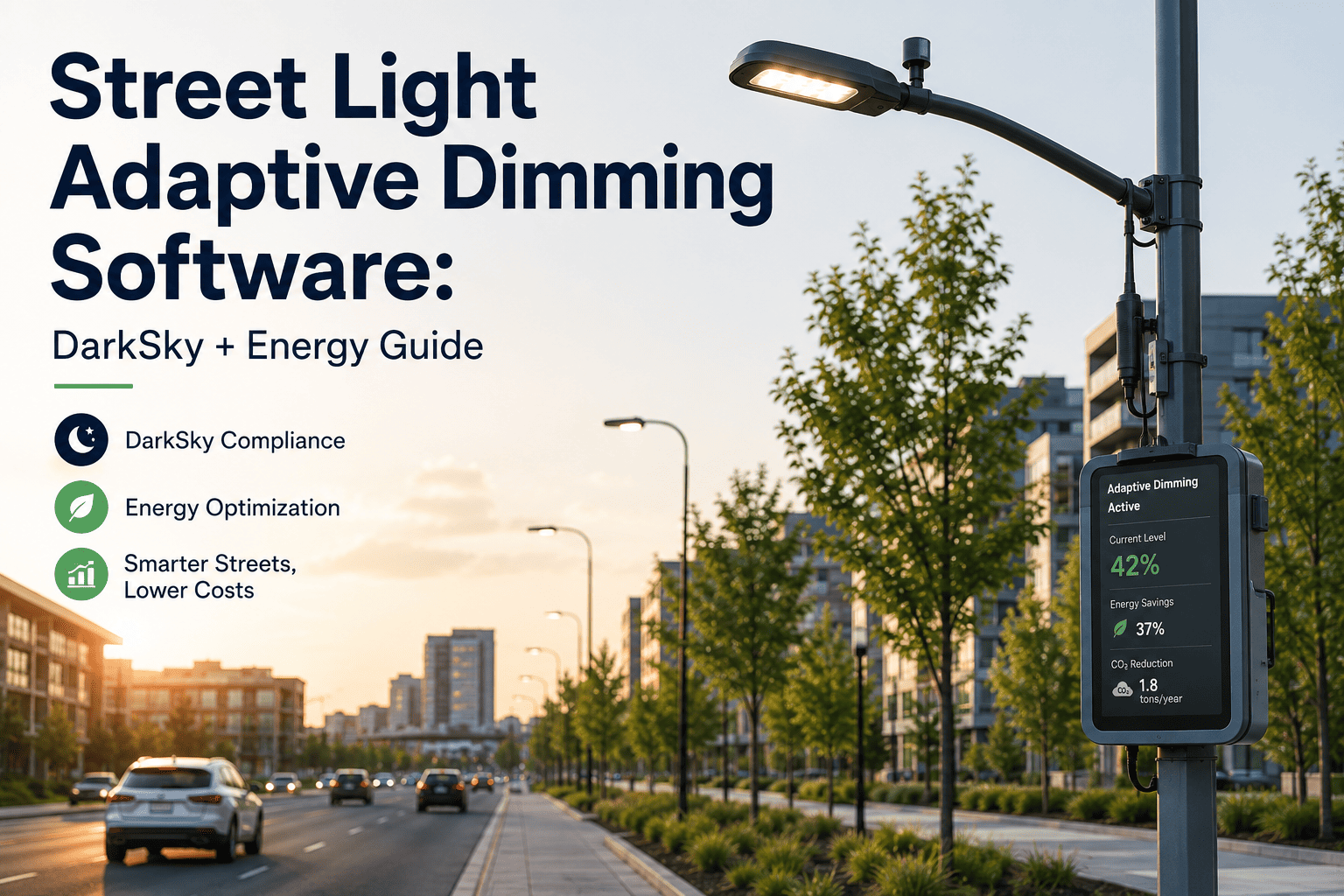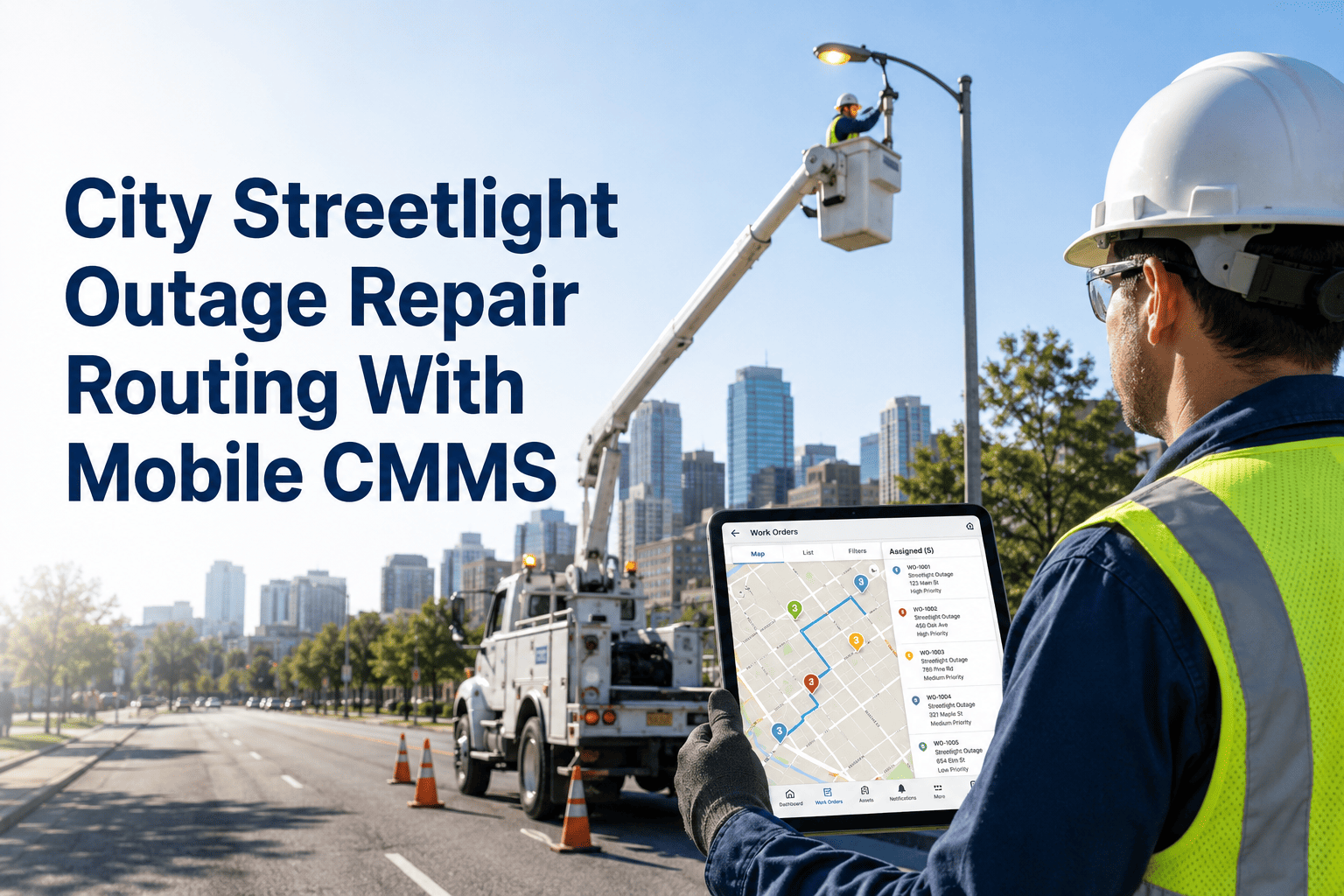
Choosing a smart street light vendor is a fifteen-year commitment dressed up as a procurement exercise. The controller, network protocol, and central management system a city selects today will govern every fixture-level command, fault report, and energy read for the useful life of the LED fleet — and the switching cost after year three is high enough that most cities never revisit the choice. The vendor market has consolidated around a handful of serious players — Signify (which now owns Telensa), Itron ROAM (which absorbed Silver Spring Networks), and a contender group led by Cimcon, Ubicquia, and Current — each with distinct network topologies, API openness, and integration profiles. A structured RFP scored on integration, uptime, and total cost of ownership beats a specification-sheet bake-off every time. See how OxMaint integrates with smart street light vendor platforms for cities running structured RFP evaluations.
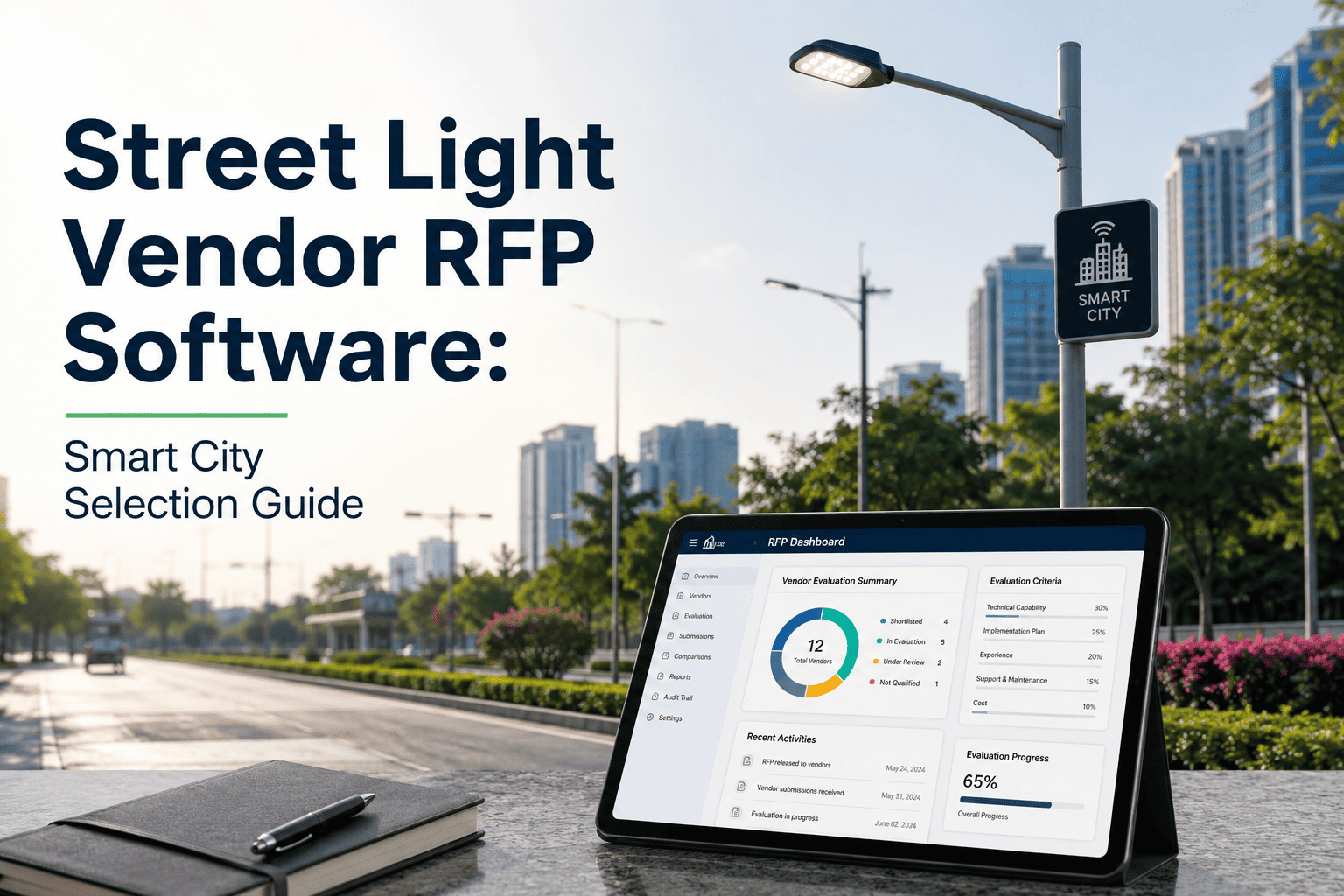
Street Light Vendor RFP Software: The Smart City Selection Guide
How to structure a defensible RFP comparing Signify Interact, Itron ROAM, Telensa PLANet, and the contender field — scored on integration openness, uptime, and 15-year TCO rather than feature checklists.
The Vendor Landscape — Four Platforms Cities Actually Evaluate
The credible vendor set for a mid-to-large municipal RFP consolidates around four platforms. Signify Interact City is the incumbent brand-name choice with the broadest sensor and IoT extension roadmap, backed by the depth of the former Philips Lighting product portfolio and a global services footprint that mid-market cities rarely find in the contender field. Itron ROAM (formerly Silver Spring Networks) leverages the same mesh network technology deployed for utility AMI, which is compelling when the city has an existing Itron utility relationship — the network infrastructure is often already in the poles.
Telensa PLANet runs on Ultra Narrow Band wireless, an unlicensed-spectrum approach that keeps operating costs low and works well for small-to-midsize cities that want to avoid recurring cellular data fees over a fifteen-year fleet life. Now operating as a Signify brand after the 2021 acquisition, Telensa's PLANet platform still competes independently and can be evaluated in the same RFP alongside Interact. The contender field — Cimcon, Ubicquia, Current, and a handful of others — competes on price and specific integration angles such as smart-pole convergence with cellular small cells or utility metering. The scorecard below sits at the heart of any credible RFP.
The Seven RFP Scoring Dimensions That Actually Matter
Most municipal lighting RFPs score on feature checklists that every serious vendor will tick. Every leader offers dimming, fault detection, energy metering, a mobile app, and a dashboard — and every proposal will claim strengths in all of them. The dimensions below are the ones that actually separate winners from losers over a fifteen-year lifecycle — and the ones a specification sheet will not reveal. Weight them explicitly in the RFP, require documented answers with evidence rather than assertions, and hold vendor presentations to that evidence rather than to the marketing narrative. The percentages shown are typical weightings from mature municipal procurement offices; adjust to reflect the city's specific priorities.
Run the Vendor Comparison From Your Own CMMS
OxMaint imports fault, energy, and uptime data from any TALQ-compliant vendor platform — making side-by-side comparison during pilot phases straightforward, and vendor switching a survivable event rather than a rip-and-replace.
Vendor Scorecard — Head-to-Head on the Dimensions That Matter
The scorecard below applies the seven RFP dimensions to the four vendor tracks. Scores are illustrative of typical positioning based on Guidehouse Insights Leaderboard analyses and public deployment records — a real RFP evaluation must verify each dimension against the vendor's specific proposal for the city's fleet size, road inventory, and existing infrastructure. Use this framework as the shape of the evaluation, not as its conclusion. The most common mistake procurement offices make with vendor scorecards is treating them as a shortcut past pilot verification; they are the opposite — a way to frame what the pilot needs to prove.
| Dimension | Signify Interact | Itron ROAM | Telensa PLANet | Contenders |
|---|---|---|---|---|
| API Openness | Strong | Strong | Strong | Varies |
| Uptime SLA maturity | Enterprise | Enterprise | Solid | Varies |
| 15-year TCO (cellular) | Higher fees | Utility-shared | Lowest ongoing | Variable |
| CMMS integration | Native + TALQ | Native + TALQ | TALQ | Verify per vendor |
| Sensor roadmap breadth | Broadest | Growing | Focused | Vendor-specific |
| Cybersecurity posture | Mature | Utility-grade | Mature | Verify |
| Reference depth | Global scale | Utility base | 400+ cities | Regional |
The Six-Phase RFP Process — Discovery to Contract
A structured RFP process typically runs 5–9 months from initial discovery to signed contract. Compressing the timeline generates predictable failure modes: skipped reference calls, unverified TCO models, and integration surprises during rollout that turn a fifteen-year commitment into a year-two crisis. The phases below cover the arc most successful municipal deployments follow, with the CMMS role called out at each stage — because the platform that lives past the RFP is what actually determines whether the winning vendor delivers value across the fleet lifecycle. Vendor teams change, roadmaps drift, and pricing renegotiates at every contract renewal; the city's own operational platform is the constant that keeps institutional knowledge intact across those cycles.
Vendor Lock-in — The Fifteen-Year Risk Cities Underprice
The uncomfortable truth of smart street lighting procurement is that the switching cost after year three is high enough that most cities never revisit the vendor choice, regardless of how the platform performs. Controllers are physically installed in every pole, radio protocols are proprietary at the physical layer, and the CMS holds years of historical energy and fault data in a schema the next vendor cannot read. Cities that treat vendor selection as a five-year commitment routinely discover in year seven that they cannot leave without a rip-and-replace project larger than the original deployment.
Three contractual and architectural provisions materially reduce this risk. First, TALQ compliance built into the contract as a warranty commitment, not just a features list — with the right to require the vendor to maintain that certification through firmware refresh cycles. Second, a data-portability clause that guarantees the city can export every fixture record, schedule, override, fault event, and energy read in machine-readable format at any time, at no additional fee. Third, running the operational data through a vendor-neutral CMMS layer from day one so that if the underlying vendor changes in year eight, the maintenance team's daily workflow does not.
Frequently Asked Questions
Buy the Platform, Not the Lock-in
OxMaint runs as the vendor-neutral operational layer above smart street light platforms — ingesting fault events, energy reads, and controller telemetry from Signify, Itron ROAM, Telensa, and contender platforms via TALQ and native APIs. Cities keep vendor optionality across a fifteen-year fleet life, and the RFP evaluation rests on real operational data rather than vendor-supplied dashboards. Free to start, no hardware lock-in.